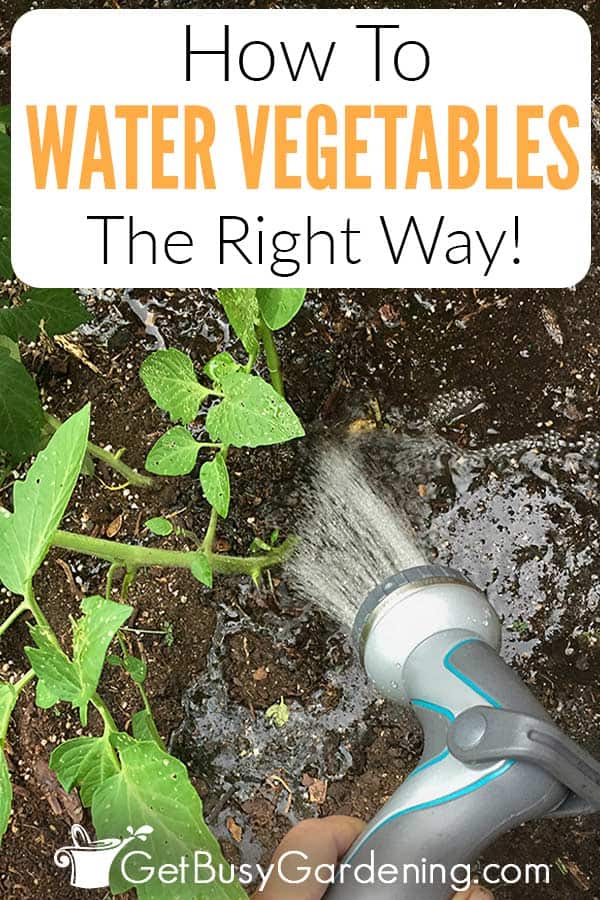
Watering vegetables properly is essential if you want to maintain a healthy and abundant garden. In this post, you’ll learn everything there is to know, including when, how much, and how often to water. I’ll also show you exactly how to water vegetable plants, the right way!
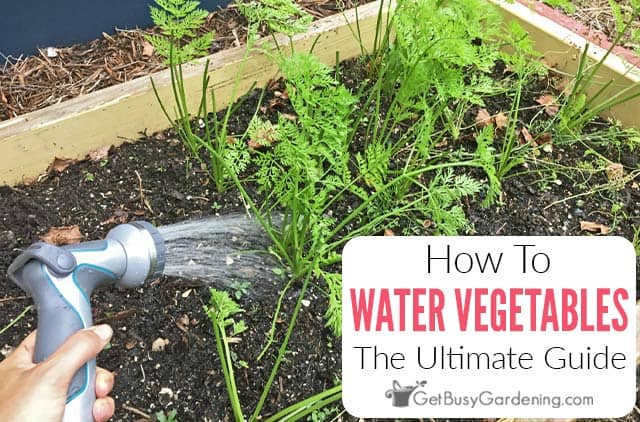

When I ask people what their biggest struggle is, one of the most common answers I get is watering the vegetable garden.
Watering your veggie garden be a huge pain during the heat of summer, there’s no doubt about that. Not only is it a chore, doing it wrong can cause major problems. Some you may not even realize are related.
It seems like it would be a total no-brainer… but it’s not. In fact, when it comes to growing vegetables, improper watering is one of the biggest mistakes that newbies make.
Yep, it can be a struggle, but don’t worry! In this guide for watering vegetable plants, I’m going to break it all down for you, and make it easy to get it right every time!
Watering A Vegetable Garden
Vegetables need a LOT of water to produce tons of yummy food for us. If they don’t get enough, it can stunt their growth, and they definitely won’t be as productive.
Improper watering can cause other problems too. Including disease and fungus issues, like powdery mildew and blight.
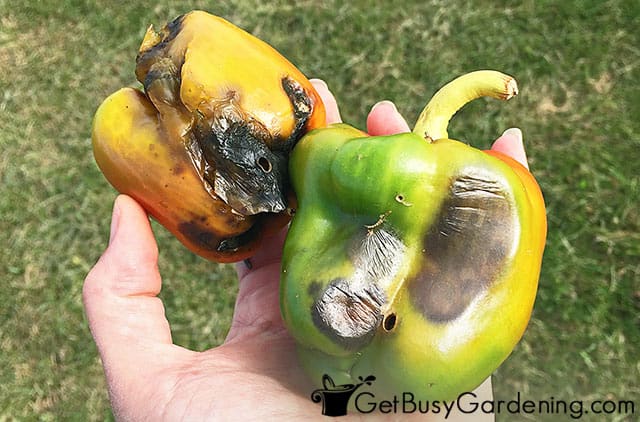
Inconsistent watering is also a contributing factor to blossom end rot, as well as cracked vegetables.
So, if your veggies aren’t producing as much food as you would like, or you struggle with other problems, it might be a sign that you’re not watering properly.
How Much Water Does A Vegetable Garden Need?
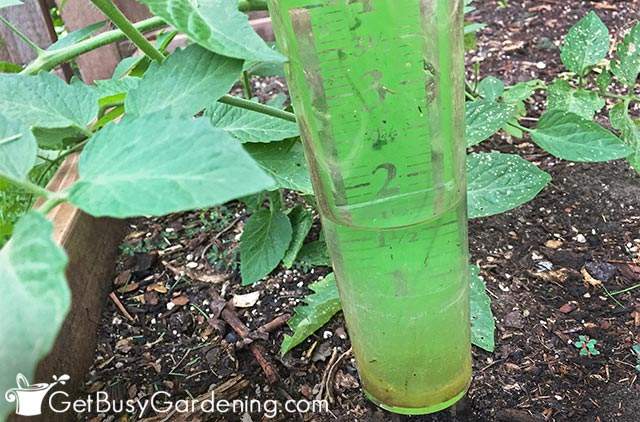
To stay healthy and productive, a vegetable garden needs 1-2” of water per week on average. A super easy way to help you keep track is to get a rain gauge.
Put it in your veggie garden to help you measure how much rain it’s getting, and then keep track of it through the week. If it collects less than one inch of rainwater, then you know that you’ll need to drag out the hose.
That’s just the average, though. There are quite a few things that can influence how much water vegetables needs:
- Humidity level – Water evaporates much slower when it’s humid outside, which is good news for us. But repeated days of high humidity doesn’t eliminate the need to water vegetables, it just slows it down a bit.
- Temperature – Hot weather puts a huge strain on vegetable plants, and can quickly cause dehydration. So, the hotter it is outside, the more you’ll need to water. I know it’s no fun to be outside in the smoldering heat, but it’s super important that your veggies stay well hydrated during a heatwave.
- Soil type – Another factor is your soil type, because some retain water better than others. Sandy soil doesn’t hold water for very long, while a denser clay can hold it much better. So it’s important to know what type of soil you have to compensate for drainage and water retention.
- Plant type – The amount of water also varies depending on what you’re growing. Vegetables that need a lot of water are the ones that flower and produce fruit (e.g.: squash, tomatoes, beans, cucumbers, etc). Whereas leafy greens (e.g.: lettuce, spinach, herbs, kale, chard, etc) don’t need as much.
- Bigger fruits means more water – Not only does the plant type make a different, but the bigger the fruit veggies produce, the more water they’ll need. For example, a full-sized watermelon plant requires more water than cherry tomatoes!
When To Water Your Vegetable Garden
The best time of the day to water vegetables is early morning. That way, the leaves can dry out during the day, preventing disease and mildew problems.
Doing it in the morning also helps to conserve water, since it won’t evaporate as quickly as it can in the hot afternoon sun.
The second best time to water your vegetable garden is in the evening. But, if you do it in the evening, take extra care not to get the foliage wet. Water sitting on the leaves overnight is a breeding ground for fungus and disease.
How Often To Water Vegetables
The good news is that you don’t need to water your vegetable garden every single day, even during the hottest and driest months of the year!
In fact, you shouldn’t do it that often. Frequent, light waterings will cause shallow roots. And vegetable plants with shallow roots will be dependent on you to water them more often, which is not what you want.
I know it sounds backwards, but it’s best to water veggies less often, with deeper waterings. A plants roots will grow where the water is, and you want your vegetables to have deep roots!
When they have deep roots, the plants will be stronger, and won’t need to be watered as often.
Overwatering
I know this might sounds crazy to some of you, but it is possible to overwater vegetables! If the soil has poor drainage, or there’s too much rain, then it can become waterlogged.
Consistently soggy soil will cause the roots to rot, and eventually kill the plants. So it’s definitely something to avoid.
To ensure proper drainage, loosen up compacted soil, and improve the overall quality, amend it with compost or sand.
Also, avoid watering vegetables when the soil is saturated. A soil moisture meter is a great tool to help you monitor this.
How To Water A Vegetable Garden Properly
Believe it or not, there is a right way to water vegetables, and there is a wrong way. To make it easy, remember this: the main goal is to get water deep into the soil, soaking the roots as efficiently as possible.
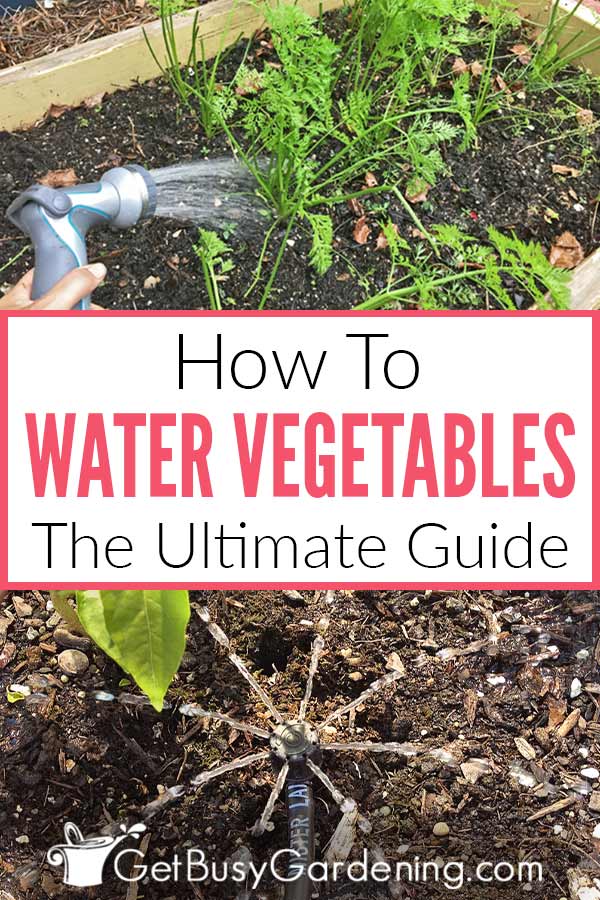
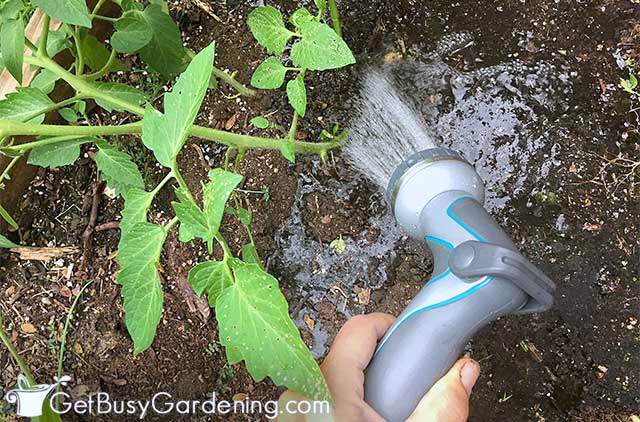
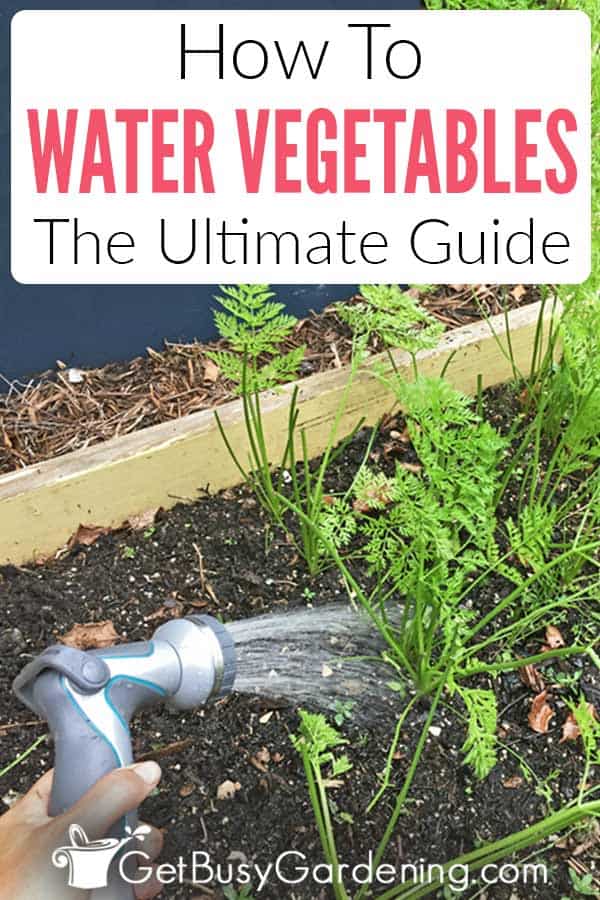
The correct way to water your veggie garden is by directing the stream at the base of each plant, rather than spraying it over the top of the leaves.
When you water vegetables at the base, the leaves won’t get wet, which prevents fungus and mildew growth.
It also helps to discourage weeds, because you’re only watering the vegetable plants, and not the entire garden (including all of the weeds).
But don’t just blast the ground with the hose. A strong stream of water can displace the soil, and uncover the roots. It can also cause soil to splash up on the leaves, which is how plants become infected with diseases like blight.
Instead, take a slow and steady approach by reducing the water pressure to a moderate stream or trickle.
This will ensure that it soaks deep into the rootball and soil, rather than running off to distant corners of the garden where nothing is growing.
Methods For Watering Vegetable Plants
Watering garden vegetables by hand is a great way to ensure that it’s done right. But let’s be honest here… not everyone has the time to stand out there and water each plant by hand (especially when it’s sweltering outside!).
The good news is that there are several other methods that can help to make our lives easier. Here are a few to try…
Soaker Hoses
One of best ways to make it simple to water vegetable plants properly is to weave soaker hoses through the beds. Then, when it’s time to water, simply plug in your hose, and turn it on low.
If you don’t like the look of soaker hoses, you can bury them under the mulch to hide them. That will have the added benefit of preventing evaporation during hot, dry weather.
Drip Irrigation
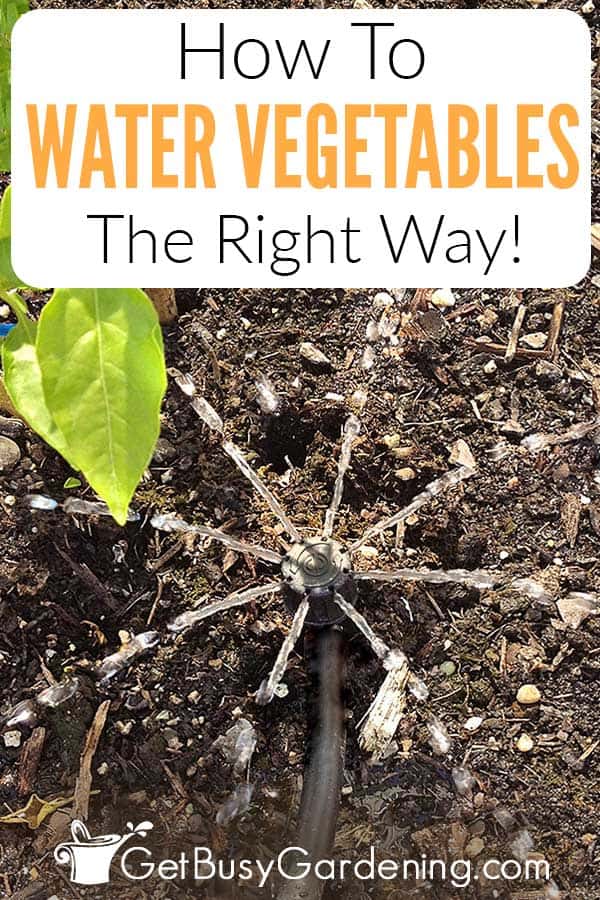
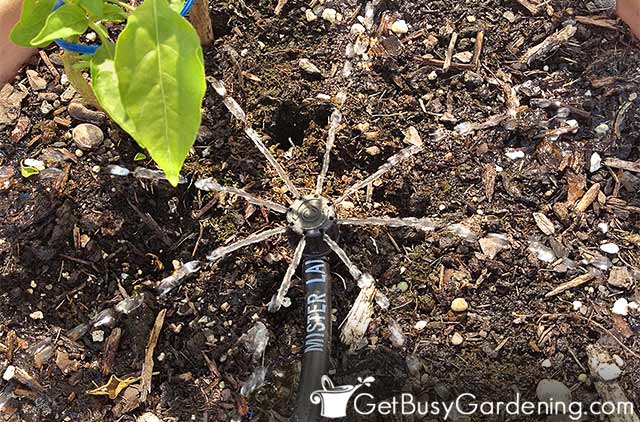
Another set-it-and-forget-it solution is drip irrigation. It’s are fairly inexpensive and quick to install, plus there are many garden kits available to make it even easier.
Set up individual drippers for each plant, a whole system to water entire beds at one time, or use them for containers. Learn how to install drip irrigation for potted plants here.
DIY Plant Watering Devices
You can easily make your own vegetable garden watering devices. Collect several buckets, coffee cans, bottles, milk jugs, or similar containers, and poke holes in the bottoms.
Then sink them a foot or two into the ground right next to each plant. When it’s time to water, simply fill up each container, and let the water soak right into the roots.
Related Post: How Do Rain Barrels Work?
Use Sprinklers In A Pinch
Even though sprinklers shoot water over the top of your garden, which is not ideal for watering vegetables, they are better than nothing.
If you’re in a pinch or rushed for time, it’s ok to set up the sprinkler once and a while. I wouldn’t recommend doing this every time though.
Use A Hose Timer
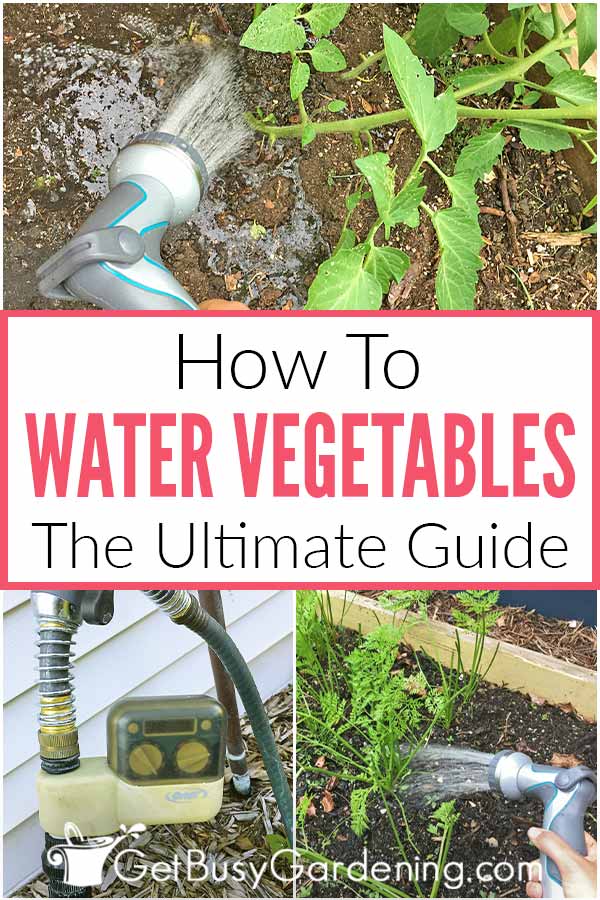
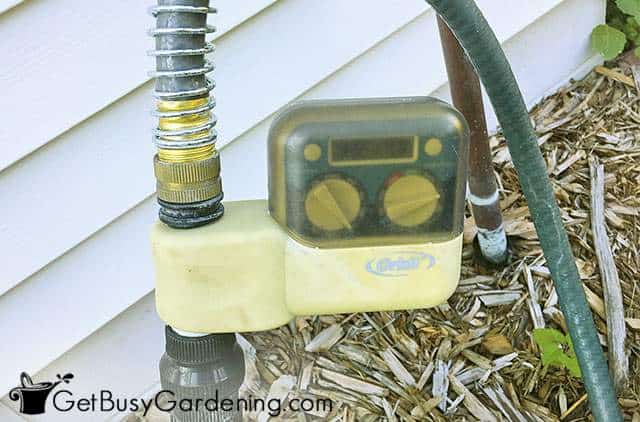
Garden hose timers are inexpensive, extremely easy to use, and WELL worth the money! You can use it with soaker hoses, drip irrigation systems, or sprinklers to make watering vegetables totally brainless and automated.
Just be sure to remember to turn the timer off during periods of heavy rain, because you don’t want to accidentally overdo it.
Tips To Make Watering Vegetables Easier
When you have a larger veggie garden plot, watering can become a huge chore, especially during dry spells with little or no rainfall. So below, I’ll share a few simple tricks that can ease the burden.
- Time your waterings – Never use overhead sprinklers during the heat of the day, because much of the water will evaporate before it ever hits the ground. Instead, run them in the very early morning, so your vegetables can get as much water as possible.
- Amend soil with compost – Amending the soil with compost, well composted manure, or worm castings will help it retain moisture longer. This is the best way to improve both sandy and clay soil.
- Stick to a schedule – Don’t wait until your vegetable plants start to droop before watering them. If they’re wilting, it means they already severely dehydrated, which causes a whole slew of problems. Sticking to a schedule will not only be easier for you, it’s much healthier for the plants.
- Water thirsty veggies first – Try to remember to water the thirstiest vegetables in your garden first (i.e.: larger veggies like melons, squash, cucumbers, tomatoes, etc.). That will prevent them from sucking moisture away from the others.
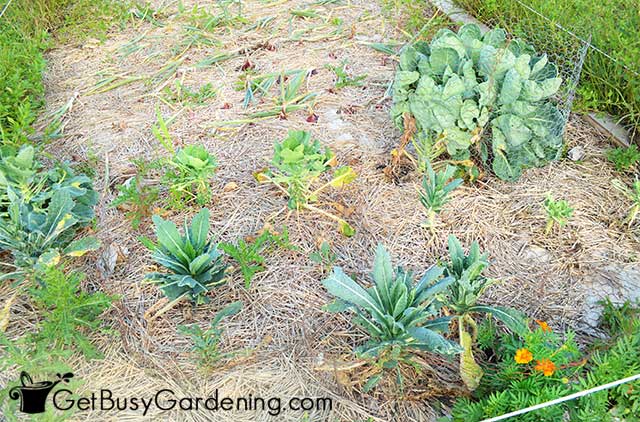
- Mulch your veggie garden – Mulch acts as an insulator to hold moisture in the soil, which means the water won’t evaporate as quickly. It also helps to keep soil from splashing on the leaves, which can prevent soil-borne diseases. Try to maintain 2-4” of mulch in your vegetable garden, and you’ll be able to water less frequently.
Related Post: Beginners Guide To Mulching A Vegetable Garden
FAQs About Watering Vegetables
In this section, I’ll answer some of the most frequently asked questions about watering vegetable gardens. If you have a question that wasn’t answered here, then ask it in the comments below and I’ll answer it ASAP.
Do you need to water a vegetable garden every day?
No, and you shouldn’t. Watering vegetables every day causes shallow root growth, which means you will need to water more often.
What time is best to water a vegetable garden?
Early morning is the best time to water your veggie garden. That way the leaves will be able to dry out during the day, which prevents fungus growth and disease issues.
What is the best way to water a vegetable garden?
The best way to water vegetables is to direct the flow at the base of the plant, using a slow and steady stream. That will ensure the water soaks deep into the roots.
Can you overwater a vegetable garden?
Yes, believe it or not, you can overwater a vegetable garden! If the soil is poor quality, compacted, or doesn’t have enough drainage, then it can quickly become saturated.
The best way to prevent this is to monitor the rainfall using a rain gauge, and only water if there’s less that one inch per week. You may also want to amend your soil with compost or sand to loosen it up, and improve drainage.
Which vegetables need the most water?
Large vegetables are the ones that require the most water. And the bigger they are, the more water they’ll need. A few examples of thirsty veggies are tomatoes, cucumber, eggplant, melons, squash, and corn.
Watering vegetables consistently is extremely important. If your garden isn’t doing very well, then you might be watering it wrong. Just remember to water deeply weekly, and you’ll notice a big difference in both the health and productivity of your veggies!
If you’d like to learn how to make the most of your space and get as much homegrown food as possible, then my Vertical Vegetables book is perfect! It will teach you all you need to know, has tons of gorgeous photos, and includes 23 DIY projects you can build for your own garden. Order your copy today!
Learn more about my Vertical Vegetables book here.
More Posts Growing Vegetables
- How To Fertilize A Vegetable Garden
- A Beginner’s Guide To Companion Planting
- 17 Easy Vegetables To Grow In Your Garden
- How To Attract Bees To Your Vegetable Garden
Share you vegetable garden watering tips in the comments section below.

Rogel Green says
I have my vegetables in planters and I have drip pans under them should I let them sit in the pans?
Amy Andrychowicz says
I don’t recommend leaving the pots sitting in the drip pans or they can quickly become waterlogged.
Lorian Bartle says
I must put my vote towards soaker hoses for watering a vegetable garden. They’re reasonably water efficient, they avoid the mold problem you mentioned by directing water towards the ground, and they cut down on weeds because you’re only watering where the plants are.
Amy Andrychowicz says
Awesome, thanks for your vote! I love soaker using hoses for watering veggies too!
Laura says
Thanks for the great tips for watering a vegetable garden! When I was little back in the 80’s my grandparents had a veggie garden every year. My grandfather buried milk jugs he had put holes in to water his plants. He was a smart man! It worked well, and made watering so much faster.
Amy Andrychowicz says
He was a smart man indeed! I have seen people use coffee cans or plastic buckets in the same way to make it easier to water their vegetables. Such a great idea! I definitely need to add that to my to do list!