

Harvesting sage fresh from your garden is quick and easy, and there are a few ways you can to it. In this post, I’ll show you exactly when and how to pick, pluck, or snip sage for the biggest and best harvest.
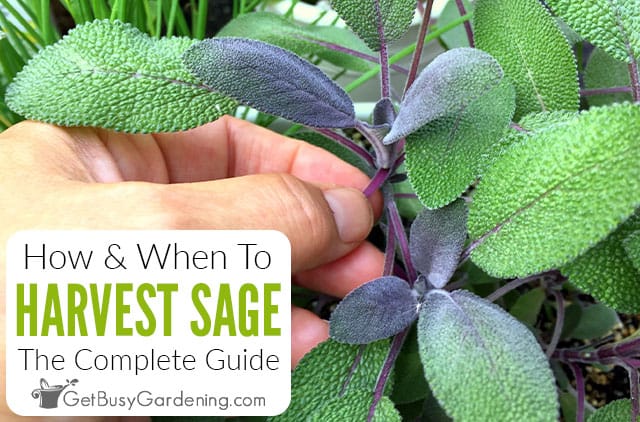

It might sound intimidating to new gardeners, but harvesting sage is actually pretty simple. Plus, since it’s a perennial herb that keeps producing, you can continue enjoying it for a long time to come.
There are two methods that are easy, even for first-time gardeners. You can either pick the leaves individually, or snip a bunch of stems all together.
In this guide I’ll show you exactly how to harvest sage using both methods.
Plus I’ll give you tips and information on cleaning, storing, and using it too. So you’ll know exactly what to do with the fresh leaves after you pick them.
When To Harvest Sage
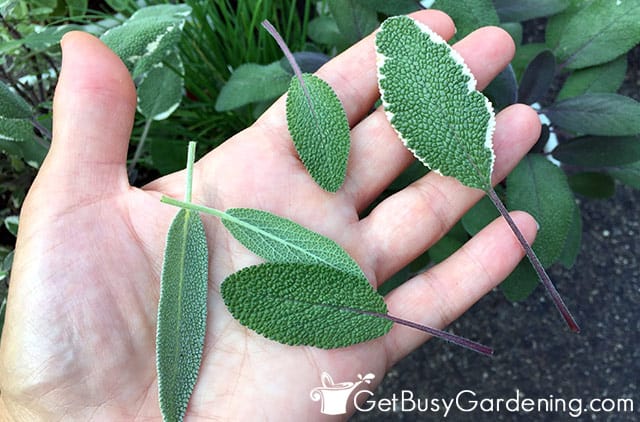
You can start harvesting sage as soon as it has several mature leaves. They usually get to be about 1-5” long when they are ready, which is the ideal size.
The best part is that you can keep picking it all summer long. Simply pinch off the leaves anytime you need to use some for cooking.
Basically, whenever a recipe calls for it, I can just walk out the back door and grab as much as I need. It’s so convenient.
Related Post: How To Grow Sage In Your Garden
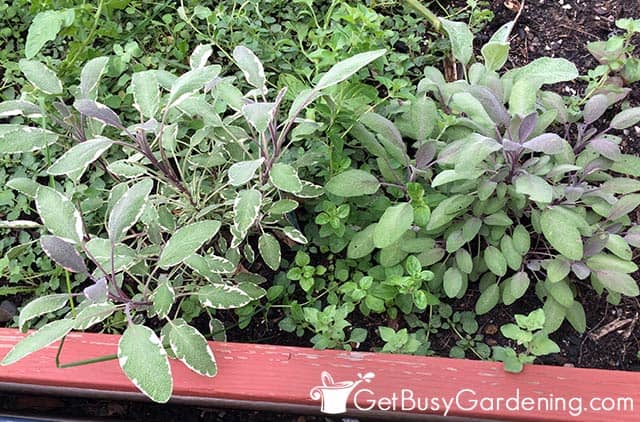
What Part Of Sage Do You Use?
The part of sage that most people use are the leaves. Though the flowers are also edible, and have a more subtle flavor. The stems are too woody to eat, so you can just discard those.
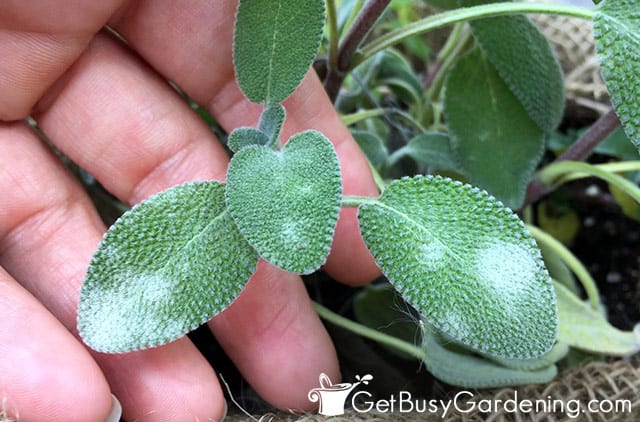
When you are deciding which leaves to pick, only select the healthiest looking ones. Toss out of any that are yellow, brown, or have spots on them. Those are not good to eat.
How To Harvest Sage
There are two simple ways to harvest sage: removing the individual leaves, or cutting off whole stems. Let’s look closer at both methods so you can choose your favorite.
How To Pick Sage Leaves
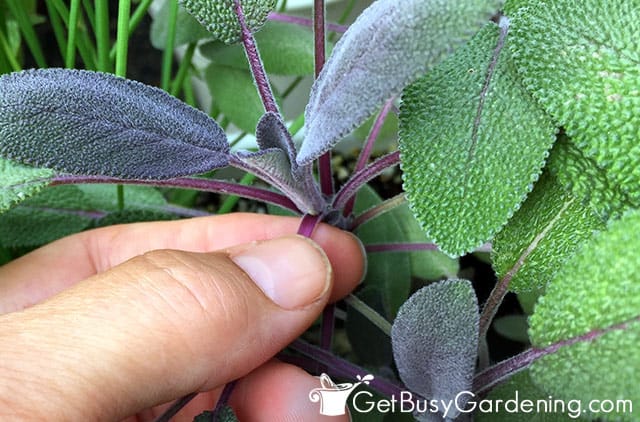
The most common way to pick sage is to simply pinch off the leaves along the stem. Or, you can pluck the small new ones on the top.
Be careful not to pull too hard, just gently remove them with your fingers. That way you won’t damage the stem or uproot the entire plant from the ground accidentally.
If you don’t like using your fingers to pinch them off, then a pair of precision pruners, or micro snips works very well too.
How To Cut Sage From The Plant
Harvesting sage stems or sprigs is another good option. This method is great if you want to get multiple leaves at once, or you plan to use it for smudging.
People also choose to do this when they want to dry large bundles of it together.
The best way to cut the stems is to use either a small pair of micro shears or precision snips because they are too tough to pinch with your fingers.
Snip the entire sprig or branch to the desired length, just above a lower set of leaves.
How Often Can You Harvest Sage?
You can harvest sage as often as you need to. Regularly cutting off the stems or pinching out the tips will encourage them to branch out, giving you an even larger yield.
In your excitement though, remember to never remove all of the leaves. Plants need at least some of them in order to survive and keep growing.
What To Do With Fresh Sage
There are quite a few different ways you can use fresh sage after you pick it.
Most people either freeze it, dry it, or keep it fresh. Freezing and drying preserves it so it lasts much longer. Learn how to preserve fresh herbs here.
Other people prefer to just pluck as much as they need for their recipes. They can be used in so many yummy ways.
If your plant begins to flower, don’t panic. Tender young blooms can be used in teas, salads, fried, or sprinkled over dishes as a beautiful edible garnish.
Washing Fresh Sage
The only times you need to wash it is if you visibly see dirt on the leaves. For this reason, I usually don’t bother.
If you see lots of dirt, just rinse them off or swish them around in a bowl of water for a few seconds. This removes all the dirt, and makes them clean to eat.
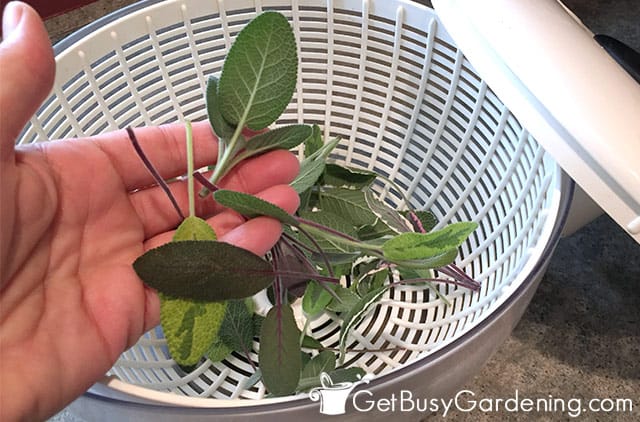
Be sure they are completely dry after rinsing, or they can turn brown pretty quickly. I use my salad spinner to spin them dry, but you could also gently pat them with a towel.
FAQs About Harvesting Sage
Here are some questions people often ask about harvesting sage. If you don’t see an answer to your question here, please ask it in the comments section below.
Does sage regrow after cutting?
Yes, sage will regrow after cutting it. In fact, cutting it encourages the plant to fill out even more. The more you pick and pinch it, the bushier it will become. Which means an even larger yield for you!
How do you harvest sage without killing the plant?
In order to harvest sage without killing the plant, keep some leaves on it at all times. Be very careful never to remove all of them. Also, never pull the entire thing out or cut it all the way down to the ground.
Can you harvest sage after it flowers?
Yes, you can continue to harvest sage after it flowers, however the flavor can become bitter. So, it’s best to pick it before it flowers for the largest leaves and best flavor.
If you pinch off the blooms before they get too large, the leaves will still retain much of their flavor. Many gardeners also enjoy using the young, tender blossoms in their cooking.
As you can see, harvesting sage is pretty simple. Not only does it add lots of flavor to your cooking, but if you continuously gather it all summer long, the plant will keep producing more for you to use.
More About Harvesting
- How & When To Harvest Chives From Your Garden
- When & How To Harvest Rosemary Leaves & Sprigs
- Harvesting Kohlrabi: Everything You Need To Know
- When & How To Harvest Potatoes
- Harvesting Brussels Sprouts – Everything You Need To Know
Share your tips for harvesting sage in the comments section below.

Gail Pabst says
We have been using our fresh sage for tea this summer and look forward to using our dried sage leaves this winter as well. Thanks for the post.
Amy Andrychowicz says
Awesome! You’re welcome.
Marlene Anderson says
I what to dry the leaves and store them for this winter. How do I do that.
Amy Andrychowicz says
I don’t have a tutorial specifically for drying sage leaves, but here’s my general guide for how to dry herbs.
Melody says
Thank you for your expertise
For a few years I have tried to grow herbs with not much luck.
Do u dehydrating sage or another method for sage.
Thank you for input..
Amy Andrychowicz says
Yes you can dehydrate your sage, it’s easy to dry. Here are other methods I use to preserve my herbs, including sage.