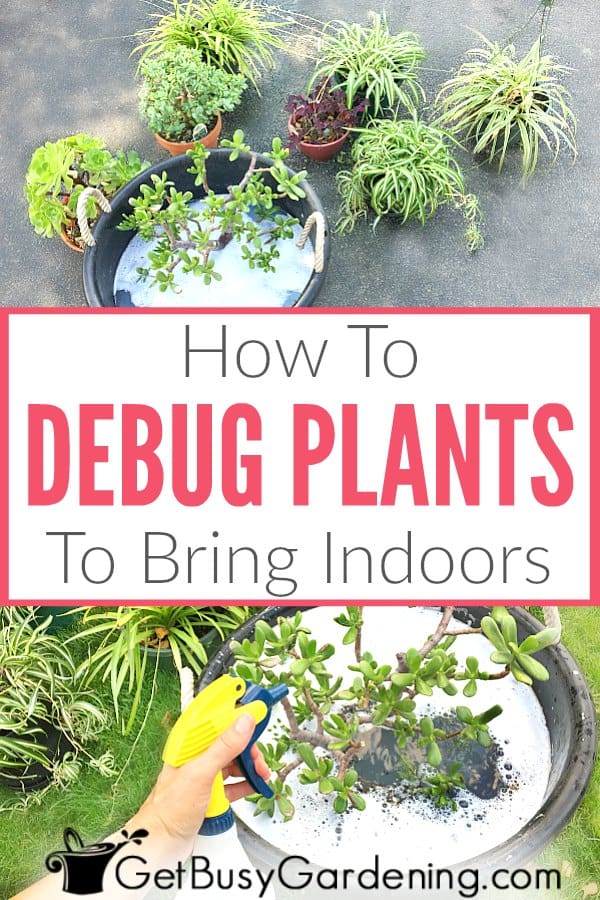
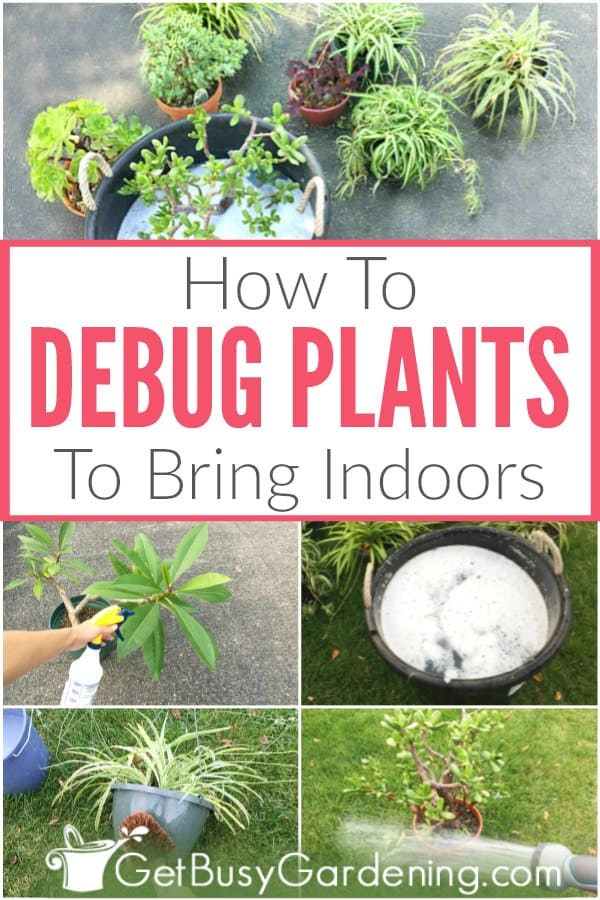
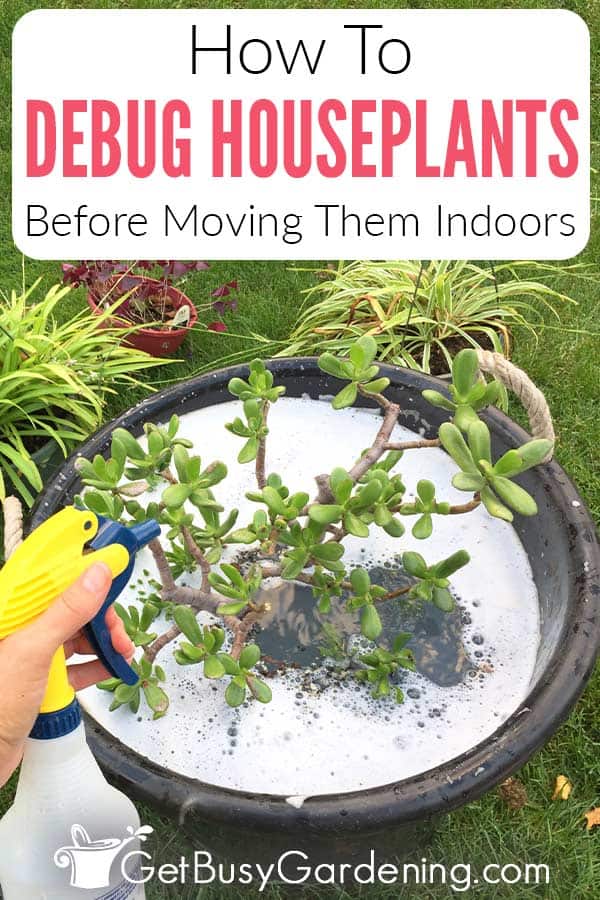
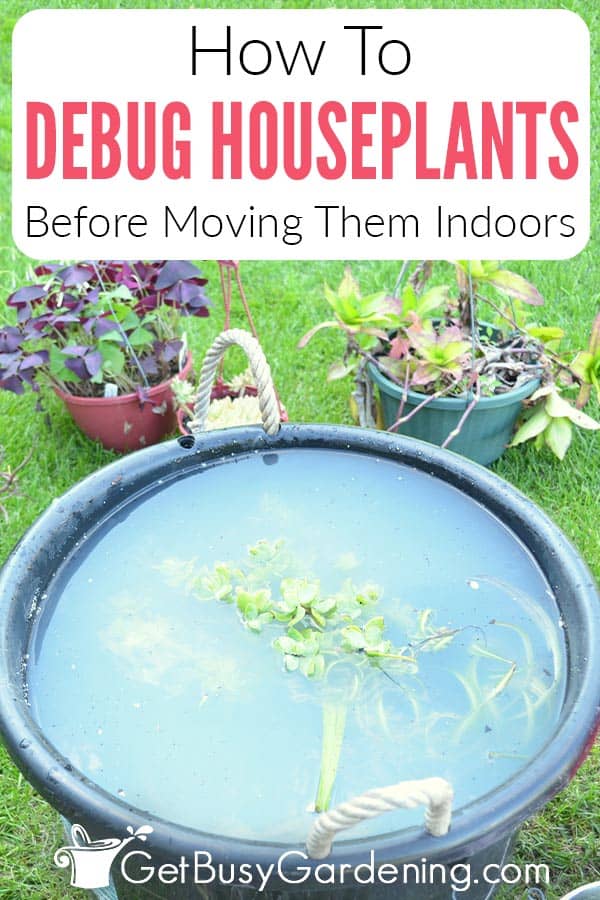
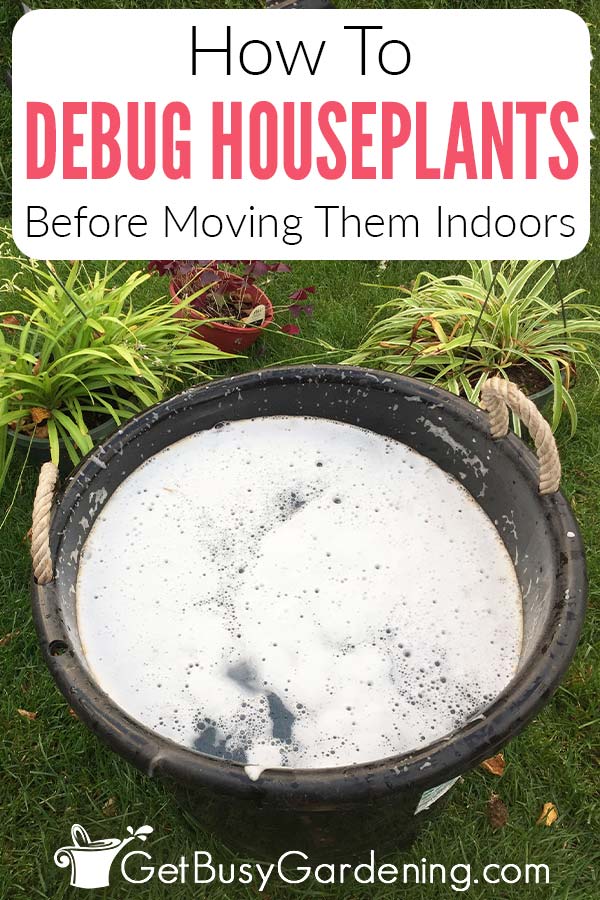
Winter is around the corner which means, it’s time to start moving some plants back indoors! The key to a smooth transition lies in knowing the right time to bring them inside and how to do it without inviting bugs. Let’s break it down step-by-step!
Aphids, mealybugs, and other types of houseplant pests aren’t normally a problem outside. But they can quickly turn into a major infestation during the winter if they come inside on your houseplants.
When To Bring Plants Inside For The Winter
Knowing WHEN to start this process is key. You should start moving your plants inside during late summer or early fall, before nighttime temperatures consistently drop below 60°F (15.5°C). Exposing tender houseplants to temperatures below 50°F (10°C) can cause damage.
A good rule of thumb is to bring them in at least two weeks before your area’s average first frost date. For example, in zone 4, that’s September 20th, around the end of summer.
Waiting too long could shock your plants which can cause their leaves to drop, go dormant, or even die if frost hits unexpectedly.
Amy’s Tip #1! 👩🏼🌾
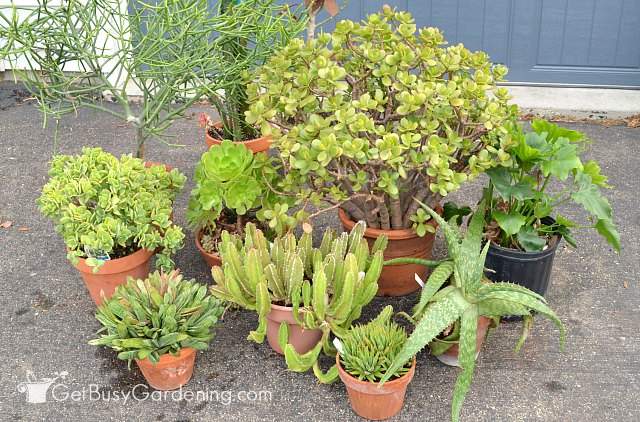
Moving all your houseplants inside at once can be overwhelming, both for you and the plants. Instead, bring them in gradually over a few weeks. This way, you can manage the workload, and the plants can adjust more easily.
9 Steps To Debugging Your Plants
Debugging plants might sound complicated, but it’s actually straightforward. Here’s how to do it step-by-step:
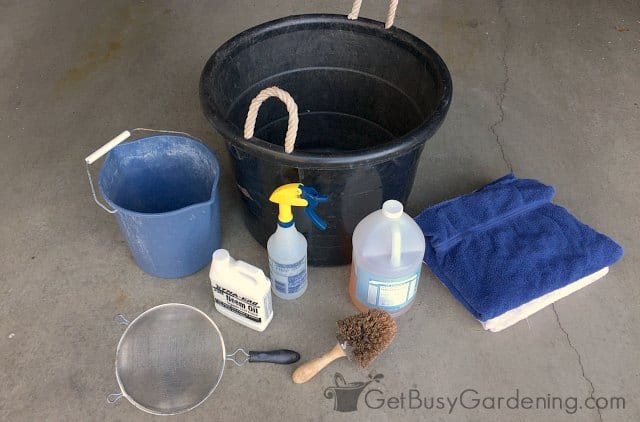
Supplies You’ll Need:
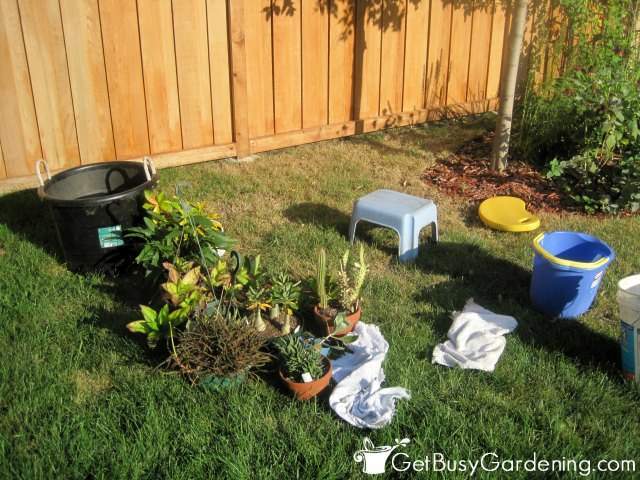
Steps:
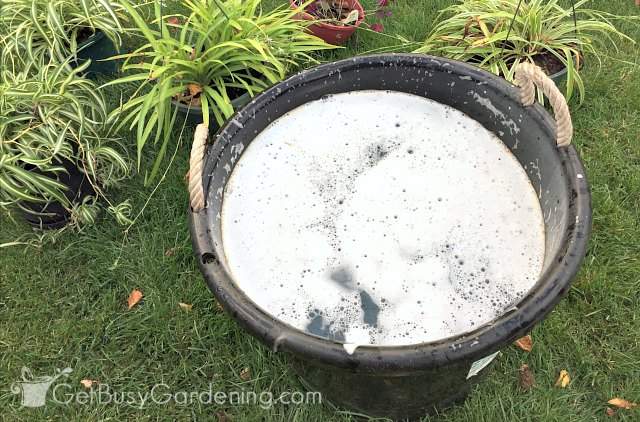
- Fill the Tub with Soapy Water: Fill your large utility tub with tepid water, and your wash bucket with warm water. Add a few squirts of a mild liquid soap to each as you’re filling them. (Avoid soaps with degreasers or detergents, as they can harm plants.)
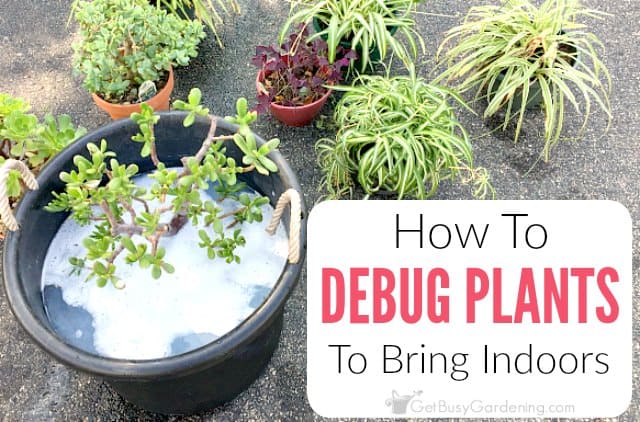
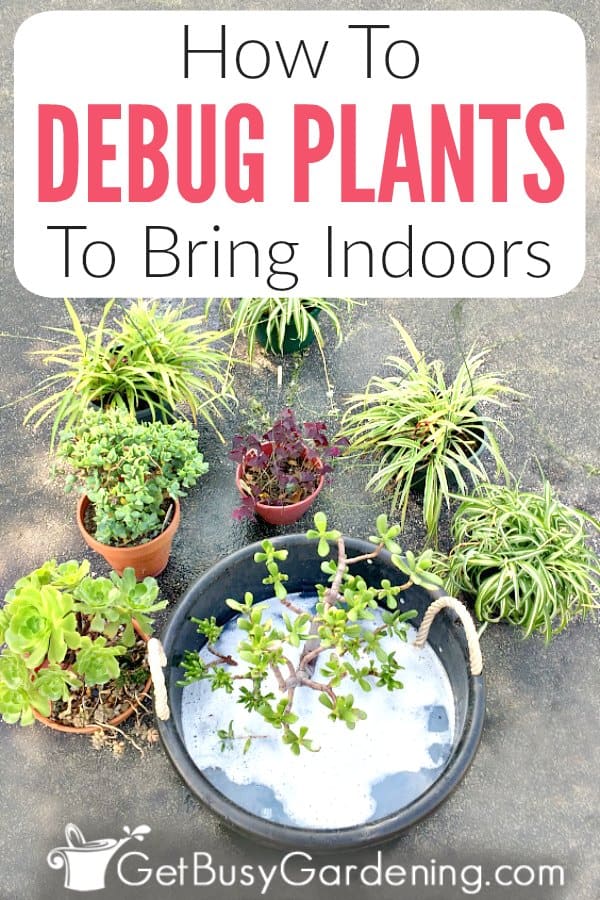
- Soak the Plants: Submerge each plant—pot and all—in the soapy water for 15-20 minutes. The soap kills bugs on the plant and in the soil. Weigh down any floating pots with bricks or rocks.
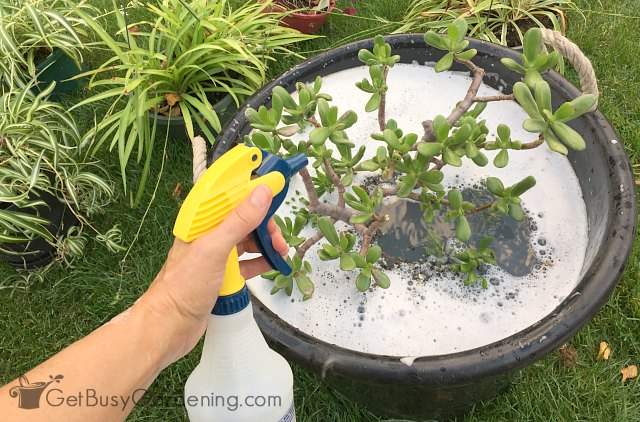
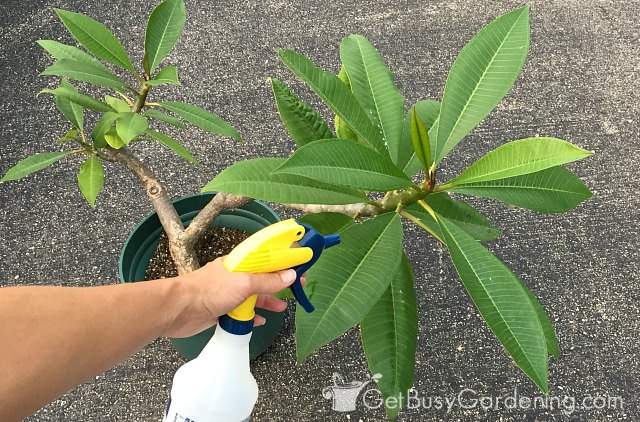
- Clean Any Exposed Leaves: Clean the leaves that aren’t submerged – If any of the leaves aren’t completely covered by the water, use an organic insecticidal soap to clean them. Or you can use my recipe, which is 1 teaspoon of mild liquid soap per 1 liter of water in a spray bottle.
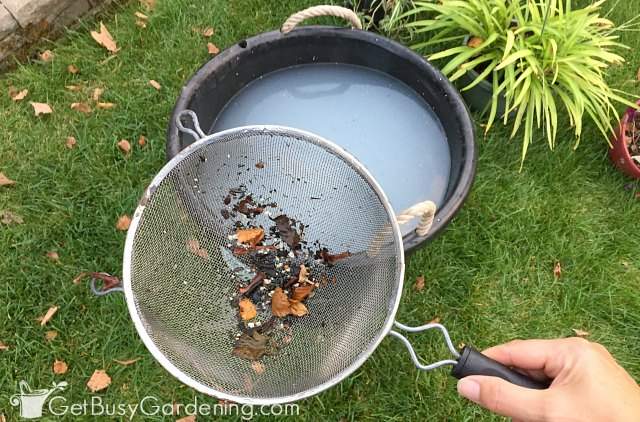
- Remove Debris: Skim any dead leaves, bugs, or debris from the water using a kitchen strainer before pulling out the plants.
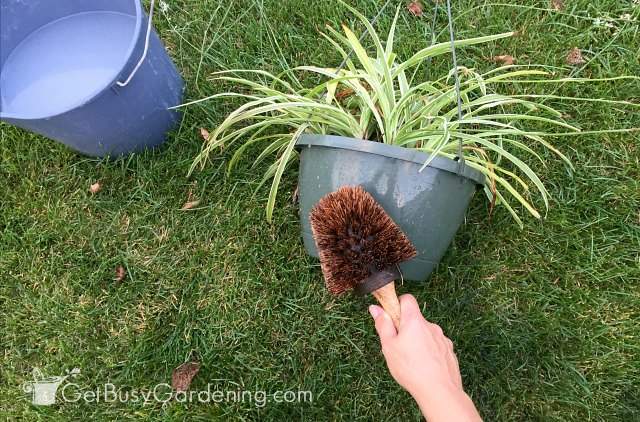
- Scrub the Pots: After soaking, scrub each pot clean with a brush.
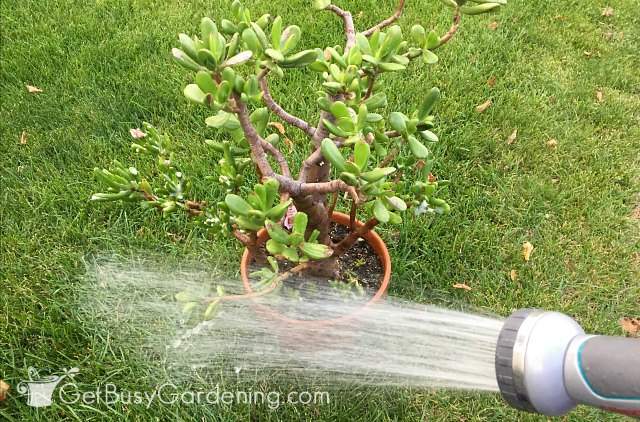
- Rinse Thoroughly: Use a hose to rinse the plants and pots to remove any remaining soap and debris.
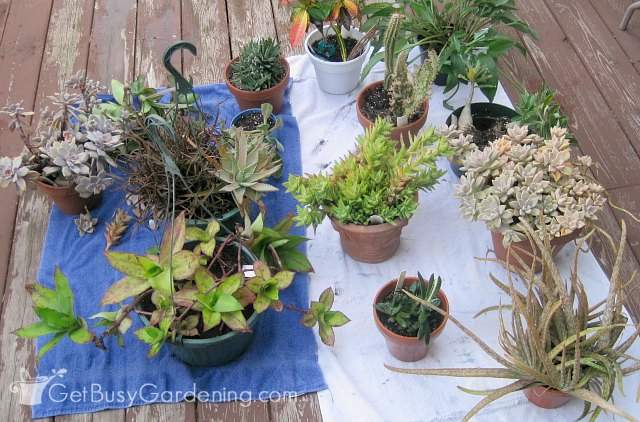
- Drain the Water: Allow the excess water to drain completely from the pots before bringing the plants indoors.
- Repeat as Needed: Continue the process until all your plants are debugged. Top off the water in the tub as needed and remove debris between batches.
- Move Plants Indoors: Once drained, bring your clean plants back inside and let the soil dry out before watering again.
Debugging Large Plants To Bring Indoors
Soaking houseplants in soapy water is great for small to medium sized potted plants, but I have several that are too large for this method. So, instead I use a modified version…
I wash the plant leaves and the stem of the entire plant with soapy water (using the same mild liquid soap I use for soaking plants), and then rinse it off thoroughly using the garden hose.
Once the leaves are clean, I spray the whole plant with neem oil and let it dry before I move it back inside.
NOTE: some houseplants are more sensitive than others, so be sure to test any type of spray on a few leaves before spraying the whole plant.
Amy’s Tip #2! 👩🏼🌾
If any of your plants are root-bound, repot them after debugging, before bringing them indoors. This keeps the mess outside and gives the plants room to grow.
3 To-Do’s AFTER Bringing Outdoor Plants Inside
- Increase Humidity: Many houseplants thrive in higher humidity. Use a portable humidifier indoors to maintain a humidity level around 50%, mimicking the plant’s outdoor environment.
- Inspect Regularly: Keep an eye out for pests after moving your plants inside. Early detection makes it easier to manage any outbreaks.
- Quarantine New Plants: If you’re bringing in new plants from outside or from a store, keep them isolated from your other houseplants for a few weeks to prevent spreading any hidden pests.
Benefits of Soaking Your Plants in Soapy Water
- Soaking gives your plants a thorough watering, so you don’t need to worry about it right away after bringing them inside.
- The process removes dead leaves and debris, leaving your plants looking fresh and clean.
- Your pots and plants will be sparkling clean, adding to the satisfaction of having healthy indoor plants.
Related Post: Fall Houseplant Care Guide
Amy’s Tip #3! 👩🏼🌾
For large plants that are difficult to submerge, use a modified approach: Once clean, spray the entire plant with neem oil to deter pests (test a small area first to check for sensitivity). Wash the leaves and stems with soapy water, then rinse thoroughly with a garden hose.
Debugging FAQs
What do I spray on plants before bringing them indoors?
You can spray your plants with a neem oil solution, or use an organic insecticidal soap to clean the leaves. I highly recommend testing any type of spray on a few leaves before treating the whole plant to make sure it won’t cause any damage.
Will your debugging method kill bugs and eggs in houseplant soil?
Yes, using my method to soak your plants in soapy water should kill any bugs or eggs that are living in the soil too. Sometimes there can be air pockets in the soil where they can survive though. So if you’re concerned, then soak them a little longer. Also, gently tap the pot after it has finished bubbling to try to release any trapped air.
How do you debug plants that are in pots without drainage holes?
To debug plants that are in pots without drainage holes you can wash the leaves with soapy water or insecticidal soap and rinse them off well after. Then spray the leaves with neem oil.
My method of soaking houseplants in soapy water works great for most types of plants, and will help to make sure you bring your outdoor plants inside without bugs. Trust me, starting the long winter off with clean and insect-free houseplants will make your life SO MUCH easier.

If you’re looking for more help for how to keep bugs off plants, my Houseplant Pest Control eBook is an essential guide to help you debug your houseplants for good. Download your copy today!
More Posts About Houseplant Pest Control
- Where Do Houseplant Pests Come From?
- How To Use Neem Oil Insecticide On Plants
- How To Get Rid Of Bugs On Your Houseplants
- Fungus Gnats vs Fruit Flies: What’s The Difference?
- How To Keep Cats Out Of Houseplants
How do you debug plants before bringing them in for the winter? Share your tips in the comments section below.


Debbie Hayes says
How does anyone deal with the awful smell of the insecticide? I used it on the plants and they are drying out so they are not soaked before I bring them is. The smell from the container I mixed it in is smelling up my basement.
Amy Andrychowicz says
Skip the chemical pesticides. They are toxic to your family and pets, and they linger for a long time. Plus the bad bugs can build up a resistance to them. I highly recommend switching to using organic products on your plants. Neem oil is amazing, and works better in the long run than any chemical pesticides. It does have a strong smell, but I leave my plants outside for a few hours after spraying them, and the smell goes away.
Kathy J says
I do this every year. In a previous comment you mentioned to not use Dawn dish soap but that’s what I’ve been using – blue (think it’s original) – & have seen no problems. I have left over bread trays from my husband’s route that I turn over. I put my potted plants on these trays to drain. The holes allow complete drainage. I use a bucket for smaller plants & plastic kiddie pools for larger plants. After everything is dry, sometimes I sprinkle food grade diatomaceous earth on the soil of each pot before bringing in.
Amy Andrychowicz says
Awesome, so glad to hear that this method of debugging your houseplants before bringing them back inside works so well for you. Thanks for sharing your tips! I need to get some of those bread trays. 😉
A detergent like Dawn may work well for the types of plants that you have, but it is still important to be sure to test each plant before soaking it in water containing heavy detergent soaps. Some plants are more sensitive than others (and I’ve killed a few using the wrong type of soap). It’s better to be safe than sorry.
Carolyn Lockhart says
After soaking my plants and letting them drain, how do you get them to dry out so the roots won’t rot.
Amy Andrychowicz says
After moving my plants back indoors, I don’t water them again until they need it. I’ve never had a problem with the roots rotting on any of my plants. Just make sure the pots have drainage holes and good drainage.
cara says
i have alittle over 30 potted plants outside, i don’t have a green house to store them in during winter, what type of set up do you recommend for all these plants during the winter months?
Amy Andrychowicz says
I just bring mine inside the house and put them in different rooms for decoration. I have a small indoor greenhouse that I also use to store plants that need extra humidity. It really depends on the types of plants you have.
Michelle says
Very very, informative thank you. Question do you just use a big bucket or can I put them in bath tub? As you can guess no experience with this process or houseplants. Michelle
Amy Andrychowicz says
I use a big bucket, but a storage bin or something like that would work too. I wouldn’t do it in the bathtub because there will be dirt, leaves, dead bugs…etc in the water after you’re done soaking the plants, and you don’t want all that going down the drain.
Sherry says
Hi Amy, I’m about to use your debugging method on bringing houseplants inside for the winter. Is it OK to use Dr. Brothers pure Castile soap with lavender in it or will this hurt the plants?
Amy Andrychowicz says
I would recommend using the Baby Mild instead of the lavender. The Dr. Bronner’s scented soaps are still organic, but they contain essential oils and I’m not sure how the essential oils could affect certain plants.
Janice Mattingly says
Have had great luck this summer with NZ impatiens and begonias and would like to try overwintering. I have a cool, south-facing room in which to keep them. They’re in 10″ hanging pots outside now, quite full and still flowering in Cleveland,OH. Several questions: the immersion method of debugging seems that it would drown the roots as I don’t believe they would ever drain so any other options other than replacing all the dirt; how much should they be pruned back and when(they’ll be shocked enough coming inside); will removing the top 2″ of soil from my 8′ grapefruit tree remove all the bugs that may have invaded the pots over the summer (can’t submerge it and I hate earwigs!)Thanks for your help!
Amy Andrychowicz says
If you have them in a pot that has drainage holes, the dirt should dry out just fine. I have never tried overwintering impatiens before, so I can’t speak from experience… but I would bring them in and wait to see how well they do inside. You’re right, they will probably go through some shock. I would give them a few weeks to adjust, and then trim the back if they look like they need it.
As for the begonia, if they are tuberous begonias, I let them go dormant during the winter and overwinter them in my basement. They tend to want to go dormant anyway, and for me it’s easier to overwinter them that way. Here’s how to overwinter tuberous begonias. Otherwise, I would do the same thing with them as I suggested with the impatiens.
And for the large tree, you can also wash the leaves with soapy water and rinse them with the hose before bringing it inside. I also use neem oil on my large plants if they tend to struggle with pest issues.
Hope this helps!
Jen says
Hi. Great article! I have a pink powder puff plant that has a ton of gnats in the soil. It is an outdoor plant. If I soak the entire plant before transplanting, will the plant be shocked because the roots have no dirt on them at all because of the soaking? Thank you
Amy Andrychowicz says
I think it would be fine if you soaked it when it’s bare root and then potting it up right after. The key for getting rid of soil gnats is allowing the top 1″ of soil to dry out. Soil gnats thrive in wet soil. Here’s more info about about how to control soil gnats.
Jen says
Thank you very much for the speedy reply. I am actually going to be transplanting today. I will give an update when done. ??
Shannon says
Hi! Great article! Hope you can help me out as I need to do this fairly soon. I have a fairy garden in an old wagon with English tears and other ground covering plants. I want to debug and replant them in smaller containers indoors for the winter. Can I just remove each plant one by one and submerge without the container, and then replant it in the smaller terrarium type bowls? Or will I lose all the dirt that way? Do you think it would work? Please advise! Thank you.
Amy Andrychowicz says
I think that would work just fine. You will probably lose some of the dirt, but I don’t think that would be a problem.
Julie says
I’ve never thought to do this but now you explain it seems like such a “doh!” moment. Of course bugs will come in with the plants, this is so simple and quite brilliant – thank you.
Kristie says
Do spiders and spider eggs come in on house plants/trees?
Amy Andrychowicz says
Yes, they sure can.
Kristie says
I have trees that are potted they are too big to soak what can I do?
Amy Andrychowicz says
I use a spray bottle filled with soapy water to spray the leaves. Then I’ll gently wash them, and then hose the plant off. You can also spray them with Neem oil if you’ve had pest issues on those plants in the past (or if pests show up after you bring them inside).
Liron Z says
Hi, can I use this method to debug potted plants just for the debugging?
Sounds like a good method even if you don’t need to move them inside.
Amy Andrychowicz says
Yes, for sure!
Martha says
I understand how to de-bug my potted plants before taking them indoors. My question is how do I make sure there are no bugs or bug eggs in the soil in the flower pot?
Amy Andrychowicz says
This method should kill the eggs too (the soap kills bugs and eggs). But, there could still be some eggs that survive in the soil (especially soil gnat eggs). If you have issues, you could remove the top 1-2 inches of soil and replace it with fresh, sterile potting soil. That will remove the eggs. Just be sure to throw the old soil outside or in the garbage bin (not in a garage can in your house).
Randy says
Will this method work for mealy bugs?
Amy Andrychowicz says
The soapy water will kill many of the bugs on the plant, but may not get rid of all of them completely if you have a heavy infestation. After soaking your plants as described above, I recommend using neem oil treatments to be sure that the bugs are completely gone. Here’s how to get rid of mealybugs for good, and here’s a post I wrote about using neem oil on houseplants.
Deb says
I live way out in the country, can I use Johnson’s baby shampoo instead. I only have Dawn dish soap around the house. Thank you, this is a wonderful article.
Amy Andrychowicz says
I have never bought that brand before, but it sounds like it would work since it’s gentle and made for babies too. Test it out on a few leaves first like I mention in the post. Definitely don’t use the Dawn soap.
Sharon says
I have used Dawn dish. Detergent in the past and it worked fine on house plants but never did any fuzzy leaves.
Amy Andrychowicz says
As I said, some plants are more sensitive than others, so it’s always best to test any type of soap you use on a few leaves before using it on the whole plant.
Tom Sikorski says
Please do not use Dawn or any other harsh soaps ,They are phytotoxic to the plants.they can actually strip away the cuticle of the plant which is it’s protective layer, opening it up to disease and pest damage. There are plenty of safe horticultural soaps available formulated for just this purpose.
krisit says
They use dawn to clean animals covered in oil – dawn has never hurt any of my plants.
Amy Andrychowicz says
Some plants are more sensitive than others. 🙂
Tom Sikorski says
But the thing people do not realize is that animals can regenerate the “protective layer of natural oil that protects them when they preen themselves. Plants cannot do that . The Dawn actually is phtytoxic to the plants and can strip away the cuticle which like your own skin , protects against bacteria, diseases and pests. Thing of how you would feel if you used a product that removed your protective layer of skin?
Jen Y says
It looks like you used this method for sedums as well? I have quite a few that I bring in.
I assume this cannot be done for African violets? I keep them on my screened porch through the summer – they thrive there.
Amy Andrychowicz says
Yes, I do this with all of my succulents plants. You’re correct, you don’t want to use this method for African violets, they don’t like it when their leaves get wet.
Jen Y says
Thank you!
Amy Andrychowicz says
You’re welcome! 🙂
V. Boutin says
If you do this on African violets, they should recover nicely as long as you don’t put them in direct sunlight while the leaves are wet. It’s the combo of wet leaves and sunlight that damages them
Amy Andrychowicz says
Great, thanks for the tip.