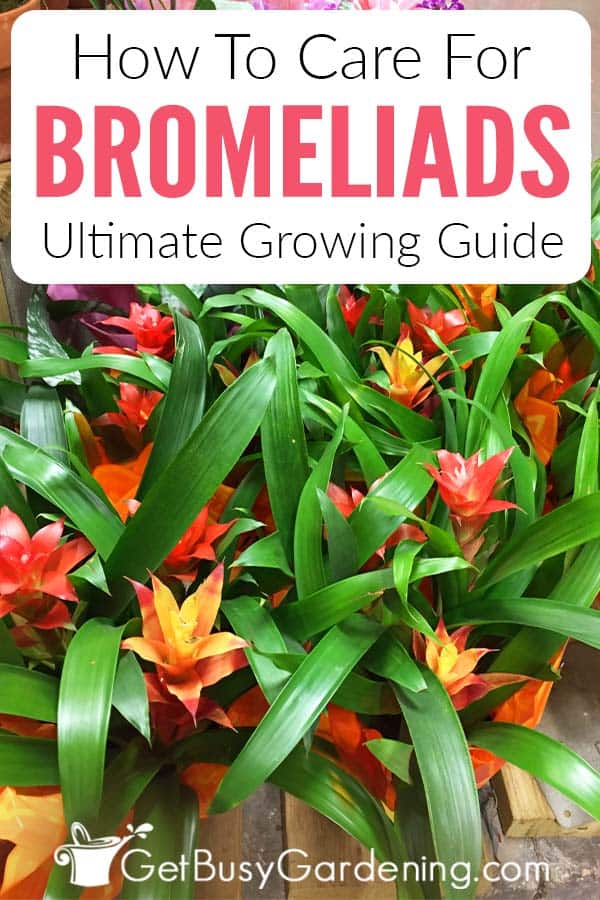
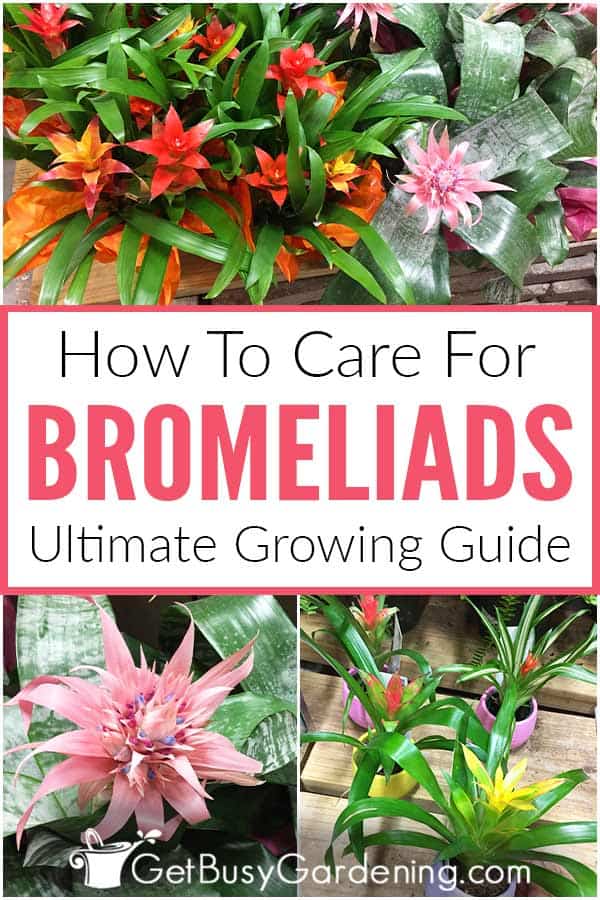
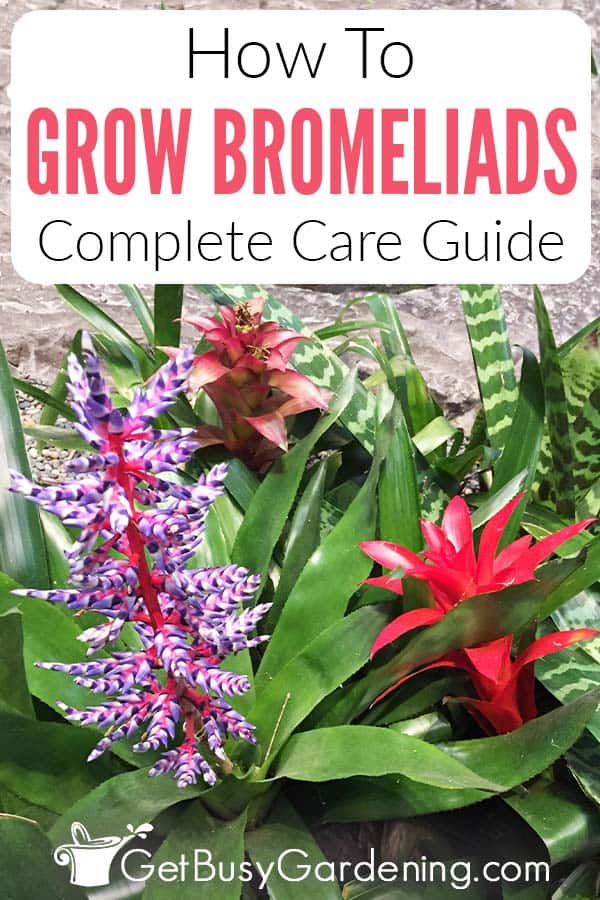
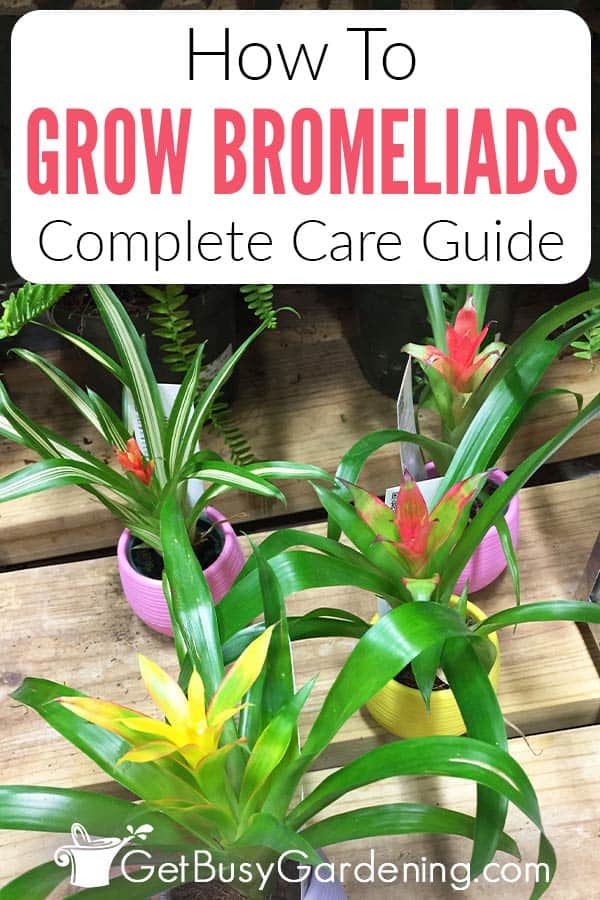
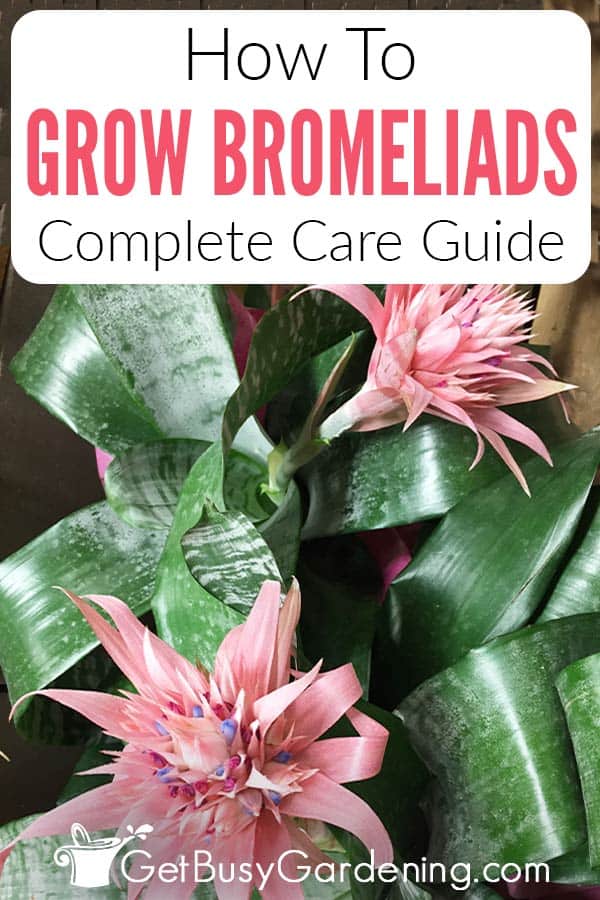
Bromeliads aren’t difficult to care for, but it’s quite different from other types of plants. Once you understand what they need, you’ll easily be able to keep yours thriving.
In this post I’ll show you everything you need to know to be successful. From watering and humidity, to soil, light, flowering, pruning, fertilizing, pest control, and much more, you’ll find it all right here.
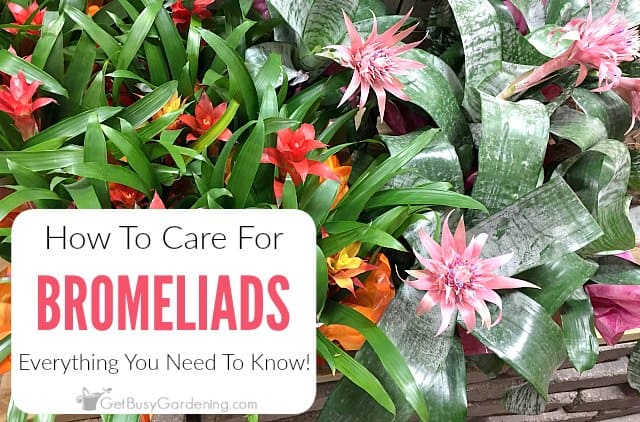

Information About Bromeliads
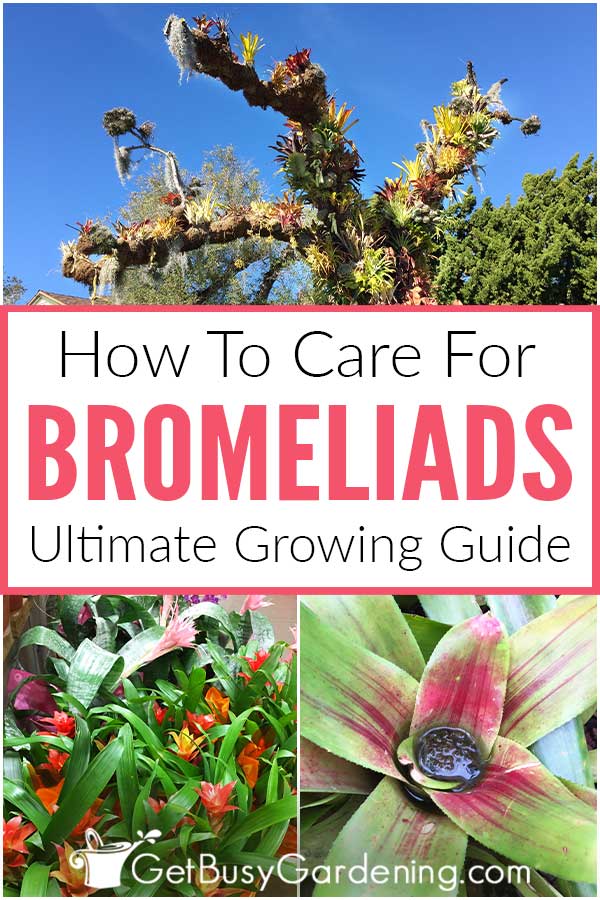
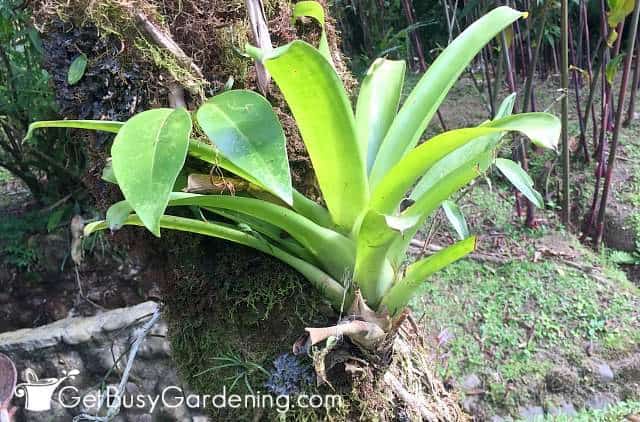
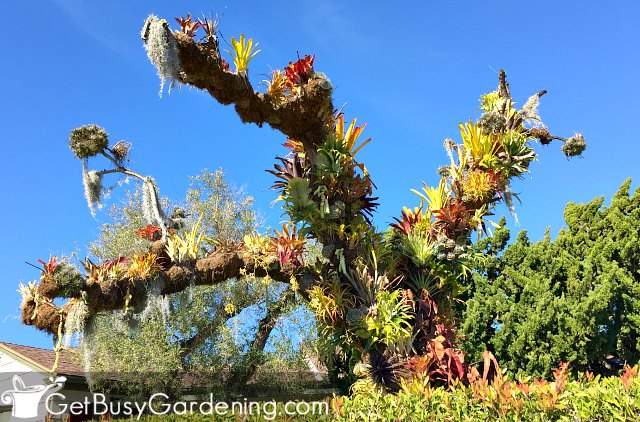
Like orchids and staghorn ferns, most types of bromeliads are epiphytes. That means they grow on trees, rocks or other plants in nature, and they get most of their water and nutrients from the air rather than the soil.
Some can be difficult to grow as houseplants, because they like humidity and can dry out too quickly in the average home (especially during the dry winter months).
They are slow growing plants, and most of them will only bloom once in their lives because they die after flowering.
Sad I know, but they usually have lots of babies before they die, so you’ll get even more plants out of the deal (but more on that later).
Flowers
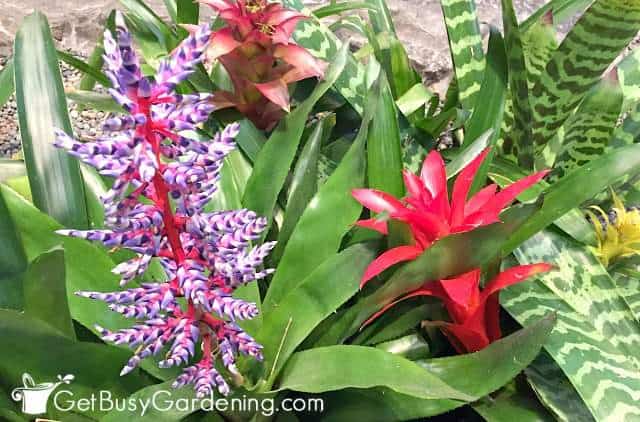
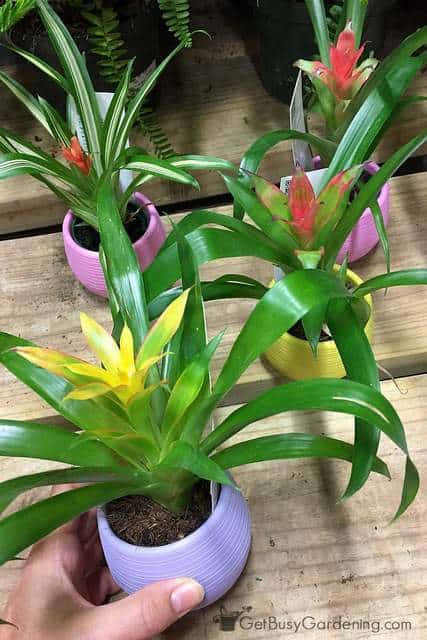
Many people think that the large colorful growth that makes bromeliads so popular is the flower, which is a common misconception. That is actually the bract, and not the flower.
The flowers grow out of the colorful bracts. Some are large spikes, and others are tiny and insignificant. Learn all about bromeliad flowers here, including when, how often, and how long they bloom.
Where To Grow Bromeliads
If you’re lucky enough to live in a tropical climate where it never get below freezing, then you can grow bromeliads outside in your garden.
Otherwise they make wonderful flowering houseplants, and are also pet friendly plants that are safe to grow if you have cats or dogs. Woohoo!
Bromeliad Plant Care Guide
If you’re new to growing these tropical beauties, you’ll find that bromeliad care is much different than any other plant you probably have.
Since they absorb nutrients and water through their leaves, you’ll need to take special care in watering, feeding, and potting them.
Proper Watering
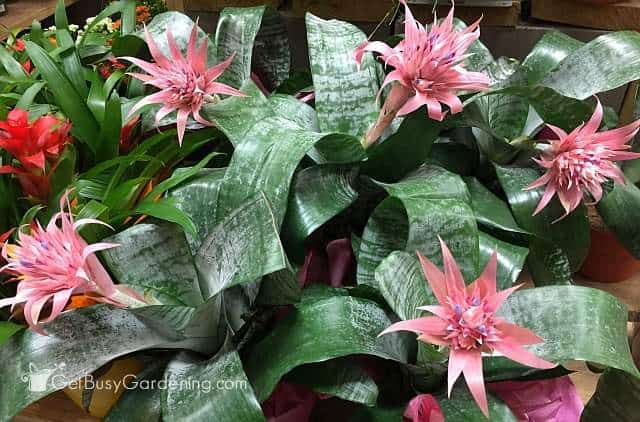
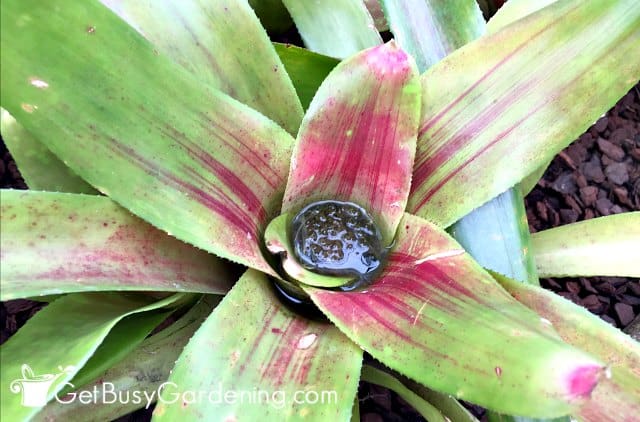
One thing that’s different about bromeliad plant care is that you don’t water them via the soil. Instead you should keep their center cup filled, and the growing medium on the dry side.
Indoors, dump out the central vase and refresh it every week or so to keep it from going stagnant. Outdoors, you can flush it regularly to keep it clean, if necessary.
Also, be careful about the type you use, because they are very sensitive to the chemicals in regular tap water. Rainwater, distilled, or filtered are the best. Learn more about exactly how to water bromeliads here for the best success.
Humidity Requirements
Bromeliads like humid air, so they do best in tropical climates. If you live in an arid region, then you should put misters around them.
Indoors you should mist your plant on a regular basis if your home is dry. Or try putting it in a room that’s naturally more humid, like a bathroom or in the kitchen close to the sink.
You could also run a humidifier during the winter to help keep the humidity level consistent in the room. An indoor humidity monitor is handy to help you give your plant the perfect amount.
Light
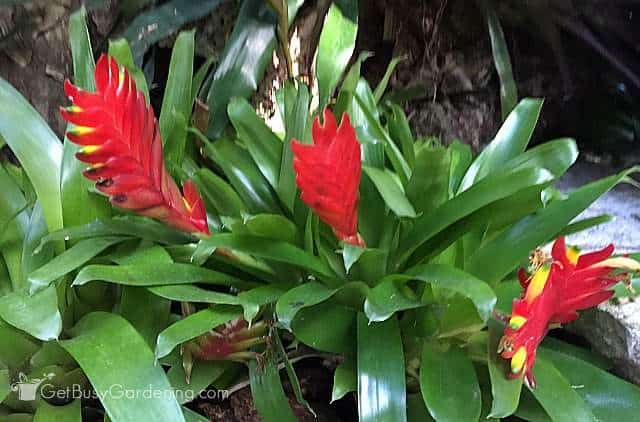
When it comes to sunshine, bromeliads aren’t super fussy, and they make great low light indoor plants. But direct sunlight can burn the leaves, and they’ll grow leggy if it’s too dark.
For best results, put yours in a spot that gets medium to bright, indirect light. A small grow light helps a ton indoors if you don’t have any sunny windows.
Soil
Technically speaking, bromeliads don’t need soil at all. They don’t get their moisture and nutrients from the soil, they use their roots to attach themselves onto trees, plants, or rocks in the wild.
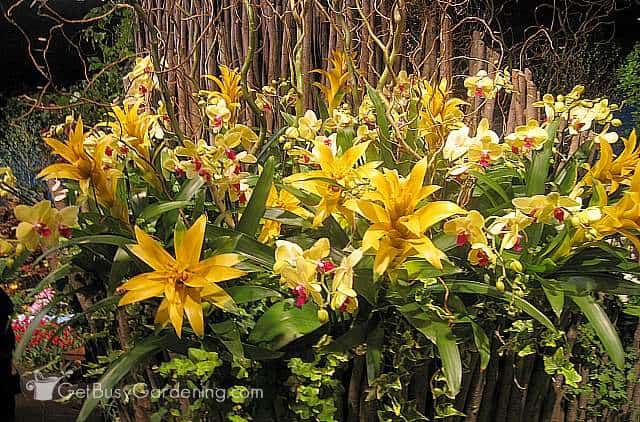
You can mount yours on a log, wood, or a board, or plant it in a container. If you prefer to grow yours in a pot, you can buy a soil mix that’s specifically made for them, or use an orchid medium.
Otherwise, you can make your own soilless medium my mixing sphagnum moss, bark, perlite and/or other coarse organic materials.
Fertilizer
Bromeliads aren’t heavy feeders, so you don’t need to fertilize the regularly. But, like any plant, they will benefit from the added nutrients – just make sure to feed them sparingly.
Also, it’s important that you always use a natural, organic brand. They are very sensitive to synthetic chemicals, which can easily burn them.
If you’d like to give yours a boost, use a half strength liquid fertilizer or compost tea during the spring and summer months.
Pest Control Tips
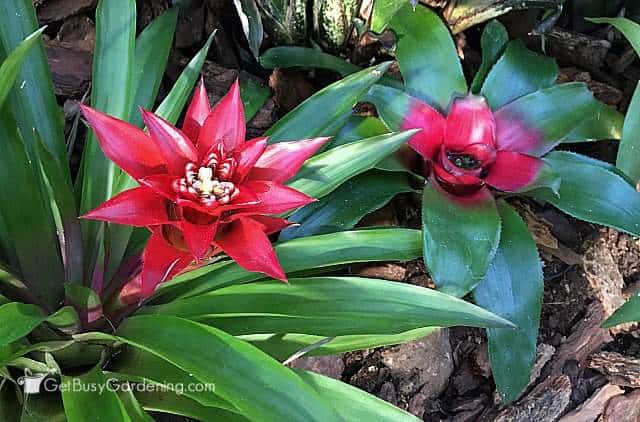
While they don’t usually have much trouble with bugs, sometimes houseplant scale or mealybugs can become a problem. So keep an eye out for these pests during your regular bromeliad care routine.
If you find any, don’t use chemical pesticides. I recommend neem oil, which is a natural insecticide, or an organic insecticidal soap to treat them. Always test any product on a leaf before spraying the whole plant.
Pruning
For the most part, you don’t need to worry about pruning your bromeliad plants. You can trim off dead or dying leaves at any time.
Cut off the flower bract after it dies back, but keep the plant growing as long as you can. Once it dies back completely, you can prune it out.
Tips For Propagating Bromeliad Plants
Like I mentioned above, most bromeliads will eventually fade and die after they’re done flowering. This is a sad fact of life.
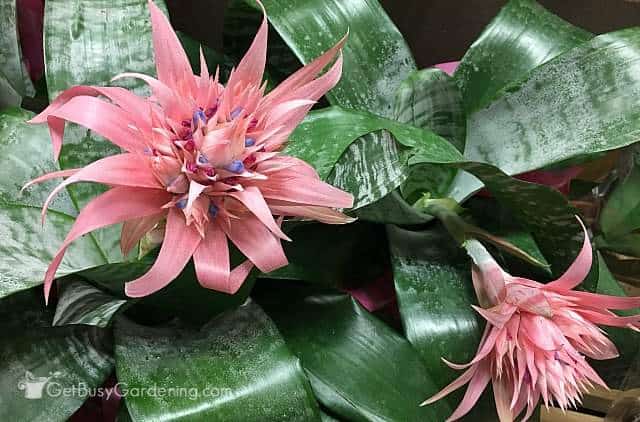
But the good news is that they usually have lots of babies before they die. As they come to the end of their life, tiny pups will grow around the base of the main plant.
You can remove these pups once they’re mature enough, or just allow them to grow after the mother plant has died back. Get the full step by step tutorial for how to propagate bromeliads here.
Troubleshooting Common Problems
There’s nothing worse than watching your bromeliad plant die, and you have no idea what’s wrong with it. So in this section, I’ll list some of the most common problems, and give you tips to fix them.
Flower turning brown, or the color is fading
Once the flower bract starts to turn brown or the color fades, it’s a sign that the plant is done blooming and is starting to die, which is a normal part of their life cycle.
Unfortunately, there’s nothing you can do to save the plant once it starts dying. But, don’t toss it out! Keep it growing as long as possible so baby pups have time to form and mature.
Leaves Turning Yellow
When the leaves start turning yellow, it means that your plant may be getting too much or not enough light, or because of improper watering.
Keep it out of the direct sun, and water it by filling the center cup, rather than moistening the soil.
Brown Leaves
The leaves may start to look dry and crispy due to a lack of water or sunburn. They will also start turning brown as the plant naturally dies back after flowering.
Ensure it’s getting the right amount of light and moisture. If it just finished flowering, then prune the brown leaves off as they die back, but keep the green ones growing as long as possible to encourage pups to form.
Bromeliads are fun to grow, and it’s not that difficult to care for them. Now that you know all about what they need to thrive, you’ll get the hang of it in no time!

If you want to learn all there is to know about maintaining healthy indoor plants, then you need my Houseplant Care eBook. It will show you everything you need to know about how to keep every plant in your home thriving. Download your copy now!
More Posts About Growing Houseplants
- Rabbit’s Foot Fern Care: How To Grow “Davallia fejeensis”
- How To Care For Rubber Plants
- Complete Tropical Houseplant Care Guide
Do you have any bromeliad plant care tips to add to this list? Please share them in the comments section below.

Shanta says
My outdoor bromeliad had green slime towards the base of the plant. Should I wash those out ?
Amy Andrychowicz says
Usually when the base of bromeliads becomes slimy, it means they are starting to die back. But if yours is still healthy and thriving, then I wouldn’t worry about it. But yes, you certainly could try cleaning it off, as long as you can do it without damaging your plant.
Anna says
Hello. I have a pink blossoming bromeliad with one older mother shoot and three large healthy pups attached. The mother shoot seems to have gotten some rot in the center (I just read not to water the cup if it’s a houseplant). Should I trim the mother plant out? If so, can I just saw it gently off near the base? Thank you for your help!
Amy Andrychowicz says
The mother plant will start to rot sometime after it’s done flowering, and it will eventually die – it’s not because you’re watering the center cup. Now that it has pups you can prune out the dead/dying section at any time. I just cut them out using a sharp pair of precision pruners. But you can use whatever method works for you, as long as you can do it without damaging the pups. Just cut all of the dead/dying leaves down to the base.
Lucy says
I just bought my first bromeliad for a piece of driftwood that I’ve been having for years. The nursery had it potted so I just stuck it mud and all into the hole in the driftwood. Should I remove as much of the mud as I can and just place the roots down into the driftwood or do I leave it alone? It’s has a beautiful red bract with tiny white flowers and I love the look of it! Thank you for this great information so I don’t panic when it finishes flowering and the mother starts to die.
Amy Andrychowicz says
I would definitely remove the mud and replace it with sphagnum moss instead. You want bromeliad roots to have a very loose and airy medium, as using something thick and heavy could cause them to rot.
Heather says
Hello-I’ve had my bromeliad for at least 10yrs. It is still green, never has flowered again, & I didn’t get any pups. I just keep watering her, I can’t stand to throw plants out. 🤷♀️ Any ideas? Thank you!
Amy Andrychowicz says
I would try giving your bromeliad more light and feeding it with a half-strength organic liquid fertilizer. Some varieties need a lot of light a warmth to flower and produce pups.
Beth Williamson says
What if the green leaves and some of the brachts are turning brown>
Amy Andrychowicz says
When the leaves and bracts start turning brown, it means your bromeliad is beginning to fade and will eventually die. It can take anywhere from a few weeks to several months for them to die completely. So leave it in the pot until the entire thing is completely brown, because babies might start to form around the base and keep growing. You can prune off the brown tips and leaves as they die to keep it looking presentable if you want. 🙂
Teresa Harrison says
Will Bromeliads survive the cold weather in the winter time outside of planted?
Amy Andrychowicz says
It depends on where you live and the hardiness of the type of bromeliad you have. Most are only hardy in the warmest zones of 10 or higher, but I believe there are a couple that can survive down to zone 8b. If you live somewhere colder than that, you’ll need to bring them indoors for the winter.
Sheryl Teasley says
Are bromeliads a succulent? I bought succulent, cactus plant food because red color is fading, will it help?
Amy Andrychowicz says
No, bromeliads are epiphytes, not succulents. The red color is probably fading because they die after they flower. That is their normal life cycle, and you can’t save them. But wait for it to die completely before you give up, because they usually grow new babies around the base, which will take over once the mother plant dies.
María says
Hola gracias muy buena información, gracias por compartir estos consejos muy esencial para el cuidado de estás plantas tan lindas, pero muy especiales para ver su desarrollo, yo tengo una de hace 5 años, efectivamente solo floreció una sola vez, y hoy solo tiene escasamente 3 hojas y una que se hace del rogar para crecer, yo amo mi planta porque aparte de ser hermosa me la regaló mi hijo por mi cumpleaños , ¿ Que puedo hacer para que desarrolle, la tengo en maceta de arcilla?
Amy Andrychowicz says
Unfortunately bromeliads die after they are done flowering. They only bloom once, and then the main plant dies, that is their normal lifecycle. The only way to keep it growing is to look for babies (aka: pups) around the base of the dying mother plant. If you find some, you can either cut back the dead part of the plant, and leave the pups to grow. Or you can remove the pups and pot them up on their own. Good luck!
NANCY j STEWARD says
How do you take the pups out without hurting them or the plant??
Amy Andrychowicz says
Remove your bromeliad from the pot, and then gently tease apart the roots to remove the pups. Make sure the ones you plan to remove are mature enough, and have their own roots, otherwise they may not survive.
Kathy Falls says
Thank you so much for all the info! I had no idea. When I first got mine it was blooming and about ten inches. I lived in upper Michigan but moved to souther Alsbama. I repotted it and three more stalks grew, it got so big I put it in a big pot. Now all the stalks are about two feet tall, and one just bloomed. I keep it on our open covered front porch, it is very humid, muggy, warm here. We are not far from the Gulf. I noticed one or maybe two shoots coming out of the dirt, I might try to replant those. I always water into the centers and in the leaves, guess I was doing it right! I am having so much fun with it . . .I will check out your FB page.
Amy Andrychowicz says
Wonderful! Sounds like you found the perfect spot for your bromeliad and that you’re doing everything right. Congrats, it sounds like so much fun! 🙂
Jean Mackley says
My daughter gave me a bromeliad aechmea for mothers day. It had quite a lot of little black flies on it, I kept taking it outside and gently brushed them off. Is there anything I can do so they do not come back. The flower is starting to die off now and there is three new pups growing. I had been watering them through the soil so do not know how it has survived this long. Thank-you for all the information on this site.
Amy Andrychowicz says
Those black flies are probably fungus gnats, and it is because you’ve been keeping the soil too moist. To get rid of them, simply stop watering the soil, and pour it into the center cup of your bromeliad instead. Keep the soil dry, and the bugs should go away.
Mary Hilsman says
I am new to bromeliad and was always intimated to try them. This gives me confidence. I live inFlorida and want to try them on the lanai which has proper temp and humidity.
Thanks for this information, so helpful. One questionI have is if I wanted to see if I could get it to attach to something, how would I do that.?
Amy Andrychowicz says
You’re welcome! You should have no problem growing bromeliads in FL. 🙂 To mount your plant, you can attach the roots to a log or a sphagnum moss pole using something like florist wire or garden ties.
John Taffee says
I have a bromeliad plant given to me by a friend many years ago. It bloomed twice since I got and it was maybe two years between blooms. It looked root bound so I repotted it in a much larger pot. I used regular dirt from outside. I think I purified it by baking. After about two years it bloomed, one or two flowers on one spike. The “flowers” are a brilliant orange. That was in the October, November 2019 time frame.
This past February it sent up a new spike. On this spike were many flowers pointing in all directions. It was a knock out beauty. I just trimmed off the dead and dying leaves. I had been watering the roots and when I repotted it I put an a light application of 10-10-10 fertilizer. I just did not know better.
I will now water only the leaves. I can’t really see any watering cups. I was thinking of dumping out the whole plant and pulling off the many pups and putting them in separate pots. After reading wonderful article on bromeliads I am thinking of leaving the whole plant as is and letting it do want nature would directs it to do.
What do you think?
I would like to send you a pictures of the plant, one with the two blooms and one with the many blooms. Is this possible? It is different from all of the website pictures that I see.
Amy Andrychowicz says
You can remove and pot up the pups if you want, that’s really up to you. Bromeliads do just fine being pot-bound, since they don’t use the soil for their roots, so no worries there. However, if they are extremely overcrowded and crawling out of the pot, then you can put them into a bigger one.
There are many different varieties of bromeliads, and I don’t have pictures of each one. So yours may very well look different than the ones in my photos. You can share your photos on my Facebook page if you’d like.
Frances says
My brother is Ray Coleman and he was known for his Bromeliads he’s no longer with us he grew a large amount outside as will in the green house but under oaks my question is where I live we get a rainy season and I have them under oaks banked I know you water them inside? But to much water should I pull them up? And put them in pots until it’s over
Amy Andrychowicz says
As long as your bromeliads are mounted and not planting in potting soil, then the rainy season shouldn’t hurt them at all. They are tropical plants that come from rainy regions of the world, so it sounds to me like you may just live in the perfect climate for them! 🙂