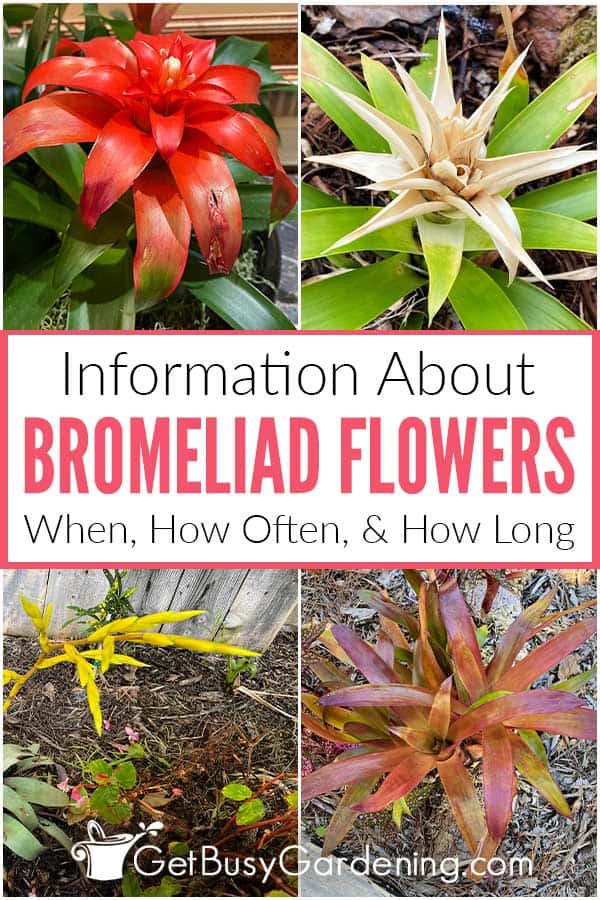
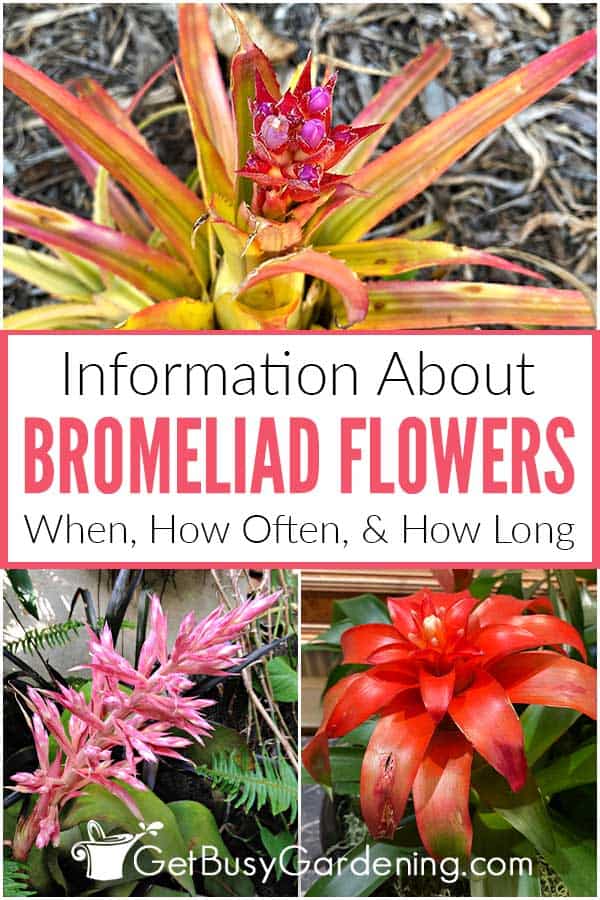
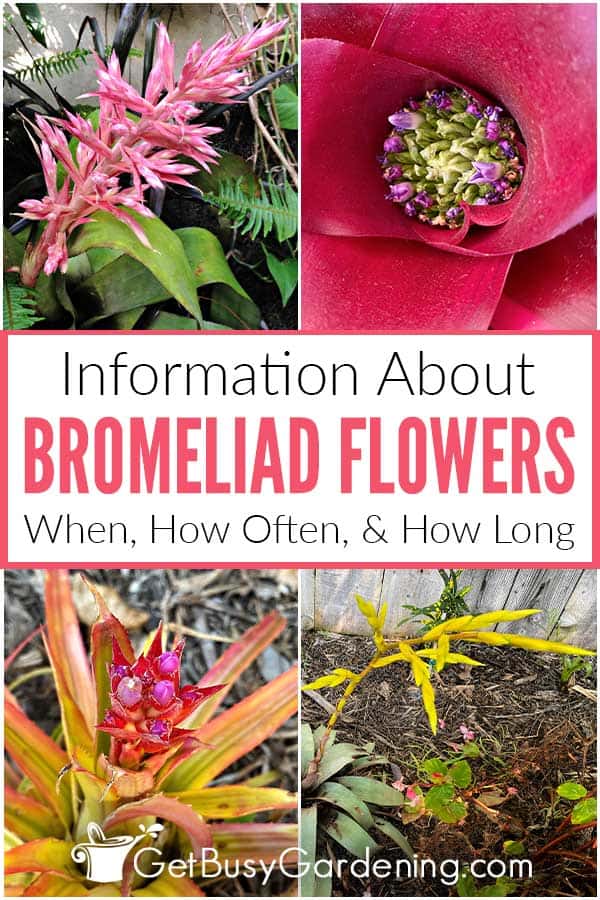
Bromeliads are popular for their striking bloom spikes and colorful bracts and flowers.
To get the most enjoyment possible out of your plant, it’s important to understand when, how long, and how often bromeliads flower, and what to do after the blooms fade.
In this post, you’ll learn everything you need to know about bromeliad flowers, including the stages of growth, how to care for them, and what to do with your plant once it’s done blooming.
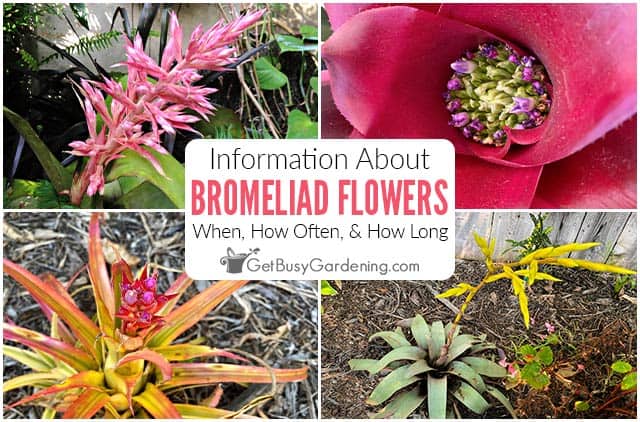

Information About Bromeliad Flowers
Bromeliads are popular for their brilliantly colored bracts that many people assume are the flowers.
So it might surprise you to learn that these are not blooms at all. Instead, they are leafy structures from which the flowers will grow.
The actual flowers can vary quite a bit in shape, size, and color from one variety to another.
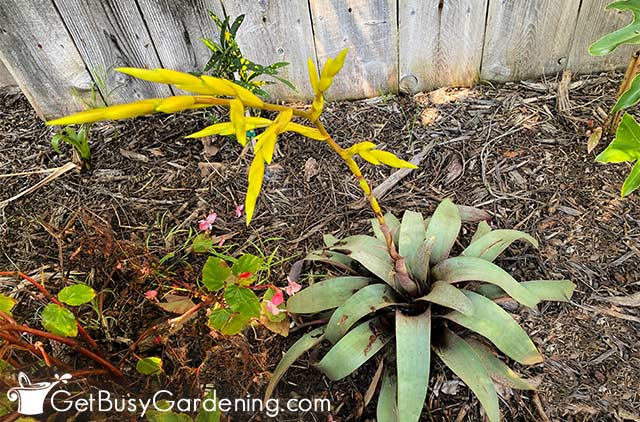
Some bromeliad plants produce tiny, insignificant flowers, whereas others may develop stunning, elongated stalks or spikes.
Sadly, a bromeliad will only bloom once in its lifetime, after which the plant will start to die. But the good news is that it usually produces offsets or pups before it dies.
Related Post: How To Propagate Bromeliad Pups
Bromeliad Bloom Stages
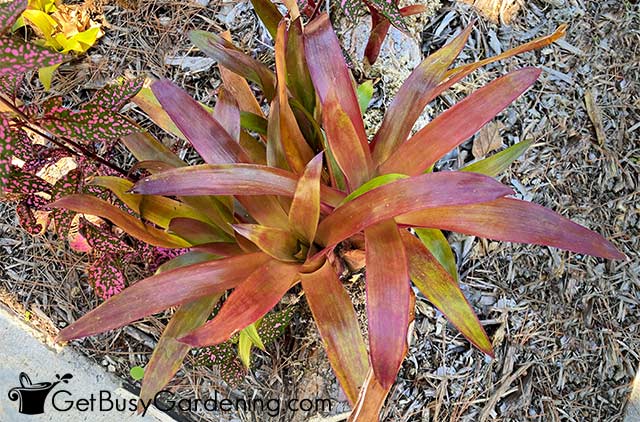
When a bromeliad is preparing to bloom, many times its foliage will begin to change shape or color. The leaves can develop a reddish tint and the rosettes may become more dense.
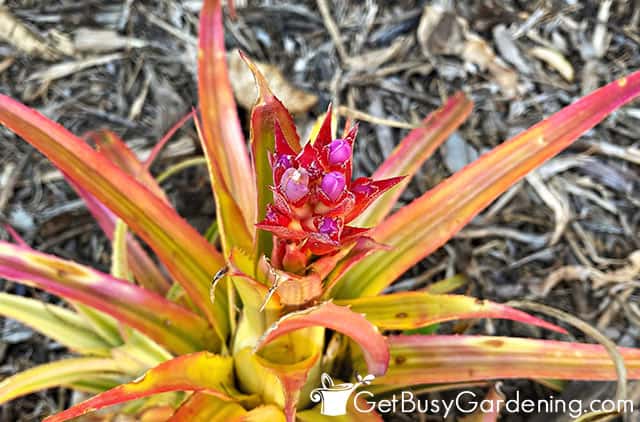
The next stage is quite exciting, when – depending on the variety – colorful leaves will begin to develop from the center of the rosette.
This is the bract, out of which the flowers will eventually form once the plant is in full bloom, which can last several weeks.
As the flowers begin to fade, the plant will produce pups (also called offsets) which will feed from the parent until they are large enough to survive on their own.
Over time, these offsets will develop into mature bromeliad plants, and the blooming process will begin once again.
Bromeliad Flower Colors
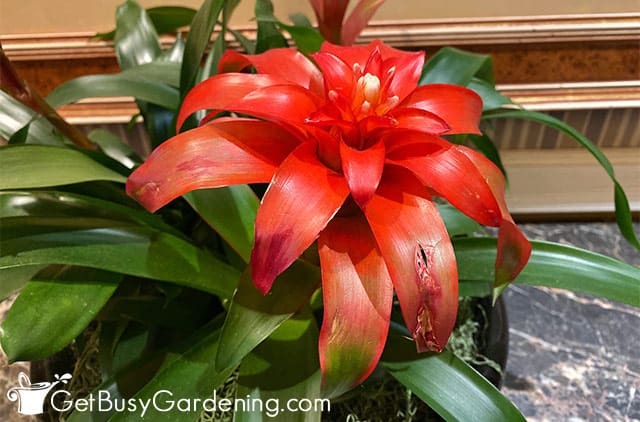
Bromeliad flowers come in an array of vibrant colors, ranging from reds, purples, and pinks, to shades of white, orange, or yellow.
The specific color of the blooms varies depending on which variety of bromeliad you have.
Do All Bromeliads Flower?
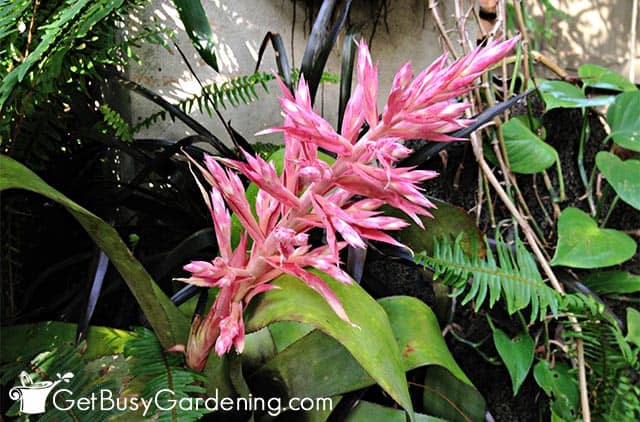
All bromeliads have the potential to produce blooms, but the flowers on some are less impressive than others.
Guzmania, aechmea, and Flaming Sword (vriesea) are a few of the most popular and stunning flowering varieties.
Those produce colorful spikes or bracts, and will develop small but brightly colored blossoms.
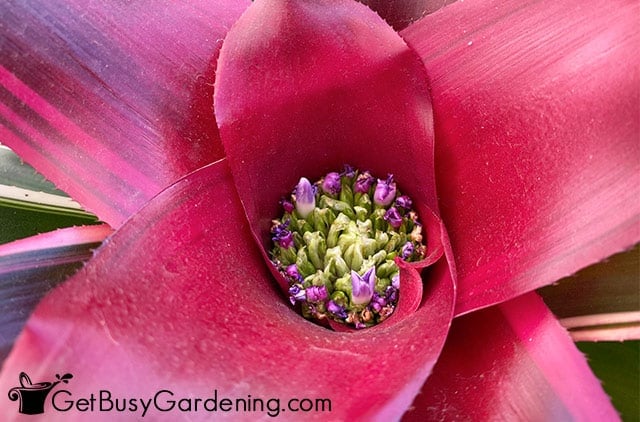
Neoregelia, on the other hand, are best known for their foliage rather than their blooms, which form inside of the center cup and are quite small and insignificant.
When Do Bromeliads Bloom/Flower
Bromeliads flower when they reach maturity, which can vary from one species to another. The bloom time also depends on the growing conditions and the care they receive.
Some types have flowering seasons, whereas others respond to environmental prompts, such as warm temperatures, high humidity levels, and plenty of bright indirect light.
How Often Do Bromeliads Bloom?
A bromeliad plant will only flower once in its lifetime. When it’s done blooming, the plant will slowly begin to die, and it cannot be saved.
Unfortunately this is a normal part of their life cycle, but the plant usually produces several babies around the base before it dies.
This means that you can look forward to more bromeliad blooms in the future.
How Long Do Bromeliads Bloom?
While some bromeliads will only bloom for a few weeks, others can flower for several months or more, depending on the type you have.
The variety isn’t the only factor affecting how long they will flower. You can help them bloom longer by providing your bromeliad the proper care and environment.
How Long Do Bromeliad Flowers Last?
How long the individual bromeliad flowers will last tends to be shorter than the overall blooming period. Some will fade within a day or two, while others can last for a few weeks.
But new flowers may open as others fade, so the plant will continue to look attractive until it stops blooming altogether.
Bromeliad Flower Care Tips
While bromeliads need a temperature of around 68°F (20°C) to flower, I recommend keeping it slightly lower once they are blooming, if you can.
Otherwise you can treat them exactly as you would at any other time, by making sure they receive plenty of bright light and humidity.
Ideally, keep them in a place that mimics their warm, moist tropical habitat, such as a bathroom or near the kitchen sink.
Use distilled or rainwater to fill the plant’s center cup, and refresh it once a week to keep it from going stagnant.
Related Post: How To Water Bromeliads
How To Keep Bromeliads Blooming Longer
While you can’t prevent your bromeliad plant from dying after it’s done flowering, there are a few things you can do to keep them blooming for as long as possible.
- Ensure that your plant doesn’t receive too much heat during blooming, the ideal range is 60-65°F (15.5-18.3°C).
- Avoid placing it in direct sunlight, as this can cause the flowers to fade more rapidly.
- Deadhead any blossoms that are fading so the plant can direct all its energy into producing new blooms.
- Finally, be careful not to overwater during this time, and fertilize very sparingly.
How To Make Bromeliads Flower
There are a few things you can do to help to encourage your bromeliads to flower. They need the right combination of light, humidity, and warmth.
Keep in mind that they won’t bloom until they are mature, which may take several years for some varieties, even in the perfect conditions.
- Light – Bromeliads need plenty of bright light to flower. If it’s too dark or shady they may only produce a few flowers or none at all.
- Humidity – Ensure the humidity level is high – ideally between 40% and 60%. If in doubt, use a hygrometer to check.
- Warmth – Keep your plant in a warm place that stays around 68°F (20°C). Cold temperatures can delay or prevent flowering.
Try Forcing It
If you’re still not having any luck, you can try forcing your bromeliad to bloom by exposing it to the natural ethylene gas that apples release as they ripen.
Simply place a mature, healthy plant in a plastic bag along with a ripe apple, and seal the bag with a knot.
Leave your it in the bag with the apple for 7 to 10 days, then remove the plant and place it in a warm and sunny location.
Why Won’t My Bromeliad Bloom?
There are several reasons why your bromeliad might not bloom. One possibility is that the plant may not be mature enough. Patience is key, and you may need to wait a few years for a new baby to flower.
Alternatively, it may not be getting enough light, heat, or humidity. They need bright light, warmth, and lots of moisture in the air.
You should also check that it is getting sufficient airflow and ensure that your plants aren’t too close together.
Finally, be sure that you’re using the right type of fertilizer. Too much nitrogen can prevent bromeliads from flowering.
What To Do With A Bromeliad After It Blooms
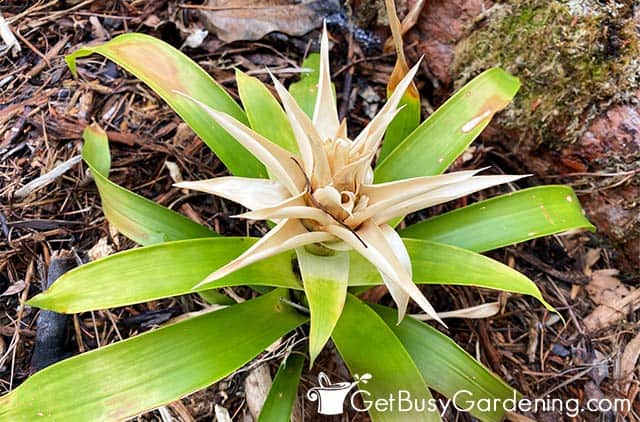
Once your bromeliad is done flowering it’s important to remove the faded bloom spike so the plant can direct all of its energy into producing offsets.
Although the parent plant will slowly begin to fade and die off at this point, continue to water it with distilled or rainwater using the central vase.
Once it’s completely faded and dried, you can prune out the main plant and leave the pups.
How To Get A Bromeliad To Rebloom
Unfortunately, you can’t rebloom a bromeliad plant because it will die after it has flowered. Instead, you’ll have to wait for the pups to flower in the future.
It may take several years for them to get large enough, but they will be exact replicas of the parent plant and allow you to enjoy the blooms for many years to come.
FAQs
Here are my answers to the most commonly asked questions about bromeliad flowers. If you don’t see yours listed, please ask in the comments below.
Do bromeliads only flower once?
Yes, bromeliads only flower once in their lifetime, because the plants die after they have bloomed. But they do produce babies which will flower when they’re mature.
Will bromeliads bloom indoors?
Yes, bromeliads will bloom indoors as long as they are mature enough and the conditions are right. Keep them in a warm, humid part of your home where they’ll get plenty of bright light. A sunny bathroom or kitchen is a great spot.
Will bromeliad pups bloom?
Yes, bromeliad pups will bloom, but they need to be mature enough to do so. Depending on the variety, it will usually take between 1-3 years.
Do bromeliads rebloom?
No, bromeliads do not rebloom because the plants begin to slowly die once they have flowered. The only way to enjoy their blooms again is to wait for their pups to flower in the future.
Should I cut off a dying bromeliad flower?
You should cut off a dying bromeliad flower so that the plant can divert its resources into producing new blooms and babies. Once the bract itself begins to turn brown, you can cut it back and continue to remove dying sections of the plant to give the offset plenty of time to grow.

If you want to learn all there is to know about maintaining healthy indoor plants, then you need my Houseplant Care eBook. It will show you everything you need to know about how to keep every plant in your home thriving. Download your copy now!
More About Houseplant Care
Share your tips or information about bromeliad flowers in the comments section below.

Leave a Reply