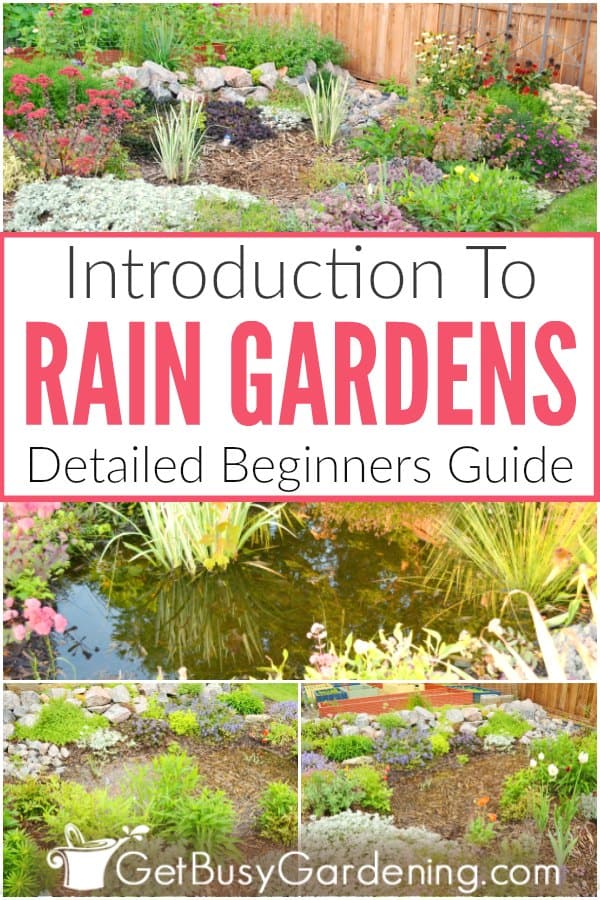
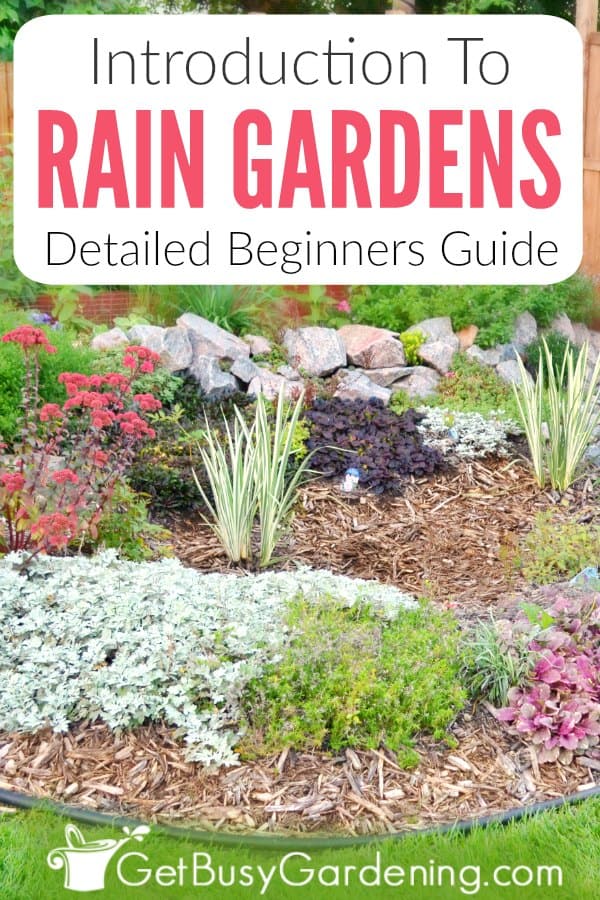
Rain gardens are a great way to control damaging runoff in your yard. While the main purpose is to capture and filter rainwater, they are beautiful too! In this post, you will learn all about rain gardens, including the purpose and benefits, how they work, and tips for creating your own.
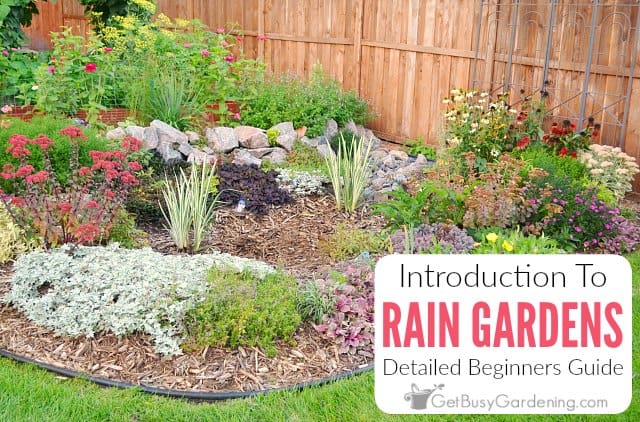

Have you ever considered creating a rain garden? Or for that matter, wondered what one is? Unlike a water garden, a rain garden captures, directs, and filters stormwater runoff as it flows through your yard.
This protects the valuable topsoil from erosion, but also offers great environmental benefits for local waterways by filtering out debris and pollutants.
Ultimately, it’s all about capturing and directing the water where you want it to flow, for the most benefit, and the least damage.
In this guide you’ll get a detailed introduction to rain gardens, so you can decide if having one is right for your yard!
What Is A Rain Garden?
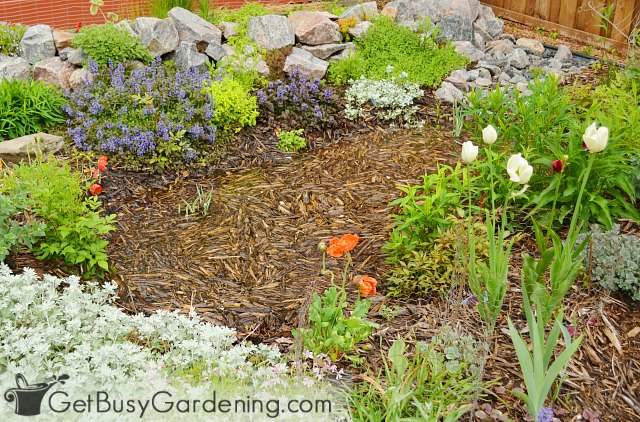
Unlike a regular flower garden, rain gardens are designed to capture rainwater runoff. They have a depressed area in the center, called a basin, where water pools, and is later absorbed into the ground.
On the surface, it looks like any other flower garden, but the middle part is lower than the outer edges.
Plants in and around the center depression loosen the soil and utilize some of the water, creating a low maintenance garden.
What’s The Purpose Of A Rain Garden?
The purpose of a rain garden is to slow the flow of rainwater runoff and absorb it into the ground, which naturally filters out debris and pollutants.
They also allow us to control how the water flows through our yards, and prevent problems like pooling and erosion.
Why Is Rainwater Runoff A Bad Thing?
Runoff is a major problem, particularly in urban and suburban areas. Stormwater runs off of our roofs, into our gutters and downspouts, and then out into the street as fast as possible.
Not to mention all the cement and blacktop surfaces, where the water never has a chance to be absorbed into the ground.
Along the way, this fast-moving water picks up all kinds of debris and pollutants, and carries them along into the storm drains.
In Minnesota, we have many beautiful lakes and rivers. All of the runoff from the storm drains are dumped straight into the local waterways.
Directing water into a rain garden prevents it from running off into the streets, taking your soil and mulch with it. It also helps to keep dirt, fertilizers, and yard waste out of our local waterways.
My Story
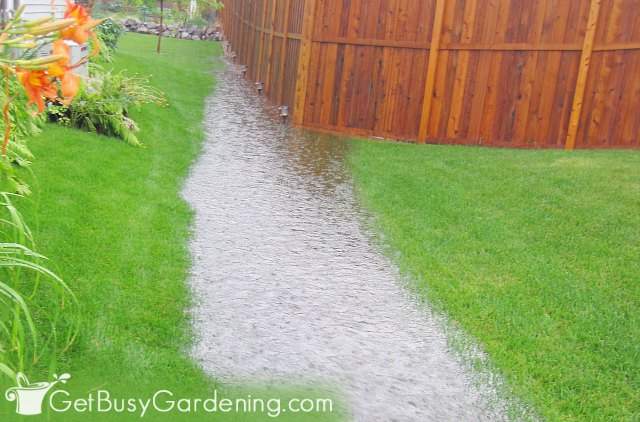
Erosion used to be a huge issue in our yard. Every time we got a heavy rainfall, the water would flow between our houses like raging mini-rivers.
This would cause large areas of mulch and dirt in my front gardens to be washed away, causing lots of (expensive!) work to rebuild.
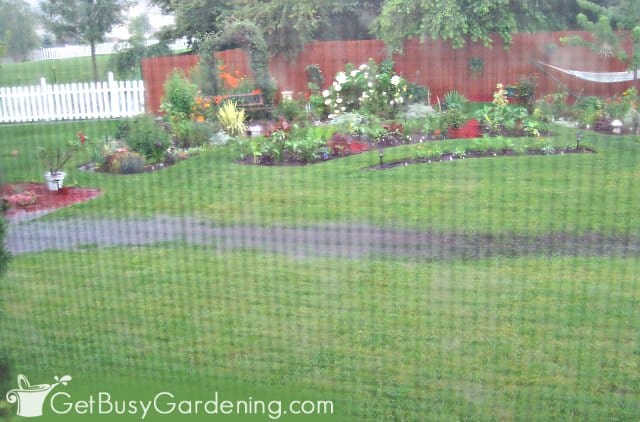
Plus, the middle of our backyard turned into a swampy mess of standing water during storms. Adding a rain garden to the spot where the most water comes into our property has been a game-changer!
It has worked wonders to prevent a swampy backyard, slow down the mini-rivers, and keep the runoff from taking my mulch and soil along with it.
How Do Rain Gardens Work?
Water is directed into the center of the rain garden, and soaks into the soil rather than running off into the streets. So it catches the runoff, and also slows it down, preventing erosion.
Excess water drains away in a convenient direction, allowing you better control of the flow of water through your yard.
Plus, the plants in the basin are not only beautiful, they server a purpose. Their deep roots loosen the soil, and help the water soak into the ground faster.
Rain Garden Benefits
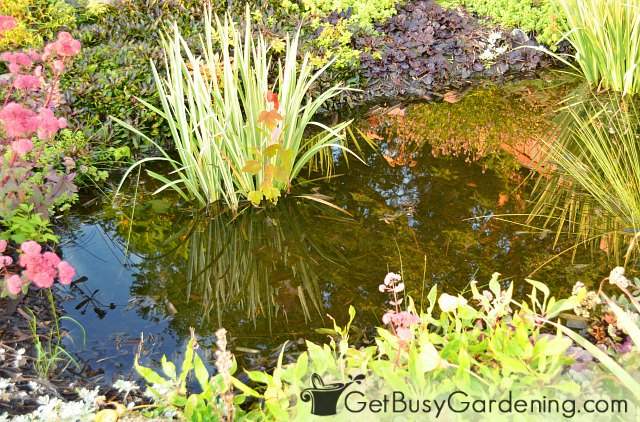
While it may seem like a lot to do, if you have major runoff problems, creating a rain garden will reduce the long-term costs of damage to your property. In addition, there are all kinds of ways that it can improve your local waterways.
Here are all the wonderful benefits of a rain garden:
- Slows stormwater runoff – Which prevents erosion in your yard and neighborhood.
- Improves local water quality – Since water is absorbed into the ground instead of running off into the street, it prevents oil, dirt, and other junk in the road from washing directly into our streams, lakes, and rivers.
- Removes pollutants – The ground is an excellent, natural filtration system. Rainwater is absorbed into the soil, and pollutants are naturally filtered through the ground before they ever reach the waterways.
- Solves drainage problems – Preventing swampy areas and pooling water in your yard.
- Adds beauty to your landscape – Just like any other flower garden!
Related Post: 7 Awesome Benefits Of Rain Barrels
Why Build A Rain Garden
If you’re unsure whether a rain garden is a good choice for your yard, take some time to observe the water during the next heavy rainfall.
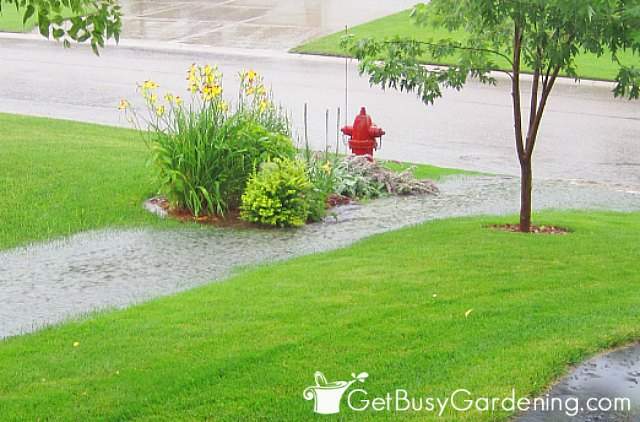
Pay attention to how much drains off your roof, and runs into the streets. During times of heavy rain, our street is turned into a mini-river. The rushing water washes away everything in its path, and causing plenty of backup at the storm drains.
One of the reasons runoff is a particularly huge problem in our yard is because we live downhill from many of our neighbors. You could see the amount of damage and erosion it caused, especially after a major storm.
Not only was it super frustrating to see all that soil and mulch wash away, it was getting costly too. One year I had to replace the eroded part of the front garden area four or five times! That was no fun.
How To Build Your Own
The first important thing to note is that you can’t just put a rain garden anywhere. You have to do a little bit of research and planning to figure out the best location.
You want to put it in a spot where it will capture runoff as it flows through, rather than somewhere that water already pools. There are also several areas to avoid.
So, if you want to put one in your yard, then make sure you take the proper steps so it will work correctly. Once the time comes, you can learn the exact steps for building one here.
Tips For Planting Your Rain Garden
When it comes time for planting, you may find that you’ll end up facing the same challenge as I did. My project was delayed a bit because we had a bunch of rain that year.
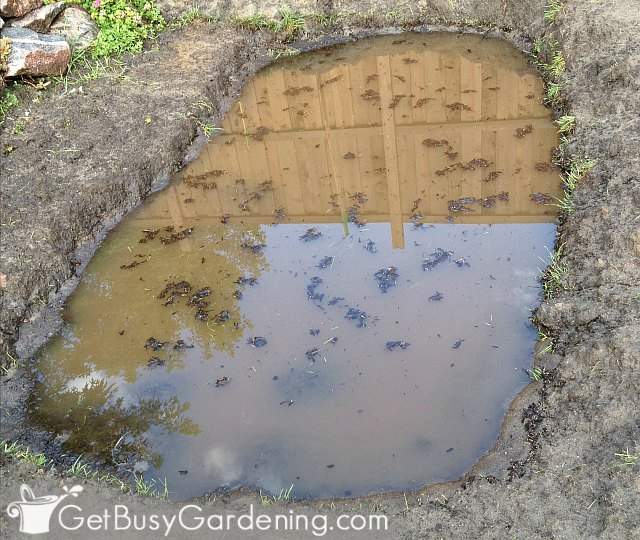
And of course, being a rain garden, the basin kept filling up with water. Well, at least we knew it was working! But all that water made it impossible to plant most of the garden.
If this happens to you too, you can cut a temporary trench in the outlet to allow the water to drain from the basin immediately, without absorbing into the ground.
That way, it will stay dry long enough to get everything planted. After the plants become established, fill in the trench so the basin will be able to capture water again.
Related Post: 29 Rain Garden Plants For Sun Or Shade
Rain Garden Care & Maintenance
You might be wondering what type of maintenance a rain garden requires, or think that it will be hard to care for.
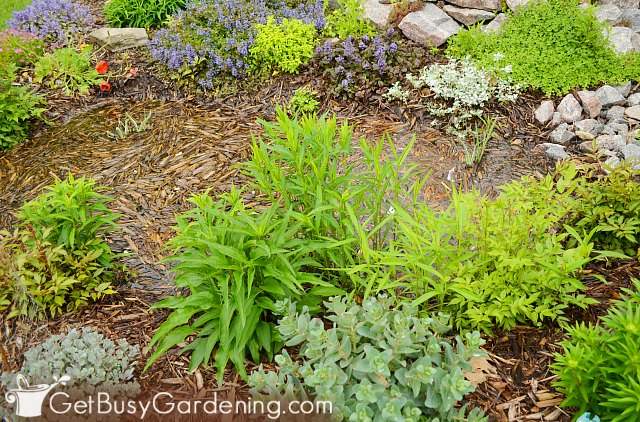
But guess what? Caring for it is basically the same as any other garden area you have. The only thing that’s different is that you won’t be able to walk into the center when it’s full of water.
You’ll also find that you won’t need to worry about watering it very often. In fact, once the plants are established, they won’t need to be watered at all, unless you have a long dry season, or period of extreme drought.
I find that weeding is also less work, because most weeds can’t become established in the center where the water pools. So I rarely need to weed in there.
Most of my weeding is around the outside and top edges. And, as long as you maintain a 3-4″ layer of mulch over the soil, the weeds that do take hold will be much easier to pull.
Rain Garden FAQs
In this section, I will answer some of the most common questions I get about rain gardens. If your question isn’t answered here, please ask it in the comments below.
How much does it cost to put in a rain garden?
The cost of a rain garden varies widely. If you do all the work yourself, it will be much cheaper than paying someone to do it. Also, the larger it is, the more materials and plants you will need to purchase.
To give you an idea, mine is about 150 square feet, and it cost $500. That included everything: compost, mulch, rock, and all the plants I needed to fill it.
Be sure to check with your city, country, or local watershed district to see if they offer any grants. As it turns out, the bulk of mine was paid for by a grant from my city.
Will my rain garden become a breeding ground for mosquitoes?
No! When properly designed, the water in a rain garden will drain within 24-48 hours. It takes mosquitoes much longer than that to mature from egg to adult, so they won’t have time to breed in the temporarily standing water.
Do rain gardens have standing water?
Yes, but only for a short time. They are not meant to be a bog, pond, or water garden that’s permanently filled with water. Any standing water typically drains within 24 hours.
Rain gardens can change the flow of runoff on your property, preventing erosion, and benefiting your local waterways, while still making your yard beautiful. It has made a huge difference in mine. I can see how much of an impact it would make if everyone had a rain garden.
Recommended Books
- Rain Gardens: Sustainable Landscaping for a Beautiful Yard and a Healthy World
- The Blue Thumb Guide to Raingardens
- Rain Gardens For the Pacific Northwest
- Rain Gardening in the South
More About Flower Gardening
- How To Grow Canna Lilies: Complete Care Guide
- How To Grow Zinnias: The Ultimate Guide
- Annuals vs Perennials: What’s The Difference?
- Peonies Care Guide: How To Grow Peony Plants
Do you have a rain garden? Tell us about your experience in the comments below!

Helen Opie says
Does the cached water in a rain garden breed mosquitoes? What do you do to prevent their laying eggs in this water?
Amy Andrychowicz says
No, it should never become a mosquito breeding ground. A rain garden is designed to drain within 24-48 hours, so mosquitoes will not have time to breed in the standing water.
mrsmstweet says
Hi! Is this a hazard to small children? Like is it literally a ‘pool’ of water? Just wondering. I don’t think my town offers rain garden grants but they really do need to think about this type of program. Their runoff and sewers are always an issue! I really like your work!
Amy Andrychowicz says
Great question. Yes, this could be a hazard to small children when the basin is full. My rain garden is designed to drain within 24 hours. Most of the time it’s empty, but it fills up after heavy rains. So, something to be cautious of if you have small children for sure. You should go to your city with a proposal. More and more cities in Minnesota are starting to offer similar programs.
Donna says
Great to see it is working. I have 2 rain gardens as well although one is always full these days due to all our rain and the drainage here and of course the clay. I planted it with native wet loving plants and it is gorgeous. I have had to add mosquito dunks since it will not drain freely due to our heavy clay.
Amy Andrychowicz says
Oh, that’s great that you have two rain gardens! I’m planning my second one right now, and hope to start installation soon. It’s going to be much smaller though. You could try working compost and sand into the basin of your rain garden to help with drainage. Of course, that would be difficult to do if your plants have filled in already. 🙂
Val says
Thanks for showing your rain garden in action.
Thanks, Valerie
Amy Andrychowicz says
You’re welcome! 🙂
vickiwetzel says
When the city put in new sewer and curbs 8 years ago they also put in a rain garden where the water from the street goes into. I believe the watershed district did them.
Amy Andrychowicz says
That is so awesome Viki! I wish my city would have done the manual labor too, I'm jealous. I tell you, our yard is so swampy that I think I could put in a few more rain gardens! I don’t know about you, but I absolutely love mine!
vickiwetzel says
Don't be too jealous I'm still paying for the assessment on my property tax. They don't do anything for free. LOL
Amy Andrychowicz says
LOL! No such thing as a free rain garden, right? 😉
Heather says
Amy, I love your finished rain garden. What an amazing amount of water that you'll be able to capture, how cool!
Amy Andrychowicz says
Yes, I am thrilled that I was able to install this wonderful rain garden in my yard, compliments of the city! 🙂
Scotkat says
Interesting I never really understood how a rain garden worked before. Thanks for the info!
Amy Andrychowicz says
You’re welcome, glad I could help you learn more about rain gardens!
PlantPostings says
Good luck with your rain garden, and I will be checking back to find out how it all works out for you. 🙂
Amy Andrychowicz says
Thank you!
darcie says
I went to one of those blue thumb sessions raingarden session as well, and wasn't sure where to start. I never did start – but I think I'm ready to start. I have one of those rivers running between my house and the neighbors too when it rains! ugh. What to do. What to do!
Amy Andrychowicz says
I know, it can totally be overwhelming. The hardest part is getting started, but I know you can do it. And trust me, you’ll be so happy you did! If you end up putting in a rain garden, I’d love to hear about your experience.