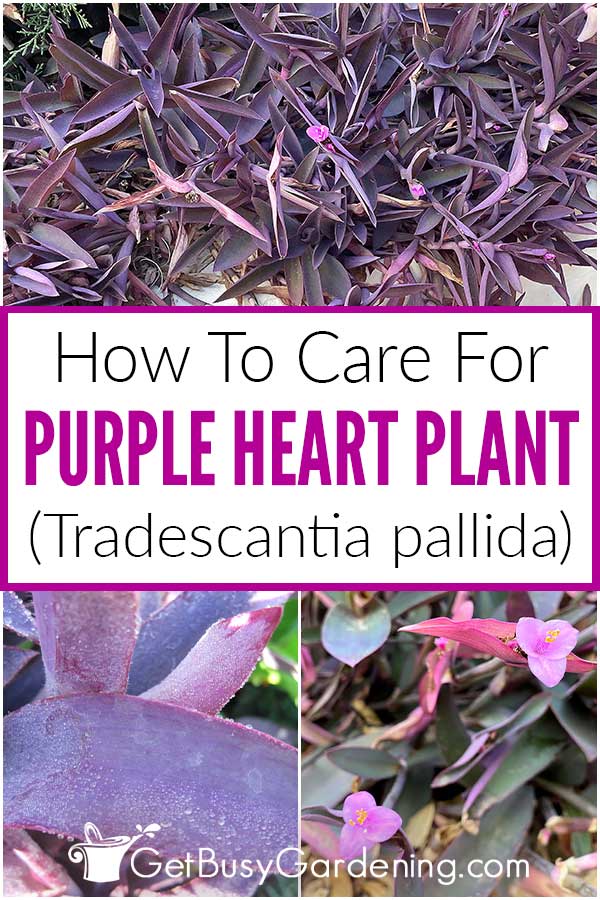

Purple heart plants (aka purple queen) are easy to care for, and can grow both indoors or outside. In this post, I’ll show you all you need to know in order to keep them thriving.
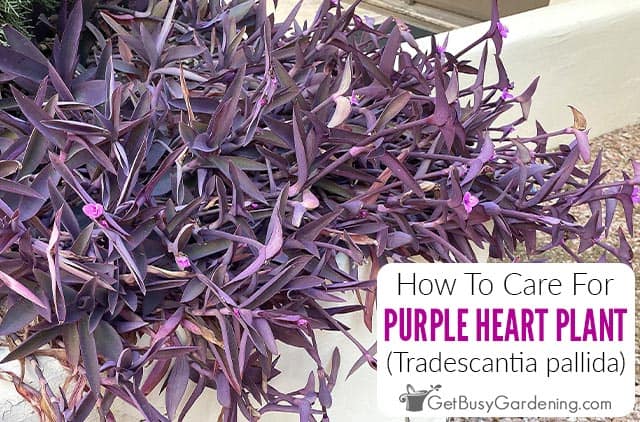

The striking foliage of a purple heart plant makes it a popular choice for landscaping and growing indoors alike.
It’s also easy to care for, making it ideal for beginners wanting to learn how to grow a Tradescantia pallida plant.
In this purple heart plant care guide you’ll learn what it takes to keep the foliage thriving and beautiful.
From light and water requirements to pruning and propagation, you’ll be well prepared to enjoy the trailing, colorful growth in your garden or home.
Purple Heart Plant Care Overview
| Scientific name: | Tradescantia pallida |
| Classification: | Tradescantia |
| Common names: | Purple heart plant, purple queen |
| Hardiness: | Zones 8-11 |
| Temperature: | 60-80°F |
| Flowers: | Pink |
| Light: | Full sun to part shade |
| Water: | Allow soil to dry slightly, do not overwater |
| Humidity: | High to average humidity |
| Fertilizer: | General purpose in spring and summer |
| Soil: | Fast-draining soil |
| Common pests: | Mealybugs, scale, caterpillars, snails |
What Is A Purple Heart Plant
The purple heart, or Tradescantia pallida, is a trailing tropical plant from the spiderwort family, and native to Mexico. It gets its common name from the delicate heart-shaped blossoms.
The other common name is purple queen due to the color that makes up the stems, leaves, and flowers.
The lance-shaped leaves can reach up to 7” long on delicate, thin stems. It’s a spreading plant that will fill up any space it’s given, but rarely grows taller than 1.5’.
Different Types Of Purple Queen Plants
The most common type of Tradescantia pallida is a deep, uniformly purple shade.
But you may also be able to find the much more rare variegated purple heart, which features pink striping along the leaves.
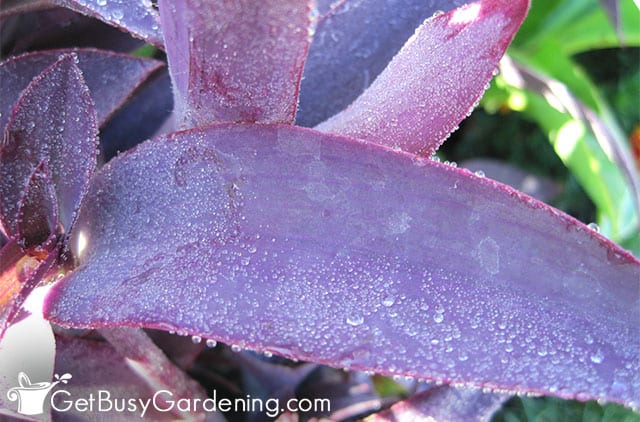
Flowers
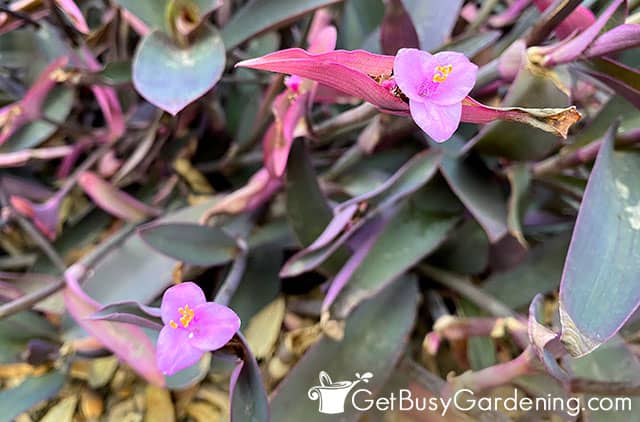
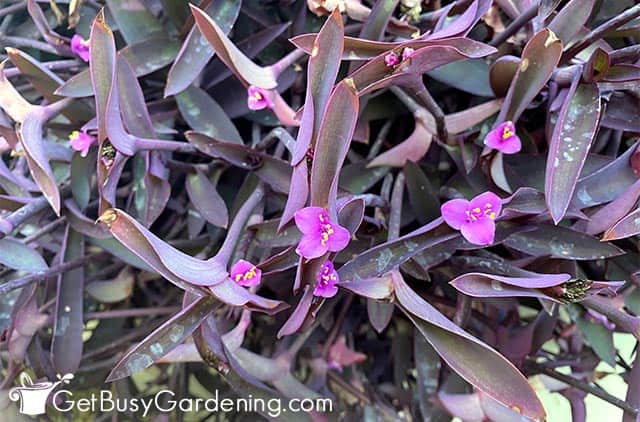
The purple queen plant is most commonly grown for foliage, but it also features pale lavender or pink, three-petaled flowers that bloom in the summer.
The blossoms have no scent, appear at the end of a stem, and are small, rarely exceeding more than 1.5” wide.
Toxicity
Tradescantia pallida is not on the ASPCA’s toxic plant list of plants that are toxic to cats and dogs.
But the University of Wisconsin notes that sap from cut or broken stems can occasionally cause skin irritation for people or pets. You can wear gloves to prevent this.
How To Grow Purple Heart Plant
Before we talk about how to care for a purple heart plant, first we should discuss the best location to grow it. Choosing a good spot is an important step for long-lasting health.
Hardiness
Tradescantia pallida is a perennial in zones 8-11. The foliage won’t survive very long in temperatures colder than 40°F.
But the roots can put out new growth when it warms up in the spring as long as the ground doesn’t freeze.
In colder regions they’re often grown in containers and wintered indoors, or kept exclusively as houseplants.
Where To Grow Purple Queen Plants
The best location to grow purple queen plants is somewhere that will provide lots of sun. The color is more vibrant when given plenty of light.
They can tolerate partial shade, but may begin to turn green or become leggy in dimmer settings.
In warm enough climates they’re used as ground cover, but can also trail over walls, large containers, or hanging baskets. No matter where you grow them, they’ll need good drainage to thrive.
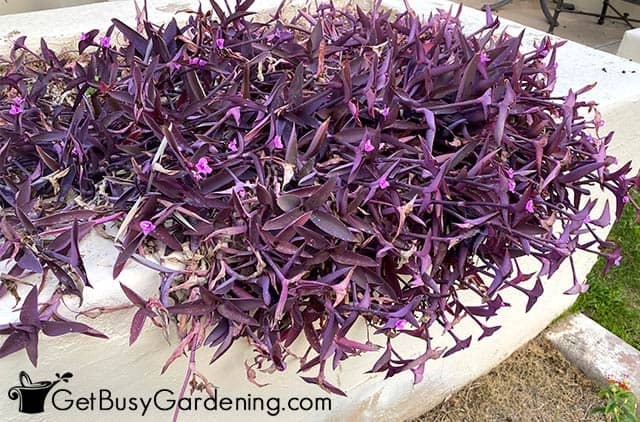
Purple Heart Plant Care & Growing Instructions
Now that you have the ideal place in mind to grow a purple heart plant, let’s talk about their care. Use these tips to keep yours thriving year after year.
Light
In order to maintain the striking color, purple queen plants need a lot of light, which can be the most challenging part of their care.
Ideally you should provide them with full sun for most of the day, though some shade in extremely hot climates can prevent them from burning.
Giving them enough light indoors can be a challenge, even in a sunny window. They’ll do their best with 8+ hours every day. If you notice the color fading or legginess, supplement with a grow light.
Water
Once established, Tradescantia pallida is fairly drought tolerant, but won’t do well in extended periods of dryness.
When the top few inches of soil are dry, water deeply to encourage hardier roots, but avoid making it sodden. An inexpensive moisture gauge will help you get it just right.
In full sun or heat waves they’ll need more frequent watering. In the winter they’ll need much less.
Indoors, keep them evenly moist, and always drain off the excess to avoid overwatering.
Humidity
Humidity is not often an issue outdoors, but if your indoor purple queen plant has limp or brown dried leaves, it may need more.
Set them on a pebble tray or run a small humidifier nearby to increase the humidity in your home.
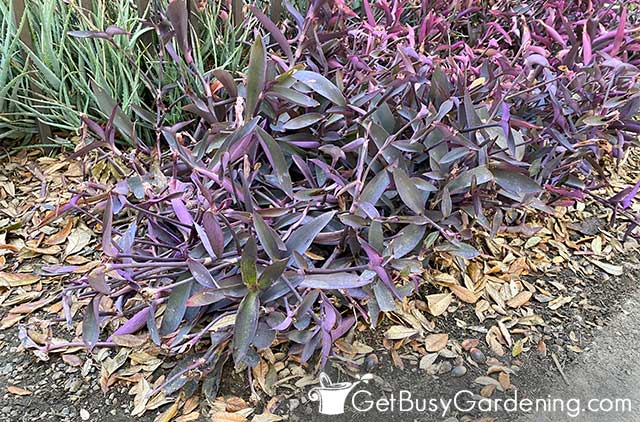
Temperature
The average household temperatures are ideal for a purple heart plant. Outdoors, they’ll thrive in a 60-80°F range, but can survive down to 40°F.
The foliage may die back after a light freeze, but can regrow in the spring as long as the ground doesn’t freeze.
Prolonged exposure to freezing weather will eventually kill the plant however, roots and all.
Fertilizer
Though fertilizing a purple queen plant is not a necessary part of their care, the occasional feeding can reinvigorate growth, enhance flowering, and make the colors more vibrant.
Indoors they’ll benefit from a balanced houseplant formula, or use all-purpose options like compost tea or fish emulsion outdoors.
Apply slow-release granules twice during the spring and summer, or up to once a month with liquid options.
Stop fertilizing in the fall and winter, and avoid chemical brands that can damage or burn the plant.
Soil
Purple heart plants will grow best in a light, loamy soil that has good drainage. You can amend outdoor beds with peat moss or compost to increase organic matter, or add sand to help with drainage.
Indoors, a good quality general potting soil will work. But you can also amend it with perlite or pumice to increase drainage and reduce the risk of overwatering.
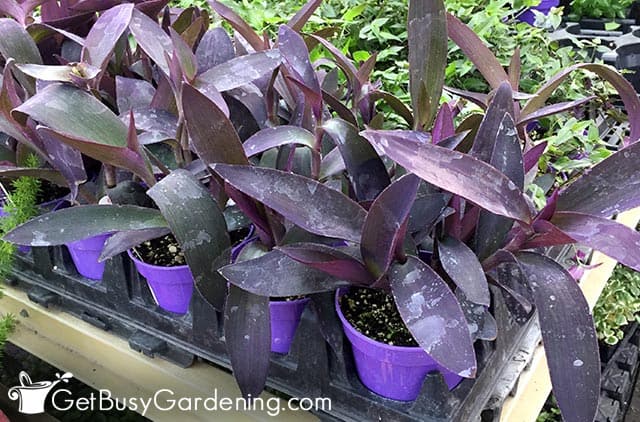
Repotting
Though purple heart plants will only grow to a certain height, they do tend to fill a container fairly quickly when given the proper care.
When roots begin to show out of the drainage holes, it’s time to size up. It’s best to do it in the spring before flowering.
Choose a container with drainage holes that’s 1-2” larger than the current one, and replant it at the same depth.
Pruning
The spreading nature of purple queen plants makes pruning a necessary part of their care, both indoors and outdoors.
Pinch off new stems as they form to encourage branching in the spring, or use sharp pruners to give it a hard trim after flowering has finished.
You can trim up to half the total size, which will result in more compact growth through the summer.
Pest Control Tips
Healthy purple hearts are generally pest free, but occasionally you may encounter an issue.
Outdoors, snails and caterpillars can be an issue. Control them by hand picking, or spreading a diatomaceous earth barrier around the base.
Indoors, mealybugs and scale are more likely. Treat them immediately with rubbing alcohol, neem oil, or an insecticidal soap for best results.
You can make your own insecticidal spray with 1 teaspoon of gentle liquid soap and 1 liter of water.
Purple Heart Plant Propagation Tips
Purple hearts are very easy to propagate with a stem cutting taken from any part of the plant.
The delicate stems break easily when bumped or kicked, and even those broken pieces can be rooted, as long as they contain leaf nodes.
Dip the cut end in rooting hormone before placing it in damp soil, or put it in a vase of water.
Keep it somewhere warm and bright for 1-2 weeks. Once you see roots or new growth, pot them up in your container or choice.
Troubleshooting Purple Queen Care Problems
Tradescantia pallida require little care once they’re established. But if you run into one of these more common issues, my tips can help you restore them to good health.
Leaves Are Turning Green
The most common cause for green leaves on your purple queen plant is lack of sunlight.
They need full sun, or 8+ hours of bright light indoors every day in order to maintain the deep purple color.
Yellow Leaves
Yellowing of purple heart leaves is most often a sign of overwatering. Only give them a drink when the top few inches of soil are dry.
However yellow leaves can also be caused by severe lack of light, too little water, or inadequate nutrients.
Leggy Purple Queen Plant
Leggy or sparse growth with long stems can be a sign of lack of sunlight, or simply age. Make sure it’s receiving full sun, or intense indoor light for 8+ hours a day.
Otherwise, begin pinching back new tips and prune leggy stems for more compact growth in the spring.
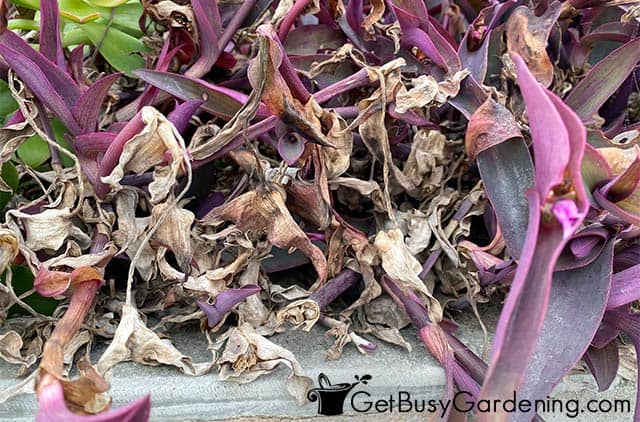
Brown Leaves
Brown leaves are also a common symptom of age, but could also be lack of moisture or low humidity.
Check the soil regularly to ensure it’s not too dry, and use a humidifier or pebble tray indoors if needed.
If the brown is appearing in the middle of the plant, it’s likely from aging. Give it a hard prune to rejuvenate it.
Related Post: Why Does My Wandering Jew Have Brown Leaves & How To Fix It
Purple Heart Plant FAQs
Here I’ve answered some of the most commonly asked questions about purple heart plant care. If yours isn’t listed, please add it to the comments section below.
Is purple heart easy to grow?
Yes, purple hearts are easy to grow once you know how to provide the best light, water, and other care needs.
Why is my purple heart plant dying?
There are many reasons that your purple heart plant is dying. Inconsistent watering (usually too much), lack of sunlight, or cold temperatures are all common causes.
Is Tradescantia pallida invasive?
While the Tradescantia pallida will spread to fill its given space, it’s not considered an invasive plant.
Can purple queen plants survive winter?
Purple queen plants can survive winter in zones 8-10. The foliage may die back after a hard frost, but should return in the spring.
Is the purple heart plant indoor or outdoor?
You can grow the purple heart plant indoors or outdoors with equal success, given the proper environment. It’s best kept inside if it gets below 40°F, but can be outdoors in warmer climates all year long.
Now that you know how easy it is to grow the striking purple heart plant, it can be a beautiful addition to your home or garden. Use these Tradescantia pallida care tips to enjoy it for many years to come.

If you want to learn all there is to know about maintaining healthy indoor plants, then you need my Houseplant Care eBook. It will show you everything you need to know about how to keep every plant in your home thriving. Download your copy now!
More Houseplant Care Guides
- How To Care For African Mask Plants
- How To Care For Heart Leaf Philodendron (Philodendron hederaceum)
- How To Care For A Philodendron Birkin Plant
- How To Care For A Pink Princess Philodendron
- How To Care For A Pink Princess Philodendron
Share your purple heart plant care tips in the comments section below.

Leah says
I’ve had my purple queen cuttings indoors all winter and I’d like to get it acclimated to outside. How should I go about that?
Amy Andrychowicz says
Great question! – You should definitely move them out slowly, or the sun will burn their leaves. Start by placing them in a shady spot outside. Then, gradually move them into the full sun over a few weeks, giving them plenty of time to get used to the intense rays.
Cindy Laskowsky says
Why is my purple heart getting white spots on the leaves?
Amy Andrychowicz says
White spots on your purple heart could be caused by insects, hail, or mildew. If the white spots look like cotton, then it’s likely mealybugs. Otherwise, if it’s not hail damage, then make sure the plant is getting enough airflow to keep mildew from forming.