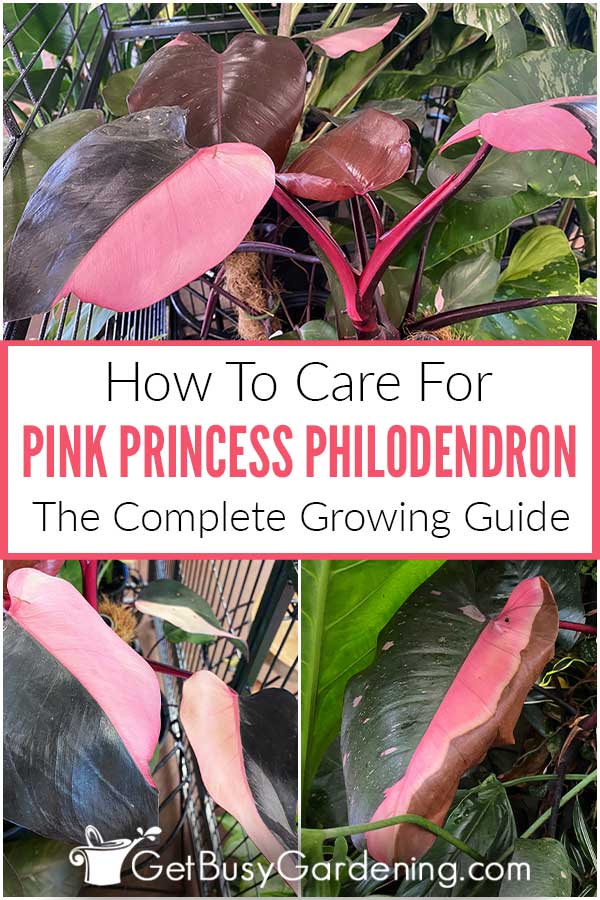
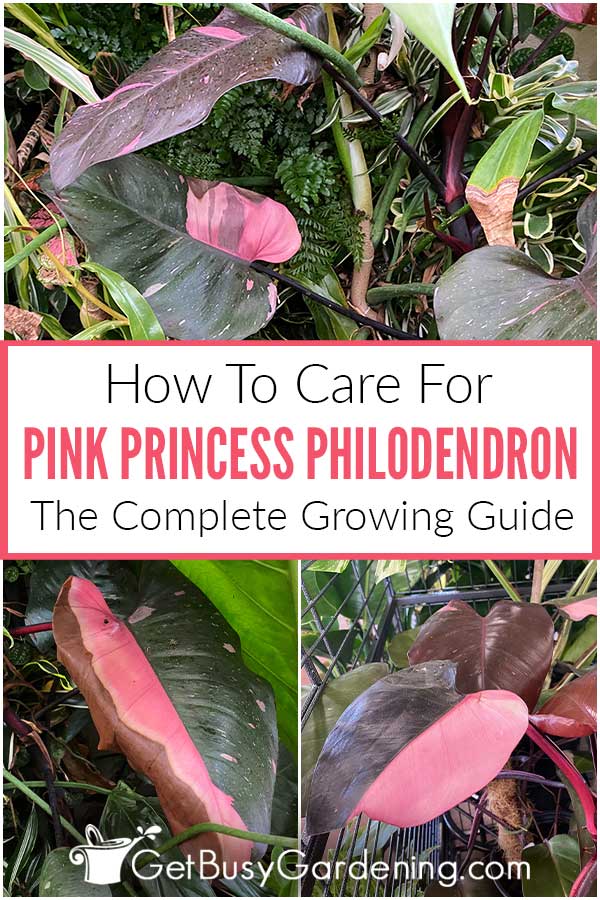
Pink Princess Philodendrons are not only gorgeous and unique, they’re easy to care for too. In this post, I’ll tell you all you need to know so you can grow and enjoy this rare plant for many years to come.
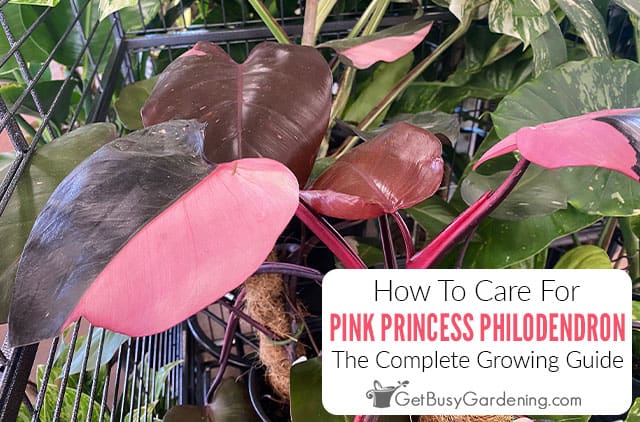

The unique colorful foliage of the Pink Princess Philodendron makes it a stunning addition to any houseplant collection.
Their low-maintenance nature actually makes them a great plant for beginners to enjoy as well.
In this guide all about Pink Princess Philodendron care, I’ll teach you everything you need to know to grow and enjoy the variegated leaves.
Discover how to provide the best light, soil, water, and humidity, plus how to prune, propagate, and so much more.
Philodendron ‘Pink Princess’ Quick Care Overview
| Scientific name: | Philodendron erubescens ‘Pink Princess’ |
| Classification: | Tropical plant |
| Common names: | Blushing Philodendron, Red-Leaf Philodendron ‘Pink Princess’ |
| Hardiness: | Zones 9b-11 |
| Temperature: | 65-85°F |
| Flowers: | N/A |
| Light: | Full to partial shade outside; bright, indirect light indoors |
| Water: | Keep soil evenly moist, do not overwater |
| Humidity: | High |
| Fertilizer: | General purpose plant food spring-summer |
| Soil: | Fast-draining, fertile soil |
| Common pests: | Spider mites, scale, fungus gnats, mealybugs, aphids |
Information About Pink Princess Philodendron
The Philodendron erubescens ‘Pink Princess’ is a member of the Araceae or Aroid family. It doesn’t exist in nature, but is a hybrid created from other species that are native to Central and South America.
The fast growing vines have aerial roots that help it cling to surfaces as it climbs. It can reach heights of 4’ with a spread of 18” wide.
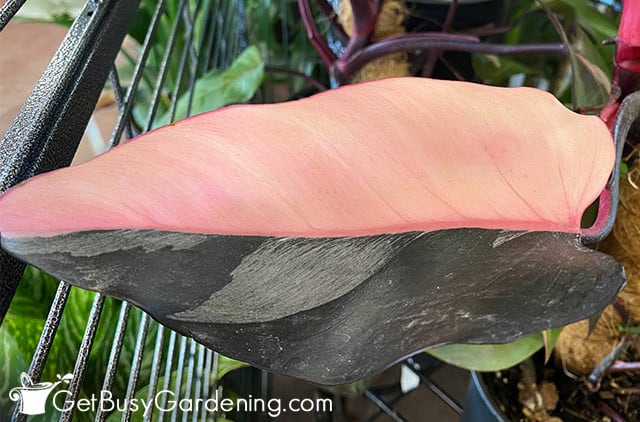
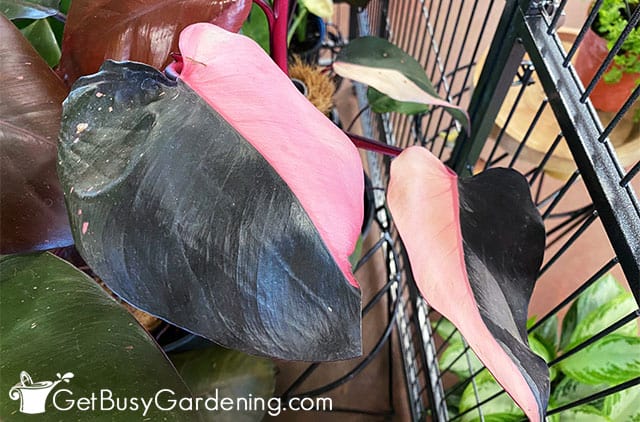
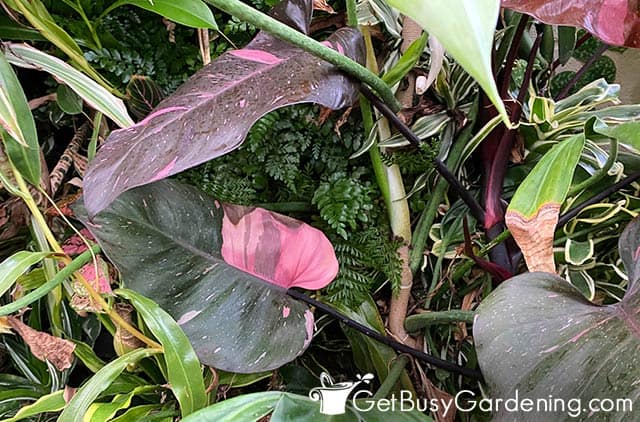
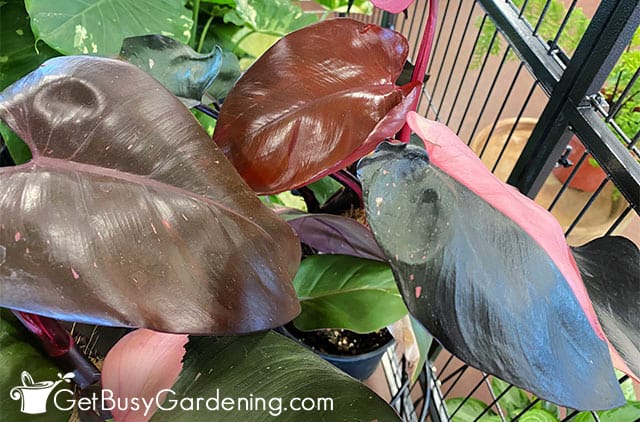
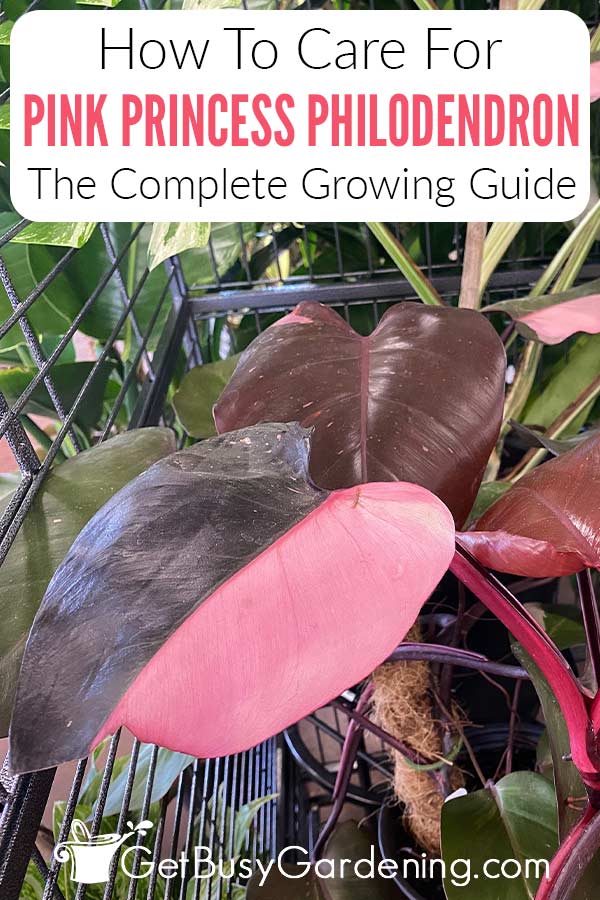
The glossy heart-shaped leaves grow from burgundy stems and feature irregular pink, deep green, and light green variegation. Each leaf can span up to 5” across.
Toxicity
Unfortunately, Pink Princess Philodendron is considered a toxic plant when ingested. So it’s a good idea to keep it out of reach of children and pets if you’re concerned about them eating it.
You can check out the ASPCA website for more information on toxic houseplants.
How To Grow Pink Princess Philodendron
Before we talk about Pink Princess Philodendron care, we should chat about how to choose the best location to grow them. A good spot can help them thrive for many years to come.
Hardiness
Pink Princess Philodendron is not a hardy plant, and can only grow year-round outdoors in zones 9b-11.
For this reason, it’s most often kept indoors as a houseplant. But some people like to put theirs outdoors during summer months, and overwinter it indoors.
Where To Grow Pink Princess Philodendron
Since they’re native to the tropics, Pink Princess Philos need humidity, moderate temperatures, and damp soil to thrive.
The variegated foliage will be the most prominent in a bright light location protected from direct sun.
They grow very well in containers with good drainage, especially with a support they can climb.
In warm enough climates, they can thrive in the shade of trees, which they’ll naturally grab onto and vine up.
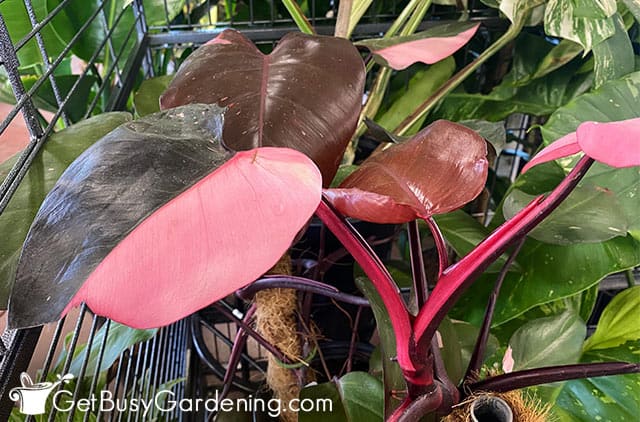
Pink Princess Philodendron Care & Growing Instructions
Now that you have a good idea of where to grow it, let’s talk about the details of Pink Princess Philodendron plant care. Use these tips to keep yours vibrant and healthy.

Light
Pink Princess Philodendron needs plenty of light to maintain the brightly colored variegated leaves, but can suffer and burn in direct sunshine.
Ideally, you should provide them with bright indirect or filtered light for 6 or more hours a day. Too little will cause the leaves to revert to green, and too much can bleach the pink to a pale white.
If you struggle to get the right amount indoors, use a grow light to meet their needs.
Water
Proper watering is key to long term health. They won’t tolerate wet feet for long, but can’t stand prolonged dry conditions either.
Wait until the soil is dry 2” down and then water deeply, letting all the excess drain from the pot. If you struggle with this, I highly recommend getting an inexpensive moisture meter.
It’s also a good idea to use distilled or rainwater. The salts and minerals in tap water can cause brown tips and curling.
Humidity
Philodendron Pink Princess will grow best in an environment with 50% humidity. You can use a monitor to see how dry the air is.
Increase it by running a humidifier nearby, setting the plant on top of a pebble tray, or misting a few times a week.
Temperature
The ideal temperature range for growing Pink Princess Philodendron is between 65-85°F.
They can survive lows of 55°F, but will slow or stop growing if it gets much cooler, and freezing temps will kill them.
They also don’t tolerate sudden temperature swings. Place them somewhere away from heating and cooling vents or fireplaces to avoid damage.
Fertilizer
The occasional feeding can invigorate growth, but too much can burn the delicate leaves.
Apply a half-strength dose of a balanced liquid fertilizer like compost tea or an indoor plant formula no more than every two weeks in the spring and summer.
You can also use slow release granules 1-2 times in spring and summer. Stop feeding them in the fall and winter to avoid weak, leggy growth.
Soil
A rich, well-draining natural mixture is best for Pink Princess Philodendron care. You can purchase one formulated for aroids, or mix it yourself.
Combine a fertile potting soil with orchid bark, perlite, and coco coir or peat moss to create a chunky medium that will provide nutrients without getting heavy.
Repotting
With the right care, Pink Princess Philodendron can grow quickly, and may need repotting every 1-2 years.
Roots coming out of the drainage holes is a sign they’ve outgrown their current container. In the spring or summer, transplant them into a new one no more than 1-2” larger.
Pruning
Pruning is not necessary, but can stimulate bushier growth, prevent legginess, and even increase the amount of variegation.
Use sterile, sharp pruners to clip a leaf just above the node where it attaches to the main stem.
It’s best to trim them for shape and vigor in the spring or summer, but you can remove damaged or dead leaves at any time.
Pest Control Tips
A healthy Pink Princess Philodendron will rarely have issues with pests. However, they can be susceptible to spider mites, scale, fungus gnats, mealybugs, or aphids when stressed.
Treat them by applying rubbing alcohol directly to the bugs, a neem oil solution, or an insecticidal spray. I make my own by combining 1 teaspoon of mild liquid soap with 1 liter of water.
Pink Princess Philodendron Propagation Tips
It’s possible to propagate a Pink Princess Philodendron through stem cuttings or division.
In either spring or summer, when new growth has begun, take cuttings that have a few nodes on the stem.
Dip them in rooting hormone and place them in either water or soil. Spring is the best time of year to split the root ball of mature plants.
Troubleshooting Common Care Problems
In the right environment, Pink Princess Philodendron care is low maintenance. But over time you may encounter one of these common issues. The tips below can help you get it back to health.
Pink Princess Philodendron Reverted
It’s normal for some leaves to be highly variegated, while others feature less. If however all of the new leaves are reverting, then it could be caused by lack of light.
Make sure it’s receiving 6 full hours of bright, indirect light every day. Use a grow light if you need to.
You can also prune them back to the last variegated leaf. That can help to encourage the new leaves to produce the pink coloring.
Leaves Curling
Curling leaves on Pink Princess Philodendron can be caused by chemicals in tap water, improper moisture level, or temperature stress.
Keep the soil evenly moist by watering when it’s dry 2” down, but never allow it to become soggy. Use distilled or rainwater to avoid a build up of salts and minerals.
Avoid drafty areas, air conditioning vents, or locations near heat sources. It’s best to maintain a consistent range between 65-85°F.
Yellow Leaves
If your Pink Princess Philodendron has yellow leaves, then it could be a symptom of overwatering, cold weather, or age.
When it gets lower than 55°F, it can begin to damage the plant, as can cold drafts from open windows or air vents.
Heavy or soggy soils can cause root rot, which will begin to yellow the leaves before they die.
However, if just one or two leaves at the bottom of the plant, but the rest look fine, it’s a natural sign of aging. In that case, it’s nothing to worry about, and you can safely remove them.
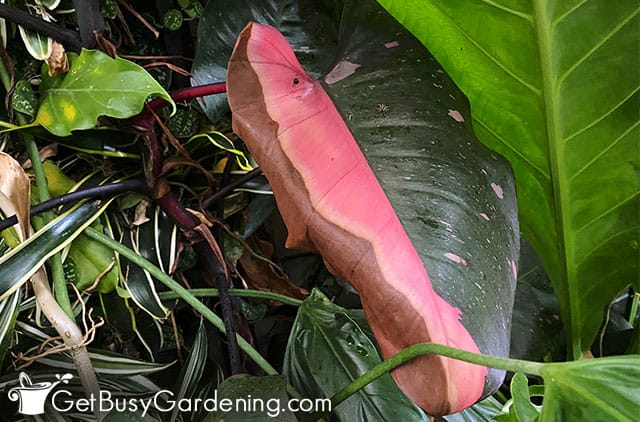
Leaves Turning Brown / Spots
Browning can be caused by lack of humidity, sunburn, drought, buildup of chemicals from tap water, or fertilizer burn.
Protect them from direct sunlight, and maintain even soil moisture. Try providing some humidity with misting, a humidifier, or a pebble tray.
Avoid feeding with full strength liquid or granules more than once a month, and don’t use synthetic fertilizers.
FAQs About Pink Princess Philodendron Care
Here I’ve answered some of the most commonly asked questions about Pink Princess Philodendron plant care. If yours isn’t listed, please add it to the comments section below.
Does Philodendron Pink Princess stay pink?
Philodendron Pink Princess will stay pink in bright, indirect light. Lack of light will result in more green, and too much can bleach them to white. However, each leaf is unique and may show more or less variegation.
Is the Pink Princess Philodendron rare?
The Pink Princess Philodendron is considered rare because it’s not a plant you’d find in nature, and is only produced by a few speciality growers.
How do you keep Pink Princess Philodendron pink?
The best way to keep Pink Princess Philodendron pink is by providing 6 hours of bright, filtered or indirect light. Ideally, put them in an east or west facing window that receives morning or evening sun only.
Is the Philodendron Pink Princess easy to care for?
The Pink Princess Philodendron is easy to care for once you understand how to create the ideal environment. They need plenty of light and humidity, consistent watering, and fertile, well draining soil.
Learning about Pink Princess Philodendron care is the first step for success. If you’re lucky enough to find one of these beautiful pink and green variegated plants, the tips in this guide will help you keep them thriving for many years.

If you want to learn all there is to know about maintaining healthy indoor plants, then you need my Houseplant Care eBook. It will show you everything you need to know about how to keep every plant in your home thriving. Download your copy now!
More Houseplant Care Guides
- How To Care For A Philodendron Birkin Plant
- How To Care For Heart Leaf Philodendron (Philodendron hederaceum)
- How To Care For Cat Palm (Chamaedorea cataractarum)
- Wandering Jew Plant Care & Growing Guide
- How To Grow Lipstick Plants
Share your Pink Princess Philodendron care tips in the comments section below.

John Todd says
My philodendron pink has drop of water dripping from its leaves, what am i doing wrong.
Amy Andrychowicz says
When a plant starts dripping water out of the leaves, it’s called transpiration, and it’s totally normal. It can be caused by high heat, low humidity, and other environmental factors. It’s usually nothing to worry about, but it is a way for the plant to release excess moisture, so make sure you’re not overwatering your pink princess.
Kathi Schue says
Love the information, can I get a copy of the complete growing guide for Pink Princess? I ordered starts and when I get them want to take good care of them.
I live in Florida, Ft. Myers area, and have a great location on my lanai for one. I also grow orchids inside and out.
Thank you
Kahti Schue
Amy Andrychowicz says
Awesome, glad to hear you loved the article! 🙂 I don’t currently have a way to print the care guide, maybe a future enhancement to the site. Good luck with your pink princess, it sounds like you have the perfect spot for it!