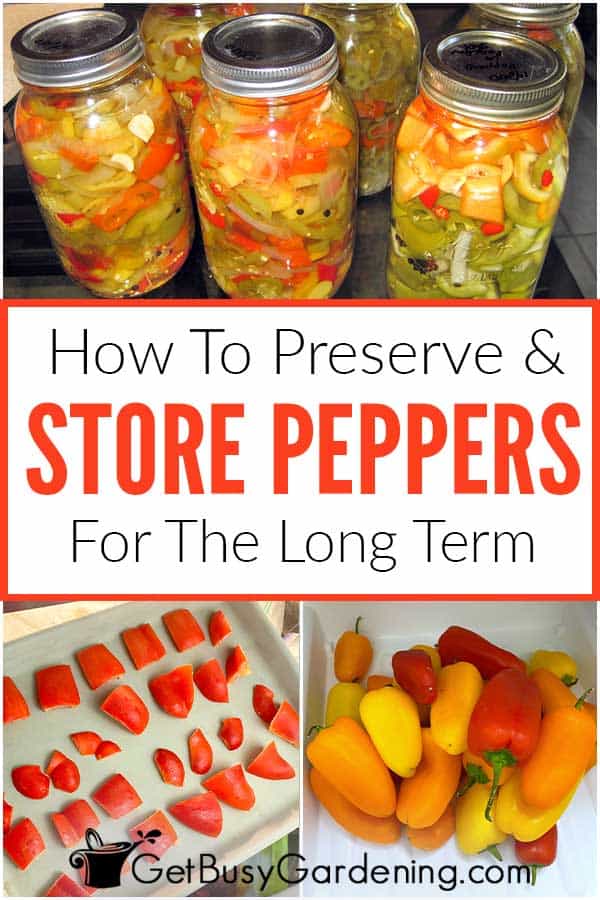
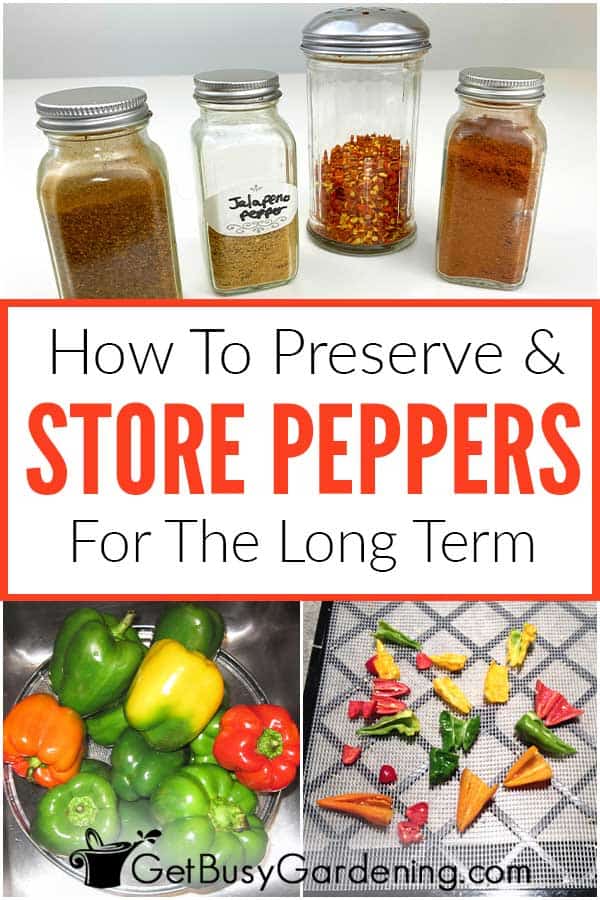
Preserving peppers is a great way to enjoy your summer bounty all year round. In this post, I’ll give you tips for how to keep them fresh longer, and show you all the ways you can store them for later use.

Being overwhelmed by an over-abundance of fresh peppers from your vegetable garden is a great problem to have.
But when you end up with more than you can possibly eat before they go bad (ummm… 15 gallons!?), it’s time to find ways to preserve and store them for later use.
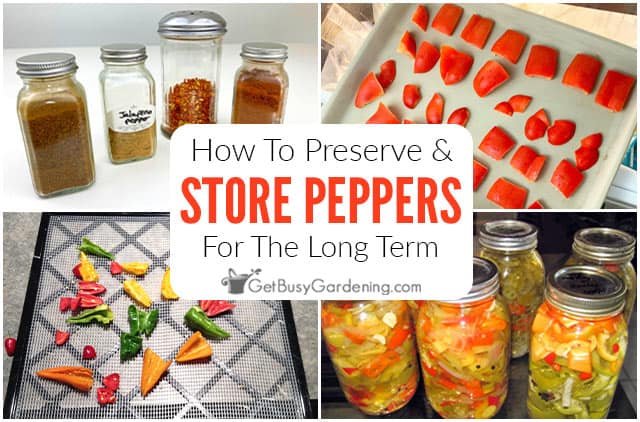
From keeping them fresh for as long as possible in the fridge, to canning, drying, freezing, and making your own spices for later use, I’ll show you all of the best options.
How To Store Peppers In The Refrigerator
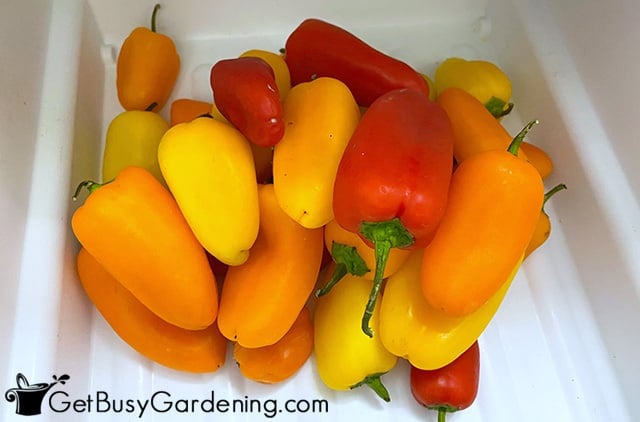
Storing peppers in the fridge is a great way to save them for the short term. To keep them fresh as long as possible, put them in your crisper drawer.
Most types will last in the refrigerator for 1-2 weeks. I find that smaller ones start to shrivel several days before the larger ones do.
Also keep in mind that green ones tend to last longer than the ripe ones do (i.e.: red, yellow, or orange).
If you won’t be able to use them up within a few weeks, then you’ll need to find a way to preserve them for the long term, which is what I’ll go into detail about next.
Related Post: How To Grow Peppers: The Ultimate Guide
How To Preserve & Store Peppers Longer
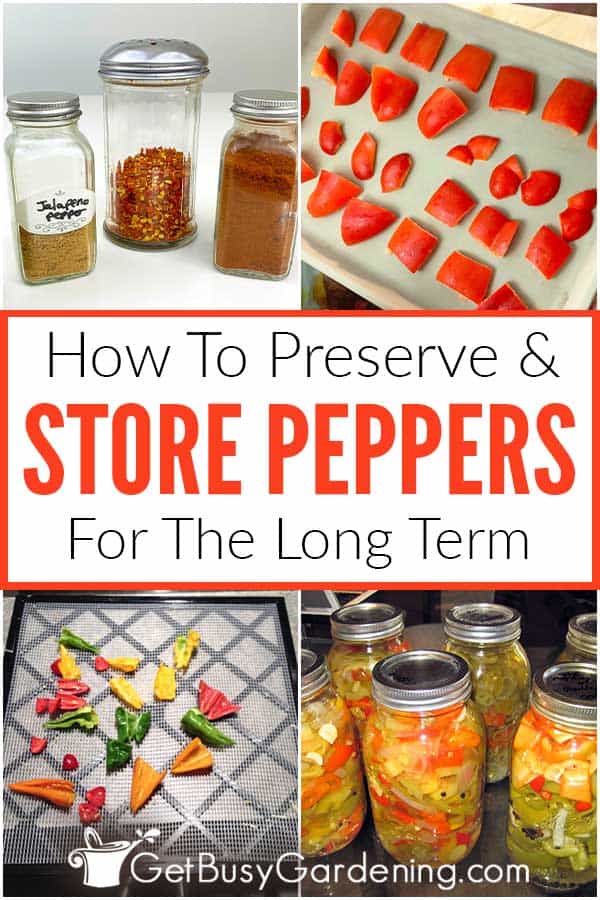
Fortunately, there are lots of ways to preserve and store your fresh peppers for winter or later use, so that none of your hard work will go to waste. The best methods to use are canning, freezing, drying, and making your own spices.
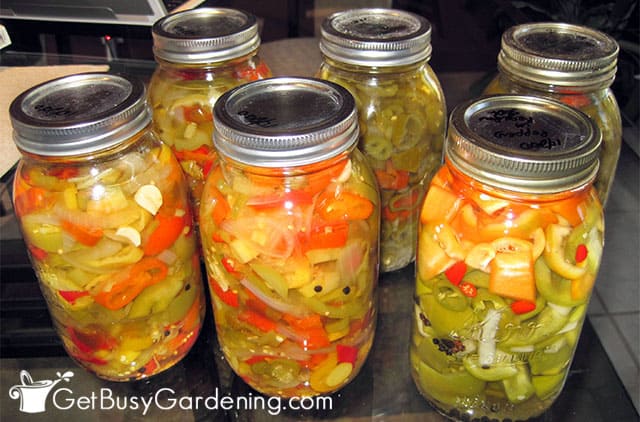
Canning
It may sound intimidating, but canning peppers is actually very easy! I prefer preserving them in water, but you could also try pickling them.
If you don’t want to pickle them, then you will need a pressure canner. Otherwise you don’t need any special equipment for this method.
Freezing
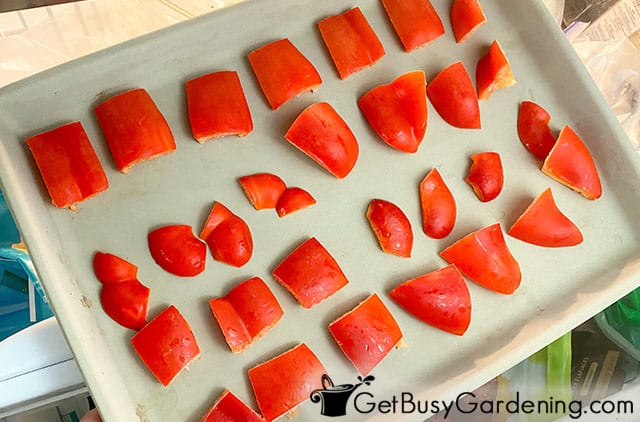
This method is one of the fastest and easiest ways to preserve any type of peppers, but make sure you have enough room in your freezer to store them.
Simply cut them into chunks and remove the stem and seeds. Put the pieces on a cookie sheet so they aren’t touching, then flash-freeze them for about 15-30 minutes.
Once they feel hard to the touch, put them in a zip-top baggie, or any other sealed container, and place them in your freezer.
Related Post: How To Prune Peppers For Maximum Production
Drying
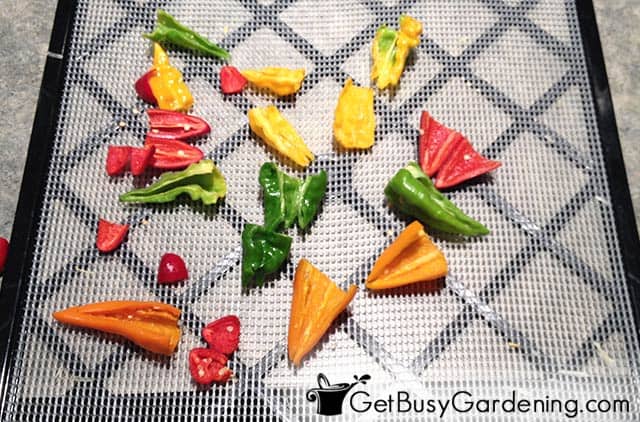
The nice part about drying peppers is that you don’t need to worry about taking up precious freezer space. Plus, you can do this with any variety that you have.
You’ll need to cut up the large ones, but you can leave smaller ones whole if you want to. Then simply pop them into your dehydrator, or put them in the oven on the lowest setting.
It can take several hours for them to dry completely. Keep in mind that the thicker the flesh, the longer this will take.
Related Post: How To Dry Cayenne Peppers
Make Your Own Spices
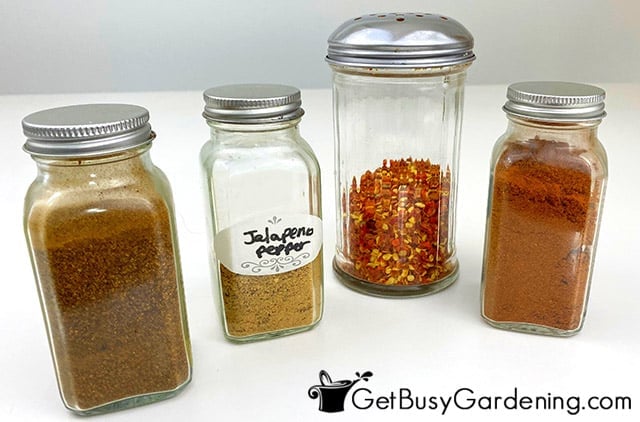
Every fall I make crushed red pepper flakes so we always have them on hand. It’s easy to do, and it’s just like the stuff they have at your favorite Italian restaurant.
I also like to grind up different varieties (both sweet and hot) into powder to fill up my spice jars. You can make your own chili powder, or any other type of spice blend that you want.
How Long Do Peppers Last In Storage?
How long peppers will last in storage depends on the method you used to preserve them.
Canned ones will be good for a couple of years. But it’s best to use up or replace your stash of dried and frozen ones annually.
Related Post: How To Grow Peppers From Seed
FAQs
Storing peppers is easy, and there are lots of options. But you might still have some questions, so below are answers to the most common ones I get. If you can’t find yours here, ask me in the comments below.
How long will peppers last unrefrigerated?
Unrefrigerated peppers can last up to one week on the counter before they start to shrivel. However, smaller ones don’t last that long. To keep them fresh as long as possible, you should put them in the refrigerator instead of leaving them out on the counter.
What is the best way to store peppers?
This depends on how you plan to use your peppers later on, and how long you want to store them. I like to can, pickle, dry, and freeze mine, and I also use them to make my own spices.
Preserving peppers is easy, and there are so many great ways to store them. Don’t be afraid to try something new each time. It’s a perfect way to bring a bit of your summer garden to your kitchen all year long.

If you’d like to learn how to make the most of your space and get as much homegrown food as possible, then my Vertical Vegetables book is perfect! It will teach you all you need to know, has tons of gorgeous photos, and includes 23 DIY projects you can build for your own garden. Order your copy today!
Learn more about my Vertical Vegetables book here.
More Food Preservation Posts
Share your tips for how to store peppers in the comments section below.

SeafoamJade says
When I buy 2 or 3 bell peppers, I always put them in a plastic produce bag and then store them in the fridge that way. BUT, I have always wondered if I was storing them the right way by doing that. Is it okay to store a few peppers in one plastic bag, or should each pepper be stored in its own separate plastic bag? TIA!
Amy Andrychowicz says
There’s no need to put fresh whole peppers into a plastic bag. In fact, I find that they get slimy or mold faster when I do that, so I just put them into my crisper drawer unwrapped. But to answer your question, you can put more than one into each bag. But you might want to leave the bag open or cut slits into it to allow the peppers to breath.
Iris says
I’ve searched and searched…..and your article is very nice and thorough, but I find that storing peppers in a plastic bag in the fridge, crisper or not, makes them slimy, as soon as one has been cut. Nothing I do can fix it except to wash it off, and get a new bag…wasteful. I have not tried storing them in the fridge in a paper bag. Any other suggestions? Nobody has addressed that issue yet! Thanks
Amy Andrychowicz says
Garden fresh peppers shouldn’t go bad that quickly in a plastic baggie. If they are from the grocery store, or are older peppers, then I could see that happening. But in that case, you should either store them whole, freeze them, or use them up right away, because there’s not much you can do to keep older peppers from getting slimy in the fridge like that. If you’re worried about the waste of using a baggie, then I recommend using a storage container instead. That way, you can just wash it and reuse it, rather than having the waste of single use plastic. Hope that helps.
Jimbo says
1) DO NOT CLOSE THE BAG. The produce must expel sulfur dioxide to not spoil. Closing the bags traps bad gas and accelerates spoilage.
2) Put a small piece of paper towel in the bag to absorb excess moisture condensing in the bag. Excess moisture accelerates spoilage.
3) Separate compromised produce from other produce. If it has a spot on it, keep it away from the perfect ones.
4) Place the bags in a spot in the fridge that keeps the food at 36 degrees. Lower leads to freezing, higher leads to rot, fluctuations lead to dehydration. .