

Propagating ornamental sweet potato vine is easy, and a great way to maximize a single plant purchase from the nursery.
In this post, I will walk you through how to root the cuttings or divide the tubers step by step.
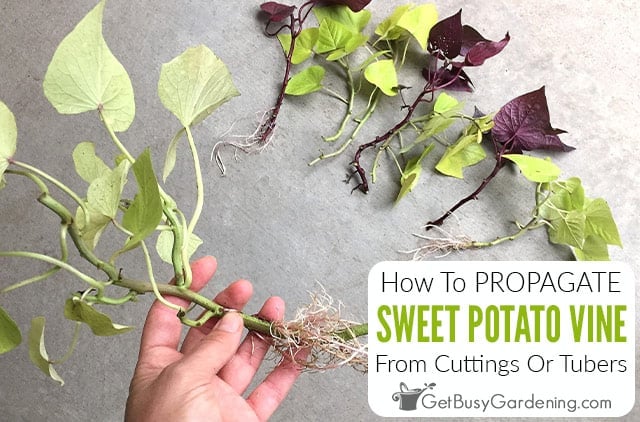

Ornamental sweet potato vines are beautiful and make a wonder addition to any outdoor planter or garden. Learning how to multiply them is fun, and a great way to expand your collection.
Sweet potato vine a good place for beginners to start with plant propagation, since they root quickly and easily.
In this guide you’ll learn all about sweet potato vine propagation using a few different methods. With my tips and step by step instructions, you’ll be able to multiply your favorite varieties in just a few weeks.
Ornamental Sweet Potato Vine Propagation Methods
There are two easy approaches that I recommend for sweet potato vine (Ipomoea batatas) propagation – rooting stem cuttings in water or soil, or dividing them.
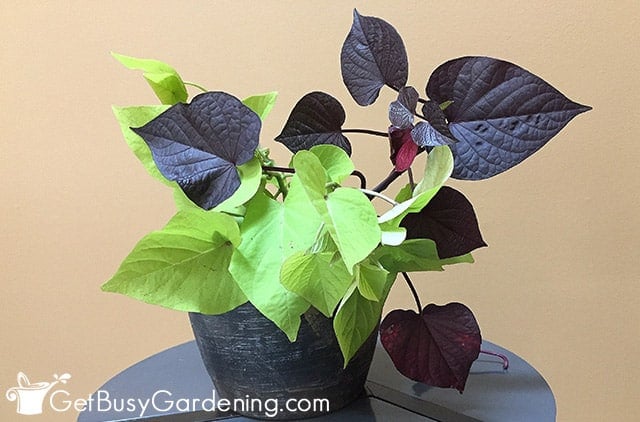
Any variety can be multiplied with these methods too. So whether you have green, chartreuse, pink, black, or purple, you can follow these same steps.
From Cuttings
Stem cuttings (aka slips) are a very reliable way to expand a single plant into many, and they can be rooted in either water or soil.
Unfortunately, you can’t root the individual leaves, it will only work with stem cuttings.
Related Post: How To Care For Ornamental Sweet Potato Vine

By Division
Mature Ipomoea batatas plants can also be divided. You can separate large chunks of the rootball, or divide the individual tubers (aka bulbs) that form underground.
Each tuber can become a new plant, but they only develop on mature vines. So, this method will only work on established plants, but is a great option for overwintering them at the end of the summer.
From Seeds
Though they can produce viable seeds, sweet potato vines are not known for reliable flowering. So it can be difficult to propagate them this way.
Some ornamental varieties are even sterile, so this isn’t a method I recommend for home gardeners.
When To Propagate Sweet Potato Vine
The best time to propagate sweet potato vine cuttings is in the spring or summer, before the weather gets cold.
It’s also the best time for dividing them. However, if you live somewhere warm, you can do it in late summer or early autumn.
Supplies For Propagating Ipomoea batatas
Before we dive into the process, having the best tools on hand will help everything go smoothly. You may only need a few of these, depending on the method you choose. See my full list of equipment and supplies here.
- Vine cuttings
- Pruning shears or precision snips
- Rooting hormone
- Rooting medium or water
- Propagation chamber (optional)
- Pots with drainage, or a vase
- Spray bottle
- Heat mat (optional)
- Trowel or shovel
- Container or a garden spot
Propagating Sweet Potato Vine From Cuttings
As the most popular method of propagating ornamental sweet potato vines, I’m going to walk you through rooting cuttings first. But before we get to that, you need to know how to properly take and prepare them.
How To Take The Cuttings
Roots will emerge from leaf nodes and along the stem, so you can take your cuttings from anywhere on the plant.
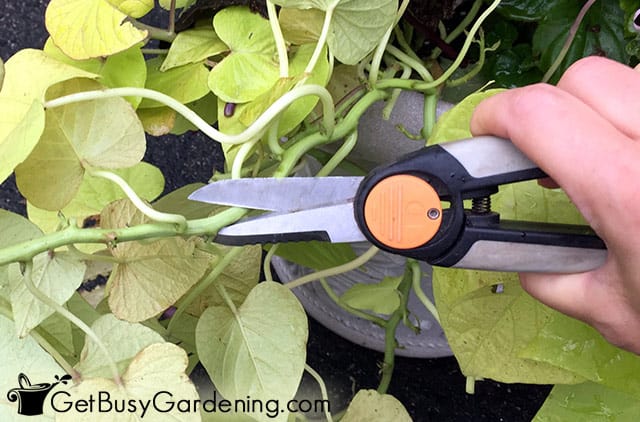
However, for best results, choose healthy vines that are 6-12” long and have several leaves on them. Then use a sharp, sterile pair of pruners or snips to get a clean cut.
Preparing Ipomoea batatas For Propagation
To prepare your slips, pinch off the leaves from the lower ⅔ of the stem. Work quickly here, as they will start to droop as soon as they’re removed from the plant.
If they wilt too much, rooting can be more difficult. So try to get them into the soil or water as soon as you can.

How To Root Sweet Potato Vine Cuttings
When you’re ready to propagate sweet potato vine cuttings, these step by step instructions will help you do it in either water or soil.
Steps To Propagate Sweet Potato Vine In Soil
Rooting the cuttings in soil is a great way to encourage stronger, hardier starts, and can reduce the risk of transplant shock.
They do best with high humidity, so using a propagation chamber can help. You can purchase one, or make your own.
Step 1: Prepare the medium – My ideal rooting medium is equal parts peat moss, perlite, and vermiculite. But you can also use a good quality seedling mix that drains well.
Step 2: Get a container ready – Choose a clean pot or use a propagation chamber. Add several inches of pre-moistened medium. It should be uniformly damp, but not wet or soggy.
Step 3: Make holes – With either a pencil or your finger, make a hole in the medium for each stem.
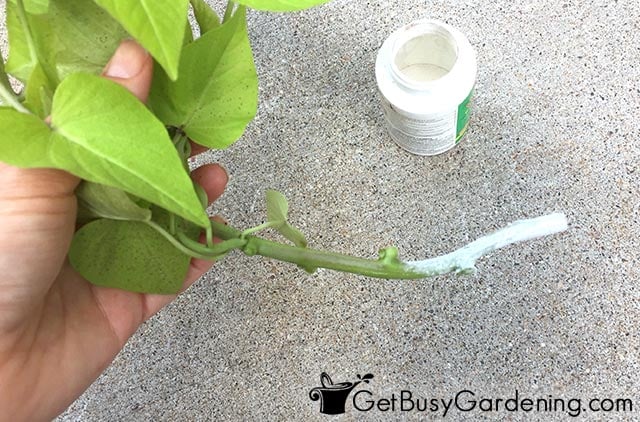
Step 4: Apply rooting hormone – Dust the base of the stems with rooting hormone. This is optional, but speeds things up, and encourages stronger, more uniform roots.
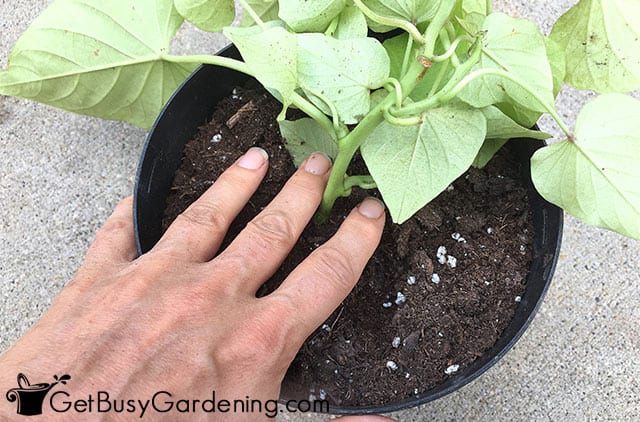
Step 5: Bury the stems – Stick each slip into the prepared hole, and gently pack the soil around the stem.
Step 6: Cover with plastic – Either place the lid on your propagation chamber, or tent a large plastic bag over the top of the pot. Make sure no plastic is touching the leaves, or they will rot.
Step 7: Add bottom heat (optional) – Warm soil encourages faster root development, so putting your container on a heat mat can speed things along.
Step 8: Place in indirect light – Keep the cuttings out of direct sun while they root. Bright light or partial shade is best.
Step 9: Keep the soil damp – Never allow the soil to dry out. It needs to stay damp, but not wet until you begin to see new growth.
If you didn’t cover them with plastic, use a spray bottle to mist the cuttings at the soil level frequently to prevent drying or overwatering.
Steps For Rooting Sweet Potato Vine In Water
Water propagation is my preferred method to use for ornamental sweet potato vines. They’re very quick to root, and can tolerate staying in water much longer than most plants.
Of course, I still recommend potting them up as soon as they have good root development for the best results.
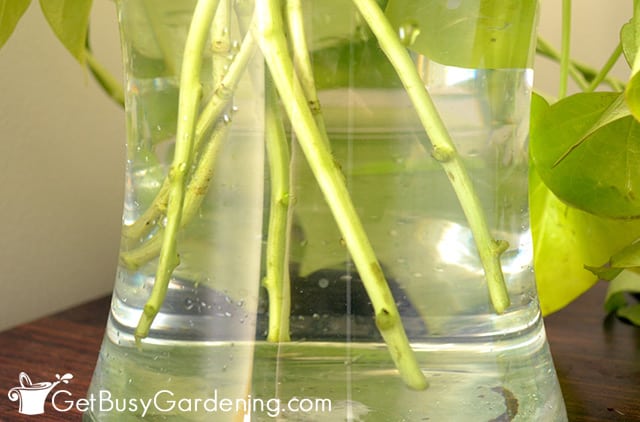
Step 1: Fill a vase with warm water – I like to use a clear vase so I can watch the roots as they start to form, but any jar or similar container will work.
Step 2: Put the stems into the water – Ensure that only the stems are submerged. If any part of the leaves are touching the water, they will rot.
Step 3: Place in a bright, warm spot – Keep them out of direct sunlight, but a warm room and lots of bright, indirect light is best.
It’s common to see some wilting at first, but they should pop up in a few days.
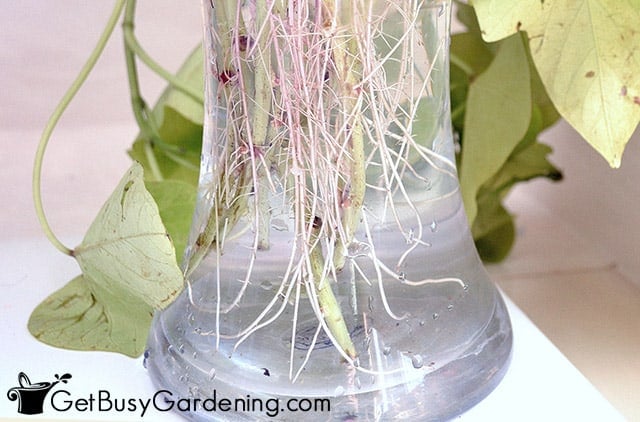
Step 4: Keep the water clean – If you notice any murkiness, refresh it with clean water to prevent rot. It’s also important to keep the developing roots submerged at all times so they don’t dry out.
Step 5: Wait for 3” long roots- When they’ve formed sturdy roots that are at least 3” long, it’s time to pot them up.
How To Propagate Sweet Potato Vine By Division
Dividing mature sweet potato vines is a great way to get lots of new ones. You can either split up the rootball, or separate the individual tubers that form on mature plants.
Steps For Dividing The Tubers Or Rootball
Before propagating your ornamental sweet potato vine by division, make sure it is well hydrated. Water it deeply at least 24 hours before you plan to split it
Step 1: Cut back the foliage (optional) – This isn’t necessary, but long vines can be frustrating and tedious to untangle. So, you can prune them back to a more manageable length first.
Step 3: Dig around the base of the plant – Dig in a wide circle so you don’t accidentally damage the roots or tubers with your trowel or shovel.
Step 4: Shake off excess dirt – Be gentle, but brush off excess clumps of dirt to make untangling the roots a little easier.
Step 5: Separate the rootball – Tease the roots apart, separating them into big groups or individual bulbs.
Step 6: Prepare the soil – Amend your garden soil with compost or manure, or use a quality potting mix for containers, and dampen it.
Step 7: Plant them – Place the new divisions into the ground or pot at the same level as they were before you dug them up. Or bury individual tubers 1-2” deep.
Step 8: Keep the soil damp – Keep the soil moist until you start to see new growth, then water as you normally would. Your divisions will likely droop after transplanting, but should recover in a few days.
How Long Does It Take To Propagate Sweet Potato Vine?
It doesn’t take very long to propagate sweet potato vines, the cuttings root very quickly. It takes just a few days for the roots to begin forming, and about 2-3 weeks for them to be long and hardy enough to pot up.
Why Won’t My Sweet Potato Vine Propagate?
There are many reasons why your Ipomoea batatas won’t propagate. Too much or too little water, cool temperatures, and time of year can all be factors.
It’s important to never allow the roots to dry out, but too much water can lead to rot on the stems or tubers.
Warmth is also important. A heat mat can be very helpful if you keep your house cool.
Finally, take your cuttings at the right time of year. Once the cooler autumn weather sets in, the plant will begin to die back naturally, and rooting will be very difficult.
How To Care For Sweet Potato Vine Cuttings
Care during rooting is simple. Cover your sweet potato vine cuttings to provide humidity, or mist frequently to keep the soil moist.
Give them plenty of warmth and bright light throughout the process too. It’s common for them to droop for a few days after putting them into water or soil, so don’t panic. They should recover in a couple of days.
How To Transplant Or Repot The Cuttings
When you start to see new leaf growth, or the roots are at least 3” long, it’s time to pot up your cuttings.
Prepare containers with a fertile, well draining potting mix. Moisten it and then bury the stems at the same depth they were during rooting.
Water lightly, and return to indirect light while they settle into their new homes. If you see some drooping or wilting, just give them a few days to pop back up.
FAQs
Here you’ll find the most commonly asked questions about propagating ornamental sweet potato vines. If I haven’t answered yours, please ask in the comments section below.
Will sweet potato vine cuttings root in water?
Yes, sweet potato vine cuttings root in water, and very quickly – this is my recommended method of propagating them.
Can you grow sweet potato vine from tubers?
Yes, you can grow sweet potato vine from tubers, but they only form on mature plants.
Is it better to propagate sweet potato vine in water or soil?
You can propagate sweet potato vine in either water or soil, both are great methods to use. But I recommend water because it’s easy, and almost always successful.
Is sweet potato vine easy to root?
Yes, sweet potato vine is very easy to root. Your new starts should be ready to pot up in as little as 2-3 weeks.
Propagating sweet potato vines is a great way to take a single plant and multiply it into many. Rooting cuttings or dividing them can easily produce lots of new, beautiful foliage to fill your garden and summer planters.

Do you want to learn how to multiply all of your plants? Then my Plant Propagation eBook is for you! It will show all you need to know in order to get as many new plants from your existing ones as you want. Download your copy today!
More About Plant Propagation
- Propagating Coleus Cuttings In Soil Or Water
- Propagating String Of Hearts (Rosary Vine) From Cuttings Or Division
- How To Propagate Begonias In Water Or Soil
- How To Propagate Pothos (Devil’s Ivy) Cuttings In Water Or Soil
Share you tips or favorite method for propagating ornamental sweet potato vines in the comments section below.


Perry Norris says
We planted our Sweet Potato vine in a 5 gallon pot this spring. It performed unbelievably well this summer. We dumped out the pot to find each plant (2) had developed 3 huge potato-size tubers deeper in the pot! I don’t notice any obvious “eyes” on the pink-purple tubers, but they’re too big to pot up in a small quart container. Can I cut them up to grow them?
Amy Andrychowicz says
Yes, you can cut up your sweet potato vine tubers to make more plants, just like you can with regular potatoes.
Elaine Omanoff says
Last year I had both green and purple sweet potato vines… this year they are all purple. I really don’t know whether the purple choked out the green or the green just isn’t as hardy and just died over the winter. I will plant the green again but I’m curious about your view.
Thank you,
Elaine
Amy Andrychowicz says
It’s most likely that your green sweet potato vines didn’t survive the winter. I don’t think the purple ones are any more hardy than green ones, but it’s possible they had better winter protection.
Georgia Roper says
Each year I buy different colored sweet potato vine plants. I bring them indoors in fall and the vines die back. Each spring once it’s warm enough to place the pots with the tubers still in them back outside what comes up is not what grew the previous year. Not lime green, not red, not black but just leathery plain ugly kind of heart shaped leaves. Do you know why?
Amy Andrychowicz says
Oh weird, I’ve never heard of that before. I would try repotting your sweet potato vine tubers and giving them a light dose of either compost tea or fish emulsion solution. You could even soak the tubers in one of these solutions overnight to give them a boost before planting. It could just be lack of nutrients from being in the same pot for more than one season.
Tina Helton says
Same thing has happened to me! So now I just get a small vine early spring and propagate as they get bigger
Alayne VanWagoner says
I’m keeping my sweet potato vine cuttings in water over the winter, as you suggested. They have done very well until February. They are getting brown spots on the leaves and some of the leaves are turning yellow and I have to pinch them off. Do I need to pot them now? It isn’t warm enough outside until May here. Thanks!
Amy Andrychowicz says
Oh no, sorry to hear your sweet potato vine cuttings are not doing well. Make sure you keep the water fresh, and that it’s not slimy or murky. You could certainly pot them up now if you’d like, that way they’ll be well established in soil before you plant them outside in the spring. Good luck!
Tracy says
Do I cut the vines off of the potato without roots to transplant into the garden?
This half potato I rooted in water has hundreds of roots I’m not sure what to do with the potato part?
Amy Andrychowicz says
No need to cut anything off of the tuber, you can just plant it right in the ground, roots facing down. The sweet potato vine/leaves might end up burning out in the sun, but more should grow in its place. Then you can just prune off the old/dead one at that time.
Mary Snow says
I dug up and separated my tubers before they froze. I carefully wrapped each in newspaper and put them in a box in my storage room. Last week I unwrapped them and planted them in pots indoors and put some in water with toothpicks holding the top half out of the water. This week they are all moldy and gross. I don’t know about the ones I planted in soil yet. I obviously messed up! I was so disappointed. Next year I will try the seedlings . What did I do wrong?
Amy Andrychowicz says
My guess is that your sweet potato vine tubers either weren’t dry enough, so the excess water made them rot, or maybe they dried out too much while in storage, and they were already dead. I wouldn’t give up on the ones you planted in soil though, rooting them in water is a risky trick, and it’s not uncommon for the tubers to rot while soaking in water.
Pat Ramthun says
how to do a tuber that has no eyes- like a reg potatto. must have been a a mature plant . It was in the ground just under the dirt all winter inTex. about the size of a soft ball. have any ideas ?
Amy Andrychowicz says
With sweet potato vines, you can just replant the whole tuber.
Jheremia says
Hey if I replant a sweet potato tuber will it grow sweet potatoes?
Amy Andrychowicz says
If you’re talking about the vegetable rather than the ornamental sweet potato vine, then you would plant those like you do with regular potatoes.