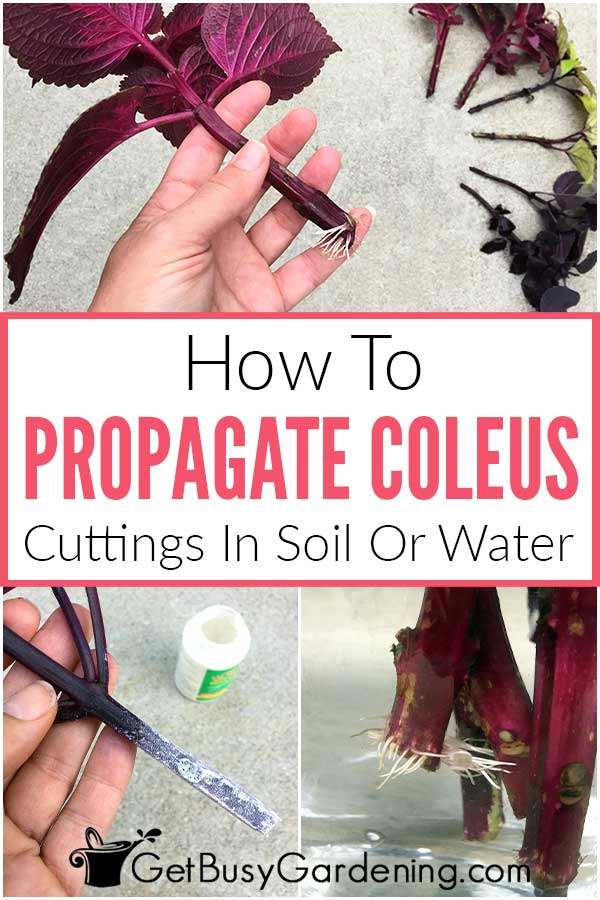
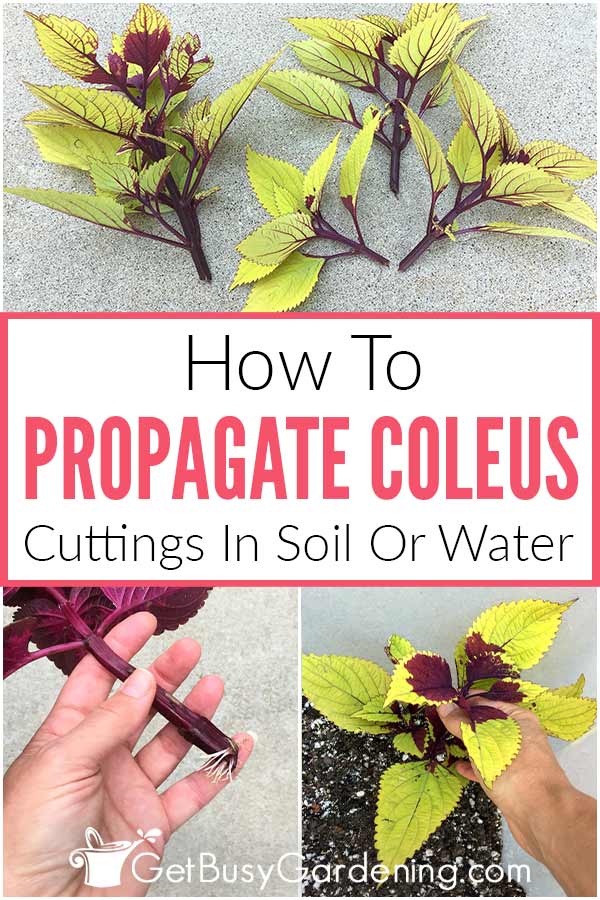
Propagating coleus is a fantastic way to take a few of your favorite varieties and multiply them into many.
In this post, I’ll show you exactly how propagate them, and also give you detailed steps for rooting coleus cuttings in either water or soil.
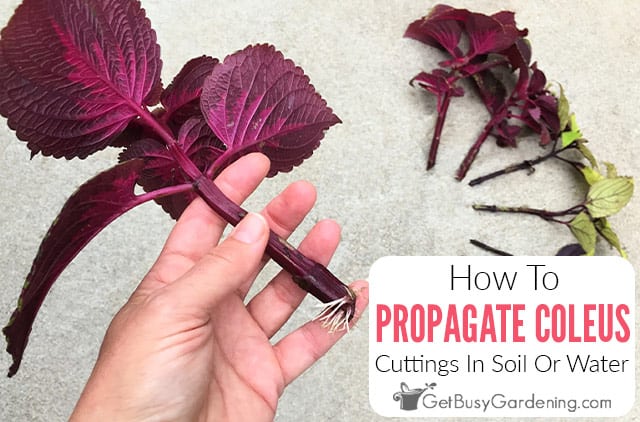

Coleus is one of my favorite annuals to use in my summer gardens and outdoor containers. But it’s expensive to buy new plants.
Luckily it’s easy to propagate coleus by either rooting the cuttings or dividing one mature plant into several.
Once you know the best time, temperature, and rooting methods, you’ll be able to expand your collection into every corner of the garden.
With the step by step instructions in below, you’ll learn how to use a few simple methods for propagation your coleus plants.
Coleus Propagation Methods
Coleus can be propagated using three different methods – by cuttings, division, or seed. They even work for any variety you have.
So whether you prefer variegated or solid colored, you can apply the methods I’ve explained below to multiply them.
Related Post: Plant Propagation: A Detailed Guide For Beginners
From Cuttings
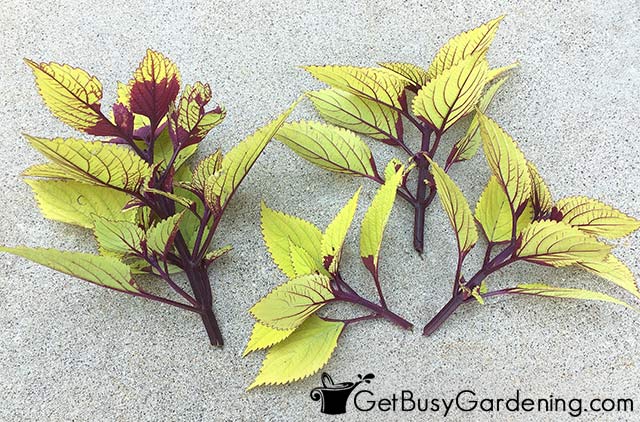
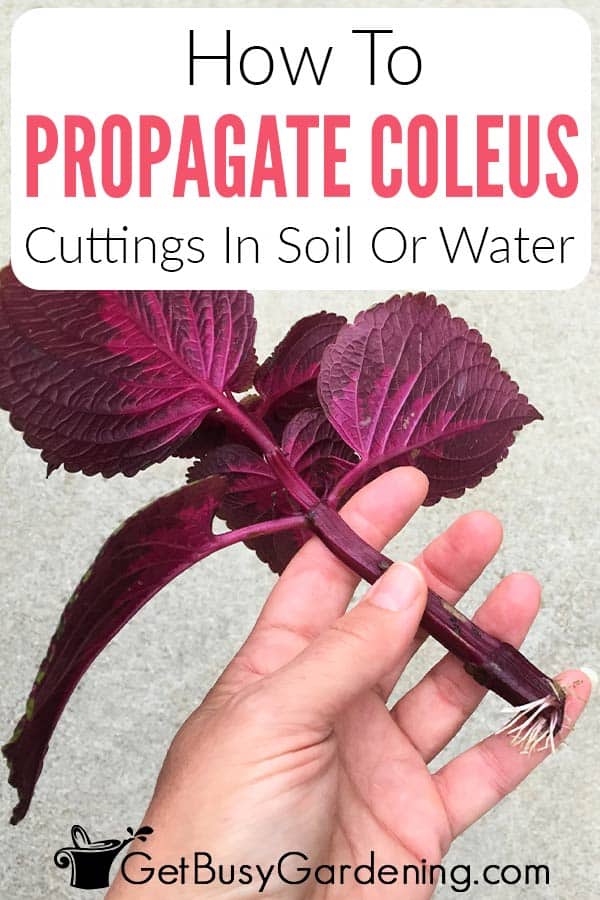
The most common way to propagate coleus is through stem cuttings. This method is fast, and effective enough to be done in either water or soil.
Single leaves sadly won’t work. But thankfully stem cuttings are simple to take and easy to root.
By Division
Division is an effective way to propagate coleus with multiple stems coming out of the soil. This technique is great for when you want to move them from one area of your garden to another.
From Seeds
Coleus can produce viable seeds when the flowers are pollinated. Once the blossoms drop off, allow the remaining pods to dry out and turn brown.
Once they’re ready, you can collect and dry them, and keep them for replanting in the spring.
When To Propagate Coleus Plants
The best time to propagate coleus cuttings is during their active growth period in early spring and summer.
As soon as the cooler fall weather sets in, they’ll begin to die back, which makes rooting them much more difficult.
The best time to divide them is in the spring when the plants are still young. This gives them plenty of time to establish themselves before the summer heat kicks in.
Related Post: How To Overwinter Coleus Plants Indoors
Supplies For Propagating Coleus
Before you begin taking cuttings, I recommend getting your supplies ready. Below is a helpful list of my recommendations, but keep in mind that some are optional based on the method you use.
If you want more ideas, here’s my full list of plant propagation tools and supplies.
- Coleus cuttings
- Rooting medium or water
- Rooting hormone
- Propagation chamber (optional for soil method)
- Container or vase (for water method)
- Clean precision pruners or basic clippers
- Heat mat (optional)
- Trowel or shovel
- Potting soil
- Pot or garden location for replanting
Propagating Coleus From Cuttings
Since it’s the most popular approach, we’ll discuss propagating coleus from cuttings first. Before that though, let’s learn how to properly take and prepare the stems for rooting.
How To Take The Cuttings
It’s important to choose only healthy stems that have leaves on them. I also recommend using stems that don’t have flower stalks, or they can inhibit root formation.
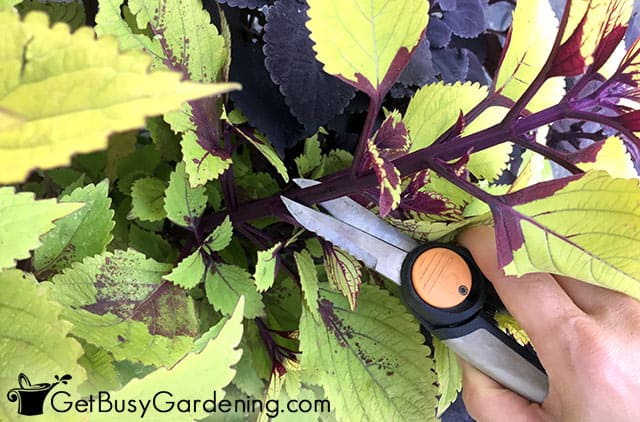
Select a 4-6″ section with several sets of leaves on it, and cut just below the bottom set.
To take my coleus cuttings, I prefer using a precision pruner, but you could certainly use a basic pair of clippers. Whatever you use, be sure they are sharp and sterilized so you make a clean cut.
Preparing Coleus Cuttings For Propagation
Once you take your cuttings it’s important to move quickly – they’ll begin to wilt pretty fast.
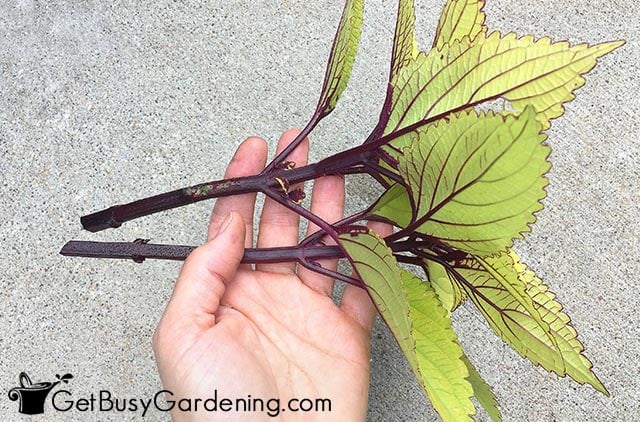
Thankfully, they’re very quick to prepare. Simply remove any lower leaves and flower stalks by pinching or trimming them off. Leave the topmost set of 4-6 leaves intact.
How To Root Coleus Cuttings
When you’re ready to propagate coleus cuttings, follow these step by step instructions for rooting them in water or soil.
Steps For Rooting Coleus Cuttings In Soil
This is my go-to method because they’re less likely to suffer transplant shock, thanks to the stronger, more hardy roots they develop in soil vs water.
Coleus does need humidity to root, so I recommend either purchasing a propagation chamber, making your own, or tenting a large plastic bag over them.
Step 1: Prepare the rooting medium – Your rooting medium should be a lightweight soilless mix that retains water.
I recommend either using a seedling soil, or mixing equal parts general potting soil, perlite, and vermiculite to increase the drainage, and reduce the chance of rot.
Whatever medium you choose to use, pre-moisten it so it’s uniformly damp, but not soggy.
Step 2: Grab a container – Fill either a clean pot or your propagation chamber with enough rooting medium so the leafless part of the stem will be completely buried.
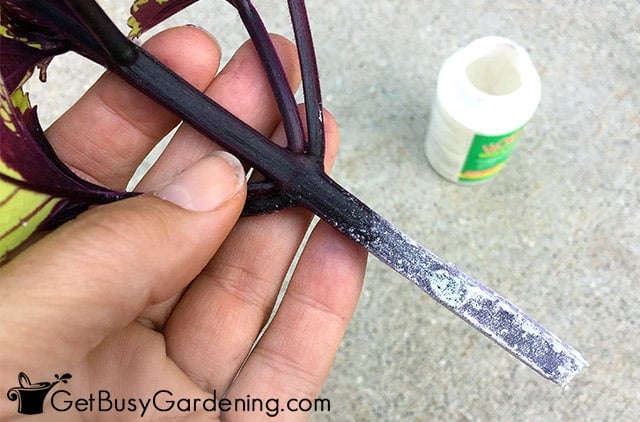
Step 3: Add rooting hormone – Brush or dip the stems in rooting hormone so each exposed leaf node is covered. A light dusting is fine, you don’t need to cake it on.
Step 4: Make holes – Use the end of a pencil or your finger to prepare spots for your cuttings so you won’t rub off the rooting hormone when you put them in.
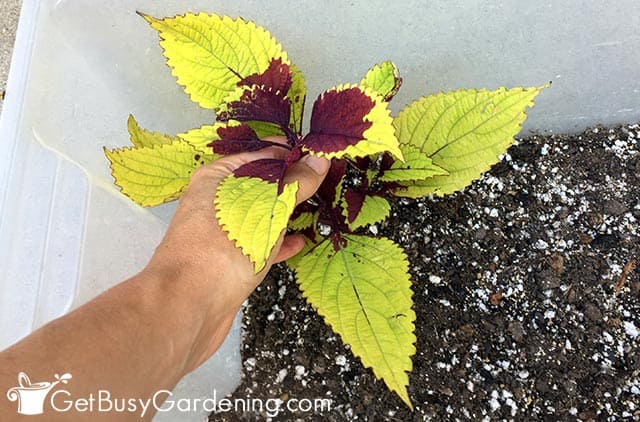
Step 5: Place the stems – Put the stems into the holes you made in the medium, bury them, and gently pack the medium around them. Don’t bury them too deep though, the leaves shouldn’t be touching the soil.
Step 6: Cover them – Place the lid on the propagation box, or tent a large plastic bag over the top of the container.
Make sure to keep any of the leaves from touching the plastic, or they will likely rot.
Step 7: Add bottom heat (optional) – Warmer temperatures will speed up rooting. So place the container on a heat mat to help move things along faster.
Step 8: Place in indirect light – Choose a bright spot where they’ll receive plenty of indirect light, but avoid direct sun to prevent scorching.
Step 9: Keep it moist – If you don’t cover them, you’ll need to keep a close eye on the medium. They won’t root if it dries out. So mist them regularly, and keep the soil damp.
If you’re using a propagation chamber or plastic baggie, watch for too much condensation, as that can cause mildew and rot.
Step 10: Wait for roots – You’ll know your coleus cuttings have rooted when you start to see new leaves forming on the top.
Steps For Rooting Coleus In Water
Rooting coleus in water is pretty simple. The main downsides are a higher chance of rot, and transplant shock. Plus, the roots aren’t as strong when they develop in water instead soil.
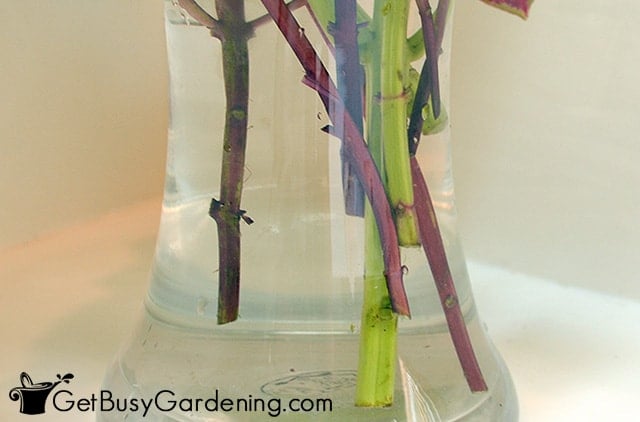
Step 1: Put the cuttings in water – Place the stems into a vase of lukewarm water. You can add one, or several, into the same container.
I like to use a clear vase so I can see the roots as they start to form, but any container that holds water will work.
Step 2: Submerge only the stems – Make sure none of the leaves are touching the water, or they will rot.
The cuttings may droop or even drop a few leaves after you put them into the vase. This is normal, and they should pop back after a few days.
Step 3: Give them bright, indirect light – Put them in a bright location, but keep them out of direct sunlight. They like temperatures above 60°F. But the warmer the room, is the faster they will root.
Step 4: Watch water levels – If the water drops below the nodes, add a little more to prevent them from drying out. If it looks cloudy at any point, refresh the vase entirely.
Stinky or murky brown water is a sign of rot, so if that happens check the stems and remove any that are mushy.
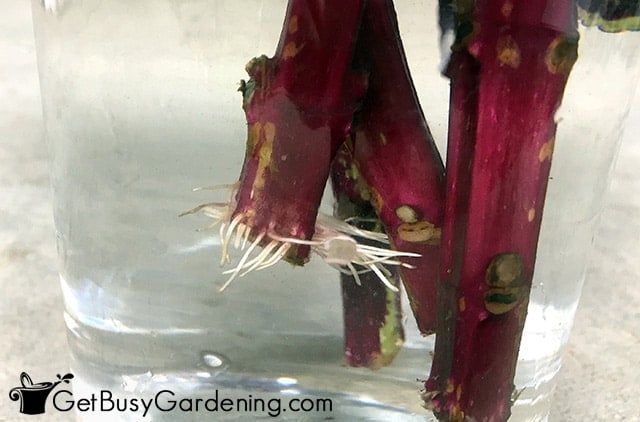
Step 5: Wait for healthy roots – Once the roots are 1-2” long, pot them up into fresh general use soil.
It’s best to do this as soon as possible. If you leave them in water for too long, the stems could start to rot, and the roots will become weaker.
How To Propagate Coleus Plants By Division
If you have mature coleus plants with multiple stems, dividing them into different containers or garden areas is a quick method of propagation.
It’s best to do this at the beginning of the season, so they have plenty of time to fill out for the summer.
Steps For Dividing The Rootball
Propagating coleus by division is a great way to get larger plants faster. But take care not to damage the rootball so they can survive the transition.
Step 1: Choose a new spot or pot – Prepare the new garden area by amending it with compost or worm castings if needed. Or, fill a clean pot with a general purpose soil mix.
Step 2: Water well before dividing – Watering the day before helps loosen the soil and roots, and hydrates the plant to prepare it for division.
Step 3: Dig it up – Use a trowel or shovel to gently dig down around the rootball. Stay about 6-8” away from the center so you don’t accidentally damage the plant. If it’s in a pot, then gently slide the whole thing out.
Step 4: Separate by hand – Brush or gently shake away any excess dirt. Then, slowly tease apart the individual stems, or divide them into several clumps for larger replantings.
Step 5: Replant at same depth – Transplant them into prepared garden spots or containers at the same depth they were originally. Gently pack the dirt around them as you fill in the hole or pot.
Step 6: Moisten the soil – Give the soil a gentle drink, and repack it as air pockets settle. Keep it evenly moist until you begin to see new growth.
How Long Do Coleus Cuttings Take To Root?
It doesn’t take long for coleus cuttings to root. Given the right temperature, light, and humidity, you should start to them forming in just 2-3 weeks.
However, it usually takes a month or more before they are strong enough for replanting.
Why Won’t My Coleus Cuttings Propagate?
There are many reasons why your coleus cuttings might not propagate. They prefer warm temperatures, bright but indirect light, and plenty of humidity.
If any of these boxes aren’t checked, they can struggle to root, and may end up rotting or shriveling instead.
But time of year is also a big factor. Any cuttings that are taken after the weather begins to cool in the fall will have more difficulty.
It’s also important to choose stems without flower stalks, or to pinch off any that try to form. Cuttings will redirect all of their energy to rooting once the flowers are removed.
How To Care For Coleus Cuttings
Keep the water level above the roots at all times if you’re using a vase. Or, provide coleus cuttings with plenty of humidity and moisture if you opted for soil propagation.
Avoid direct sun to prevent burning the leaves or baking the cuttings. But keep them in a room at least 60°F or warmer to encourage rooting.
If they begin to wilt, it’s likely that they’re drying out, or receiving too much heat and sun. Move them to indirect light, or try misting them to increase the humidity level.
How To Transplant Or Repot The Cuttings
When it’s time to pot up your newly propagated coleus, choose a garden spot with fertile, well draining soil, or fill a container with a quality mix.
Moisten the soil first, then bury your baby plants at the same depth they were in the rooting medium or water.
Gently pack the soil around them, and give them a light drink to remove air pockets. Keep the soil moist until new growth begins.
Related Post: How To Care For Coleus Plants – Complete Guide
FAQs
Below you’ll find the most commonly asked questions about propagating coleus. If yours isn’t answered here, please leave it in the comments section.
Is it better to propagate coleus in water or soil?
It’s better to propagate coleus in soil rather than water because they develop hardier roots. This will help make potting them them more successful, and lower the risk of severe transplant shock.
Are coleus easy to root?
Yes, coleus are extremely easy to root in either water or soil. In the right conditions, they can start forming new roots in just a few weeks.
Can you propagate coleus from a leaf?
No, it is not possible to propagate coleus from a leaf, only stem cuttings will work.
Will coleus cuttings root in water?
Yes, coleus cuttings will root in water if taken properly from the plant and given the right conditions.
Learning to propagate coleus is a great way to multiply your favorite varieties every year. Rather than spend money on lots of them, cuttings from just a few can fill your garden and containers with all the foliage you love the most.

If you’re ready to learn how to propagate any type of plant that you want, then my Plant Propagation eBook is just what you need. I will show you how to multiply any type of plant that you want. Download your copy today!
More About Plant Propagation
- Propagating String Of Hearts (Rosary Vine) From Cuttings Or Division
- How To Propagate Begonias In Water Or Soil
- How To Propagate Pothos (Devil’s Ivy) Cuttings In Water Or Soil
- Propagating ZZ Plants From Cuttings Or Division
- Propagating Ornamental Sweet Potato Vine Cuttings Or Tubers
Share your tips or favorite method for propagating coleus plants in the comments section.

Christy I says
Thank you for the tips! I just brought home my first coleus from a plant swap and I was wondering if it was any different from other cuttings ☺️🫶🏼
Adele Pecore says
Are the varieties with really big leaves just as easy to propagate, or do they require any special care?
Amy Andrychowicz says
You can propagate all varieties of coleus the same way.
Jim Webber says
I’m glad I read this, I have been trying for some time to propagate from leaves, without success When placed in water, they do produce an encouraging amount of roots, but when potted on, do nothing more than maintain the leaf, which eventually dies. they need a portion of stem, with leaf nodes, to produce a plant. I will no longer persist with leaves no matter how enticing they look. Jim Webber (from UK)
Amy Andrychowicz says
You’re welcome. I’m impressed you were even able to get the coleus leaves to root at all, as I would have bet they would only rot.
Jim Webber says
Hello Amy, I took a photo of one leaf that I rescued from the bin, but seem unable to send it, so let me describe it. The leaf is 6.5″ high x 4″ wide, the stalk is 1.5″ long with 12″ long roots, looking like a horse tail hanging from it. I had left this particular one in water for a lot longer than usual, as an experiment. Normally after about 2 weeks, the cuttings are good to pot onwards, this one was about 4 weeks in plain water. I have also tried leaf cuttings in sharp sand, which also works regarding root growth, but also does not produce a viable plant. Jim Webber
Amy Andrychowicz says
Very interesting, thanks for sharing your experiments with rooting coleus leaves, I love it! If you want, you can post the photo on my Facebook page here.