Raking your grass in the spring is not only an essential chore, it’s also a great excuse to get outside and enjoy the warm weather. But, if you start too early, you can damage your lawn.
So, how do you know when it’s time to tackle raking your lawn in the spring? In this post, I will give you some tips to figure out if it’s too early, and how to tell when it’s safe to start.

Is It Too Early To Rake My Lawn?
Every year, I see a lot of my neighbors outside raking their lawns way too early. Trust me, I get it. After the long winter months, there’s nothing you want more than to get out and start working in the yard – and I’m right there with you!
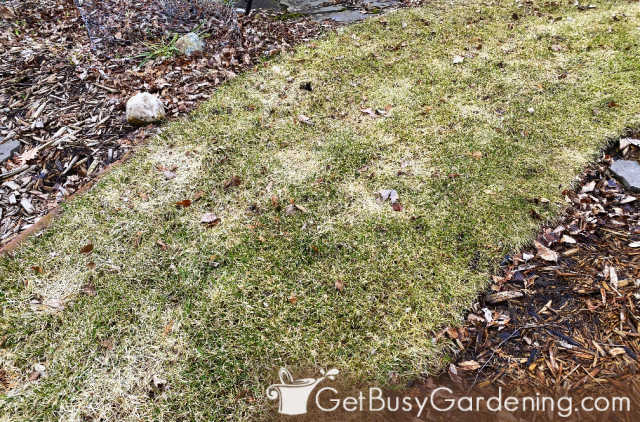
But in early spring, the grass is still dormant, and raking it too early can cause damage by pulling out the healthy turf along with dead grass blades and the excess thatch layer.
The root system of your dormant grass won’t be strong enough to resist the pull of the rake. So you’re basically doing more harm than good by creating bare patches where weeds can take hold.
Even when the air temperature is warm in early spring, the soil is cold, and probably still frozen in some places. In addition, the ground is very wet with all that melting snow, and can be quite saturated. It’s not a good idea to rake your lawn while the soil is cold, wet, and frozen.
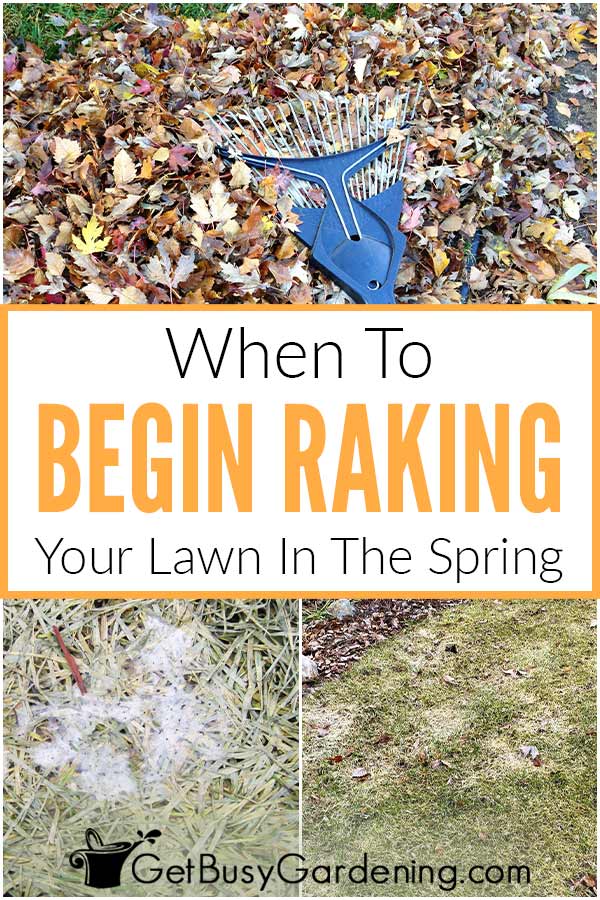
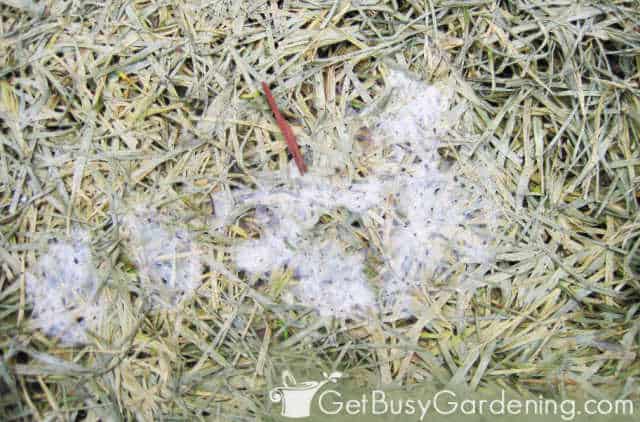
There may be some visible damage from voles and their tunnels, dead patches caused by deicing chemicals or road salt, or you may see white spots of snow mold on top of the grass.
All of these lawn problems make it very difficult to resist the urge to rake. You should also hold off on fertilizing or doing any other kind of spring grass care, such as patching or overseeding, this early as well.
Timing is everything, and I definitely recommend waiting to see if the warm temps are truly here to stay before performing any type of lawn prep or maintenance.
Related Post: How To Cut Grass Like A Pro Using Lawn Mowing Patterns & Techniques
When Should I Rake My Lawn In The Spring?
It’s best to give the lawn time to warm up, dry out and start waking up from dormancy before raking it. So wait until all the snow has melted, the ground has thawed, and the grass begins to turn green before you start any type of preparation or cleanup.
I know you’re itching to get out there, but it’s not all about your lawn. Spring is a great time to do other types of yard tasks.
This could mean picking up any fallen tree branches, dog poo, or other debris, and pulling weeds. But resist the urge and leave your rake in storage for just a few more weeks. I promise, it will be worth it.
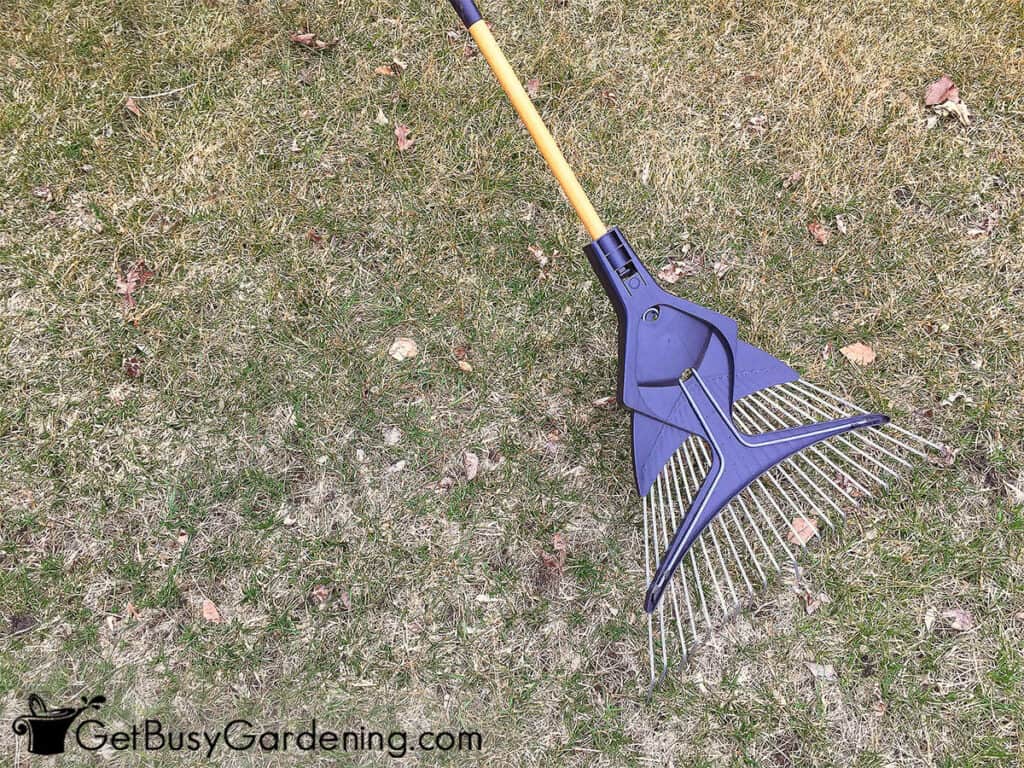
Instead keep yourself busy with the endless list of spring garden clean up tasks that will get you focused long enough for your grass to wake up. Then you can celebrate, because it’s finally time to rake, and you’ll be sure you’re maintaining a healthy lawn!
More Spring Gardening Tips
- Pruning Plants: The Complete Step-By-Step Guide
- Spring Houseplant Care Tips
- Spreading Mulch Tips: Best & Easiest Way To Lay Mulch Evenly
- How To Trim Tree Branches: A Step-By-Step Guide For Beginners
Share your early spring lawn care tips in the comments section below.

Bernard R. Horstmann says
I love in Denver, Co when should I rake?
Amy Andrychowicz says
The exact time to start raking your lawn in the spring can vary from year to year. Wait until all the snow has melted, the ground has thawed, it’s no longer soggy/saturated, and the grass starts turning green.
G.W. says
I have always hard raked my lawn as early as possible in spring. I have also fertilized very early for root growth. ( low nitrogen) . For the last 30 years my lawn has been the nicest on the street. Get the dead stuff out and let the healthy grass breath. You will be happy. Use higher nitrogen when you see the lawn perk up
Doc Grauberger says
I understand that raking too early may hurt native pollinators that hibernate under the debris. When is it safe for them?
Amy Andrychowicz says
Yes, great point! It would be best to wait until the weather warms up in the spring before you rake the leaves out of your garden beds. Once the temps are consistently above 50F during the day, then you’re good to go.
Jeff DeTore says
Hi Jeff from Boston. I just started raking my lawn yesterday with a normal leaf rake. Is it too early last year lisco irrigation came to put my sprinkler system in 2nd week of April. The guy told me I didnt rake it hard enough and i was late in even doing so… so Monday is April 1st. Today is Saturday. My lawn is like half green and half yellow from dead grass. I rake until i just see dirt and i move on. Snow has been gone for a couple weeks now and ground is thawed. Am i too early tho or raking too hard too early?
Amy Andrychowicz says
I would definitely recommend waiting until your grass starts growing before you rake it. Raking your lawn too early can damage the grass, and cause bare spots. If you rake to the point of seeing bare dirt like you describe, it opens up spots for the spring weeds to seed themselves and grow. Once your lawn starts to green up and grow, then you can rake it. If you find there are bare spots at that point, I would cover them with grass seed to fill them before the weeds have a chance to take hold.
Julie says
Too late. I already raked some areas that look like they were taken over by moles. Large areas of curvy dead grass. Do you have any tips for that?
Cathy says
Moles would be underground except for their mounds at entrances to holes. The curvy is either mice or voles.
Amy Andrychowicz says
That is an excellent question. Lawn damage from small rodents is also a common problem in the spring. This is areas of the grass where it looks like something was tunneling under the grass, leaving the grass uprooted.
If there is a small amount of damage, that area of your grass will be a little slower to grow, but will recover fine in time. If the damage from the voles is heavy, then you will probably need to overseed your lawn in those areas to repair the damage.