

Growing spinach can be tricky if you don’t know how to care for it. So in this post, I’m going to tell you all of the secrets to success, and give you tons of tips so you will have your best crop ever.
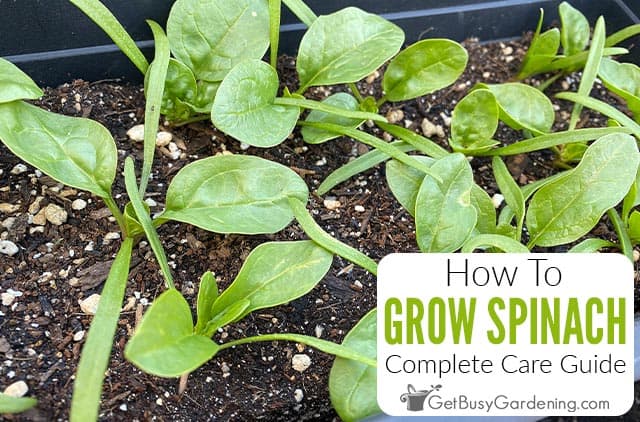

Spinach is a popular leafy green that many people find hard to grow. But I have some great news for you, it is a lot easier than you think.
It has a short season and low care needs, which make it perfect for beginners to try in their gardens and containers.
In this guide I’ve shared my best tips for how to grow spinach. You’ll discover when to plant, how to provide the best sun, water, temperature, and fertilizer, plus everything else you need to be successful.
Quick Spinach Care Overview
| Scientific name: | Spinacia oleracea |
| Classification: | Vegetable |
| Common names: | Spinach |
| Hardiness: | Annual |
| Temperature: | 35-75°F, protect from heat |
| Flowers: | Insignificant, blooms late spring-early summer |
| Light: | Full sun to partial shade |
| Water: | Keep soil evenly moist |
| Humidity: | Average |
| Fertilizer: | Nitrogen rich fertilizer monthly |
| Soil: | Rich, fertile, well-draining soil |
| Common pests: | Flea beetles, spider mites, aphids, rabbits, deer |
Information About Spinach
Spinach is a flowering plant native to Asia that belongs to the Amaranthaceae, or amaranth, family.
It’s an easy-to-grow, cool weather annual with a short lifespan, usually just a brief 6-10 weeks.
The low-lying plant can spread to nearly 1’ wide, with leaves reaching up to 6” long, though they can be enjoyed at smaller stages as well.
Different Types Of Spinach
There are dozens of types of spinach you can grow in your garden that have different ranges of heat tolerance, disease resistance, and more.
But all the varieties fall into one of these three categories:
- Savoy – Varieties like Bloomsdale or Regiment have deeply crinkled leaves and a more intense flavor.
- Semi-savoy – The leaves on these feature less dimpling, and are easier to clean. Try Butterflay, Catalina, or Lavewa varieties.
- Smooth-leaf – The smooth leaves on these are milder in flavor. Matador and Red Cardinal are popular for this type.
Hardiness
Spinach is a very cold hardy plant, often tolerant of temperatures as low as 20°F once it’s established.
They do not tolerate heat at all though. At the first sign of 75°F or warmer they’ll bolt, or go to flower.
How Does Spinach Grow?
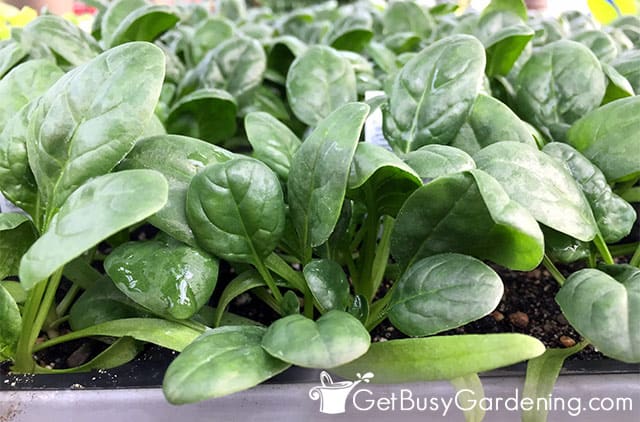
Spinach leaves grow in a rosette pattern around a central stem, with young leaves in the middle and older, larger ones on the outside.
They are edible at any stage. Baby leaves can be enjoyed when young and tender, and the older ones are delicious too.
How To Grow Spinach
The right location and time of year are essential for growing a successful spinach crop. Let’s talk about how to get started off right.
Where To Grow Spinach
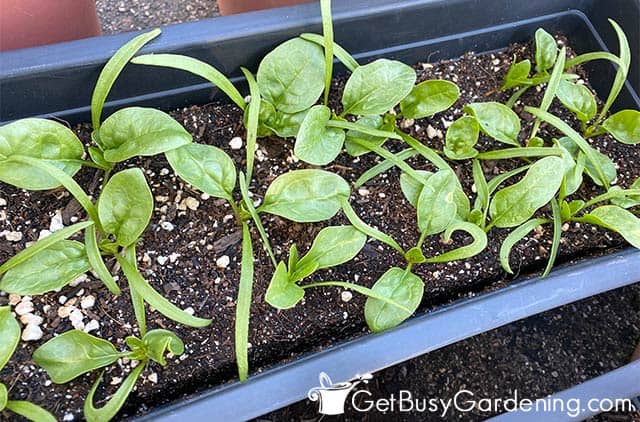
Spinach is a very compact plant that can grow in almost any empty spot you can find. They only need 4-5” of space.
It’s not a heavy feeder either, so it can flourish in containers, gaps in your garden beds, or even mixed in with other salad greens.
No matter where you choose, it prefers well-drained soil that’s rich with organic matter, and a cool spot where it will be protected from the hot afternoon sun.
When To Plant Spinach
The short growing season and heat sensitivity of spinach makes planting it at the right time extremely important, and one of the main keys for success.
Waiting too long will increase chances of it bolting before you get a worthwhile crop. But it isn’t difficult once you get the timing down.
Transplanting can also cause bolting, so direct sow the seeds 4-6 weeks before your last frost date, or as soon as the soil is workable in spring.
It can also be enjoyed as a fall crop. Plant in late summer to maximize the cool temps. In warm climates, it’s even possible to grow it through the winter.
Spinach Care & Growing Instructions
Spinach is low maintenance and easy to care for if given the right growing environment. Use these tips to maximize the short season.
Sunlight
Spinach can grow well in either full sun or partial shade, as long as it’s spared from heat.
Protection from the afternoon sun can help prolong its lifespan. So add row covers or a shade cloth to shield them during that time of the day.
Another reason they do best in the cooler months is that they will bolt when exposed to more than 14 hours of sunlight a day, regardless of how warm it is.
Water
Proper watering is another important factor for successful spinach care. Keep them evenly moist at all times, but never waterlogged.
Water when the top of the soil no longer feels damp, and avoid letting it dry out more than 1” down. Use a moisture gauge to monitor it.
Temperature
The ideal temperature range for growing spinach is between 35-75°F. It can tolerate cold down to 20°F, but won’t put on much growth.
When it gets hotter than that, the plant will quickly start to flower (bolt).
It’s also very important for the soil to be cool at planting time. Anything above 75°F will cause the seeds to go dormant. So use a soil thermometer to check it.
Fertilizer
Spinach isn’t a heavy feeder, so using an all-purpose or nitrogen-rich fertilizer once a month is all it will need.
Choose an organic brand, either a water-soluble one like compost tea or fish emulsion, or top-dress with slow-release granules. I always recommend avoiding any chemical fertilizers.
Soil
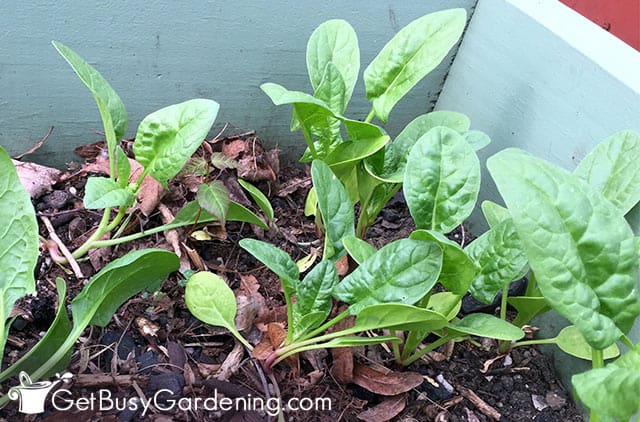
Start your spinach in a neutral soil that’s rich with organic matter to set them up for the entire season nicely.
Work compost or worm castings into the bed before planting to boost nutrients. That will also help with drainage so they don’t stay too wet.
Pest Control Tips
Spinach usually has few pest issues simply because it’s done growing by the time the bugs emerge in the warmer weather.
But that doesn’t mean they’re pest-free. Flea beetles, spider mites, aphids, and cutworms can all be an issue.
Treat them with diatomaceous earth or an insecticidal soap, or make your own from 1 teaspoon of gentle liquid soap and 1 liter of water.
Deer, rabbits, and other animal pests also enjoy a leafy treat if they can get to it. Fencing, netting, or row covers can help fend off furry invaders.
Disease Control Tips
Downy mildew, white rust, and mosaic virus are all potential issues when growing spinach.
To prevent them, avoid watering overhead. Soil or water splashing up and sitting on leaves can spread disease.
A natural fungicide can help control mildew issues if needed. Otherwise, pull infected plants before the problem can spread through the rest of your garden.
Tips For Harvesting Spinach
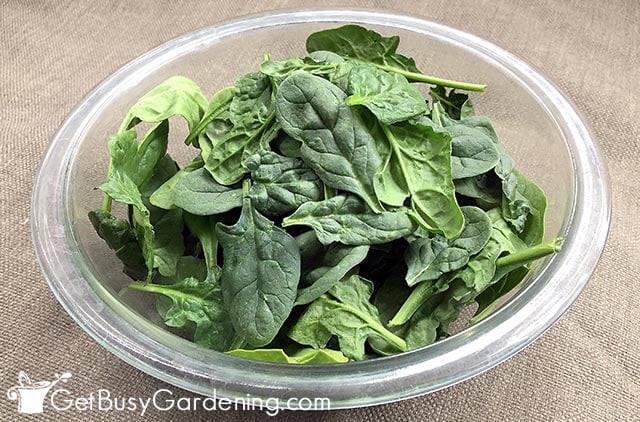
You can pick both the young and the more mature leaves as needed. Cut or pinch them off, working from the outside in.
As long as you don’t cut off the top of the main stem it will replenish itself. This might let you enjoy multiple harvests before the season ends.
Once you know temperatures are climbing, gather the remaining leaves before bolting, otherwise they will become bitter.
Related Post: Freezing Spinach With Or Without Blanching
Troubleshooting Common Problems
Spinach is beginner friendly once you get the hang of it. But if you face any of these common issues, my tips can help you get back on track.
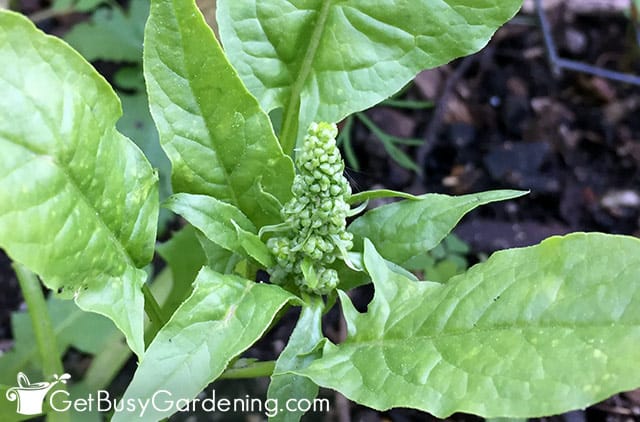
Spinach Going To Seed
If your spinach is going to seed, it’s usually because it has been exposed to too much sunlight or heat, but transplanting can also cause it.
The leaves will taste increasingly bitter as it bolts, so pull the plant and gather what you can immediately.
Plant Not Growing
No new growth could be caused by extremely cold temperatures, lack of sun, or too little water.
Keep the soil evenly moist, and make sure they’re getting partial sun, or at least 4-6 hours a day.
If it’s cooler than 35°F outside, you may just need to wait for temps to climb back up to see growth.
Yellow Leaves
Yellow or pale leaves are often caused by inconsistent water, temperature fluctuations, or a nutritional deficiency.
Keep the soil evenly moist through more frequent, smaller waterings, rather than occasional deep ones. You can also apply a high nitrogen fertilizer to help return the dark green.
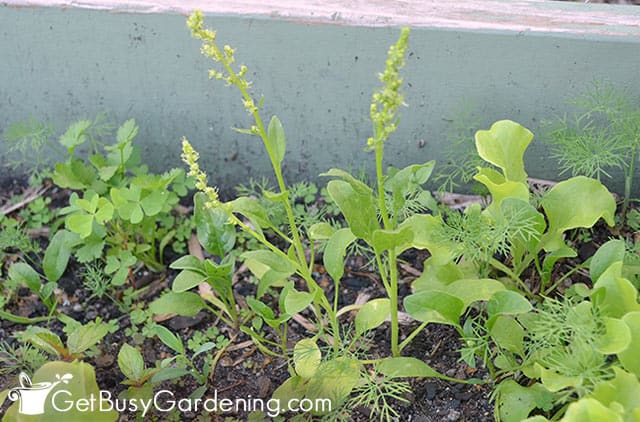
Plant Getting Taller
Once your spinach starts to grow taller rather than wider, it’s a sign they’re ready to bolt. Harvest everything you can from the plant before the leaves get bitter and it goes to seed.
FAQs About Growing Spinach
Here I’ve answered some of the most commonly asked questions about growing spinach. If yours isn’t on the list, please add it to the comments section below.
How long does it take to grow spinach?
Exactly how long it takes to grow spinach depends on the environment, variety, and care. But in general it takes between 40 to 60 days from seed to harvest.
Will spinach grow back after cutting?
Yes, spinach will grow back after cutting leaves from the plant, and will continue to replenish until heat signals the end of its season.
Why is it so hard to grow spinach?
While it can be hard to grow spinach when you’re not familiar with the care needs, you’ll find it’s actually very easy once you get the hang of timing and creating the ideal environment. Plant it early to avoid heat, provide afternoon shade, and keep the soil moist to help it flourish.
Does spinach need full sun or shade?
Spinach needs full sun to partial shade. Protecting it from the heat of the afternoon sun can help delay bolting and prolong the season.
What month do you plant spinach?
The month you plant spinach will depend on your climate. Aim for 4-6 weeks before the last frost date for your region, or as soon as the soil is workable in early spring.
How often does spinach need to be watered?
Spinach needs to be watered often enough to keep the soil consistently moist. When the top inch is dry, give it a drink, but avoid puddling or making it soggy.
Now that you see how simple growing spinach is, you can easily enjoy it in your spring or fall garden. Even a beginner can have a wonderful yield with these care tips in hand.

If you’d like to learn how to make the most of your space and get as much homegrown food as possible, then my Vertical Vegetables book is perfect! It will teach you all you need to know, has tons of gorgeous inspirational photos, and 23 DIY projects you can build for your own garden. Order your copy today!
Learn more about my Vertical Vegetables book here.
More About Vegetable Gardening
- How To Grow Lettuce At Home
- How To Grow Radishes At Home
- How To Grow Green Beans At Home
- How To Grow Brussels Sprouts In Your Garden
- 15 Colorful Vegetables To Grow In Your Garden
Share your tips for how to grow spinach in the comments section below.


Leave a Reply