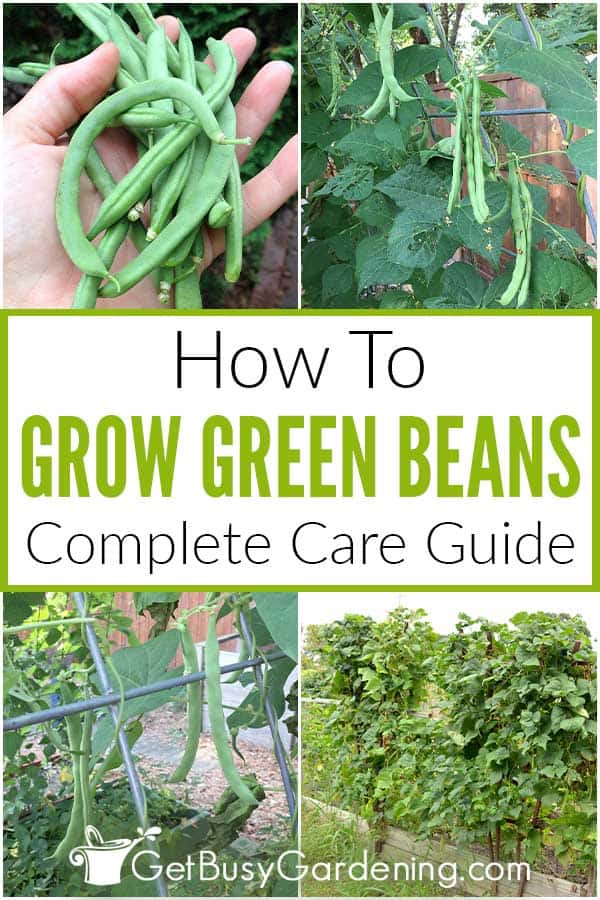
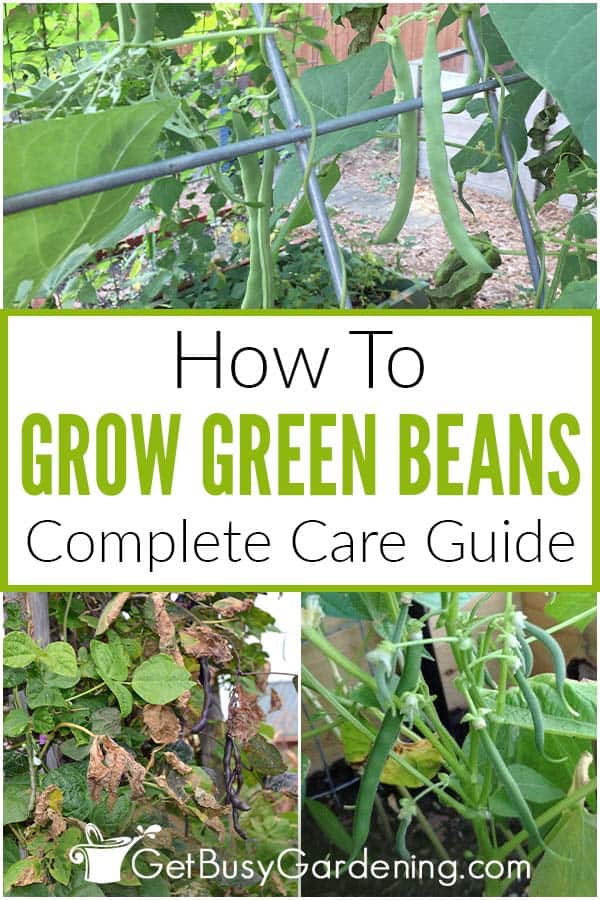
Growing green beans is fun and very rewarding. In this post, I’m going to show you all you need to know about how to care for them to get your biggest and best crop ever.
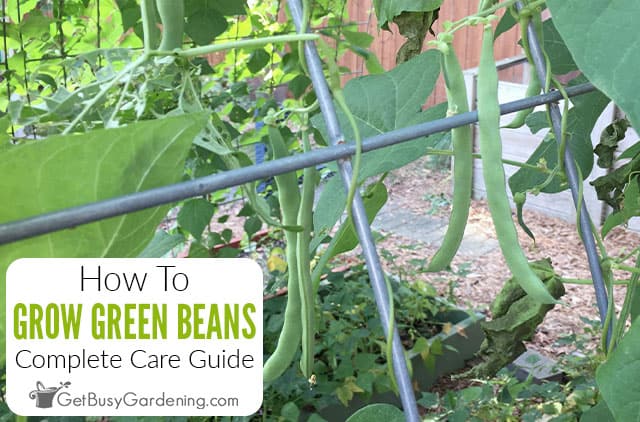

Tender, fresh green beans are a pleasure to grow once you get the hang of how to care for them.
Even a beginner can learn how to grow their own green beans, no matter their garden space or experience.
In this guide I’ve shared all of the information you need to know in order to start growing green beans at home.
Find out the best time of year and location to get started, and all the essential care tips for sunlight, soil, water, fertilizer, troubleshooting problems, and much more.
Quick Green Beans Care Overview
| Scientific name: | Phaseolus vulgaris |
| Classification: | Vegetable |
| Common names: | Green beans, string beans, haricot vert, snap beans |
| Hardiness: | Annual |
| Temperature: | 65-85°F |
| Flowers: | White, blooms summer-frost |
| Light: | Full sun to partial shade |
| Water: | Keep evenly moist |
| Humidity: | Average |
| Fertilizer: | Top-dress with compost monthly |
| Soil: | Rich, fertile, well-draining |
| Common pests: | Slugs, snails, beetles, aphids, rabbits, deer |
Information About Green Beans
Green beans (Phaseolus vulgaris), are legumes that grow edible pods and seeds.
Also commonly called string beans, haricot vert, or snap beans, they were originally cultivated in Central and South America, but are now grown all over the world.
Depending on the variety, they either produce continuously on long vines reaching 15’ or more, or provide a single-harvest from a compact bush that usually reach a maximum of 2’ tall.
Different Types Of Green Beans
At a very high level, there are two main types of green beans: pole (vining) or bush.
- Pole beans – The large climbing vines, are best suited for a garden plot, and require a trellis. They are very prolific, and will continue producing all summer long.
- Bush varieties – These compact types are ideal for small spaces or containers. They don’t require extra support, but also only yield one crop.
Both types include a wide range of heirloom and hybrid varieties that come in different colors and sizes.
Despite the name, they can be yellow, purple, many shades of green, or a combination of the three.
Kentucky Wonder, Carimant, or Cobra are a few popular vining ones. Or, check out Whopper, Celine, or Blue Lake bush varieties.
Hardiness
Though green bean plants can live for more than one year in an ideal climate, they cannot tolerate the cold or extreme heat.
High temperatures will cause blossom drop and stop pod development. Cold weather will also stop growth, and frost will eventually kill them.
For these reasons, most people must grow them as annuals, and replant them every year.
How Do Green Beans Grow?
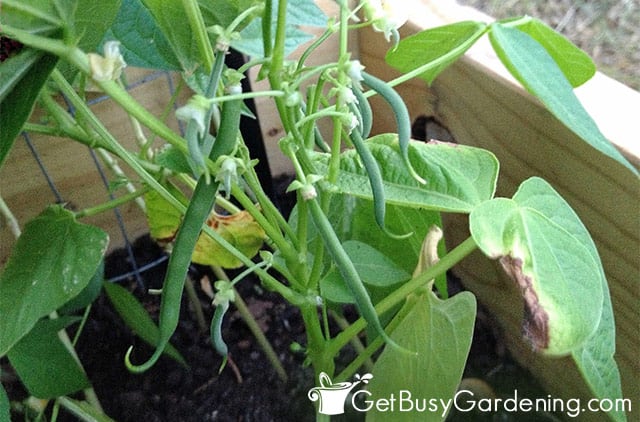
Individual green beans grow from self-pollinating flowers that typically start to appear 6-8 weeks into their life cycle.
Bees, butterflies, wind, or even a quick, gentle sweep of your finger around the flower will pollinate them. The edible pods will begin to form shortly after pollination, and typically mature within 7-10 days.
More flowers will continue to develop, even as it sets pods. Check back often to pick the mature ones, which will encourage the plant to keep producing.
Related Post: How To Save Green Bean Seeds From Your Garden
How To Grow Green Beans
Timing and location are important first steps for successfully growing green beans. Let’s talk about how to get both right.
Where To Grow Green Beans
Green beans grow and produce their best in a full sun location with well-draining soil.
Pole beans need plenty of space and a trellis, so make sure to select an area with ample room for them to climb and spread.
Bush types can be grown just about anywhere: in a garden, raised beds, or even in containers.
When To Plant Green Beans
Wait to plant your green beans until all danger of frost has passed in the spring, and ground temperature is around 70°F. You can use a soil thermometer to check it.
It is not beneficial to try planting them earlier. They can’t handle the cold at all, and cool soil will stunt their growth.
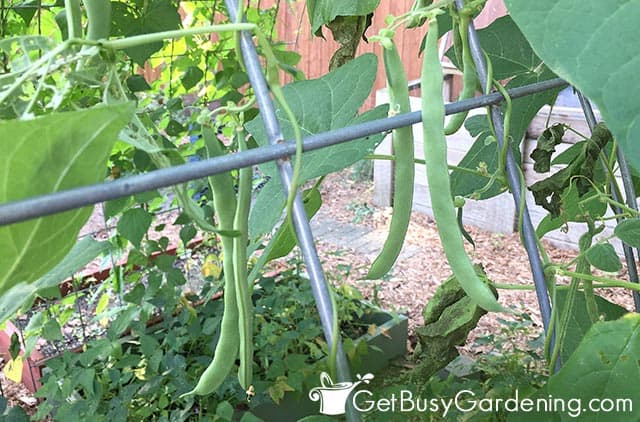
Green Beans Care & Growing Instructions
Now that you know when and where to grow green beans, let’s talk about how to care for them. Providing an ideal environment is the best way to get a good yield.
Sunlight
While green beans can flourish in partial shade, they will grow and produce the best in full sun.
Provide them with 6+ hours a day to encourage as much flowering and pod production as you can.
In hot or arid climates, position them in a location where they will be protected from the intense afternoon rays, or use a shade cloth to shield them.
Water
Green beans have shallow roots, and benefit from consistent moisture. When the top 1” of soil is dry, give them a deep drink.
Inconsistent or infrequent watering can result in blossom drop, drooping, and poor yield. While overwatering will cause yellowing and rot.
Use an inexpensive moisture meter, and keep in the 4-7 range to ensure you’re giving them the perfect amount.
Temperature
The ideal temperature range for growing green beans is between 65-85°F. They are not tolerant of extreme temperatures, either heat or cold.
When it falls below that, growth will slow, and frost will eventually kill the plant. High heat can cause blossom drop, or prevent flowering altogether.
If you live somewhere that gets very hot in the summer, then you can use a shade cloth to protect them when the temperature soars.
Fertilizer
Legumes like green beans have the unique ability to put nitrogen producing bacteria into the soil as they grow, basically providing their own fertilizer.
As long as you begin with fertile soil, there’s little need to feed them throughout the season.
But it’s always a good idea to top dress with compost or worm castings once a month.
Soil
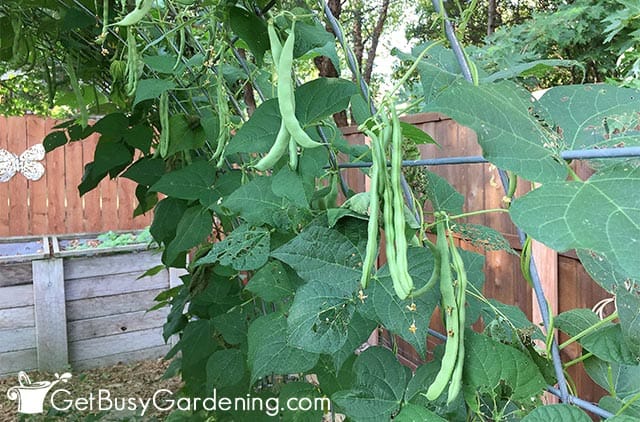
They aren’t particularly picky about the of soil you use. But for best results, grow your green beans in fertile, well-draining medium.
They prefer a mix that’s high in organic matter, with a range of 6-7.0 on your pH probe. But they can tolerate a wide variety of soils, from sandy to clay, as well as mildly acidic to alkaline.
You can amend poor quality soils with compost or worm castings, and add garden lime to neutralize extreme acidity.
Trellising
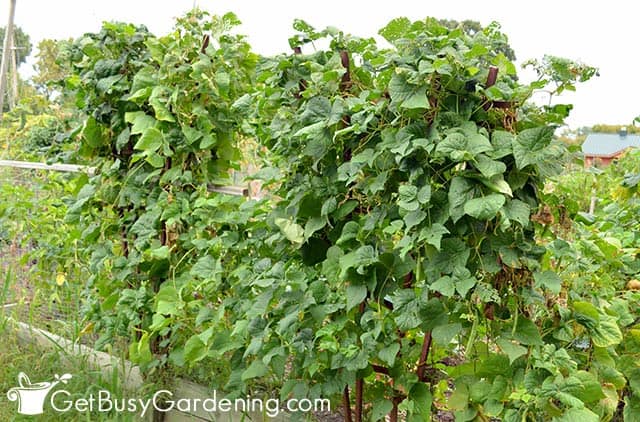
If you’re growing pole beans, trellising is key to controlling the sprawl of the vines. Bush types won’t need any extra support.
The vines are lightweight, but they will need something tall and fairly sturdy to climb on.
Teepees, fences, or arches are popular choices. There are many pre-made or DIY options out there to choose from.
Related Post: Freezing Green Beans With Or Without Blanching
Pruning
There’s really no need to prune bush green beans as part of their regular care. But you could remove any damaged or discolored leaves to keep them looking nice.
For climbing types, pinching out the top of the vines when they’ve reached the end of their support can help focus the plants energy on pod production, and encourage them to branch out more.
If you want, you can remove any dead or damaged leaves as often as you’d like. However, don’t remove too many leaves at one time.
Pest Control Tips
Green beans are magnets for all kinds of pests, both animals and bugs. Aphids, slugs, several species of beetles, thrips, and snails can all be damaging.
You can manage insects with hand-picking, a neem oil solution, diatomaceous earth, and insecticidal soap (or mix your own using 1 teaspoon mild liquid soap and 1 liter of water).
For furry pests, deter them with barriers if possible. Floating row covers, are difficult for large vines, but an option for bush varieties. Fencing usually works best to keep them away from both.
Disease Control Tips
Mosaic virus, bean rust, mildew, and blight are all potential diseases you may experience when growing green beans.
Keep an eye on the foliage for signs of red, yellow, white, or black discoloration and splotching.
Diseases are best managed by trimming away and destroying affected leaves or plants before they can spread. You can also try an organic fungicide to slow the spread in the very early stages.
Try watering at the roots rather than overhead to prevent splattering soil and water, which can spread disease faster.
Tips For Harvesting Green Beans
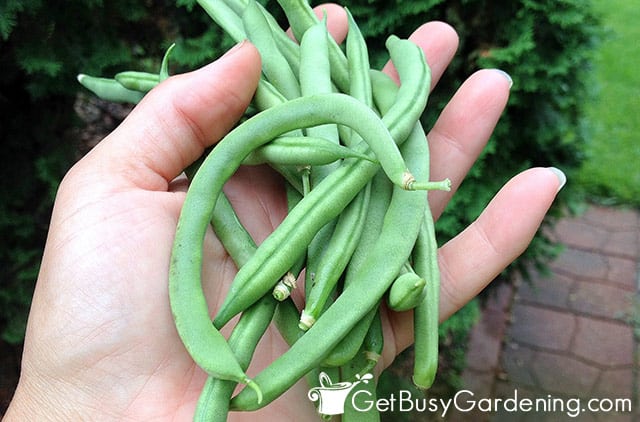
Picking pods while they’re young and tender not only results in a sweeter, crisper treat for you to enjoy, it also can increases production.
Pulling and yanking can damage the delicate stems though. So instead, either snip them off with precision shears, or break them off carefully using your other hand to hold the vine.
Related Post: How To Can Green Beans
Troubleshooting Common Problems
When growing green beans, you may run into one of these more common issues. Use my tips below to return yours back to good health.
Leaves Turning Yellow
Yellowing leaves can be caused by pests and diseases, but are most commonly caused by overwatering.
If the soil is soggy and wet, let the top 1-2” dry out between drinks.
Holes In Leaves
Holes in green bean leaves are most commonly caused by bugs. Japanese beetles, Mexican bean beetles, slugs, and cucumber beetles can all eat holes in them.
Row covers can help to keep pests off, as can hand-picking. Target pests with neem oil, diatomaceous earth, or insecticidal soap to kill or deter them.
Plant Not Flowering
Often it’s temperature fluctuation that stops green beans from flowering. Too low, too high, or extreme changes between the two can prevent blooms from forming.
But it can also be a lack of water, or too much nitrogen. Water consistently so the soil stays evenly moist, and add a phosphorus-heavy fertilizer to encourage bloom production.
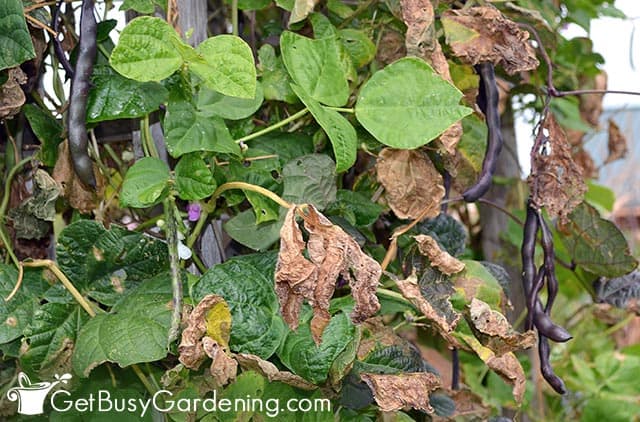
Brown Leaves
If you see browning leaves it could be from a bacterial disease like blight or bean rust, or from plants being too crowded and competing for resources.
The foliage will also start to naturally brown and die at the end of their life cycle, or as the weather starts cooling down in the fall.
FAQs About Growing Green Beans
Here I’ve answered some of the most commonly asked questions about growing green beans. If yours isn’t listed, please add it to the comments section below.
How long does it take for green beans to grow?
How long it takes for green beans to grow depends on the variety. From seed to harvest, they can range from as low as 50 days for bush types, to 70 for the larger climbers.
What month do you plant green beans?
The right month to plant green beans will depend on your climate. Wait until all danger of frost has passed in the spring and the soil temp is at least 70°F.
Are green beans easy to grow?
Green beans can be easy to grow once you understand how to create their ideal environment and care for them. Provide 6+ hours of sun, water them consistently, and stay on top of managing pests.
Do green bean plants come back every year?
No, green bean plants do not come back every year once they die back in the fall. Though it’s possible for them to live for more than one year in an ideal climate, most people grow them as annuals, and replant them yearly.
How long do green bean plants produce?
How long green bean plants produce depends on the variety. A bush type usually produces one crop then begins to die. While larger pole varieties will continue to produce until temperatures are too hot or cold for them.
Growing green beans can be simple and fun, even for a beginner, when you’re equipped with the right knowledge to create their ideal environment. Use these tips to encourage healthy, sustained growth all season long.

If you’re ready to learn how to create a beautiful and highly productive veggie garden, then you need my book, Vertical Vegetables. It will teach you how to be successful, and also has 23 DIY projects you can build for your garden. Order your copy today!
Learn more about my Vertical Vegetables book here.
More About Vegetable Gardening
- How To Grow Summer Squash
- How To Grow Cucamelons (Mouse Melon)
- How To Grow Spinach
- How To Grow Eggplant
- How To Grow Peas
- How To Grow Your Own Sprouts
- How To Grow Winter Squash
Share your tips for how to grow green beans in the comments section below.

James says
My bush beans have runners on them, can I snip them off, or should I leave them alone?
Amy Andrychowicz says
Humm… I’m not sure what you mean whey you say your bush beans have “runners”. Do you mean they’re popping up from underground, or that they’re vining out?
Barbara A Tyo says
My green beans are turning yellow. They are not ready to pick yet. What causes this? I have grown been for years and never had this happen.
Amy Andrychowicz says
The most common reason for green bean plants turning yellow is too much water. Let the soil dry 2″ deep before giving them a deep watering.
Annette says
my blue lake green beans are slowing their production, and it is the beginning of August in SW Ohio. They are in a raised bed, and they are the second plant of the season. I plan to reuse the bed for fall gardening, but want to know if I can get extra benefit by turning them under before planting another fall crop, or just pull and discard. I still have seeds for next spring.
Thanks.
Amy Andrychowicz says
Definitely pull them and discard, rather than turning them under. Your bean plants won’t have time to break down before planting your fall crops, so I don’t see any added benefit by doing that.
Peter Nash says
I have been growing runner beans for the 40 odd years but the lady couple of years I have had aproblem. Some of my beans gave been growing half way up the stickes and give up turn brown and die. At first I thought it was ants but I have pulled a few dead plants now and there are no ants about. I have now grown fresh plants and will plant some more. Fingers crossed these will grow