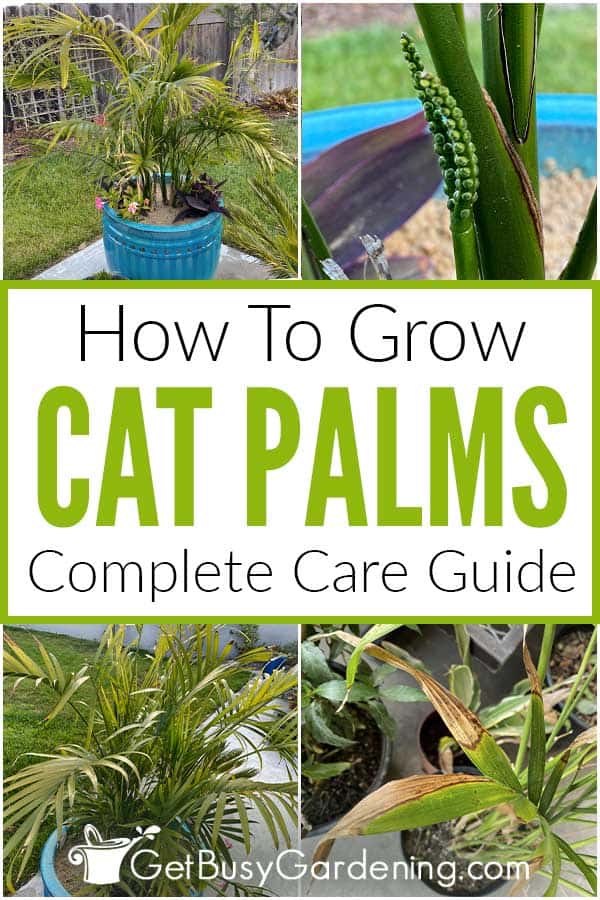
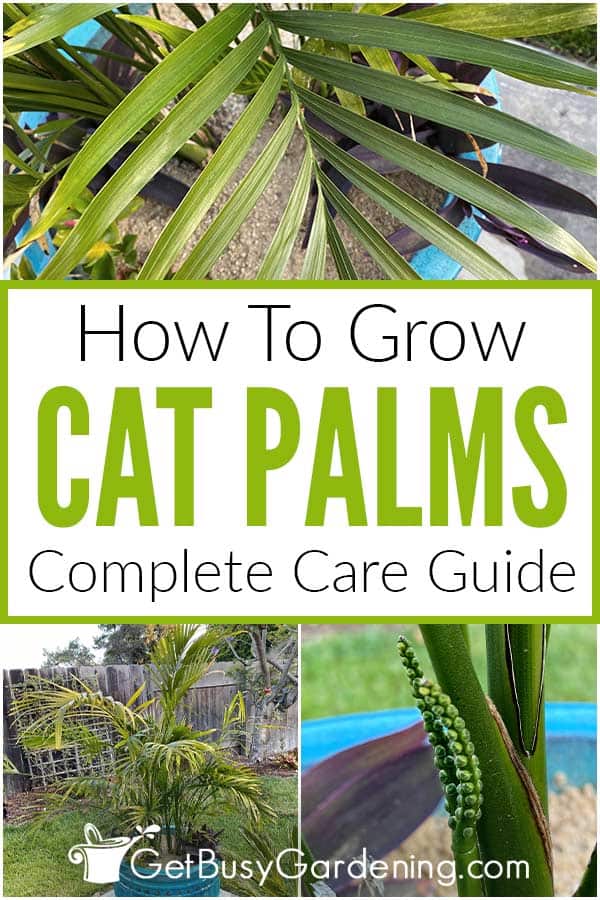
Cat palm plants are easy to care for, and grow well either indoors or outside. In this post, I’ll tell you everything you need to know in order to keep them thriving for many years to come.
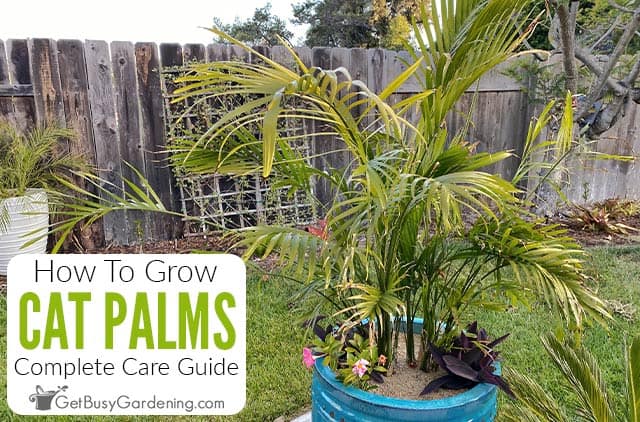

Enjoying the green foliage of a cat palm is easy, even if you’re a beginner gardener. They’re low-maintenance, tolerant nature makes them perfect to feature in your home or outdoors.
This guide is designed to teach anyone about cat palm plant care so they can grow them successfully.
Discover what kind of water, light, soil, and maintenance they need so you can care for your cat palm like a pro in no time.
Cat Palm Quick Care Overview
| Scientific name: | Chamaedorea cataractarum |
| Classification: | Palm plant |
| Common names: | Cat palm, cascade palm, Mexican hat palm |
| Hardiness: | Zones 9+ |
| Temperature: | 65-80°F |
| Flowers: | Yellow, blooms late winter-spring |
| Light: | Full to partial shade, bright light indoors |
| Water: | Keep soil evenly moist, never let it dry completely |
| Humidity: | High |
| Fertilizer: | General purpose plant food spring-summer |
| Soil: | Fast-draining, fertile soil |
| Common pests: | Spider mites, scale, mealybugs |
Information About Chamaedorea cataractarum
Cat palms, or Chamaedorea cataractarum, are native to Southern Mexico and Central America. They also go by the name cascade palm, cataract palm, and Mexican hat palm.
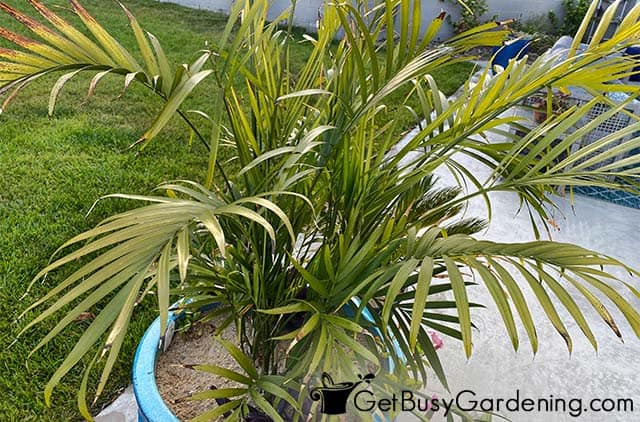
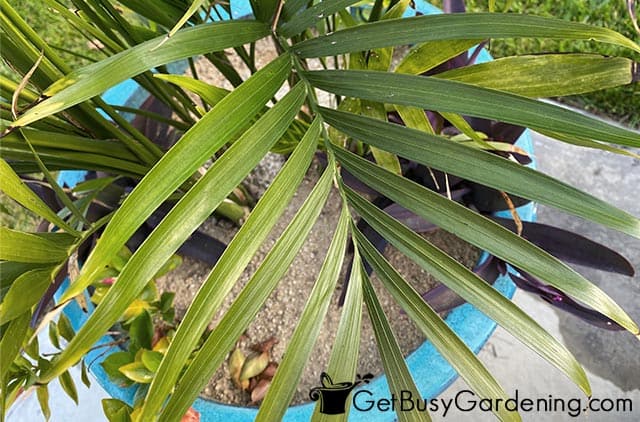
There is no central trunk, but rather a collection of stems that produce fronds in a bushy shape. They are wide, with feather-shaped leaves that can reach 1’ wide on either side.
They’re grown for their blue-green year-round foliage, easy-care, and air-purifying qualities. Outdoors they can reach up to 6’ tall. But in containers, they’re more commonly 2-3’.
Flowers
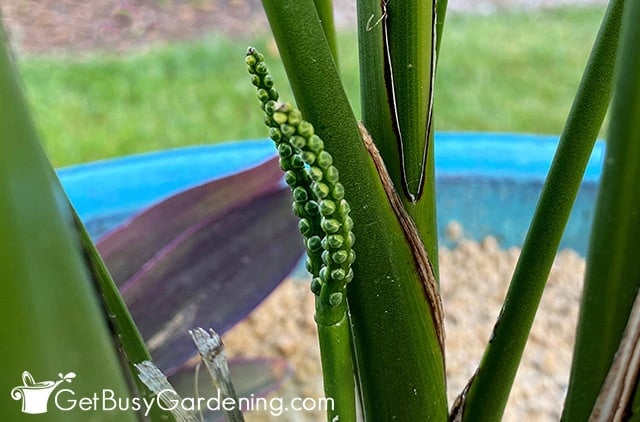
Cat palms produce bloom spikes in the late winter or early spring that blossom into small, bright yellow flowers.
If grown near another Chamaedorea cataractarum, the flowers can be pollinated and produce small berries that contain seeds.
How To Grow Cat Palms
Before we talk about cat palm care, let’s chat about where to grow them. Choosing the right location is important to keep them thriving.
Cat Palm Hardiness
Cat palms are not cold hardy, and can only be grown outdoors year round in zones 9-11.
Though they can survive lows of 20°F, the foliage will begin to suffer at anything less than 50°F.
Where To Grow A Cat Palm
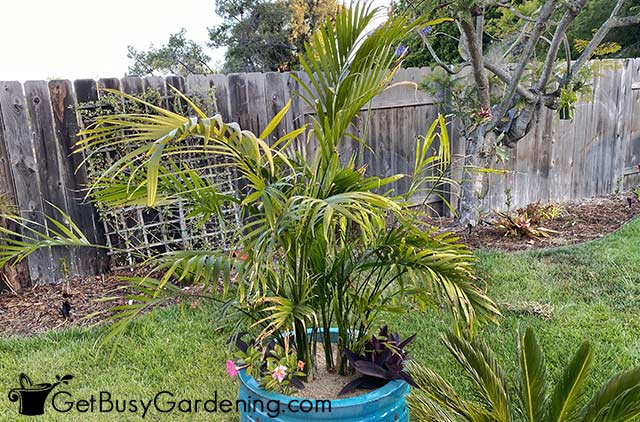
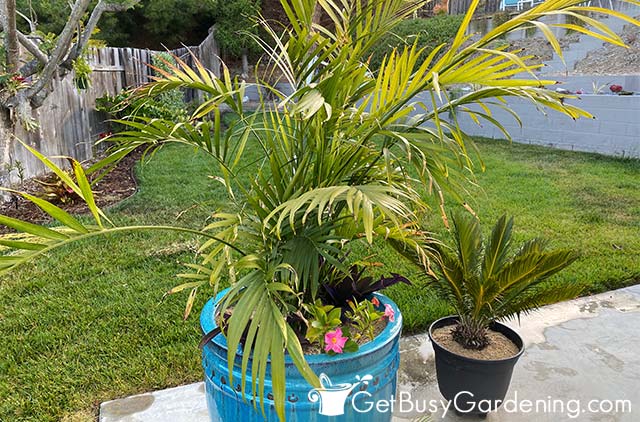
In a warm enough climate, they’ll love a partial to full shade garden location outdoors. They also do very well in containers that have good drainage.
Many people keep them as houseplants during the winter, and move them outside in the warmer months.
Cat Palm Plant Care & Growing Instructions
Now that you have an idea of where to grow them, let’s talk about the details of cat palm care. Creating the right environment will encourage the healthy, green foliage.
Light
Direct sunlight can actually be damaging to the green fronds. They can tolerate some morning or evening rays, but prefer a partial to full shade location outside.
Indoors they’ll do best in a bright spot with plenty of indirect light. Rotate them often to keep the exposure even, or add a grow light to supplement.
Water
Cat palms like water, and need to be kept consistently moist in order to flourish.
Let the soil dry out only 1-2” down, then give them a deep drink, and allow the excess to drain off. Use a moisture meter to help you get the amount just right.
They also can be sensitive to the minerals and chlorine in tap water, or to temperature shock if it’s too cold. For best results, use filtered tap, tepid distilled or rainwater.
Humidity
Since they’re native to damp, tropical environments, your cat palm will thrive in 50% humidity or more. Most homes are too dry, so you will likely need to supplement it.
You can measure humidity levels with a digital hygrometer. If needed, run a small humidifier nearby, set the container on a pebble tray, or mist them frequently to add more moisture.
Temperature
The ideal temperature range for growing Chamaedorea cataractarum is between 65-80°F.
They can survive down to 20°F, but the foliage will suffer and begin to die back when it drops below 50°F.
In cold climates, it’s best to bring it inside in the fall before it gets below 60°F at night. In hot weather, they’ll need more shade and frequent irrigation to endure the heat.
Fertilizer
Consistent feeding is a great way to stimulate healthy new growth on your cat palm, and it’s an important part of their care.
Give them a dose of a balanced liquid houseplant fertilizer, compost tea, or fish emulsion once a month in the spring and summer.
Otherwise you could also use slow-release granules once or twice per season. Either way, stop in the fall and winter.
They are sensitive to chemicals, so I recommend using natural, organic options to prevent fertilizer burn on the roots or leaves.
Soil
The ideal soil is a sandy and porous mix that retains moisture, but also has good drainage. A pH range of 6-7.8 is best, which you can check with a probe meter.
There are many options for creating a good mix for them, the easiest is to use a pre-made fast-draining mix.
Another option is combining 2 parts regular potting soil, with 1 part each of pine bark, and perlite.
Repotting
Cat palms don’t need frequent repotting as part of their regular care routine. In fact, many home gardeners keep them somewhat pot-pound in order to restrict the growth rate.
If yours is showing roots through the drainage holes however, it’s time to size them up. Tackle it in the spring or summer, and go up only 1-2 pot sizes.
Make sure you repot at the same depth, and be gentle with the delicate, brittle roots.
Pruning
There’s no real need to prune your Chamaedorea cataractarum unless you’d like to remove yellowing or otherwise damaged leaves.
It’s common for the bottom leaves to die with age as new growth appears in the spring. Once they’re completely yellow or brown, you can trim them away with clean precision pruners.
Pest Control Tips
Healthy cat palms rarely have issues with pests, but they can occasionally be bothered by spider mites, scale, and mealybugs.
The best method for organic control is to treat them with a neem oil solution or insecticidal soap. I make my own by combining 1 teaspoon of mild liquid soap with 1 liter of water.
Cat Palm Propagation Tips
Cat palms can be propagated by seed, but it’s only possible if you have two plants for pollination. Even then germination is unreliable.
The most common way is by division. Use a sharp sterile knife to separate the pups when they’re 1’ tall, carefully removing a section of roots with it. Replant at the same depth in a new pot, and water gently.
Troubleshooting Common Care Problems
Cat palms are easy to grow once you understand how to care for them. But over the years you may encounter one of these common issues. Use my tips below to get them back into good health.
Yellow Leaves
There are many reasons why your Chamaedorea cataractarum could develop yellow leaves, like overwatering, temperature swings, age, or nutrient deficiencies.
Cat palms need consistent moisture, but can develop root rot if left in soggy or poorly drained soil. Heat above 80°F or below 50°F can be damaging, as can a lack of nutrients in depleted soil.
Yellowing is also a natural part of aging, so if the bottom leaves begin to turn, but the rest of the plant looks healthy, there’s nothing to worry about. Simply trim them away.
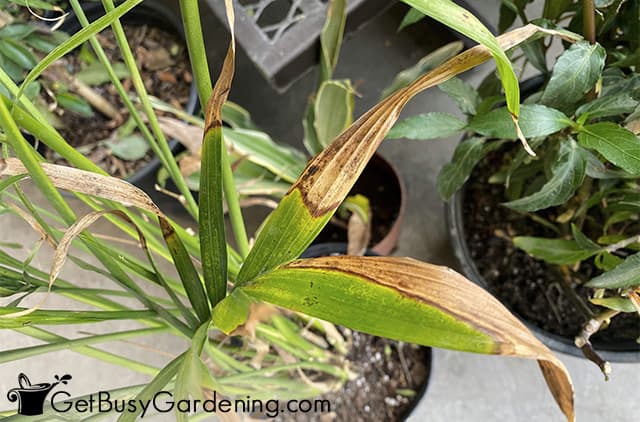
Brown Tips
Browning tips is also a very common problem. Sunburn, bugs, mineral build up from tap water, or using synthetic fertilizers could cause brown spots or tips.
Treat any pests you see right away, and keep cat palms out of direct sun, especially in the hottest part of the afternoon.
If you’ve been watering with tap water or applying chemical fertilizer, you can flush the pot with distilled or rainwater for 5-10 minutes to flush out the buildup.
FAQs About Cat Palm Care
Here I’ve answered some of the most commonly asked questions about cat palm care. If yours isn’t on the list, please add it to the comments section below.
Is cat palm safe for cats and dogs?
According to the ASPCA website, cat palms are not toxic to cats and dogs, and considered a safe plant to have near your pets.
Are cat palms easy to care for?
Yes, cat palms are easy to care for. Give them partial shade or bright indoor light, consistent water, and high humidity, and they’ll grow without much attention.
Do cat palms grow fast?
Cat palms do not grow fast, and can take up to a decade to reach full size, even in the best conditions.
Is a cat palm a good indoor plant?
A cat palm is a great indoor plant that can grow well in bright, indirect light when watered consistently and provided with enough humidity.
Can cat palms take full sun?
No, cat palms can not take full sun, and the leaves can burn in direct exposure. Full to partial shade, especially during the afternoon hours, is ideal.
Now that you see how simple cat palm plant care is, you can grow one in your home or outdoors. Use these tips to keep it happy and healthy for many years to come.

If you want to learn all there is to know about maintaining healthy indoor plants, then you need my Houseplant Care eBook. It will show you everything you need to know about how to keep every plant in your home thriving. Download your copy now!
More Houseplant Care Guides
- How To Care For Sago Palm Trees (Cycas revoluta)
- How To Care For Umbrella Tree Plant (Schefflera arboricola)
- How To Care For Dracaena marginata (Madagascar Dragon Tree)
- How To Care For A Pink Princess Philodendron
- How To Care For Fiddle Leaf Fig Plant (Ficus lyrata)
- How To Care For Black Pagoda Lipstick Plant
Share your cat palm plant care tips in the comments section below.


Leave a Reply