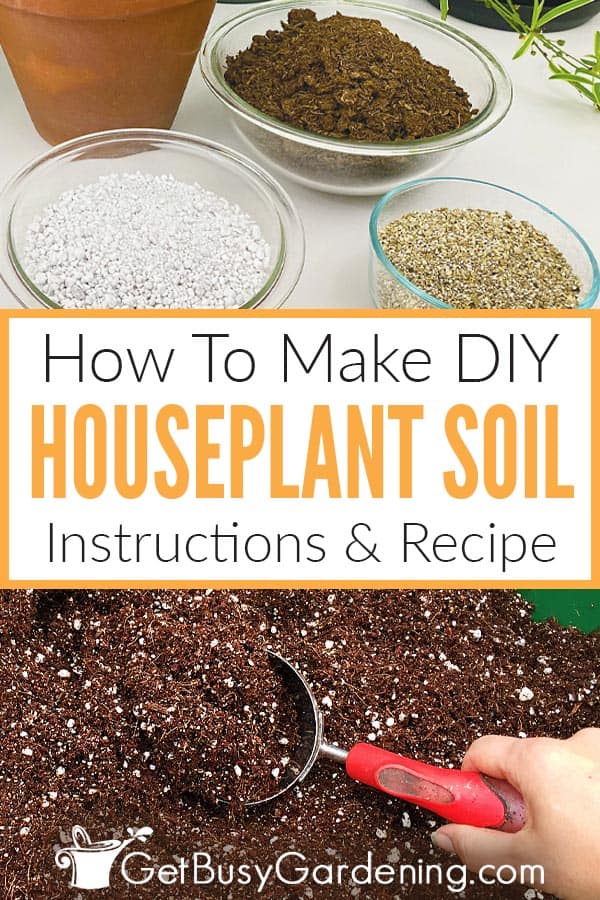
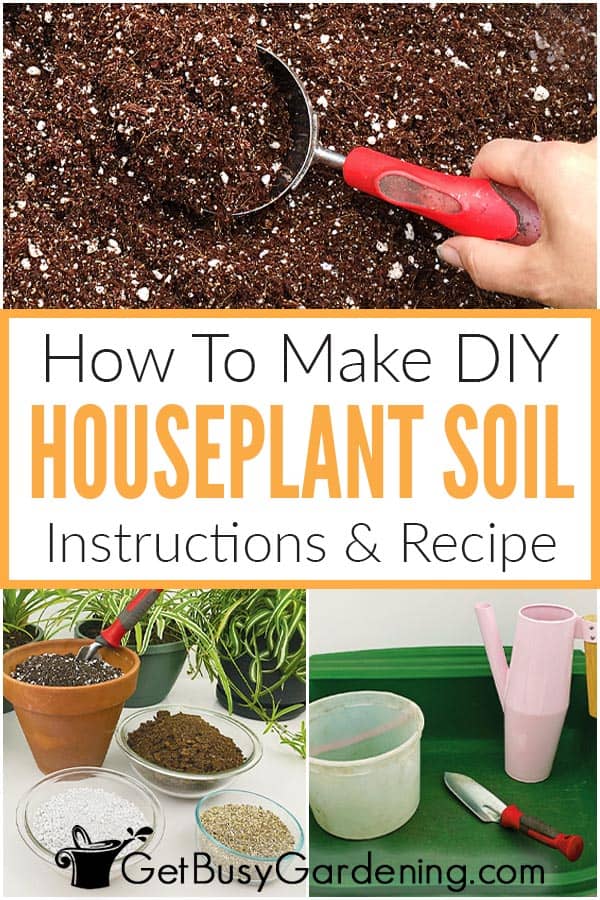
Finding the perfect houseplant potting mix can be frustrating. That’s why I came up with my own DIY recipe that is both easy and budget friendly! In this post, I am going to show you exactly how to make potting soil for indoor plants, from scratch.
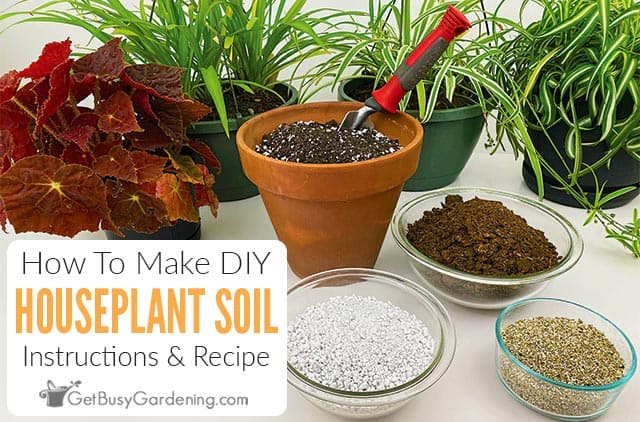

Making your own homemade indoor potting soil may sound difficult, but it’s actually super simple! This mix only has three ingredients, and is perfect to use for growing houseplants.
Below I’m going to show you exactly how to make an all-purpose DIY houseplant potting mix. So, if that is what you’re looking for, then you’re in the right place.
However, if you have succulents or cactus plants, they require a special medium. So, you should use this recipe instead. Keep reading to learn how to make potting soil for indoor plants…
The Best Soil For Houseplants
I’ve been growing indoor plants most of my life, and I’m pretty sure I’ve used just about every type of retail houseplant soil mix in existence. It always amazes me how different they can be, depending on what brand you buy.
I find that many types of commercial mixes either don’t have enough drainage, won’t retain water, contain a lot of sand, or have large chunks of rocks or sticks in them (so annoying!).
Most houseplants need a light and fluffy mix that has both good drainage, and moisture retention.
Otherwise the soil can become compacted, and won’t retain moisture at all. Or it can hold too much water, and become overly saturated.
Neither of these scenarios will end well for your houseplants, and you will struggle to keep them thriving. But, if you don’t want to make your own, then this is a good mix that you can use instead.
Related Post: 7 Easy DIY Potting Soil Recipes To Mix Your Own
Benefits Of Making Potting Mix For Houseplants
Not only is it easy to whip up a batch of homemade houseplant potting soil whenever you need it, there are other benefits too.
Getting the ingredients in bulk and mixing your own is cheaper than the buying the pre-made stuff.
Plus, you have complete control of what goes into your mix. So, since you know exactly what’s in it, you can feel good about using it for all of your indoor plants!
And, since you control the ingredients, you can easily modify my recipe to come up with your own. That way, all of your houseplants can have the exact type of soil that they need.
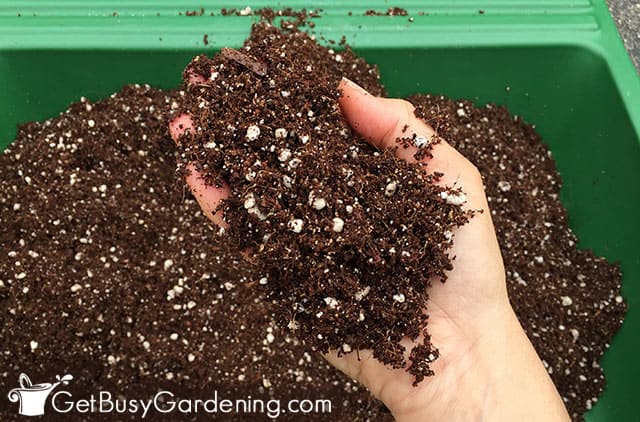
How To Make Potting Soil For Indoor Plants
I guess you could say I’ve become a bit of a houseplant potting soil snob over the years, LOL. Yes, I admit it. And that is exactly why I’ve come up with my own mix.
Plus, I use the same ingredients in other soil mixes that I make. So they will never go to waste, and I always have them on hand when I need to whip up a fresh batch for my houseplants.
Houseplant Potting Soil Ingredients
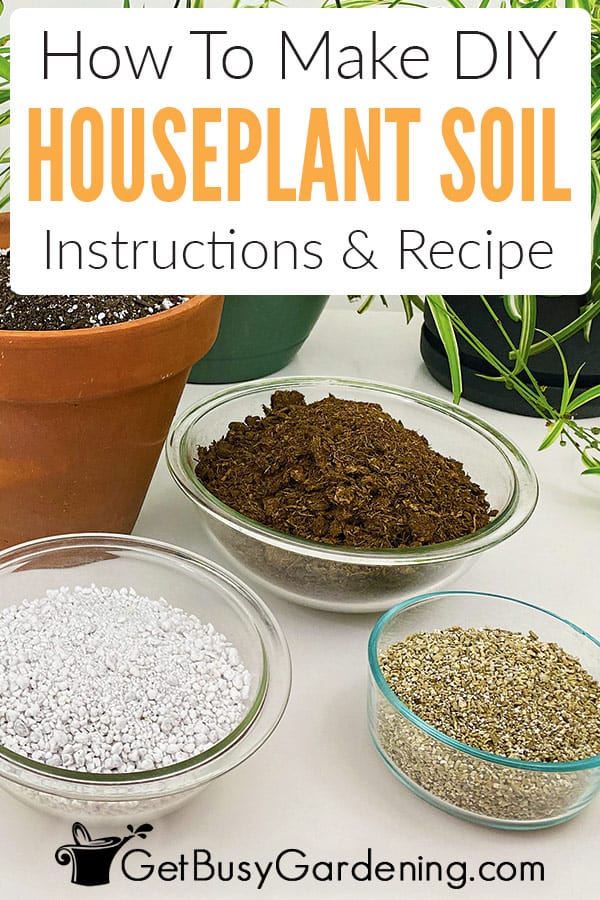
To make this really simple, you will only need three ingredients! You should easily be able to find all of these at any garden center or home improvement store where houseplant soil is sold. Here’s a quick description of each one…
Peat Moss Or Coco Coir
This is your base ingredient, and adds moisture retention to the soil.
The main difference between these two is that peat moss is very slow to renew, and isn’t as sustainable as coco coir (which is the bi-product of coconut processing).
I personally prefer using coir, but you can choose either one.
Perlite Or Pumice
Perlite is the white pieces that you see in most potting mixes. It adds drainage, and helps to prevent compaction.
If you can’t find it, then you can use pumice instead. Both of these options are all-natural, so no worries there.
Vermiculite
Vermiculite is a natural mineral that helps to prevent soil compaction, keeping the mix light and fluffy.
Another benefit is that it retains moisture. It is also very lightweight, so won’t add any extra heft to the mix.
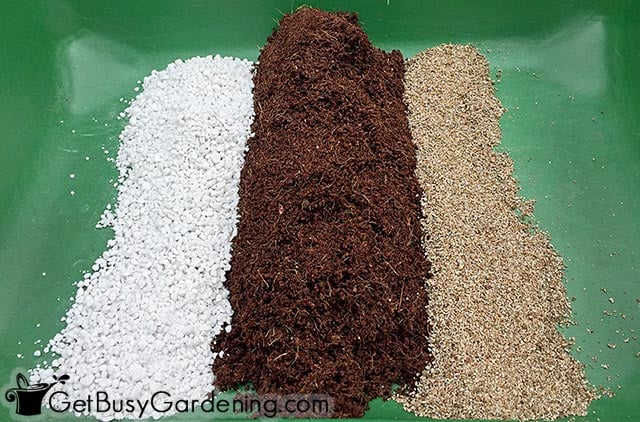
Supplies Needed:
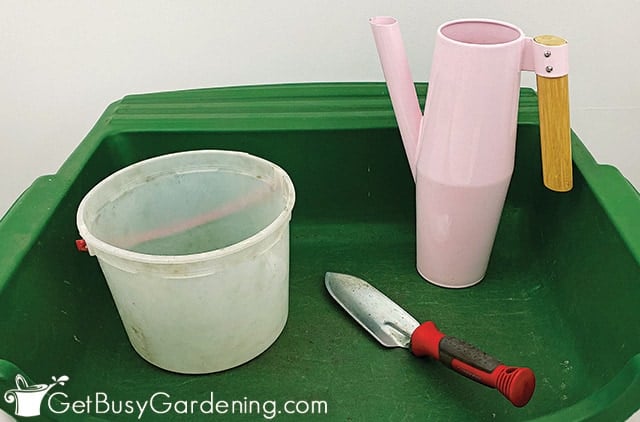
- Measuring container (I use a 1 gallon bucket, but you can use any size measure you want)
- Soil scoop or hand trowel
- Large garden tub, bucket, potting tray, or wheelbarrow
- Safety mask (you don’t want to breath in the dust)
- Water
DIY Indoor Plant Potting Mix Recipe
- 2 parts pre-moistened peat moss** or coco coir
- 1 part perlite or pumice
- 1/4 – 1/2 part vermiculite
** Peat moss is acidic, and most houseplants prefer an alkaline soil. So, if you use peat moss, you should add one tablespoon of garden lime per gallon to balance it out. You can use a pH tester to make sure it’s neutralized, if you want.
What does “part” mean?
A “part” could be anything, it’s just a generic unit of measure. One “part” can be a cup, a gallon, a scoop, a handful… whatever makes the most sense to you, and how large of a batch you plan to make.
Related Post: How To Make Your Own Gritty Mix Potting Soil
How To Mix Potting Soil For Houseplants
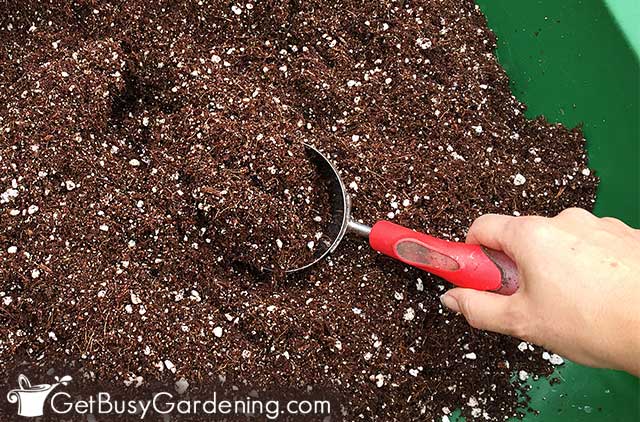
First, dump all of your ingredients into a garden tub, wheelbarrow, potting tray, or bucket. Then use your soil scoop or trowel (or your hands) to mix it all together.
If it’s a small batch, and you’re using a container with a lid for mixing, you could shake it up to combine the ingredients.
Whichever method you choose, just make sure that everything is mixed together evenly. After you’re done, you can use the soil right away for repotting houseplants, or save it for later.
If you are going to use it right away, then this would be a great time to add in some all-purpose granular fertilizer. Follow the instructions on the package so you know exactly how much to add.
Storing Leftover DIY Houseplant Soil
I make my DIY houseplant potting mix in large batches, and then store the leftovers so I always have some on hand.
It’s easy to store, and you can keep on a shelf in the garage, your basement, or even a shed.
Just be sure to put it into an airtight container. Soil is a breeding ground for indoor plant bugs, and even the stuff that’s sitting in storage can become infested. Yuck, you don’t want that.
I keep mine in a five gallon bucket with a tight fitting lid. If yours doesn’t have an air-tight lid, then I recommend these lids, which fit on a few different sized buckets.
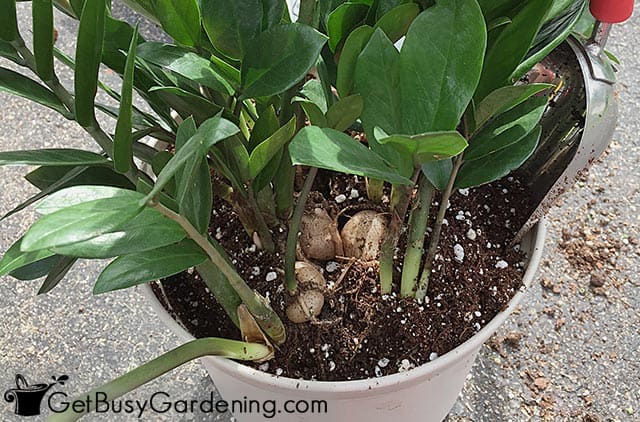
Making homemade indoor plant soil is easy and economical. This recipe is perfect for most types, or you can adapt it to fit the needs of your specific houseplants. Now that you know how to make potting soil for indoor plants, the possibilities are endless.
If you want to learn all there is to know about maintaining healthy indoor plants, then you need my Houseplant Care eBook. It will show you everything you need to know about how to keep every plant in your home thriving. Download your copy now!
More Houseplant Care Posts
- How To Make Potting Soil For Outdoor Containers
- How To Make Your Own DIY Seed Starting Mix
- How To Water Indoor Plants
- How To Fertilize Houseplants:
- How To Mount A Staghorn Fern (Platycerium)
Share your recipe, or tips for how to make potting soil for indoor plants in the comments below!

Sarah says
Hello!
Is this potting mix ideal for dieffenbachias and bromeliads or would it be too acidic?
Amy Andrychowicz says
You can use this potting mix for any type of tropical houseplant, so yes. To make it more alkaline, you can either use coconut coir instead of peat moss, or add garden lime to it as I mention in the recipe.
Dena says
I have calatheas, Boston ferns, peace Lily, spider plants, monstera and devils ivy. I am a beginner! Can I use the same mix for all above? If so what is the best ingredients to use. Thank you.
Amy Andrychowicz says
Yes, you can use this potting soil mix for all of the plants you mention. Calatheas like a slightly acidic soil, so I would use the peat moss for them rather than coco coir.
Heather says
This is a fab mix! I couldn’t get the Coco coir easily so omitted it. Will this be detrimental?
Amy Andrychowicz says
This houseplant soil recipe calls for ether peat moss OR coco coir. So, as long as you used the peat moss as your base, you don’t need to also use coco coir, so you’re all set.
Rob says
What nutrients are in this mix and what is your advice on adding nutrients? Thanks.
Amy Andrychowicz says
Some nutrients will come from the peat/coir in this recipe, especially as it starts to break down. But this is just a basic indoor plant potting soil. It’s best to add more nutrients once you’re ready to use it, which you should customize depending on the plant. Here’s a detailed article about that… How To Fertilize Houseplants: The Ultimate Guide.
Hope says
What size coir particles do you use?
Amy Andrychowicz says
For this potting mix recipe for indoor plants, I just use the bag that contains various particle sizes.
Kirsty says
So you only need these three ingredients? Or do you add this to a soil base?
Amy Andrychowicz says
You only need these 3 ingredients! 🙂
Rachel says
Would you recommend adding Leca balls to the bottom of a pot when using this mix? Thanks in advance!!
Amy Andrychowicz says
There’s no reason to put Leca balls into the bottom of the pot before adding your potting soil. Using a pot with drainage holes is all you need to do.
Lily Feagin says
Thank you for your great tips. I have read so much about gnats, and I have lost multiple plants to garden gnats myself. What soil do you recommend for the least problem with these bugs?
Amy Andrychowicz says
Yes, they are a very common problem in any type of houseplant potting soil. Here’s a post for you that has all of the details about them, and how to eliminate them… How To Get Rid Of Fungus Gnats In Houseplants Soil Hint: most of the time the problem is from overwatering, rather than the type of soil you use.
Renee Christine says
Thanks for this great recipe! I have been needing to make my own houseplant soil for awhile now, and your steps made it so easy!
Amy Andrychowicz says
You’re welcome!
Megan Mathew says
Do you find that you need to water your houseplants less often in this mix (coco coir, vermiculite, and pumice/perlite)? I’m finding that this mix retains moisture way longer than my usual bagged potting soil.
Amy Andrychowicz says
It really depends on the ingredients that were in the type of potting soil you were using before. Coir and vermiculite both help to retain moisture. So, if the soil you were using before was low on or void of those ingredients, then yes, this mix will definitely retain moisture longer.
Liam says
I keep getting white mould of the surface of my potting soil. How can I stop this?
Amy Andrychowicz says
When mold grows on top of potting soil, that means it’s too wet. Allowing the soil to dry more between waterings, so at least the top 1″ is dry, will kill the mold. To get rid of it faster, you can scrape it off and toss it into the garbage.
Matthew says
Would this work for vegetables like tomatoes, peppers, herbs, greens, etc.? Specifically, the coconut coir mix version?
Amy Andrychowicz says
This soil recipe is best for indoor plants. I do have one specifically for herbs & veggies, you can find it here… 7 Easy DIY Potting Soil Recipes To Mix Your Own.
Alec says
I forgot to get the coco coir wet whilst mixing the ingredients. Is it possible to fix the mistake after I’ve already mixed everything together? As I really don’t want to waste the already mixed material.
Amy Andrychowicz says
Yes, no problem. You can add water to your DIY indoor potting soil mix, and stir it all together. Just add a bit of water at a time, so it’s not too wet. Then add more if necessary, until it’s perfectly moist. 🙂
MAURICE WEBB says
can i use poultry grit instead of pumice for indoor plants
Amy Andrychowicz says
I recommend using perlite as an alternative for pumice. Poultry grit is a good alternative for sand in a mix that you would make for plants that need well-draining soil (like in my DIY succulent soil mix recipe).