

Chinese evergreens are one of the best houseplants out there, and they’re very easy to care for. In this post, I’m going to tell you all there is to know about growing them, so you will have the best success.
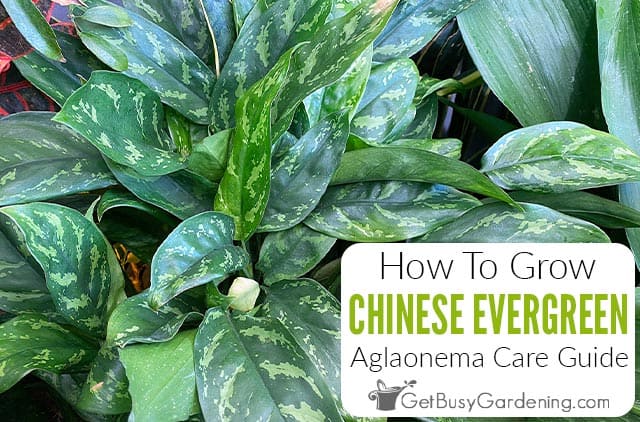

There are few more durable and care-free houseplants than the Chinese evergreen. They are perfect for beginners and experts alike.
Once you have one, it’s important to learn how to keep it lush and healthy so it can live a long and healthy life.
In this Chinese evergreen plant care guide I’ll teach you everything you need to know. Learn how to choose the best location, as well as tips for watering, soil, light, pruning, fertilizing, and so much more.
What Is A Chinese Evergreen
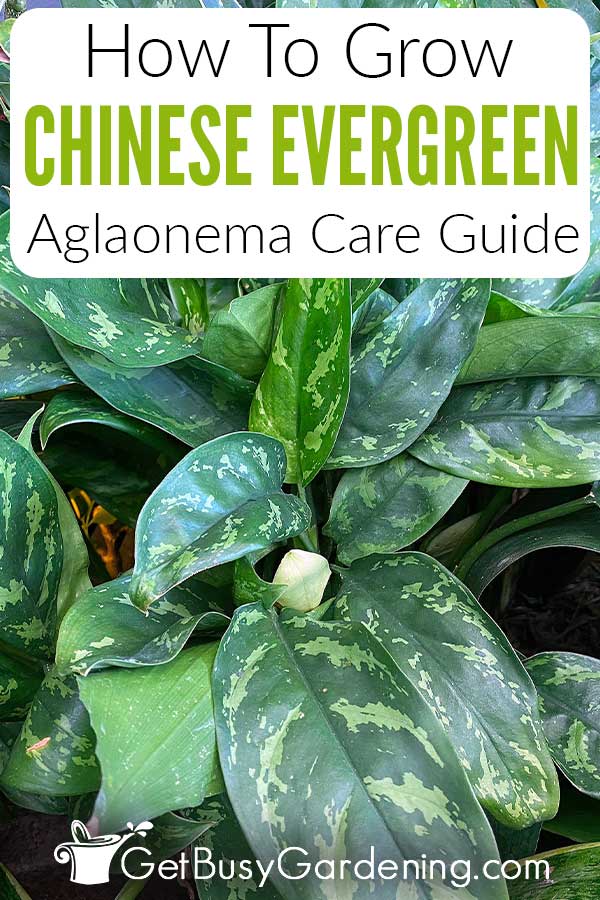
Chinese evergreen, or Aglaonema, is a gorgeous tropical plant that is native to Asia. Since they are very tolerant of a wide range of environments, they’re very popular houseplants.
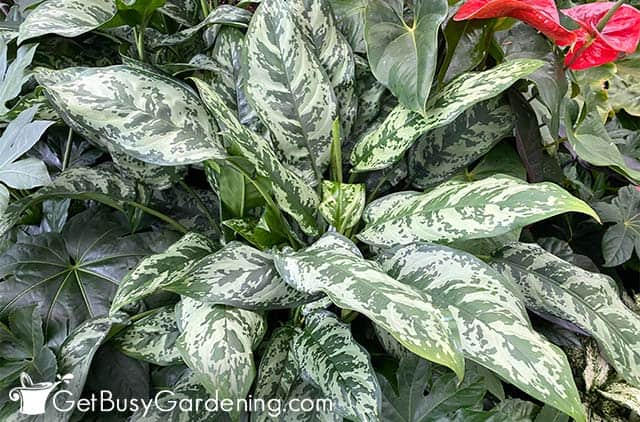
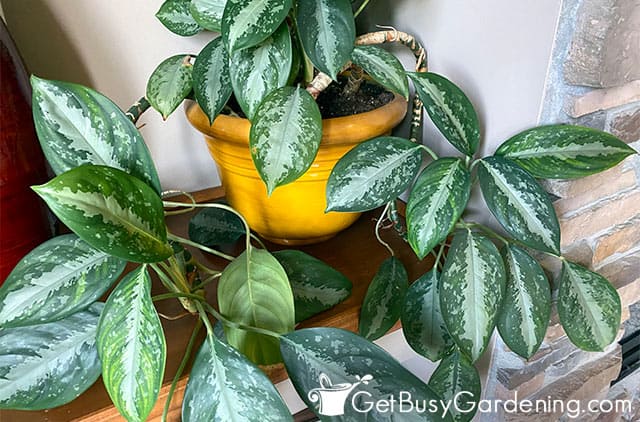
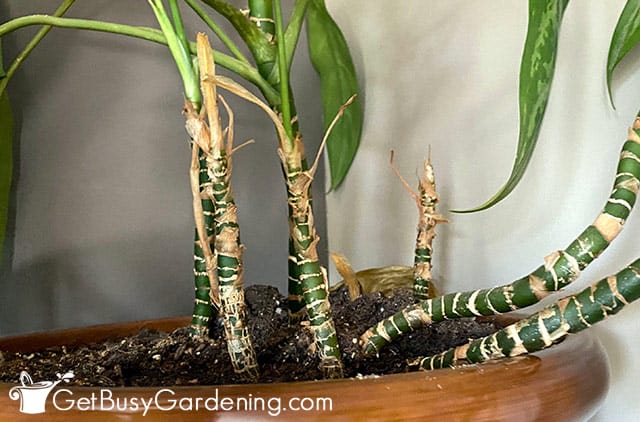
The lance-shaped leaves grow from central stems. As they age, the bottom ones fall off and leave beautiful diamond shapes on thicker canes at the bottom.
The texture and appearance of the foliage are often models for fake plants. They can be so shiny you might even mistake it for one!
Different Aglaonema Varieties
There are over 20 varieties of Aglaonema, and the appearance can vary dramatically between them.
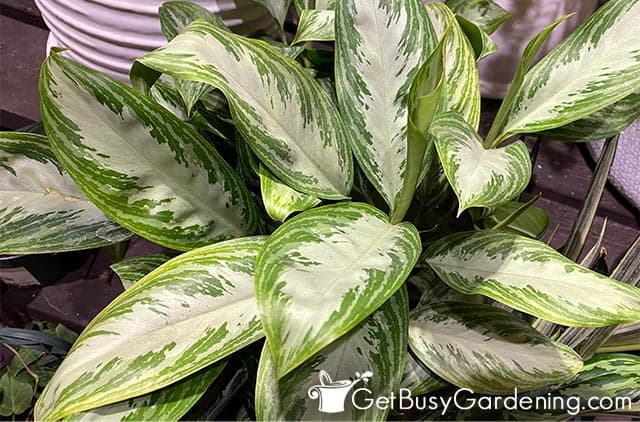
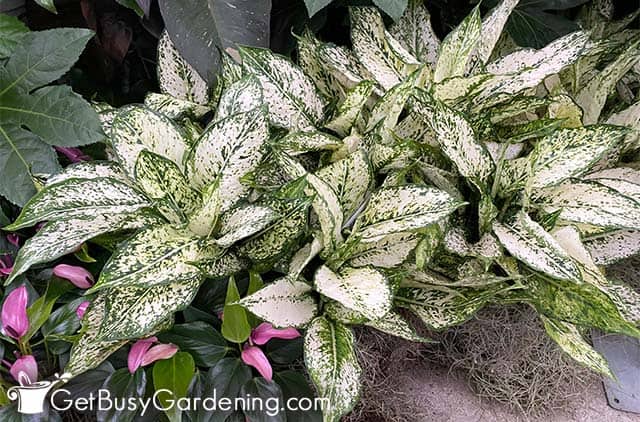
You can find colors ranging from white, silver, red, or pink that speckle, stripe, or mottle the leaves. Here are a handful of the most popular types:
- Aglaonema pictum ‘Tricolor’ – Commonly called the ‘camouflage’ plant due to the mottling of deep, light, and very pale green that cover the leaves.
- Aglaonema ‘Silver Bay’ – Wider leaves have silver centers with smears of deep and pale green along the edges.
- Siam Aurora Red Aglaonema – Pale pink stems lead to deep green leaves that have a dark red central stripe and borders.
- Aglaonema commutatum – The deep green is interrupted by repeating patches of pale green that reach out from the leaf centers.
- Algonema ‘Silver Queen’ – The leaves are almost entirely silver with some deep green splashes along the edges.
Chinese Evergreen Flowers
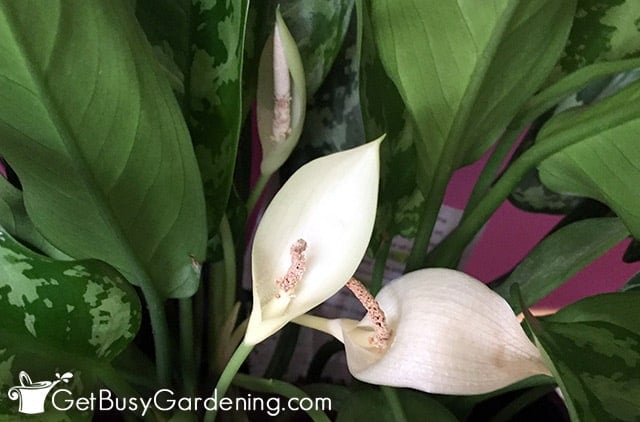
Mature Chinese evergreens that are grown in high light environments can bloom. White spathe-like flowers will form between the foliage in the summer.
The flowers are usually small, and can either be trimmed away once they fade, or left to form seed-containing berries.
Toxicity
Unfortunately for pet owners, according to the ASPCA website this plant is toxic to cats and dogs.
So if you have one, it’s best to keep them out of reach of both pets and small children.
How To Grow Chinese Evergreen
Before we talk about Chinese evergreen care, first I’ll help you find the perfect place to grow them. In the right spot, they won’t need much hands-on maintenance.
Hardiness
While Algaonema is a happy houseplant, they aren’t as tolerant of many outdoor environments. They’re hardy in zones 10+ and prefer temperatures above 60°F at all times.
When it gets colder than that, the leaves can brown, drop off, and eventually the plant may die. So, if you live in a cold climate, bring them indoors for the winter.
Where To Grow Aglaonemas
If you live in a warm enough climate, you can grow your Chinese evergreen in well-draining soil in a shady spot of your garden. For the rest of us, they make great year-round indoor plants.
They do well in containers that have drainage, and can tolerate a range of low to bright indoor light settings. Choose a spot away from any cold drafts, heaters, and air vents to keep them happy.
Once it’s warm enough, you can move them outdoors to an area protected from the sun so they can enjoy the warmer weather in spring and summer.
Chinese Evergreen Care & Growing Instructions
Now that you have the perfect place in mind, let’s talk about the best Chinese evergreen care. Here are my tips for keeping the foliage bright and healthy.
Light
One of the benefits of Aglaonemas is their light tolerance. They don’t like direct sun, but do very well in a range of low to bright, or indirect light. Even fluorescents will work.
But dark environments can slow growth, dull the colors, and occasionally cause leggy stems. Add a grow light or move it to a brighter area if you see this happening.
If you have it near a window, or the light is coming from the side, rotate your plant monthly to encourage a rounded, more compact shape.
Water
Chinese evergreens are beginner-friendly because they don’t need much water to grow. In lower light or winter months, they’ll need even less.
Wait until the top 2” of the soil is dry, then give them a thorough drink and drain off any excess from the drip tray. Never let them sit in water.
Too much will eventually cause root and stem rot. If you struggle with it, invest in an inexpensive moisture gauge to help you out.
Humidity
As a native to the tropics, they thrive in higher humidity, but are tolerant of average indoor levels.
If you notice brown tips on the leaves, then the air is too dry. Add a small humidifier, place a pebble tray of water underneath, or occasionally mist them.
Wiping the leaves down with a damp rag is also a great way to add extra moisture, and also keeps them clean of dust.
Temperature
If there’s one thing Aglaonemas don’t love, it’s the cold. Temperatures between 65-85° are ideal.
When it gets much cooler than that, brown or dark spots will appear on the leaves. Much hotter and they’ll need shade, more frequent water, and misting.
Fertilizer
Chinese evergreens aren’t heavy feeders, so fertilizing isn’t a necessary part of successful care. But the occasional feeding can stimulate growth and make the colors more vibrant.
Give them a liquid houseplant fertilizer monthly, or add slow release granules once or twice a year during the spring and summer.
I recommend avoiding chemical options however, as they can easily burn and damage the foliage.
Soil
Aglaonemas are not picky about their soil, and a regular potting mix will work. But to help avoid soggy soil and root rot, a well-draining option is ideal.
You can also try making your own by amending your general potting soil with perlite or coarse sand.
Repotting
They like to be fairly root-bound and only need to be repotted every 2 or 3 years, or when they need it.
Look for roots coming out of the drainage holes, or pushing through the top of the soil to know it’s time. If new growth is increasingly slow, that may also be a sign.
Choose a pot 2-3” larger than the current one, and bury the rootball at the same depth as it was in the original container.
Pruning
Since they’re so slow-growing, there’s almost no need to prune your Chinese evergreen as a regular part of your care routine.
However, it’s a good idea to trim away damaged or dying older leaves to maintain a healthy looking plant. Also, cutting back the tips of leggy stems will encourage more compact growth.
Use sharp, sterile pruners to trim leggy stems or discolored foliage in the spring or summer.
Pest Control Tips
Healthy Chinese evergreens rarely have issues with pests. But sometimes spider mites, mealybugs, scale, or aphids can become a problem.
Thankfully they’re easy to treat with natural solutions like neem oil, rubbing alcohol, or insecticidal soap.
You can even make your own bug spray by mixing 1 teaspoon of mild liquid soap with 1 liter of water.
Apply these remedies directly to the leaves and stems to immediately help control the bugs.
Aglaonema Propagation Tips
Once you see how easy an Aglaonema is to grow, you may want to propagate your favorites. It’s very easy with either stem cuttings or by division.
Take a healthy cutting that’s 4-6” long, and dip the end in rooting hormone. Then plant it in moistened soil, or try rooting them in water.
Keep them in a warm, bright, humid place for about 3 weeks. Once healthy roots and new growth begin to form, pot them up.
Troubleshooting Chinese Evergreen Care Problems
The durable and low-maintenance Chinese evergreen is easy to care for. But over the years, if you experience any of these common issues, here are my best tips for fixing them.
Yellow Leaves
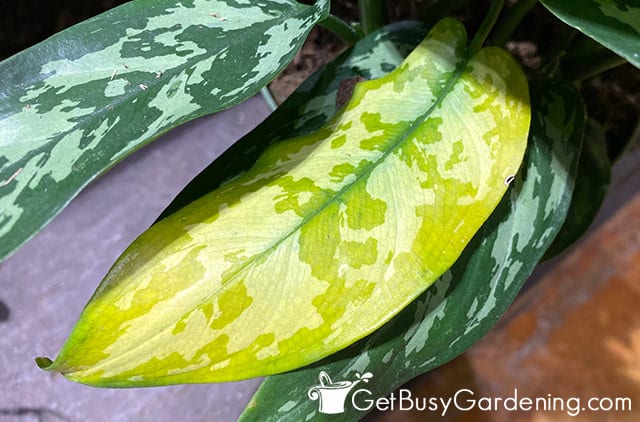
It’s normal for the oldest lower leaves on a Chinese evergreen to turn yellow and drop off as they age. This is part of their normal life cycle, and nothing to panic about.
However, if there are several yellowing leaves on other areas, then it’s usually caused by overwatering.
Always let the soil dry out a few inches down before you add more. It should never be soggy or completely bone dry.
Curling Leaves
If your Aglaonema has curling leaves, then it’s getting too cold or too dry. Increase the humidity by placing the container on a pebble tray with water, or setting up a humidifier nearby.
If it’s in a cold room, add a small space heater to bring temperature up to above 65°F. Or, move it to a warmer area of the house.
Curling leaves can also be an indication of a pest infestation. So make sure to inspect the leaves, and treat any bug problems immediately.
Leggy Stems
Leggy stems are almost always caused by too little light. But it could also be a sign that your Chinese evergreen is severely pot-bound.
Move it to a brighter location with plenty of indirect light, or add a grow light. If leggy, sparse growth continues, try repotting into a larger container.
Brown Leaf Tips & Edges
Brown edges and leaf tips on a Chinese evergreen are usually a sign of too little humidity or moisture. Water more often, or try misting if the air in your home is extremely dry.
But this could also be from using too much chemical fertilizer. If that’s the case, flush the pot, and switch to using a natural, organic brand instead.
FAQs About Chinese Evergreen Care
Here I’ve answered some of the most commonly asked questions about Chinese evergreen care. If yours isn’t on this list, add it to the comments section below.
How much light does a Chinese evergreen need?
A Chinese evergreen needs bright, indirect light to keep its colors and maintain growth. It can tolerate a range of low to bright indirect light without suffering, and even does well beneath fluorescents. Always keep it out of the direct sun.
How often do you water Chinese evergreen?
How often you water a Chinese evergreen depends on the temperature and light it’s given. Rather than sticking to a set schedule, check it every few weeks, and water deeply when the soil feels dry a few inches down.
Should I mist my Chinese evergreen?
You should mist your Chinese evergreen if your home has dry air and it’s showing signs of needing increased humidity, like brown leaf tips.
How long will a Chinese Evergreen live?
A Chinese evergreen will live for decades with the proper care. Propagation is a great way to keep your favorite varieties going for even longer.
How big does Chinese evergreen grow?
Chinese evergreens grow as big as 3-4’ tall and wide on average, but it can take many years for them to reach full size.
For beginners looking for a houseplant that doesn’t need a lot of hands-on maintenance, an Aglaonema is a great choice. With my Chinese evergreen care tips, even a novice can learn to keep them thriving like a pro.

If you want to learn all there is to know about maintaining healthy indoor plants, then you need my Houseplant Care eBook. It will show you everything you need to know about how to keep every plant in your home thriving. Download your copy now!
More Houseplant Care Guides
- How To Care For Chinese Money Plant (Pilea peperomioides)
- Dieffenbachia (Dumb Cane) Plant Care & Growing Tips
- How To Care For Peperomia Plants
- How To Care For Alocasia Plants
- How To Care For Dracaena marginata (Madagascar Dragon Tree)
- How To Care For A Philodendron Birkin Plant
- How To Care For A Money Tree Plant (Pachira aquatica)
Share your Chinese evergreen care tips in the comments section below.

Debbie Millspaugh says
Hello. My Chinese evergreen is growing in low-medium light in my screened porch. It keeps getting cotton like spots on stems mostly near the base of the leaves. I spray with neem oil, goes away but eventually it comes back. Is this a type of mold? What can I do to prevent it? Enjoyed reading your articles as I learned about the different varieties (of which I have and didn’t know what they were)!
Amy Andrychowicz says
Uh oh, it sounds to me like your plant has bugs. I’m guess they’re mealybugs, and here’s how to get rid of them. If not, then check this list of other common houseplant bugs to identify them.
Debbie says
Thank you! I erred on the side of caution and sprayed with neem oil but they have returned 3 times. I might repot with new soil.
Amy Andrychowicz says
Bummer! I don’t recommend repotting your plant, that will just further stress it, and it won’t do anything to get rid of the bugs. Keep cleaning off the bugs and treating with neem oil, and they’ll eventually go away.
Donna Gordon says
I’ve had my Chinese evergreen for years (almost decades!) Lately the leaves have been drooping like they haven’t been watered. Only watered when I could see the leaves starting to droop. I’ve been watering almost every other day and seems to be picking up alittle. Am I watering too much? Could there be other issues? Help!
Amy Andrychowicz says
If the soil dries out that quickly and your Chinese evergreen needs to be watered every other day, then it’s probably root-bound and needs to be repotted. Otherwise you are likely overwatering it, which can also cause the plant to droop. Stick your finger 2″ deep and if it’s wet, then you’re overdoing it. If it’s dry and won’t hold any water, then pot it up into a container that’s one size larger than the current one.
Donna Gordon says
Thanks ever so much for your reply! Will check it out when I return home!
Amy Andrychowicz says
You’re welcome!
Lynn says
I’ve grown Chinese evergreens for years and it is my favorite plant. You’ve answered some questions I’ve had but couldn’t find answers for. This is an excellent guide!!!
Amy Andrychowicz says
Yay, glad I could help answer your questions!