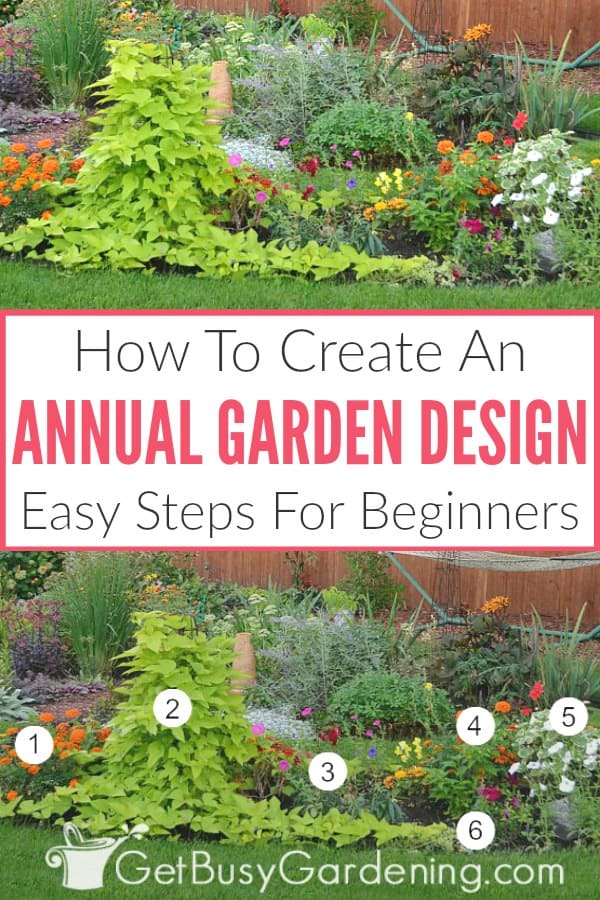
Designing your annual garden is nothing to be afraid of, and doesn’t have to be difficult or intimidating! In this post, I will walk you through how to plan it step-by-step, and show you just how easy it is to create gorgeous annual flower beds every year!

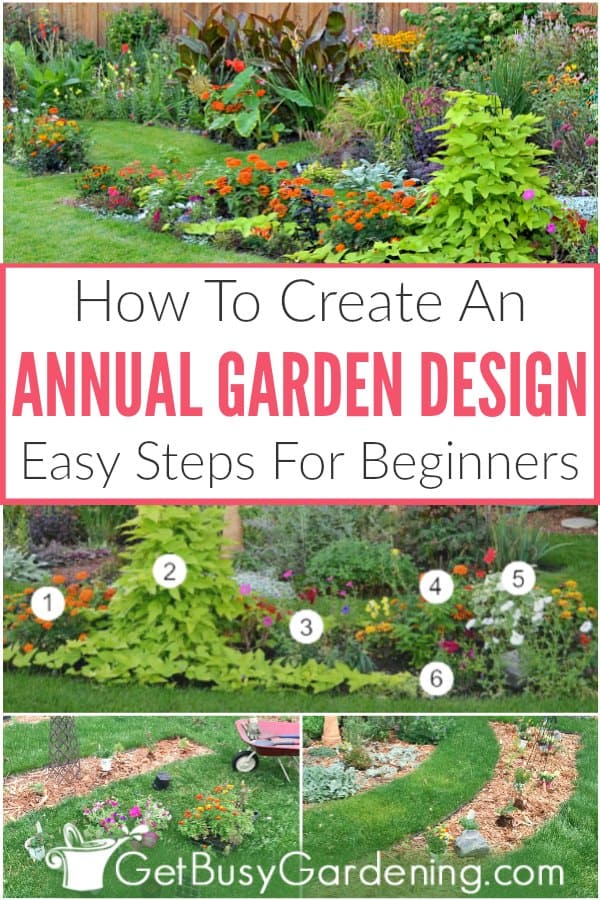
Some of you may be feeling intimidated by the thought of having an entire garden area dedicated to annual plants, because designing it seems way too complex. Don’t be!
I’ll be the first to admit that I am not a professional landscape designer. Well guess what? You don’t need to be either!
You don’t need any formal annual garden plans drawn out for you to create gorgeous flower beds!
Honestly, I was totally intimidated by professional drawings like that when I first started gardening. I found them confusing and intimidating.
I prefer to take more of an ad hoc approach for creating my annual gardens, and they end up looking amazing every year.
Just remember, since annuals only last one season, your flower bed designs can easily be changed, nothing is permanent. If you’re not happy with the results this summer, you can completely redesign it next year.
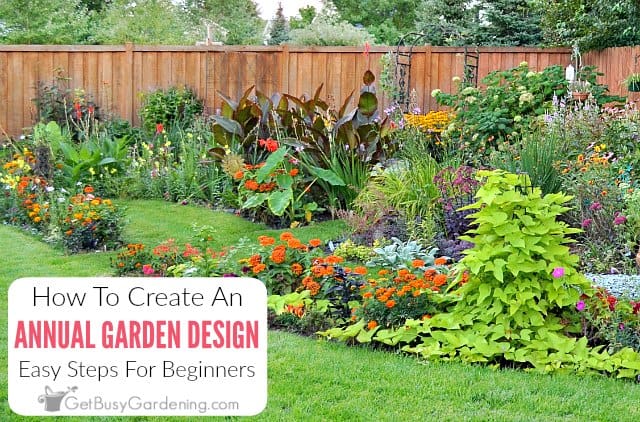
Choosing Plants For Your Annual Garden Design
Picking out plants is the fun part! But, it can also be super stressful for many new gardeners. If you’re feeling stuck, here are tips for choosing annual flowers…
How Much Sun Does Your Garden Get?
The first thing you should do before even coming up with your annual garden plan is to determine how much sun the area gets. If you’re unsure, here’s how to determine garden sun exposure.
That way, you’ll make sure to buy plants that will thrive in your garden. Whether it be full sun, part shade, or full shade, you can find beautiful annuals to fill any space.
Plan To Plant In Layers
Look for plants that are different heights, colors, and textures. Think of it as planting in layers of color, texture, and different heights.
Buy as many different types of flowers as you want, depending on your tastes. Just make sure you have some that are tall, medium, and short so you can add lots of layers to your annual garden design plan.
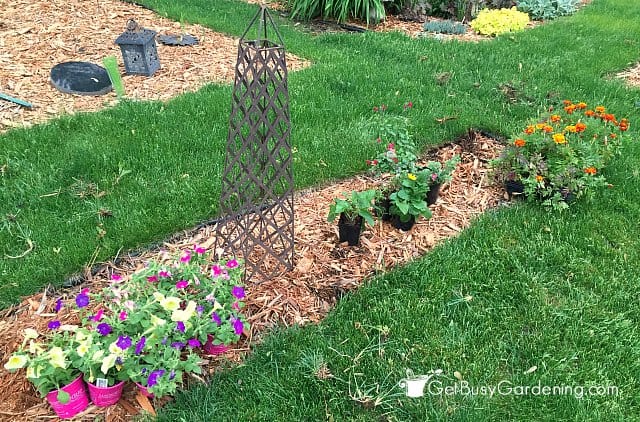
Consider Planting In Groupings
Some people think that using too many different types of plants and color combinations makes a garden look busy or messy. You can stick to groups of yellow annuals or red annuals.
So, if you prefer a more formal garden style, stick to using only 3-5 different types of plants in your design plan.
The garden will look fuller if you plant in groupings. This isn’t required though, you can buy as many different colors and combos as you like.
Add Height & Interest
Consider using a trellis or an obelisk for growing vines, and adding more height to the garden. Using vertical structures like this also adds interest to your annual garden design.
Use something short if your garden is in the middle of the yard, or in front of another garden.
But if yours is up against the fence or house, you could use something taller, and grow larger climbing flowers, like morning glories or black-eyed Susan vines.
Figure Out The Number Of Plants
If you’re completely clueless about how many plants you need for your garden, look at the tags. They will tell you large each plant gets, and how much spacing they will need.
Then you can calculate based on the square feet you need to cover. Otherwise, measure the area of your space, and ask someone at the garden center to help you figure out how many plants you need.
Keep in mind that annual plants can be crowded together tighter than perennials, since they only last one growing season.
So, you don’t have to worry much about spacing. But do pay attention to how large the plants will get, and try to space them accordingly. That way, one plant won’t take over and crowd out smaller ones by mid-summer.
Don’t worry, after you do this once or twice, you’ll have a much better idea of how many plants to buy.
Related Post: How To Transplant Plants In Your Garden (5 Steps!)
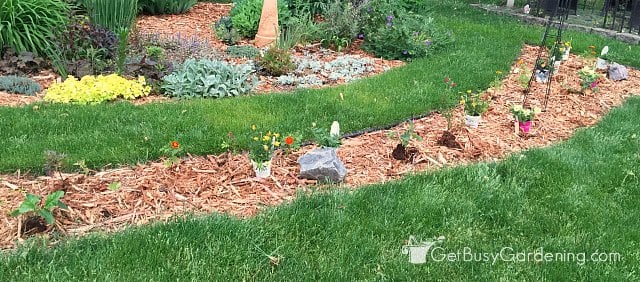
Annual Flower Bed Ideas & Inspiration
When you’re at home, you may have a general idea of what you want. But once at the garden center, the choices can feel overwhelming.
There are a lot of options, so to make it easier, bring a list of your ideas with you. But don’t be afraid to get creative – remember, nothing is permanent, because they are annuals!
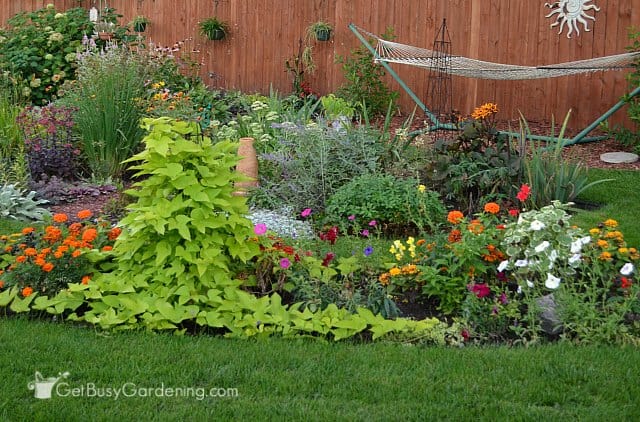
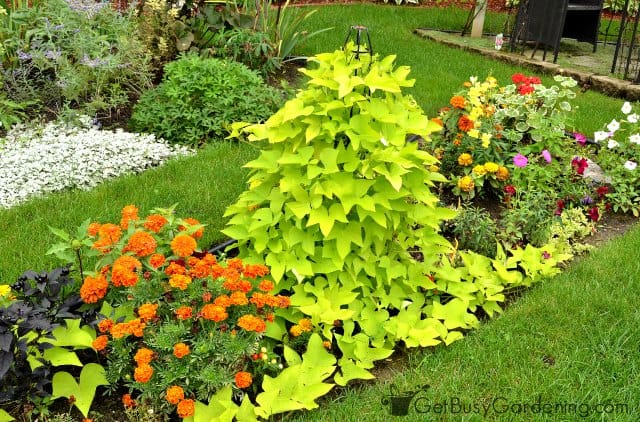
To help inspire you, here are the plants I included in my full sun annual flower garden design last year…
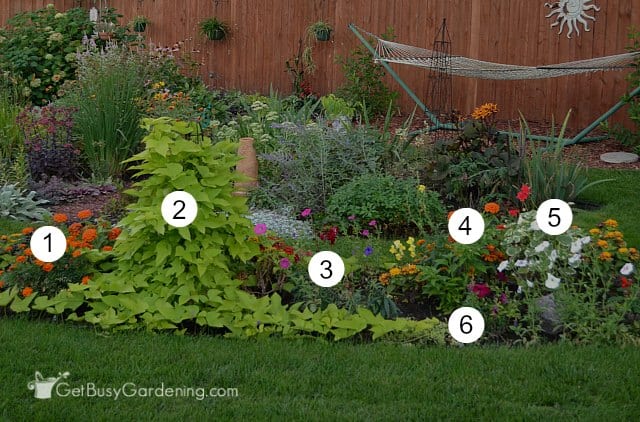
You can see the height variation with the tall focus plants, and lower, broader plants to fill everything in.
I also chose ones that had some variation in their foliage color, to create even more visual interest. The plants listed below correspond to the numbers in the above photo:
1. Marigold (French mix) – Marigolds are great because they provide some natural pest control, and attract beneficial insects (yay pollination). They’re also easy to grow, and come in many varieties. So you can intermix them throughout your design to add tons of variation.
2. Sweet potato vine – Vines add height to your garden for visual interest, particularly on an obelisk or trellis. Sweet potato vine comes in lots of colors, giving some extra foliage diversity.
3. Petunia (mixed colors) – Petunias are another plant with a myriad of choices for color, and will keep blooming all summer long. They are a good option for adding lots of color to the lower levels.
4. Zinnia (mixed colors) – These are a great, mid-height choice; with long-stemmed flowers that can be used for cutting arrangements. They also attract hummingbirds and butterflies.
5. Geranium (red flowers with variegated leaves) – Choosing a geranium with variegated foliage also adds some visual variation to break up all the greens in your garden for a fuller look. And the reds are very vibrant.
6. Moss Rose (double mix) – Something low covers any blank area of dirt, makes the garden look fuller, can prevent weeds from becoming established. Moss rose flowers add gorgeous color, and the succulent foliage is cool too.
Related Post: How To Grow Zinnias: The Ultimate Guide
How To Arrange Annuals In A Flower Bed
In this section, I’ll show you exactly how to layout your annual garden beds. You’re not planting anything yet, just looking for the placement you like.
So keep everything in the pots for now. That way, you can take your time figuring out the arrangement, and have fun with it!
Oh, and if your plants came in flats rather than pots, you can easily cut the cells apart with scissors.
Here are easy, step-by-step instructions for coming up with your annual flower bed layout…
Step 1: Lay everything out – After you get home, spread all of your plants out on the ground so you can easily see everything you have.
Yes, it can get messy, but I find it easier to design my annual garden when I can see everything that I have to work with.
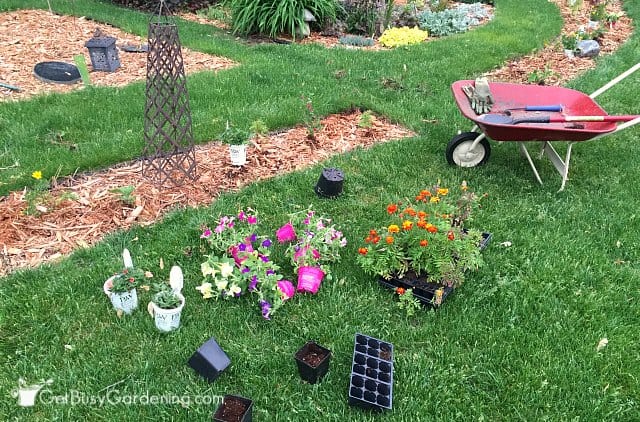
Step 2: Position the focal plants – Next, grab the plants that will grow the tallest, and put them in the middle of the garden (or in the back of the garden if it’s up against a fence or wall).
These will be the focal points, and help to create height and visual interest. If you want to add even more height, you can use a trellis or an obelisk for vining plants, like I did in mine.
Don’t fuss over this too much, you can always make adjustments once you have all of the other plants placed.
Step 3: Add the filler plants – Once you figure out a placement you like for the focal plants, grab the next tallest ones.
These will be the filler plants that will fill the empty spaces between the others. Place them in front of, or around the taller plants.
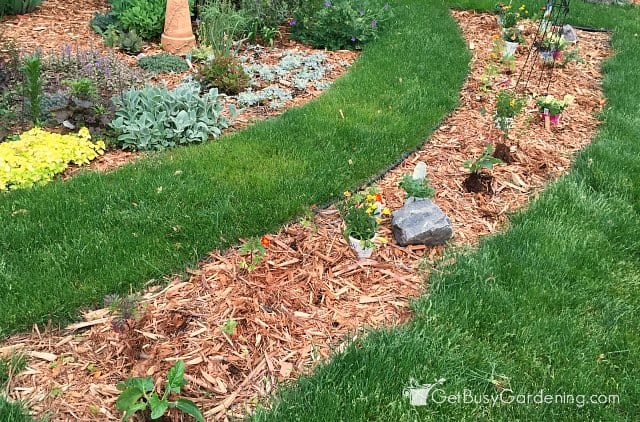
Step 4: Add more layers – Continue layering shorter and shorter plants until you’ve placed all of them in the garden.
Step 5: Position the ground cover plants – Super short groundcovers will complete the look, and make the garden even fuller.
Step 6: Make any necessary adjustments – Once you have everything placed in the garden, take a step back and see if you like the arrangement.
If anything looks off, rearrange things until you come up with an annual flower beds design layout that you love. If you’re still unsure, leave it as is for a few days, and come back to it.
Since everything is still in pots, you can move stuff around as much as you want until you find the perfect layout. There’s no rush to get it all done in one day.
Step 7: Take photos of your arrangement – Once you have everything laid out the way you like it, make sure you snap a few pictures of the final arrangement.
Photos help to make sure everything looks good, and help you figure out what’s missing or misplaced. They also help to keep track of your design, just in case you move things, and then decide you liked it better before.
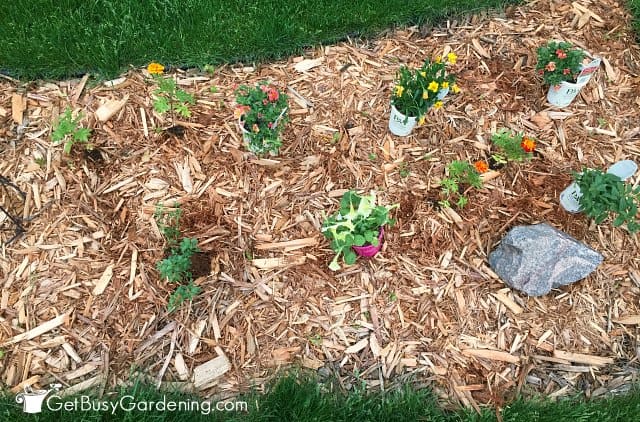
Planting Your Annual Flower Garden
Once you come up with the perfect annual garden design plan, all you have to do is pop the plants in the dirt!
Before getting started, make sure to take a few new pictures if you moved anything since the last time you took them.
Sometimes you can accidentally move things as you work to get everything planted, and having photos to reference will help to keep your design on track.
Leave everything right where it is, and plant them one at a time so you don’t lose your design. I find that planting everything is the part that goes the fastest after I figure out my layout.
See, annual garden design is really quite simple, and nothing to be afraid of. Skip the fancy plans, find inspirations before you head to the garden center, and keep track of your ideas. The best part is you can change it every year for fresh, new annual beds!
Recommended Reading
More Posts About Flower Garden Design
- Annuals vs Perennials: What’s The Difference?
- Perennials Made Easy! How To Create Amazing Gardens
- Rain Gardens: A Detailed Guide For Beginners
- How To Design A Front Yard Foundation Planting
- Create A Bee-Friendly Garden To Help Save The Bees
Share your tips for creating an annual garden design plan in the comments section below.

Mary says
Can you separate pansy’s. If so how do I separate a potted pansy plant
Amy Andrychowicz says
Sure. Shake off as much of the soil as you can, then gently tease apart the roots of the individual plants to separate them.
carolyn g wilkinson says
i love the garden it is wonderful and pretty. i have to say that potato vine bring out the look. i love all of the flowers that’s on this pic. I’m really going to start my garden when the weather breaks. i can’t wait. thank you.
Amy Andrychowicz says
Thanks, I’m glad you like my annual garden design! Have fun planning and planting yours, I hope it will grow great for you!