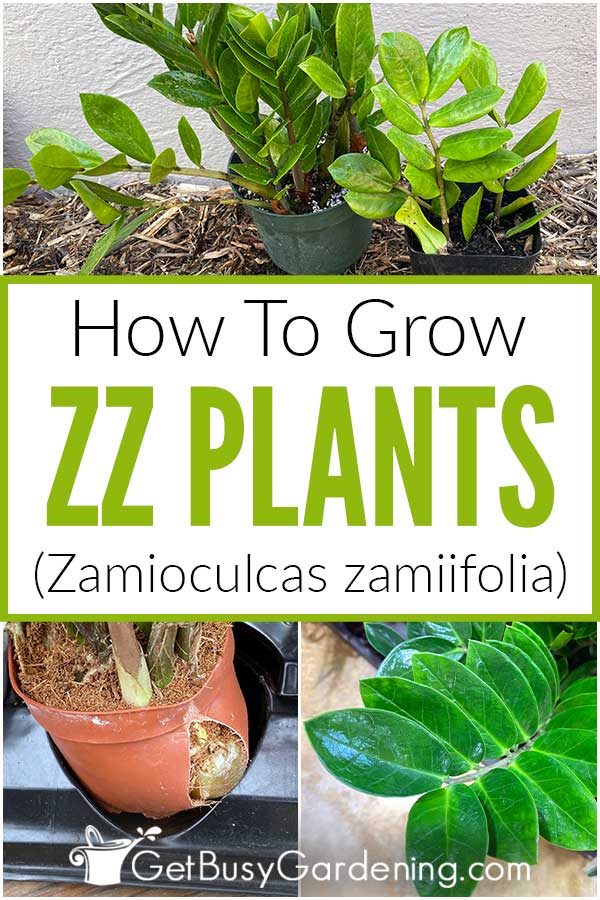
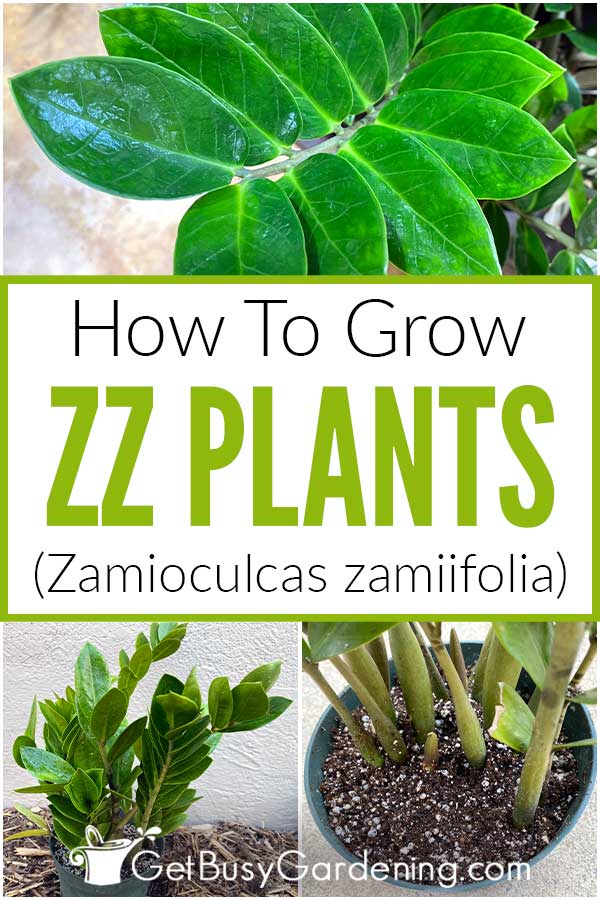
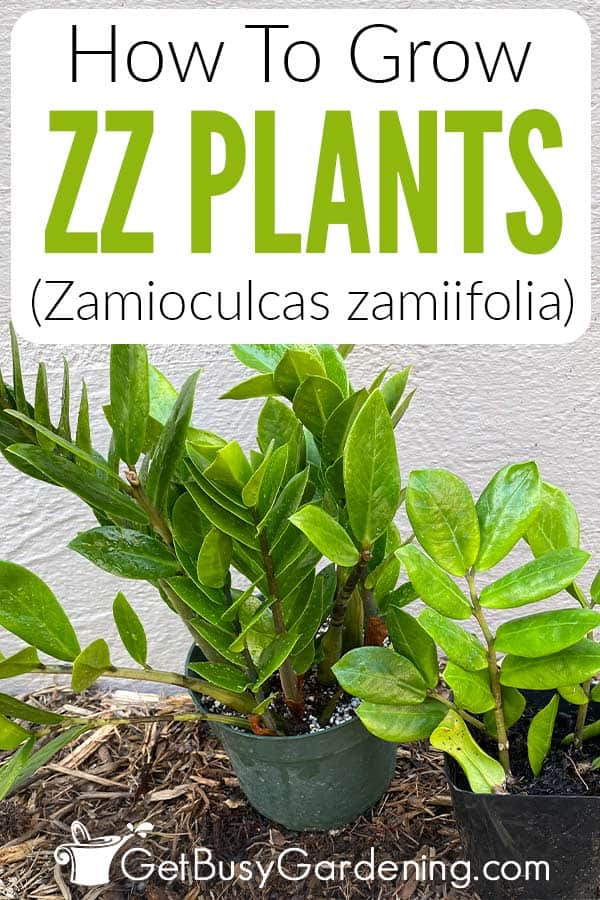
ZZ plants are gorgeous and extremely easy to care for. In this post, I’ll tell you all you need to know about growing Zamioculcas zamiifolia, so you can enjoy yours for decades to come.
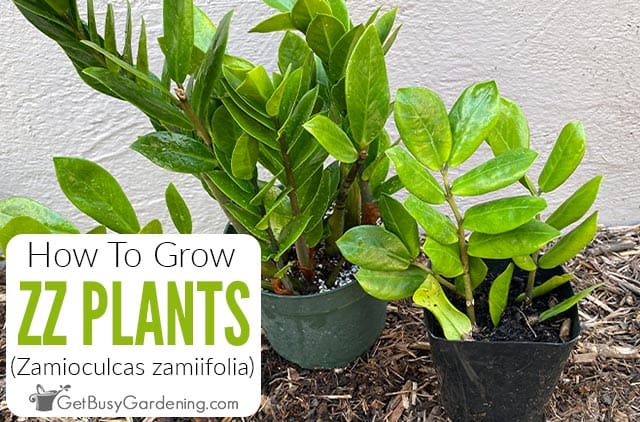

The first time I set eyes on a ZZ plant, I instantly fell in love. I had to buy one immediately! I mean the thick, dark green foliage looks so shiny and healthy, how could anyone resist adding one to their collection?
These tough specimens are great for everyone, even the newest gardener or self-proclaimed brown thumb.
Zamioculcas zamiifolia are easy to grow, beautiful, and even do better with a little neglect. Their forgiving nature and ability to tolerate a wide range of conditions makes them a popular choice for offices and homes alike.
In this detailed ZZ plant care guide, you’ll discover the different varieties you can grow, and learn all about water, light, soil, fertilizer, repotting, pruning, and much more.
Information About ZZ Plants
Zamioculcas zamiifolia, or ZZ plant for short, is native to tropical Africa, and also goes by the names aroid palm and Zanzibar gem.
It has earned the reputation as the ‘eternal plant’ because it can survive in many environments, handle a fair amount of neglect, and still live a long, long time.
The thick stems sprout from tuberous rhizomes under the soil, and are thinner on the top. Some varieties can get up to 4’ tall.
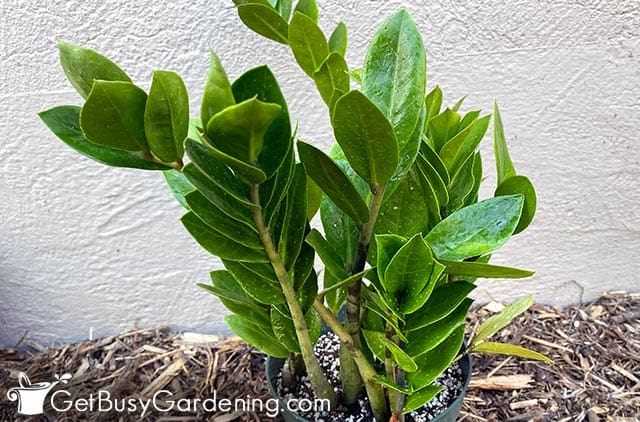
ZZ plants are known for the smooth leaves that grow uniformly from either side of the stems. They’re so glossy and consistently shaped that they’re often mistaken for artificial plants.
Related Post: Growing Plants Indoors – The Ultimate Guide
ZZ Plant Varieties
Aside from the deep-green leaves on a regular ZZ plant, there are several other varieties that are also very popular.
The different colors in the dark-leafed Raven, as well as the yellow and white spotted variegated varieties make them a fun addition to any collection.
Zamicro and Zenzi varieties are great options for those looking to keep them in smaller spaces – neither will reach the full height of the classic one.
The latter also features curled leaves, giving them a different appearance. The rounded leaves on the Lucky classic make it a popular variation as well.
Flowers
It may surprise you to hear that an aroid palm can actually flower, since they’re usually kept for their foliage alone.
It’s very rare for them to bloom indoors. But, they can occasionally develop small, insignificant spathe-type flowers near the base, similar in appearance to a peace lily bloom.
Zamioculcas zamiifolia Benefits
ZZ plants have been loved in office work spaces for a long time, and are growing in popularity in homes, especially for beginner gardeners.
They can live happily in low light settings, even solely under the fluorescents of a windowless indoor environment.
They’re also forgiving if you’re the type to forget watering from time to time, and are considered an air purifier.
Toxicity
Every part of Zamioculcas zamiifolia is poisonous to cats and dogs if ingested, and the sap can sometimes cause skin or eye irritation.
So it’s best to keep them away from pets and small children. For more information you can visit the ASPCA website.
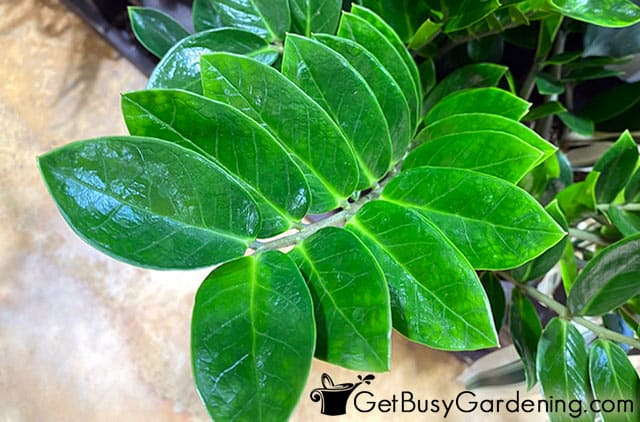
How To Grow ZZ Plants
Before learning how to care for ZZ plants, it’s important to understand the best environment for them. The good news is that the tips below will work for any variety you have.
Hardiness
Since they’re only hardy in the warmest zones of 10-12, they don’t tolerate cold at all. That’s why they’re more often kept as houseplants.
They prefer temps between 55-80°F. If they’re exposed to lower than 50°F for too long, they will suffer and can eventually die.
So, if you put yours outdoors for the summer, be sure to move it back inside before it gets too cold for them.
Where To Grow ZZ Plant
It’s very common to grow ZZ plants in work spaces and homes because they adapt very quickly to a wide range of indoor conditions.
They can do well anywhere from the dim corners of your home, to the brightest room, as long as they’re not exposed to direct sun. They’re even tolerant of different humidity levels.
If you live in a warm enough climate, you can keep it outdoors in either a pot or the garden. As long as it’s in a shaded area and has well-draining soil, it’ll be happy.
ZZ Plant Care & Growing Instructions
Now that you know the perfect location for your aroid palm, it’s time to learn just how easy they are to care for. They’re forgiving, but nothing is completely hands off. Follow these tips to keep yours healthy for decades.
Light
From the fluorescents at work, to the brightest source of natural sun in your home, ZZ plants grow very well under most types of light.
But the amount of light they get will affect how they perform. Very low light conditions can cause leggy, sparse, and slowed growth, and full sun will burn them.
For the best results, keep them in a place that gets bright, indirect sun or artificial lighting for most of the day.
Soil
They aren’t too picky about their soil, and a general purpose one will work just fine. But the best soil for a Zamioculcas zamiifolia is a well-draining one that is neutral or slightly acidic.
If you tend to overwater, then mix equal parts regular potting soil, perlite, and coarse sand to increase drainage. Otherwise you can use a cactus potting mix.
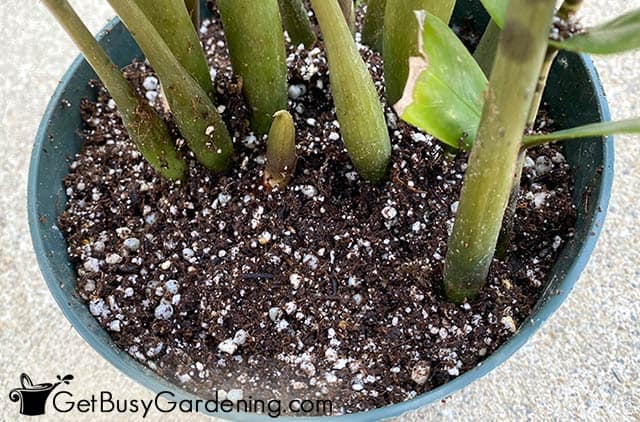
Water
One of the traits that makes a ZZ plant easy to care for is that they don’t need frequent watering. In fact, they don’t like wet feet at all, and it’s best to let the soil dry out before watering again.
The best method is to water deeply, until it begins to drain out of the bottom of the pot. Dump out all the excess to reduce the risk of rotting roots and rhizomes. Then let them be until the soil is dry at least 1” down.
How quickly that happens can vary based on how much light they get. Those kept in brighter areas may need more frequent watering than those in low light.
If you struggle to get it right, a moisture gauge is a great tool to help you get it perfect every time, and prevent overwatering.
Fertilizer
Although Zamioculcas zamiifolia doesn’t require fertilizer as a part of their regular care, they can be invigorated by an occasional feeding.
Apply a diluted houseplant fertilizer or compost tea once a month or so during the spring and summer. Or you can add a slow-release type to the soil in early spring, and again mid-summer, if you prefer.
I always recommend a natural option over chemical fertilizers, which can damage them over time. Stop fertilizing in the fall, and don’t feed them at all during the winter.
Repotting
ZZ plants don’t need frequent repotting, and it can be stressful on them. So only repot when they are completely root-bound.
You’ll know because the rhizomes will begin to push up above the soil line, or the roots will come out of the bottom holes.
When the time comes, choose a new container that’s only one pot size larger the the current one, and has drainage holes in the bottom.
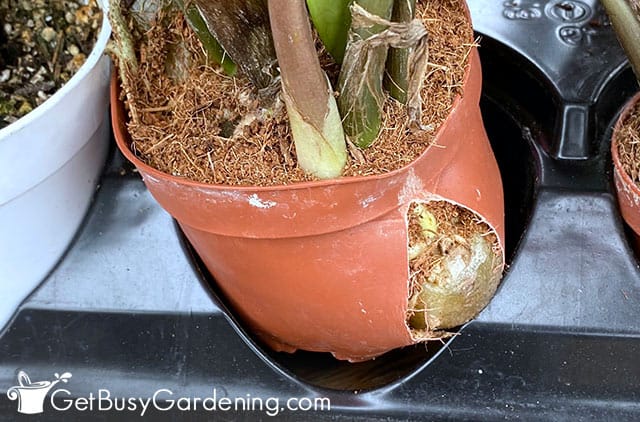
Pruning
There’s no real need to prune an aroid palm other than maintaining shape, or trimming old or discolored leaves.
If yours has a few stems that are much taller than the others, you can prune them back with clean, sharp shears. Any yellowing leaves can also be removed.
The cut stems won’t grow back on top, but it will encourage more to form at the base, so it will become fuller.
Pest Control Tips
Healthy ZZ plants don’t often experience bug issues. But on occasion common pests like mealybugs, scale, aphids, and fungus gnats can be an issue.
A natural insecticidal soap or neem oil solution can be very helpful in eliminating them. You can even make your own by combining 1 teaspoon of gentle liquid soap with 1 liter of water.
Zamioculcas zamiifolia Propagation Tips
Zamioculcas zamiifolia are very easy to propagate with either leaves, stem cuttings, or through division.
Stem and leaf cuttings can be rooted in either soil or water. Keep them in a warm location or on a heat mat until new leaves begin to appear, and the roots are long enough for potting up.
The rhizomes can also be divided into new containers. This is great to do when they’ve outgrown their current pot. Learn all about how to propagate them here.
Troubleshooting Common ZZ Plant Care Problems
Here you’ll find my best advice on the issues gardeners most often face when growing a ZZ plant. With these tips for fixing common problems, you’ll be able to keep yours looking its best for many years.
ZZ Plant Not Growing
If your ZZ plant is not growing, then it could be caused by not enough light, lack of nutrients, or overcrowding.
Though they can live in low light, too little can all but halt their growth. To remedy this, move it to a brighter location, or add a grow light.
Yours may also be ready for repotting, or it needs a dose of fertilizer to help give it a boost.
Leaves Turning Yellow
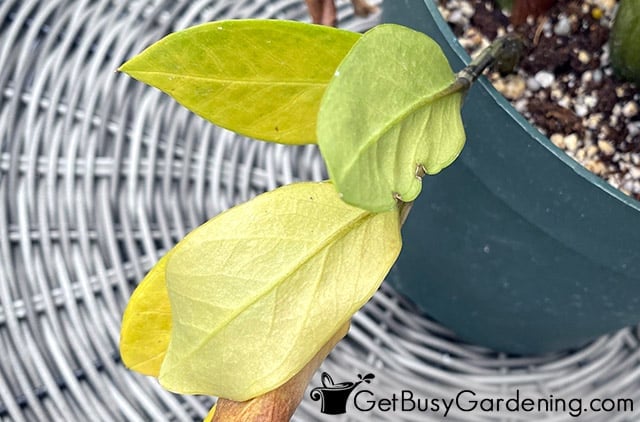
Leaves turning yellow on a ZZ plant is most often the result of overwatering. But it can also be under watering, temperature extremes, nutritional deficiency, or over fertilizing.
First check the soil. If it seems soggy, or there are mushy brown areas along the stems or rhizomes, overwatering is the problem.
Let the soil dry out more between waterings. Otherwise, if it’s bone dry, then give it a good drink, and water it a bit more often.
To prevent temperature damage, keep it between 55-80°F and away from cold or hot drafty areas.
If you’ve been fertilizing frequently with a chemical product, flushing the soil can help. Run water through the pot for 2-3 minutes and drain off all excess.
ZZ Plant Care FAQs
Below I’ve answered the most commonly asked questions about Zamioculcas zamiifolia care. If you don’t see yours here, please ask in the comments section.
How quickly does Zamioculcas zamiifolia grow?
How quickly a Zamioculcas zamiifolia grows depends on the care it’s given. Even in the perfect conditions they aren’t extremely fast growers. Low light will slow or halt it, while bright light and regular feedings can increase the pace.
How can I make my ZZ Plant grow faster?
You can make your ZZ plant grow faster by moving it to a bright location with plenty of indirect light. A monthly feeding of houseplant fertilizer in the spring and summer can also give them a boost.
Do ZZ plants like to be misted?
ZZ plants do like to be misted, especially in dry environments. They’re native to a tropical region that is naturally humid. They can tolerate average home humidity, but they’ll love the occasional spritz.
Is the ZZ plant poisonous to cats and dogs?
Yes, the ZZ plant is poisonous to cats and dogs when ingested. You can refer to the ASPCA website for more information on their toxicity.
Are ZZ plants low maintenance?
ZZ plants are very low maintenance and they thrive on neglect. They’re fairly hands-off, do well in many light settings, and require infrequent watering.
ZZ plants are a great choice for beginners who want something both beautiful, and low maintenance. With the easy-to-grow nature of a Zamioculcas zamiifolia and these care tips, you’ll see that it’s a great choice for any indoor or outdoor space.

If you want to learn all there is to know about maintaining healthy indoor plants, then you need my Houseplant Care eBook. It will show you everything you need to know about how to keep every plant in your home thriving. Download your copy now!
More Houseplant Care Guides
- How To Care For Snake Plant (Mother-In-Law’s Tongue)
- How To Care For Corn Plants (Dracaena fragrans)
- Palm Plant Indoor Care – The Ultimate Care Guide For Your Palm Plant
- How To Care For String Of Pearls Plant
- How To Care For String Of Hearts (Ceropegia woodii)
- How To Care For Firestick Plant (Euphorbia tirucalli ‘Sticks Of Fire’)
Share your ZZ plant care tips in the comments section below.

Leave a Reply