

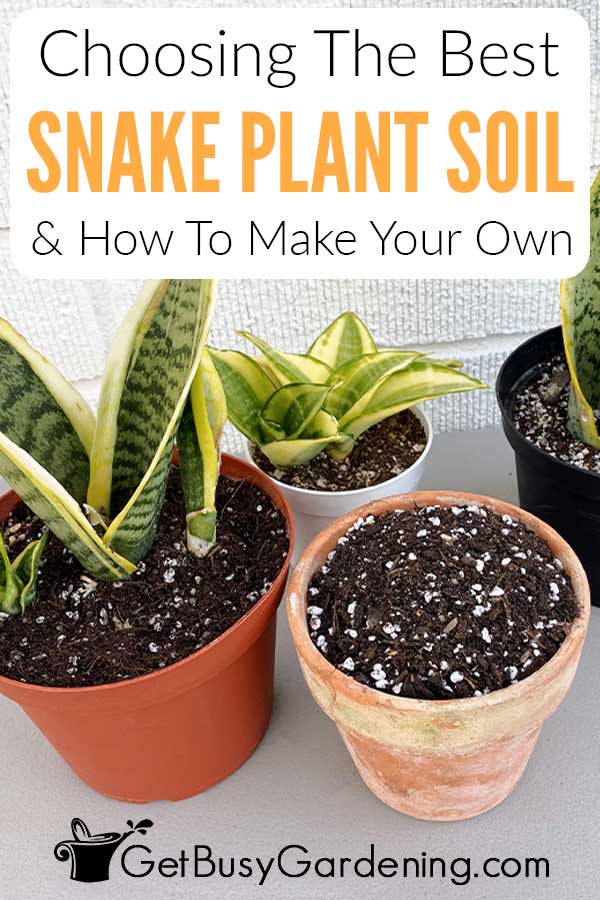
Using the right type of soil for snake plants is very important for their long-term heath and vitality.
So in this post, I’ll tell you all you need to know about snake plant soil, including the best type, what properties to look for, and I’ll also give you my recipe so you can mix your own.
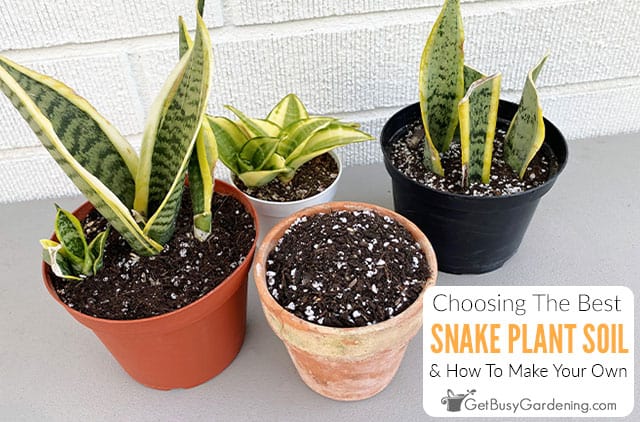

Choosing the best soil for snake plants is a big part of keeping them healthy. The wrong kind can cause many problems, or even kill them.
This guide covers everything you need to know about the type of soil that snake plants need to thrive.
You’ll learn which ones you can use, the properties to look for, and even how to mix your own with my easy recipe.
What Kind Of Soil Does A Snake Plant Need?
A snake plant needs soil that has adequate drainage, some nutrients, and good air flow to prevent overwatering.
It’s important to remember that they’re succulents. That means they’re very good at storing moisture in their leaves.
Since they keep water stored, they don’t like a medium that retains too much. When they’re in a mixture that stays wet, it can cause issues like root rot.
The good news is that no matter which variety of Sansevieria you have, they all prefer the same type of soil.
Related Post: How To Care For Snake Plant (Mother-In-Law’s Tongue)
The Best Type Of Soil For Snake Plants
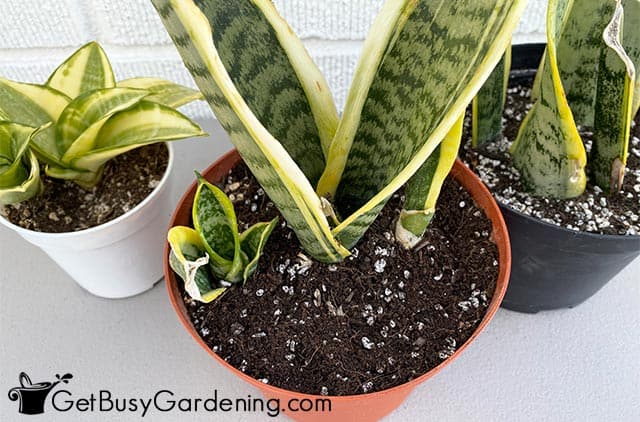
The best type of soil for snake plants is a light, loamy, and well-draining mixture.
I don’t recommend using a general purpose potting mix on its own because many commercial brands retain too much moisture.
To help you choose the ideal medium, look for those that contain the following properties:
Free-Draining Soil
Read the packaging and look for one that has fast drainage as one of the main qualities. If it says moisture retentive or anything similar, then it’s not the right choice.
Porous Mix
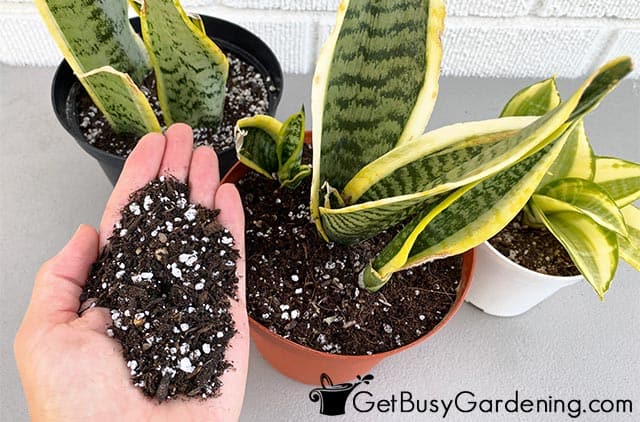
Another quality to look for is a porous or aerated mixture. This lets the air flow through the root system, and helps the soil drain faster, which is exactly what your mother-in-law’s tongue plant needs.
Nutrient Rich
Sansevierias don’t require much fertilizer when planted in soil with the right nutrients. So choose a mixture that contains organic materials to keep them thriving.
Snake Plant Soil pH
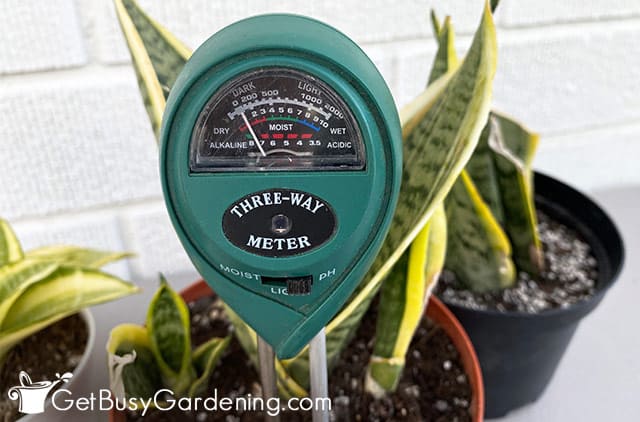
Snake plants aren’t too fussy about soil pH, but will thrive with when its slightly acidic to neutral. It should be between 5.5 to 7.0 on a probe meter.
If it’s too alkaline you can add an acidifier or an acidic fertilizer granules. If it’s overly acidic, add some garden lime to balance it out.
Related Post: How To Repot A Snake Plant
How To Make Potting Soil For Sansevieria
If you’d prefer to make a DIY potting soil for your snake plants, then you can do it very easily.
A commercial mix can be a great, quick option. But making your own gives you complete control over the ingredients, and is often cheaper.
Snake Plant Soil Mix Recipe
Below is my snake plant soil recipe and mixing instructions. It’s simple and doesn’t take much time to mix your own, plus you can store the leftovers for later.
To measure the ‘parts’ you can use any container, like a 1 gallon bucket or measuring cup, for example. Just be sure to use the same measure for each ingredient so it’s consistent.
Recipe:
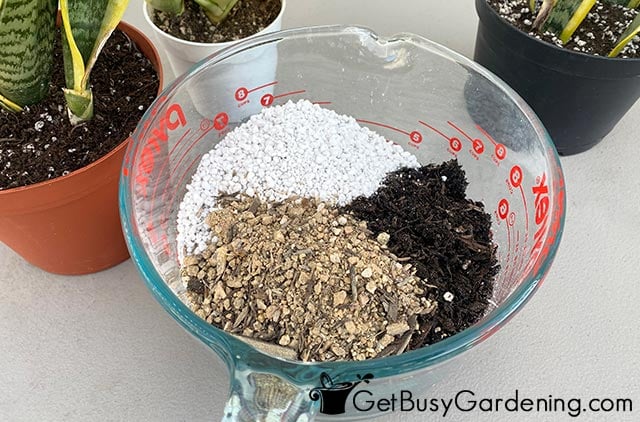
- 2 parts regular potting soil
- 1 part coarse sand
- 1 part perlite or pumice
- 1 part coco coir or peat moss
Supplies needed:
- Measuring container
- Trowel or shovel
- Container for mixing (I use a bucket or my table top potting tray)
- Dust mask (optional)
Mixing Instructions
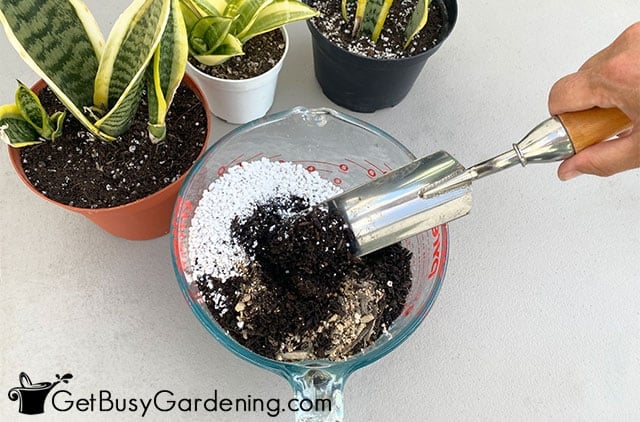
To mix the soil for your mother-in-law’s tongue, combine the coco coir (or peat moss) and potting soil in a bucket or tray, and mix well with your hand trowel or shovel.
Then add the coarse sand and perlite (or pumice), and stir again to mix everything together thoroughly.
Use what you need right away, then store any leftovers in a bucket or container with an airtight lid.
Related Post: How To Propagate Snake Plant (Sansevieria) In Water Or Soil
FAQs
Here I’ve answered some of the most commonly asked questions about Sansevieria soil. If yours isn’t on the list, please add it to the comments section below.
Can I use succulent soil for snake plants?
Yes, you can use succulent soil for snake plants. It is designed to be free-draining and loose, which makes it a safe choice.
Can I use regular potting soil for a snake plant?
I don’t recommend using regular potting soil for snake plants because it can be too heavy, and easily lead to overwatering and root rot. You can amend it with sand and perlite to make it drain faster.
Can you use cactus soil for snake plants?
Yes, you can use cactus soil for snake plants because it’s coarse and well-draining. However, if it’s too gritty, then you should mix in some peat moss or regular potting soil to add more organic matter.
Choosing the right soil for snake plants is essential for their long-lasting health. As long as you purchase or make a mixture with the qualities above, yours will be set up to thrive.

If you want to learn all there is to know about maintaining healthy indoor plants, then you need my Houseplant Care eBook. It will show you everything you need to know about how to keep every plant in your home thriving. Download your copy now!
More About Potting Soils
- How To Make Your Own Cactus Soil Mix (With Recipe!)
- 7 Easy DIY Potting Soil Recipes To Mix Your Own
- How To Make Potting Soil For Indoor Plants
- How To Choose The Best Money Tree Soil
- How To Make Your Own Succulent Soil (With Recipe!)
- How To Choose The Best Plumeria Soil
- How To Choose The Best Spider Plant Soil
Share your tips for the best snake plant soil or your favorite recipe in the comments section below.

Niecy H. says
I have noticed some black spots on my flower leaves. Is that a fungus, and if so, is there something natural I can use to get rid of it.?
Amy Andrychowicz says
Black spots on your snake plant leaves are most likely due to overwatering and/or moisture sitting on the leaves, both of which can cause rot. Make sure the soil dries out between waterings. Here’s my complete snake plant care guide for more info.