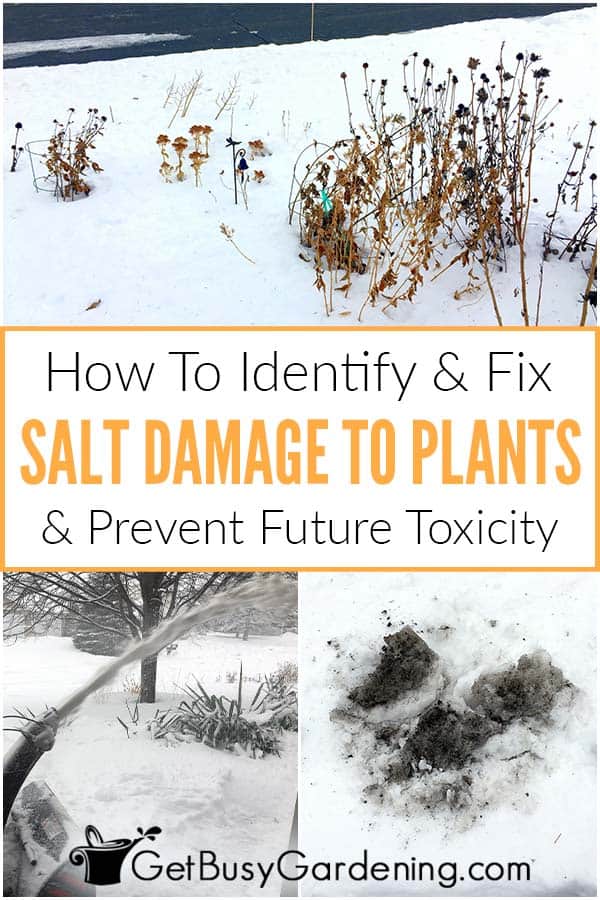
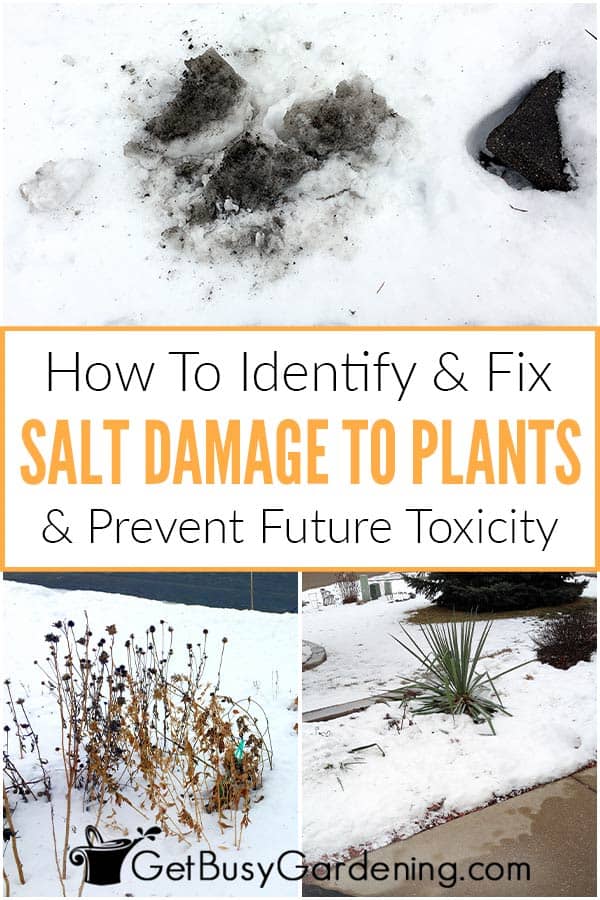
Salt damage to plants can be a major problem. Don’t worry, because in this post I will show you how to recognize the negative effects of salt on plants, and give you easy tips to prevent it from building in the soil.
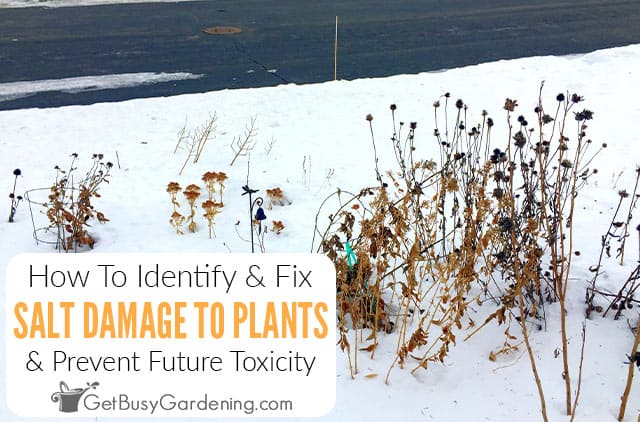

When your garden is located near a road, driveway, or sidewalk where road salt and deicing chemicals are often used, it can be toxic to the plants.
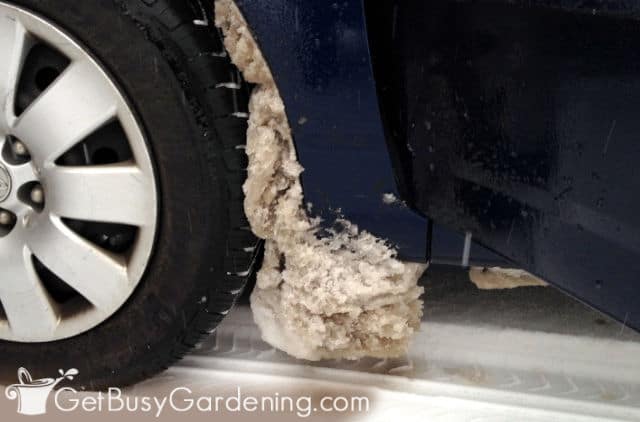
Take a minute to think about all of the stuff that’s dumped onto our roads during the winter.
No matter what we do, these will end up on our driveways and walkways… and ultimately in our yards and gardens.
And when these accumulate in the soil can be devastating, especially for sensitive plants. But salt damage to plants can be prevented with a little bit of mindfulness.
Why Is Salt Bad For Plants?
Landscaping plants, including trees and shrubs, can have a sensitivity to salt (sodium chloride) and other deicing chemicals that are dumped or sprayed on them by snow plows and passing cars throughout the winter.
These salts and deicers are leached into the soil and absorbed by the plants. They pull moisture from the roots and leaves, and can cause them to suffer from dehydration.
Salt stress in plants can also make them more prone to damage from severe winter cold.
The toxicity isn’t always apparent right away either. Salt can build up in the soil over time, and end up killing plants after a few years.
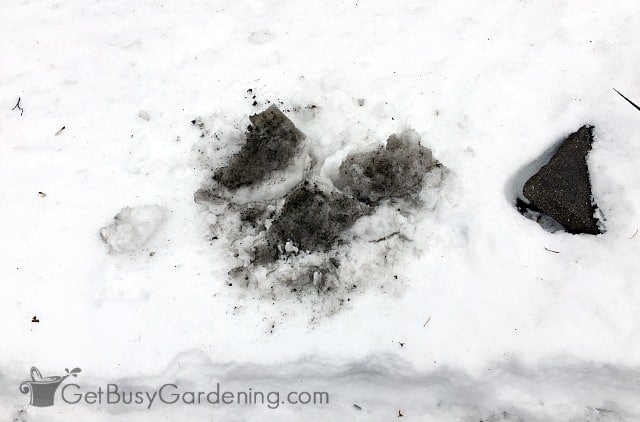
Salt Poisoning Symptoms In Plants
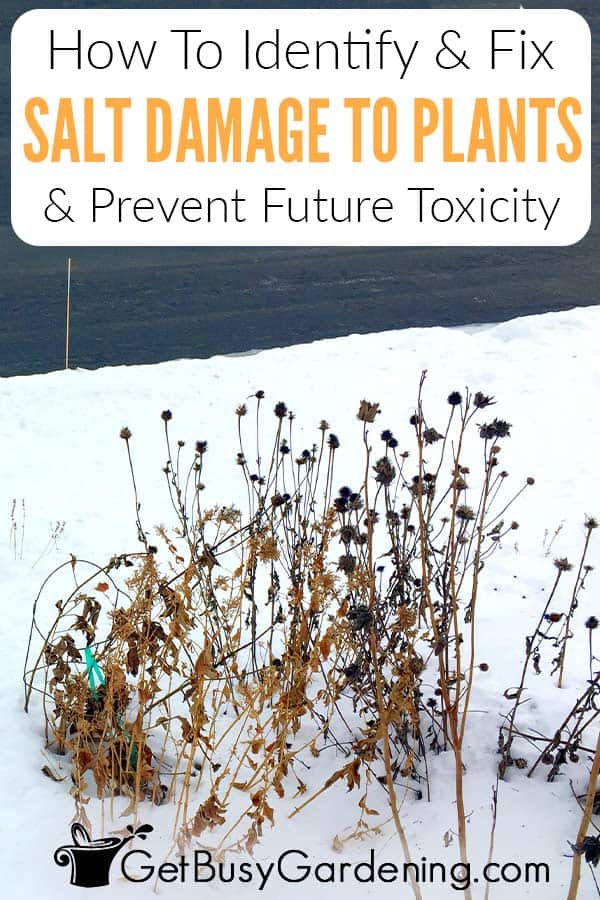
The symptoms of salt poisoning in plants are not always evident right away. Many times you won’t see any problems until spring or early summer, and sometimes it’s a slower progression. Here are a few symptoms to look out for…
- Yellow or brown leaves, especially on the side of the plant that faces the street or driveway
- Extremely slow or stunted growth
- Deformed leaves, buds, or stems
- Poor or delayed flowering and fruiting
- Wilted plants that never seem to get enough water
- Tip or marginal leaf burn
- Early fall leaf drop
7 Tips To Prevent Salt Damage To Plants
Below are my tips to help prevent salt damage to plants. You probably won’t be able to avoid exposure all together, especially in gardens right next to a road or driveway.
But it’s good to think about what you can do to minimize the impact, and do your best to prevent major problems.
1. Target Your Winter Salt Applications
Be mindful of where you spread salt during the winter. Rather than broadcasting deicers to prevent ice buildup, or applying them to surfaces that don’t need it, use them only when necessary to spot-treat trouble areas.
2. Be Mindful When Applying Salt Near Plants
When you do apply deicing salt onto your driveway or walkways, take great care to only get it on the pavement.
Be mindful and make sure you aren’t accidentally sprinkling it on plants or into a garden area in the process.
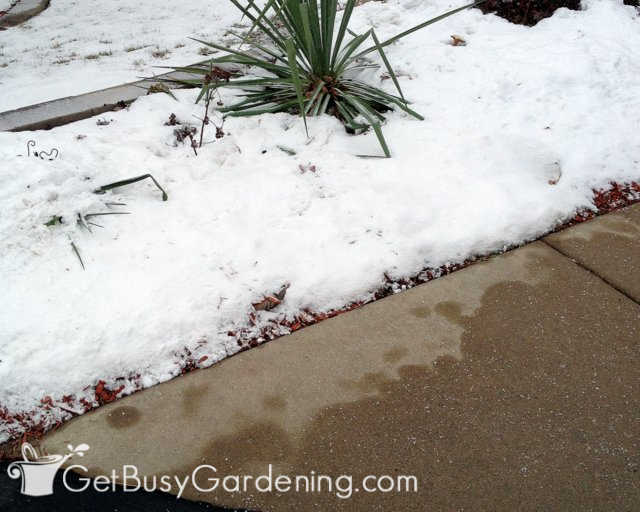
3. Clear The Snow Before Applying Salt
Rather than sprinkling deicers over the top of the snow to melt it, clear it from the area first. Then apply the salt directly to icy patches if necessary. This will help to cut down on the amount you’re using.
4. Dilute Your Deicer
Mix sand or non-clumping cat litter with your deicer to dilute it. This will cut down on the amount of salt you’re spreading around your property, and prevent damage to your plants.
As a bonus, since these are gritty, they also add traction in icy areas.
5. Be Careful Around A Garden Pond
Be especially careful if you have a garden pond near an area where you apply deicers.
Even small amounts of salt and other chemicals can kill the fish and plants that are hibernating in there, and contaminate the water once it thaws in spring.
6. Use Salt-Resistant Plants
Certain types of plants are more tolerant to salt exposure than others, and therefore have less risk of toxicity.
So plan ahead and use salt-resistant plants near the road, driveway, or sidewalk, there are lots to choose from.
7. Protect Sensitive Plants
Wrapping sensitive plants and shrubs with burlap or similar material secured with twine will protect them from foliar salt spray.
Or you can try creating a wind-block screen or other physical barrier between the plants and the street to cut down on their exposure.
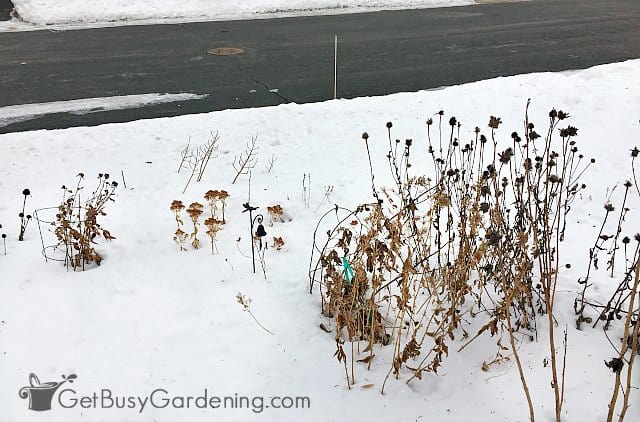
How Do You Fix Salt Damage To Plants & Soil?
It can be very difficult to fix salt damage to plants once it occurs. But if nothing is done, the affected plants could die. So here are a few things you can try to help correct the problem faster, and prevent future toxicity.
- Flush the soil – Here in Minnesota, heavy spring rains do a good job of flushing deicers out of the soil. But if it’s dry, then you should rinse exposed plants well, and flush the soil with fresh water.
- Move sensitive plants – After they put on their new spring growth, move sensitive plants to a different location where they will be protected from future salt spray.
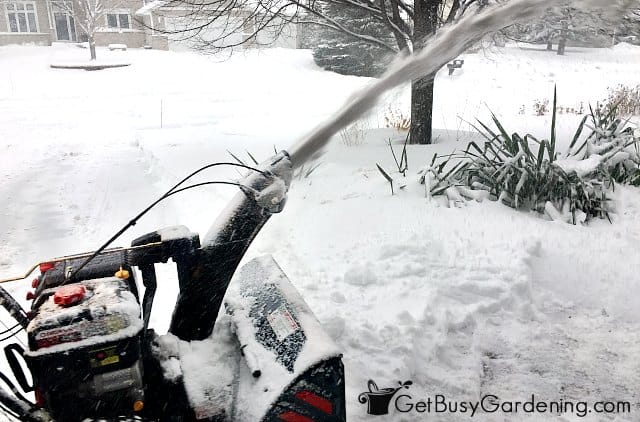
- Pay attention during snow removal – During the winter, take great care to toss or blow any salt-laced snow away from your gardens, plants, and trees. This will help to prevent poisoning in the future.
- Amend heavy soils – Heavy clay will hold onto salt much longer than sandy soil does. So, try amending your roadside beds with sand and compost to improve drainage and help the salt naturally flush out faster.
Salt damage to plants can be frustrating, and devastating to your landscaping. But it’s not difficult to take a few small steps to prevent salt accumulation in soil, and major toxicity from happening.
More About Cold Climate Gardening
- 7 Tips For Protecting Plants From Snow Damage
- How To Protect Plants From Frost Damage
- Beginner’s Guide To Cold Frame Gardening
Share your tips for preventing salt damage to plants in the comments section below.

Leave a Reply