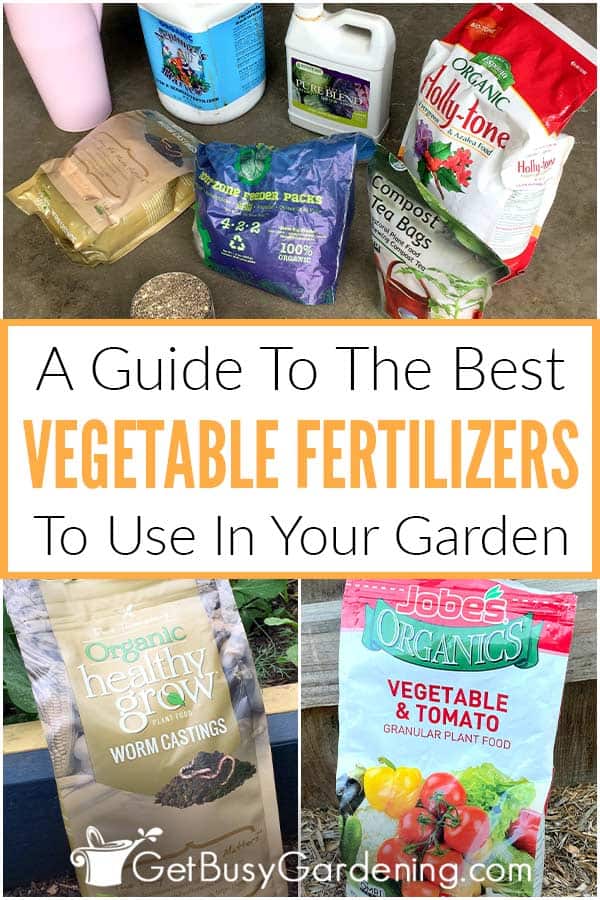
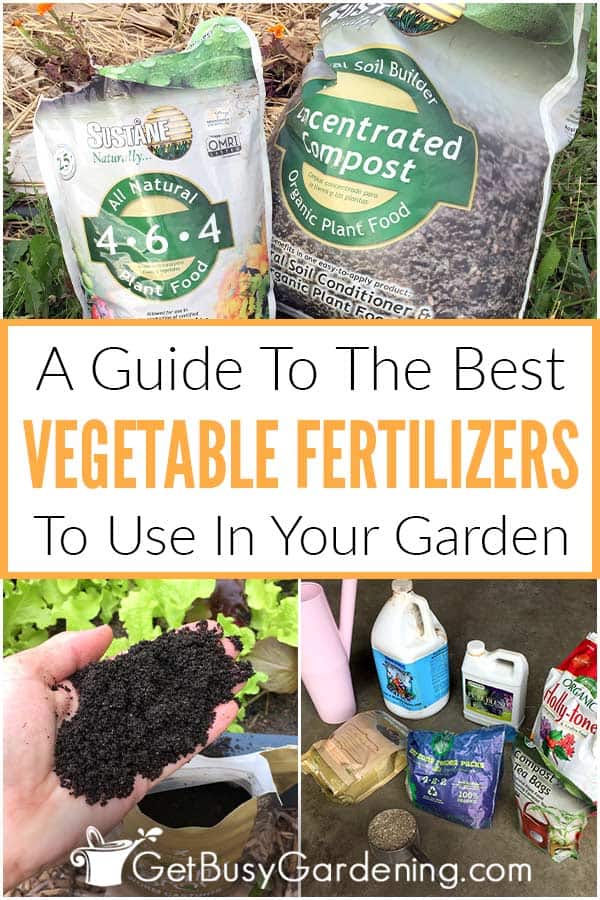
Choosing the best fertilizer for your vegetable garden is easy with this detailed guide. Below I will break it all down for you to make it simple to figure out what type to use. Then I’ll give you a list with tons of options so you can find what will work for you.
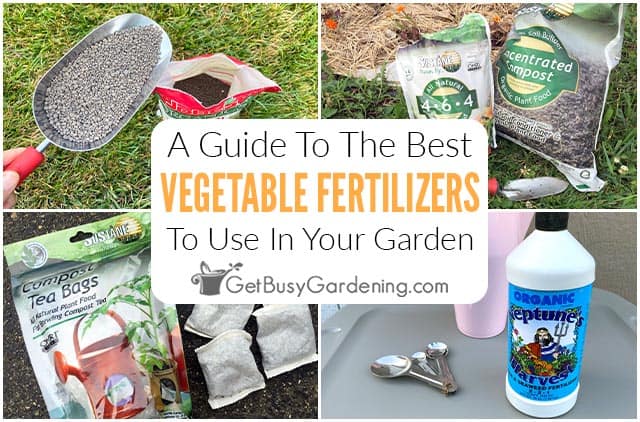

Selecting the best fertilizers for your vegetable garden can seem complex and overwhelming, especially for beginners. What are those three numbers? Should you choose granules or liquids?
My goal with this handy guide is to answer those questions and you choose the best organic and natural plant food for your veggies.
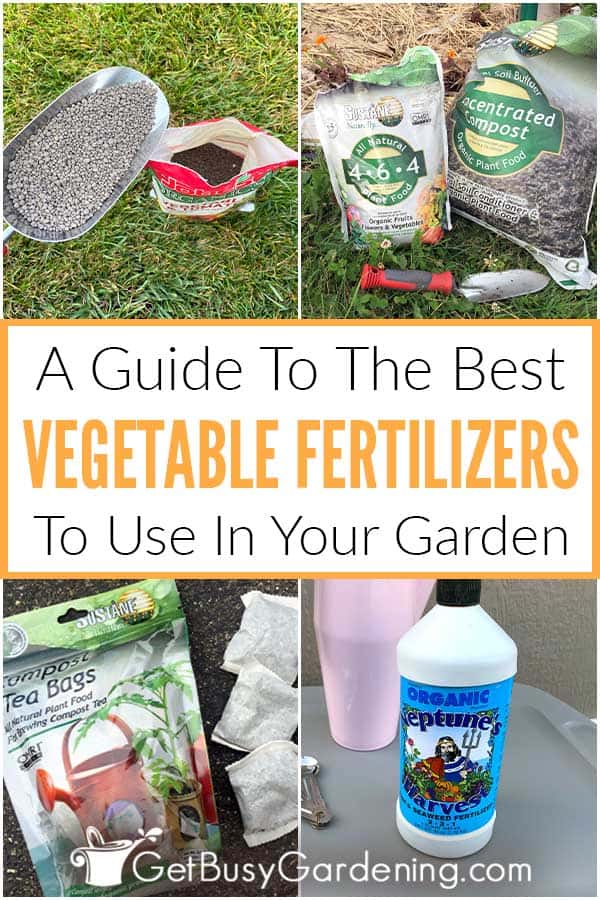
Below I’ve discussed the differences in the many forms of vegetable fertilizers, and shared a handy list of my top recommendations.
I’ll also give you tons of helpful tips for how to determine the best one for the types of crops you want to grow.
Different Types Of Fertilizers Vegetables
If you’ve ever walked down the fertilizer aisle at your local garden center, you know first hand how many different types there are to choose from. It’s downright overwhelming!
The first thing you may notice is that some come in a liquid form, while others are dry (e.g.: pellets, powders, stakes, or granules).
The good news is that there’s no right or wrong answer to the form you choose. It often comes down to ease of use, convenience, and your personal preference.
However, when choosing the best fertilizer for your vegetable garden, I highly recommend you only use natural and organic ones.
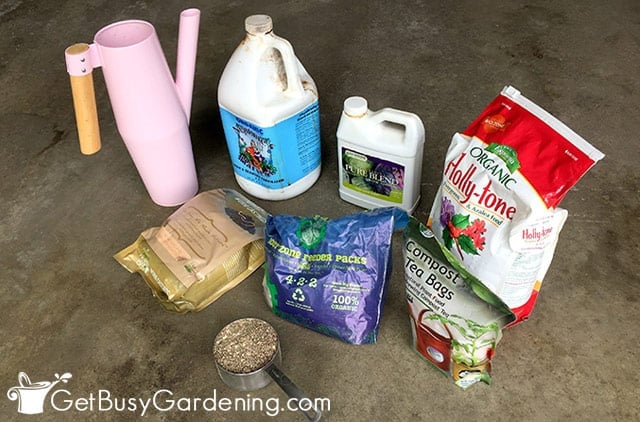
Chemical/Synthetic -vs- Natural/Organic Fertilizer For Vegetables
When it comes to feeding your vegetable garden, I always recommend using natural, organic fertilizers rather than synthetic chemicals.
Chemical fertilizers give us instant gratification, but they cause major damage to the health and fertility of the soil over time.
It’s also much easier to burn the roots with these types of products. They can damage, or even end up killing, the plant. Plus, they just aren’t a healthy way to grow food.
Natural and organic fertilizers on the other hand build up the soil over time, giving veggies the rich, fertile foundation they need to thrive.
And rich, fertile soil means stronger, healthier plants, higher yields, and delicious, healthy organic vegetables for us!
So, in my list below, I’ve only included organic and natural options, because those are the ones that I use in my own garden.
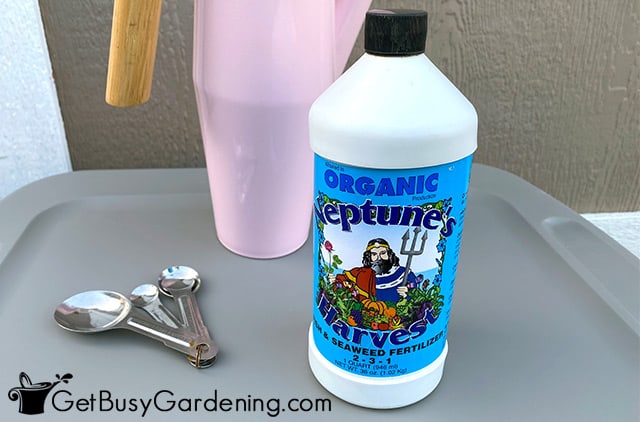
Water Soluble Fertilizers
Most types of liquid vegetable fertilizers will come in either a concentrated form, as tea bags, or as water-soluble powders.
The biggest benefit of using liquids is that they are absorbed by the plant quickly. That means they start working faster than granules.
But on the flip side, they don’t last as long, and need to be applied more often than the slow release types.
Slow-Release Granules
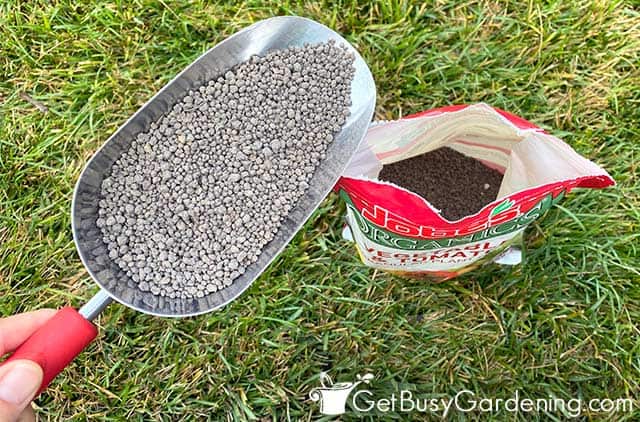
As you probably already guessed by the name, slow release granules add nutrients into the soil over an extended period of time. This means you don’t have to apply them as often as liquids.
But, it also means that those nutrients aren’t immediately available to the plant. So it will be longer before they’re able to use them.
Worm Castings
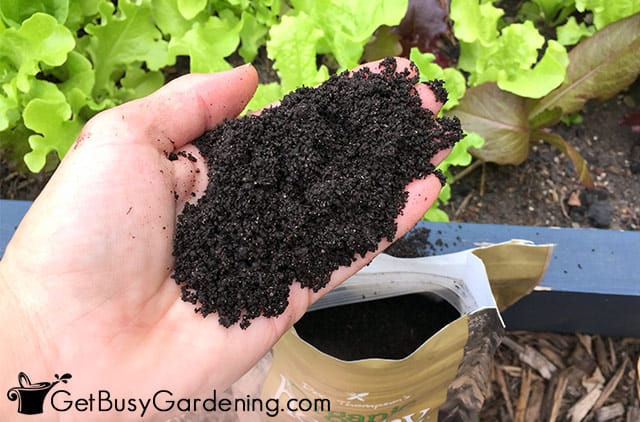
Another common product you may see in the vegetable fertilizer aisle is called “worm castings” (or “earthworm castings”).
In case you’re unfamiliar with that term, worm castings = worm poop. And what could be more natural than that?
Don’t let the word “poop” turn you off from using them. They look and feel just like dirt, and don’t really have any scent at all.
Worm castings work similar to slow release options by adding nutrients and building up the soil over time.
What Is The Best Fertilizer For A Vegetable Garden?
Now that we know more about the differences between fertilizers for vegetables, let’s talk about how to choose the best one to use.
The good news is that companies make it easy by putting the N-P-K numbers right on the bag. N-P-K stands for nitrogen, phosphorus, and potassium.
Those are the three most important nutrients that vegetables need to live and produce tons of food for us. The ratio you choose depends on the type of plant you’re feeding.
- Flowering vegetables – These are the ones that need to bloom to produce fruit (tomatoes, peas, squash, cucumbers, etc.). They need extra phosphorus, which encourages flowering, so the middle (P) number should be the highest.
- Root crops – These are the ones where we eat the roots of the plant (carrots, turnips, radish, beets, etc.). They do best with less nitrogen and more phosphorus (P) and potassium (K) to support root development.
- Non-flower vegetables – These are the ones where we only eat the leaves (spinach, chard, lettuce, kale, etc.). These veggies need a high nitrogen (N) fertilizer, so the first number should be the largest.
Related Post: How & When To Fertilize Your Vegetable Garden
MY TOP PICKS FOR THE BEST FERTILIZERS FOR VEGETABLE GARDENS
Now that we’ve discussed details about the various options, it’s time to show you my favorite vegetable fertilizers. All of the products below are organic and natural, which is what I use in my own garden.
BEST SLOW RELEASE VEGETABLE FERTILIZERS
These are my top picks for slow release fertilizers. Here you will find granules, spikes, and feeder packs that continuously release nutrients into the soil over time.
1. JOBE’S ORGANICS GRANULAR PLANT FOOD
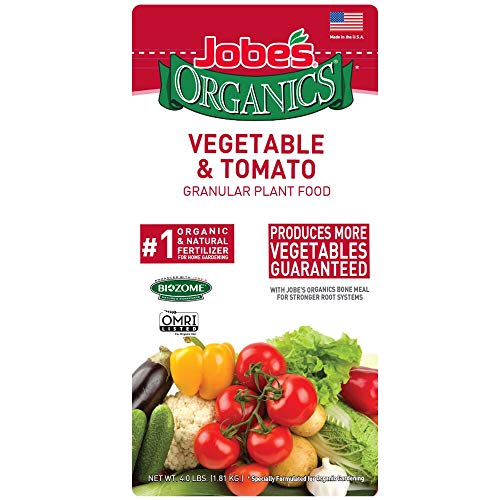
This granular food has an NPK of 2-5-3, which is great for flowing veggies. It’s formulated with Biozomem, a proprietary blend of microorganisms that are good for your soil and plants.
2. FOX FARM HAPPY FROG VEGETABLE FERTILIZER

These certified organic granules support both vegetative and flowering stages. It has an NPK of 5-7-3, and will help your veggie garden to resist disease as well.
3. SUSTANE ALL NATURAL FRUIT & FLOWER

This all-natural slow-release product has an NPK of 4-6-4, and contains 17 essential nutrients. It improves soil health, encourages more blooms, and even better, it has no odor, so it’s a pleasure to use.
4. DAVE THOMPSON’S HEALTHY GROW VEGETABLE

My next pick is a vegetable fertilizer that has additional calcium in it to nourish your soil and increase your harvest. The NPK on this one is 3-3-5.
5. DR. EARTH HOME GROWN VEGETABLE FERTILIZER
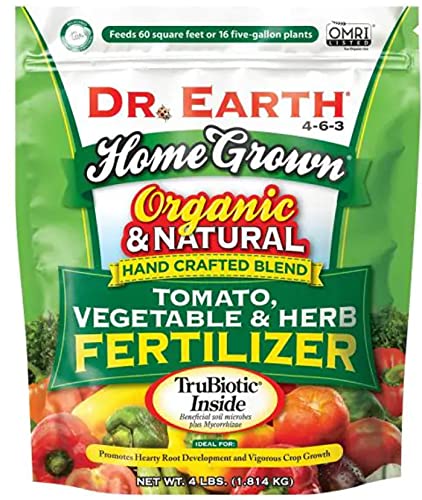
Another organic option, this one has an NPK of 4-6-3. A little bit goes a long way. A single application will enhance your efforts for months at a time.
6. FOX FARM HAPPY FROG FRUIT & FLOWER
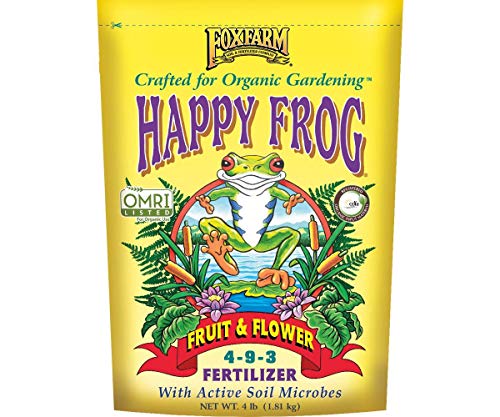
These granules have an NPK of 4-9-3. This specific blend includes tons of phosphorus, which encourages healthy fruit and flowers.
7. NEPTUNE’S HARVEST CRAB & LOBSTER SHELL
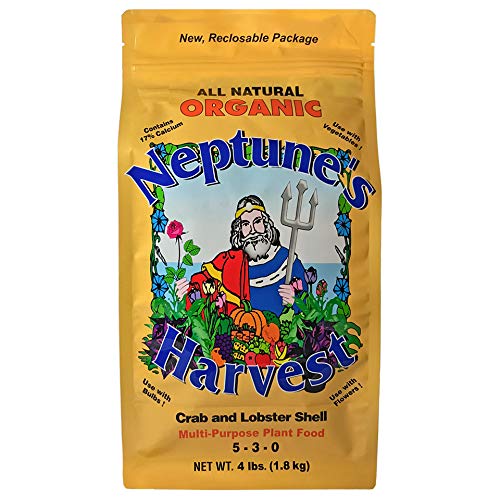
This blend is made of ground up seashells derived from the North Atlantic Ocean. It provides a fantastic source of calcium, which is an important nutrient for your veggie garden, and has an NPK of 5-3-0.
8. DR. EARTH PURE & NATURAL KELP MEAL
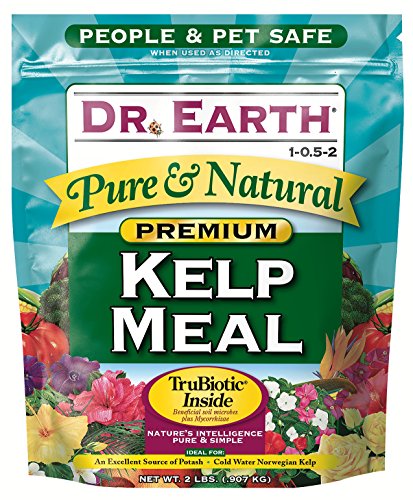
This next option comes in a powder, and has 5 strains of soil microbes that help your vegetables become more drought-tolerant. It’s NPK is 1-0.5-2.
9. ORGANIC MECHANICS ROOT ZONE FEEDER PACKS

My next selection has an NPK of 4-2-2 and includes calcium-rich oyster shells, which is great for green leafy veggies. It comes in convenient feeder packs, which means you don’t have to measure – it’s already prepackaged.
BEST LIQUID FERTILIZERS FOR VEGGIES
When it comes to the best liquid or water soluble fertilizers for your vegetable garden, the following choices will give you the highest yield, and are the easiest to use.
10. NEPTUNE’S HARVEST FISH & SEAWEED
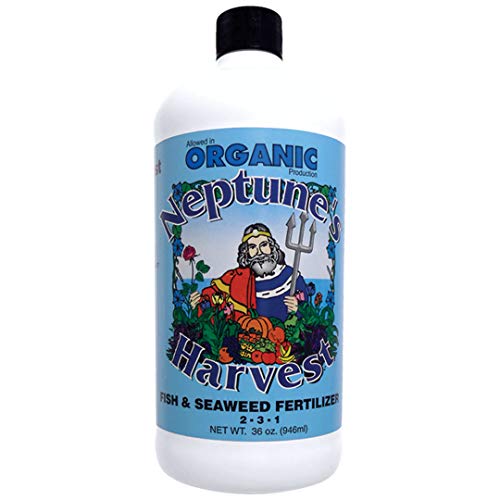
You will love the results when you use fish emulsion. This one has an NPK of 2-3-1 and a special blend of fish and seaweed that is formulated to give your veggies just what they need to thrive.
11. LIQUID KELP & VEGETABLE GROWTH CONCENTRATE

This liquid concentrate gives you a lot of bang for your buck. Just one ounce mixed with water makes a full gallon of veggie fertilizer. The NPK is 0.3-0-0.6.
12. PURE BLEND COMPOST TEA FERTILIZER
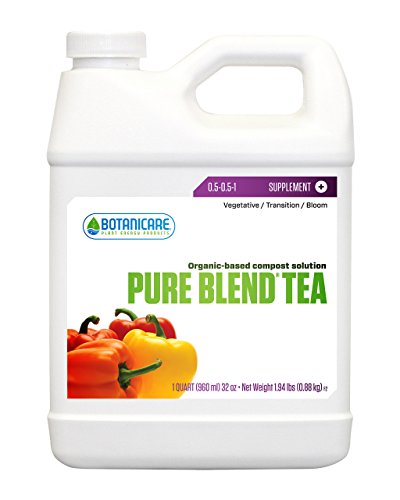
This compost tea fertilizer is known to increase both the aroma and the flavor of vegetables. Its NPK is 0.5-0.5-1 and it absorbs quickly in the soil to give you faster results.
13. ESPOMA ORGANIC GENERAL PURPOSE

With an NPK of 2-2-2, this organic all-purpose liquid fertilizer is a good way to give your vegetable garden a boost.
14. SUSTANE COMPOST TEA BAGS
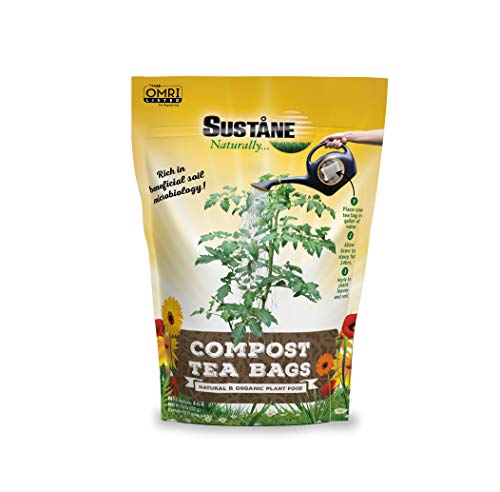
If you want to try brewing your own compost tea, these tea bags make it simple. The NPK is 4-6-4, and this blend of nutrients is perfectly formulated to feed your veggies.
BEST ALL AROUND VEGETABLE PLANT FOOD
If you want to make things super simple, you can never go wrong with these all-purpose vegetable fertilizers. They work with just about any type of crop, so they are fantastic for beginners.
15. DR. EARTH PREMIUM GOLD ALL PURPOSE FERTILIZER

This slow-release all-purpose fertilizer has a neutral NPK of 4-4-4. You can use it on all of your veggies for a bigger and more abundant harvest.
16. DAVE THOMPSON’S HEALTHY GROW ALL PURPOSE

This all-natural feed comes in the form of granules with an NPK of 3-3-3. It has a low odor and is known to help veggies grow bigger.
17. SUSTANE NATURALLY ALL PURPOSE PLANT FOOD

This one strengthens your vegetable plants’ tolerance of hot and dry conditions. Its NPK is 8-2-4 and naturally helps your vegetables absorb more nourishment from the soil.
18. JOBE’S ORGANIC FERTILIZER SPIKES
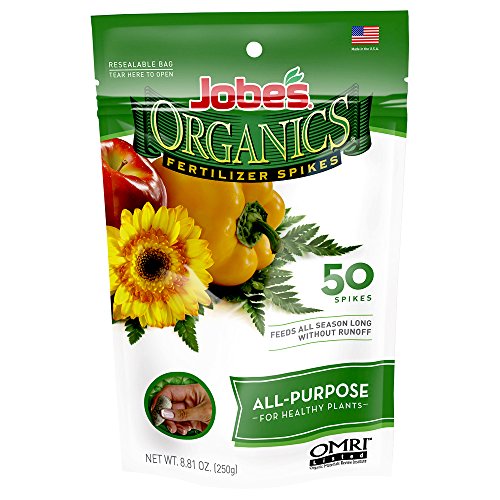
This one strengthens your vegetable plants tolerance of hot and dry conditions. Its NPK is 8-2-4 and naturally helps your vegetables absorb more nourishment from the soil.
19. ORGANIC WORM CASTINGS FERTILIZER

What could be more a more natural fertilizer for a vegetable garden than worm poop? It is fantastic for enriching the soil, and will feed your beds over a long period of time.
20. CHARLIE’S ALL NATURAL COMPOST

I’m sure you know by now that compost is another excellent all-natural veggie plant food. It has copious amounts of microbes that will nourish any type of crop, and continue to feed them for a long time.
21. WAUPACA NORTHWOODS MUSHROOM COMPOST

Mushroom compost is a great soil amendment that will feed your veggies with both micro and macro nutrients to give you greener leaves and a bigger yield.
FAQs
In this section, I’ll answer some of the most common questions I get regarding the best fertilizers for vegetable gardening. If you can’t find the answer you’re looking for here, ask it in the comments section below.
Can I use compost for fertilizing my vegetable garden?
Yes, you can use compost for fertilizing your vegetable garden. It is a wonderful organic soil amendment that will add key nutrients and feed your vegetables.
You can even brew your own compost tea using tea bags or concentrate, and then use it just as you would use any other liquid fertilizer.
Is all purpose fertilizer good for vegetable gardens?
Yes, all purpose fertilizer is good for vegetable gardens. However, it is best to feed veggies that produce a fruit with one made specifically for flowering plants.
So for those, select one with a higher, middle ‘P’ number, rather than using a general purpose one.
Can you use houseplant food on vegetables?
Whether you can use houseplant food on vegetables depends on both the type of fertilizer you have, and the kind of plants you’re feeding.
General purpose or ones with a high nitrogen (N) number will work just fine for non-flowering veggies. If yours is high in phosphorus (P), that would be best for the blooming/fruit producing ones.
Choosing the best fertilizer for your vegetable garden will be easy now that you understand what to look for, and have a good list options to choose from. Whether you decide on a granular or liquid plant food, your vegetable garden will thank you for the healthy boost.
More About Vegetable Gardening
- Choosing The Best Mulch For Vegetable Gardens
- 15 Fast Growing Vegetables To Plant In Your Garden
- How To Design A Vegetable Garden Layout
More About Fertilizers
- How To Fertilize Herbs In Your Garden Or Pots
- How To Fertilize Your Flower Garden Beds
- How To Fertilize Outdoor Potted Plants & Containers
- How To Fertilize Indoor Houseplants
What are your favorite types of fertilizer for your vegetable garden? Share your top picks in the comments below.

Michelle says
Where does fish emulsion fall into the list? I’ve been hearing about it, but I’m not sure when it how to use it.
Amy Andrychowicz says
Fish emulsion is a liquid fertilizer, and I have it listed as #10. The brand I use (linked to in the article) comes in a concentrate. So you simply mix the recommended amount with water. Easy peasy.