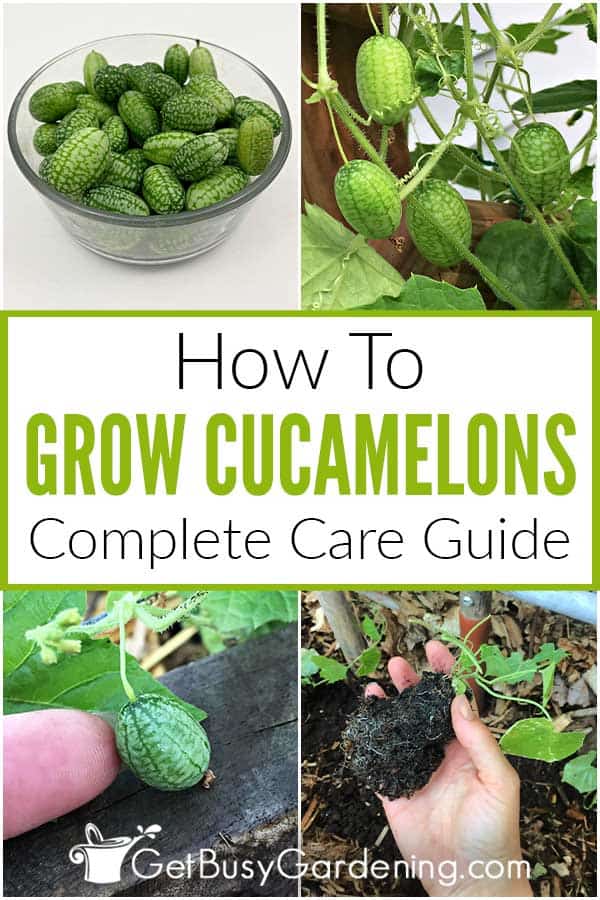
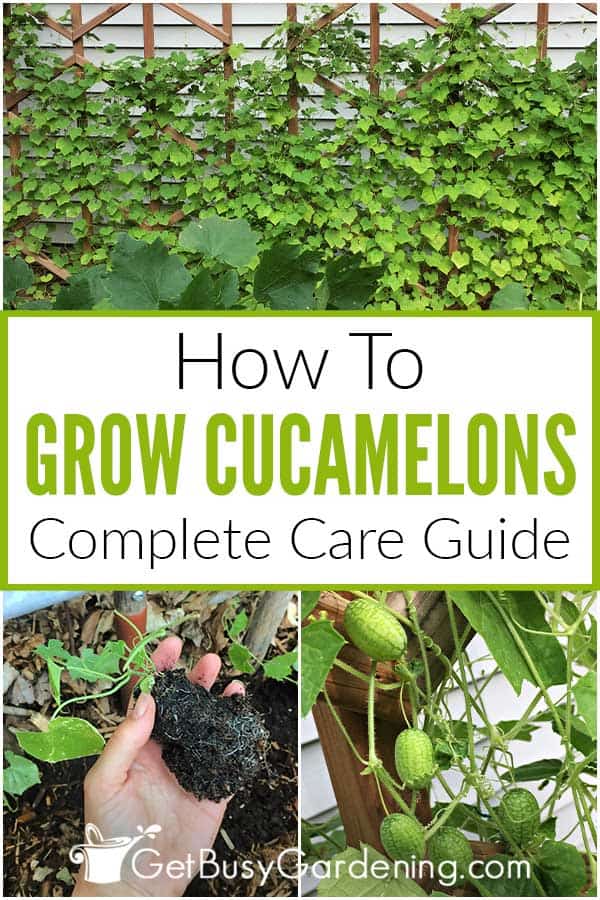
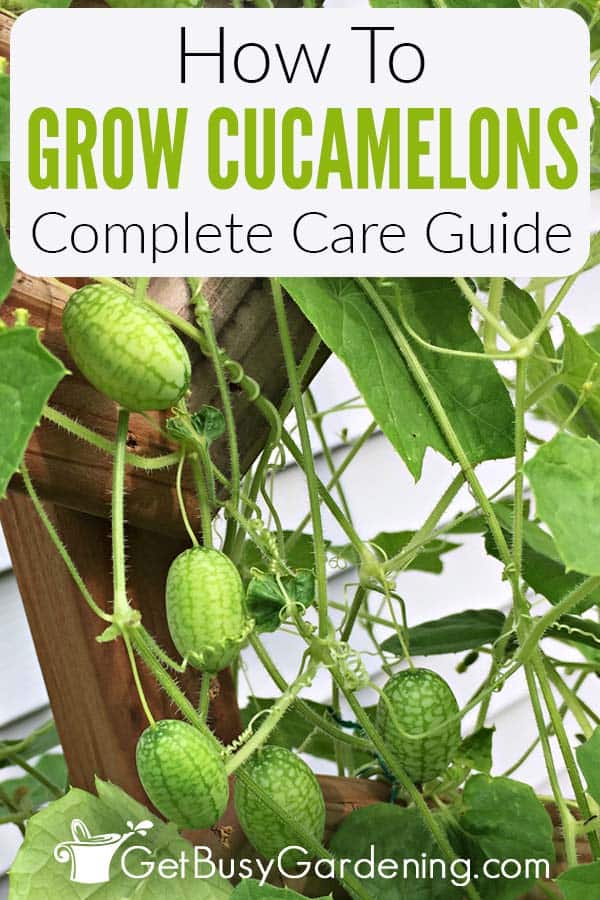
Growing cucamelons is easy, even if you’re a total beginner. They produce loads of adorable little mouse melons per plant, and the vines are easy to train too.
In this post you’ll learn all you need to know about how to grow cucamelons the right way to get the biggest, healthiest harvests.
We’ll discuss fertilizing, location, sunlight, temperature, watering, soil requirements, and much more.

Cucamelons Quick Care Overview
| Scientific name: | Melothria scabra |
| Classification: | Vegetable |
| Common names: | Cucamelon, Mexican Sour Gherkin, Mouse Melon, Mexican Miniature Watermelon |
| Hardiness: | Zones 9+ |
| Temperature: | 50-75°F |
| Flowers: | Yellow, late spring-summer |
| Light: | Full sun to part shade |
| Water: | Keep soil evenly moist, do not overwater |
| Humidity: | Average |
| Fertilizer: | High-potassium fertilizer in spring and summer |
| Soil: | Rich, fertile, well-draining |
| Common pests: | Cucumber beetles |
Information About Cucamelons
Cucamelons (Melothria scabra) are tender perennials from the Cucurbitaceae family. They’re a highly productive, easy-to-grow vegetable plant native to Mexico and Central America.
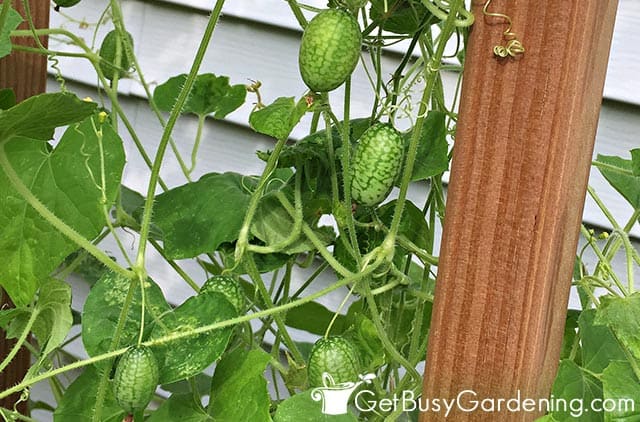
The vining stems grow 10’ long or more and will cover a trellis or other garden structure with dense, green foliage that’s naturally pest and disease resistant.
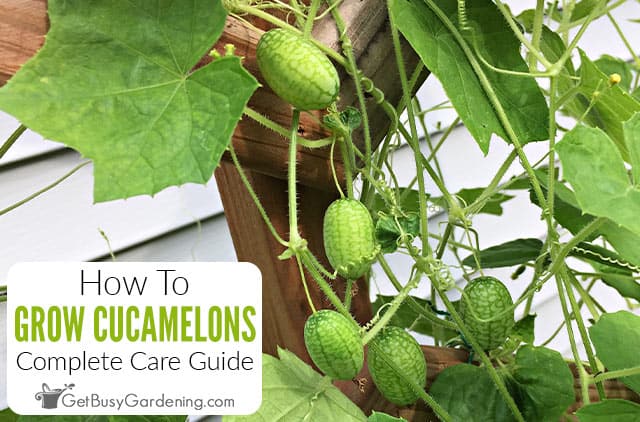
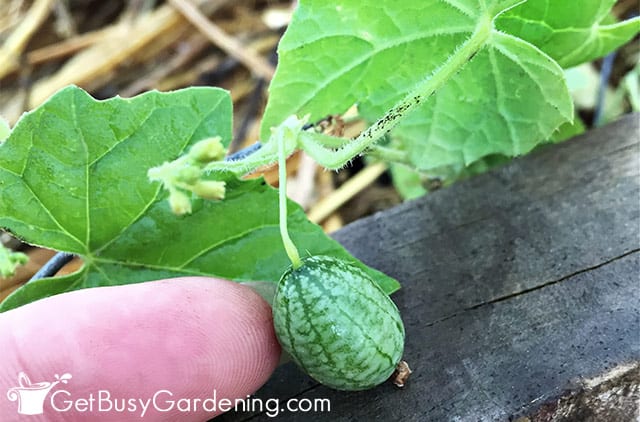
The yellow flowers develop small, grape-sized fruits that look like miniature watermelons, earning it the nickname mouse melon.
Its other common names, cucamelon and Mexican sour gherkin, come from the flavor, which tastes like a mix of cucumber and watermelon, with a sour citrus note.

Hardiness
Cucamelons are not cold hardy and won’t survive temperatures lower than 50°F (10°C) for very long.
They are often grown as annuals in zones 2-11, but they’re actually tender perennials that can survive the winter in zones 9+, as long as the ground doesn’t freeze.
The foliage may die back in the lower zones, but the plants produce small tubers at the end of the season that allows them to regrow the following year.
If you live in a colder climate, you can dig up the tubers in the fall and overwinter them indoors, then replant them in the spring.
How Do Cucamelons Grow?
Cucamelons grow small fruits from female flowers after they’ve been pollinated by male flowers. Pollination occurs by wind and insect, or you can do it by hand.
The blossoms begin to appear about 9-10 weeks (65-75 days) after planting, and the fruits will start to develop a few days after the female flowers are successfully pollinated.
Once the plants mature, flowers and fruits will continue to develop at various stages until frost kills the vines in the fall.
How Long Do Cucamelons Take To Grow?
Mouse melon plants take 60 to 75 days (9-10 weeks) to reach full maturity after planting. It takes another 7 and 10 days after pollination for the fruits to become large enough to harvest.
How To Grow Cucamelons
Before we dive into cucamelon plant care, let’s first chat about where and when to plant them.
Choose a good location from the start so growing your Mexican sour gherkins is as easy as possible.
Where To Grow Mexican Sour Gherkin
Plenty of sunlight and rich, well-draining soil are key to growing cucamelons successfully.
Choose a garden location with direct sunlight and lots of space to accommodate the sprawling vines.
You can also grow cucamelons in containers that are at least 5 gallons or 16” in diameter.
No matter where you grow them, use a type of cucumber trellis, pea netting, or another support system to keep the prolific vines tidy, and prevent them from taking over your garden.
When To Plant Mouse Melon
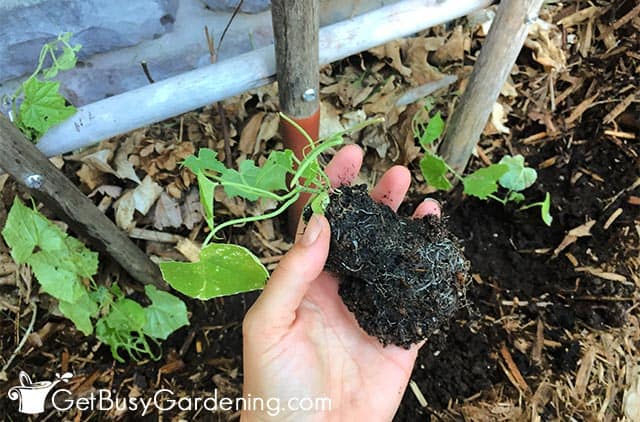
Wait to plant your cucamelons until all chance of frost has passed in the spring and the soil temperature is around 70°F (21°C), you can check it with a soil thermometer.
Mouse melons don’t like the cold, so it’s not beneficial to plant them into your garden earlier because it could stunt their growth.
In zones 7+ you can directly sow the seeds once nighttime temperatures are consistently above 50°F (10°C). Otherwise start them indoors 4 to 6 weeks before your last frost date.
Related Post: How To Grow Cucamelons From Seed & When To Plant
Cucamelon Plant Care & Growing Instructions
Now that you know where and when to plant them, it’s time to talk about how to grow cucamelons. Use these tips to maximize the growing season and fully enjoy the fruits of your labor.
Sunlight
Cucamelons need 6-8 hours of light per day. Full sun is ideal for the best fruit production.
In very hot climates that routinely reach temperatures of above 85°F (29°C), provide them with afternoon shade to protect the foliage and fruit from burning or drying out. A shade cloth works great for this.
Water
Though somewhat drought-tolerant, Mexican sour gherkins produce best when given 1” of water per week.
Always direct the stream near the base of the plant and not over the leaves, which can lead to mildew growth.
Keep the top layers of soil damp to help the shallow roots stay hydrated, but avoid making it puddled or soggy. Excess water can lead to root rot, and eventually kill the plant.
Mulch with straw or shredded leaves to help retain moisture longer, especially during hot weather.
Temperature
The ideal temperature range for Melothria scabra is between 65-75°F (18-23°C).
They can survive down to 50°F, but prolonged exposure to cold temperatures will halt fruit production, damage foliage, and eventually kill the plant.
Hot temperatures of 85°F (29°C) and above will slow or stall fruiting and flowering. To avoid that, provide shade during the hottest part of the day and water more frequently.
Fertilizer
In rich soils cucamelons don’t require a lot of fertilizer to thrive, but a few well-timed applications will provide a boost.
Add compost, aged manure, worm castings, or slow-release granules at planting to give them a head start.
Then apply a high-potassium or all-purpose organic liquid plant fertilizer once during the spring and summer.
Soil
The best soil for mouse melons is rich, fertile, well-draining, and slightly acidic. They prefer a pH between 6.1 and 6.8, which you can check with a gauge probe.
Amend poor soils with plenty of organic matter, like compost or aged manure, to improve nutrient availability and drainage before planting.
Trellising
Though not technically a requirement, growing cucamelons on a trellis has many benefits.
It saves garden space by controlling the vining growth, and keeps foliage and fruit off the ground so it is less susceptible to pests and disease. It also makes harvesting a breeze!
The vines can reach about 10’ long, but they are fairly lightweight, so you should use a medium-sized support for them.
A traditional trellis, small arch trellis, obelisk, or a-frame would work great. They tend to clump at the bottom, but you can easily train the vines to climb.

Pruning
Pruning is also not a requirement, but helps maintain their shape and size as your cucamelon vines get long or unruly.
Use sharp, sterile pruners to snip away damaged or dead leaves throughout the season.
Once your vines have reached the desired length, pinch back new growth to encourage more branching and flowering instead.
Pest Control Tips
One reason cucamelons are well-loved by gardeners is their natural pest resistance. Deer, rabbits, other furry pests, and most insects are not usually an issue.
However, no plant is 100% pest-proof, and they can be affected by some bugs, such as the cucumber beetle.
Row covers, yellow sticky traps, and neem oil solutions are all useful ways to prevent or manage them if needed.
Disease Control Tips
Mexican sour gherkins are also very disease resistant when properly cared for, but again, no plant is 100% immune.
Powdery mildew can develop from overwatering or continuous moisture sitting on the foliage. You can try treating it with an organic fungicide to slow the spread in the very early stages.
Mosaic virus is another potential issue that causes yellow mottling on the leaves. Trim and destroy affected foliage right away to prevent it from spreading.
Tips For Harvesting Cucamelons
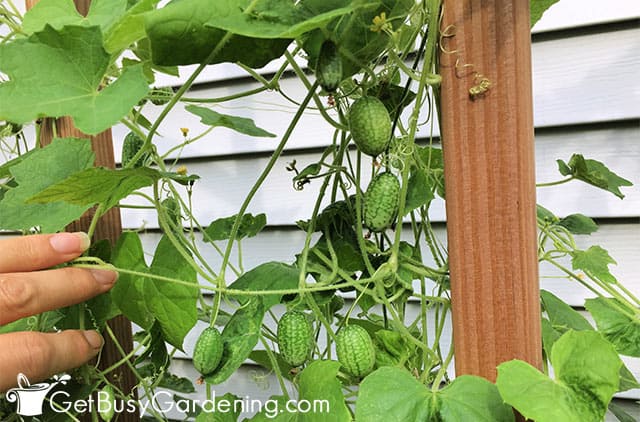
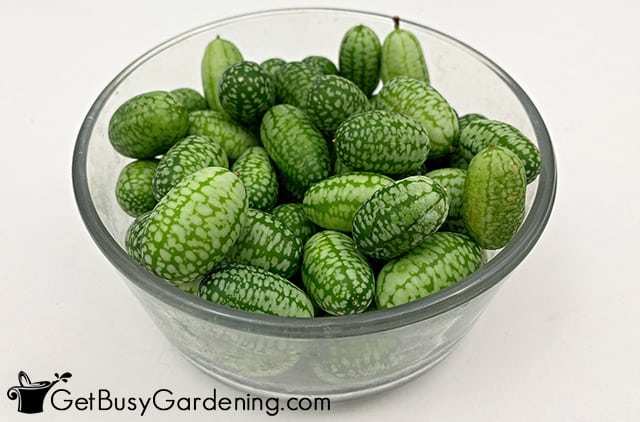
When your cucamelons have reached 1” in diameter, about the size of a grape, and are bright green they’re ready to be harvested.
It’s best to pick them as soon as they are ready, for the best flavor and texture. Overly ripe fruits will become increasingly sour and seedy.
Use sharp, clean pruners to trim them from the vine rather than pulling them off to avoid potential damage. Check back and harvest often to encourage more flowering and fruiting.
Troubleshooting Common Problems
I’m happy to tell beginners that cucamelons are very easy to grow and virtually pest-free. But there’s always a possibility you’ll encounter one of these potential issues. These tips will help return your plant back to good health.
Leaves Turning Yellow
Yellowing leaves are usually a problem of improper watering or lack of nutrients.
A moisture meter is a good tool to help you understand how much water to give if you’re struggling. The soil should be evenly moist but not sodden, or between 4-7 on the gauge.
Otherwise, amend poor-quality soil or fertilize with an all-purpose organic liquid or slow-release granules to boost the nutrients.
Brown Leaves Or Edges
Pests, sunburn, nutrient deficiency, and drought all cause browning leaves if left unchecked.
Provide shade in the afternoon, extra moisture in temps above 85°F (29°C), and treat any pests as soon as you see them.
Plant Wilting
Wilting is usually a symptom of heat, drought, or pests. Check your cucamelon for insects, and make sure it’s properly watered, especially during heat waves.
FAQs About Growing Cucamelons
Here I’ve answered some of the most commonly asked questions about growing cucamelons. If yours isn’t listed, please add it to the comments section below.
What does a cucamelon taste like?
Cucamelons taste like a combination of a cucumber and a watermelon, just like the name would suggest, but with a slightly sour flavor, and a hint of citrus.
Are cucamelons easy to grow?
Yes! Cucamelons are very easy to grow and a great choice for beginners. They’re highly prolific and naturally pest and disease resistant.
What part of a cucamelon do you eat?
The part of a cucamelon that you eat are the small fruits that are produced from the flowers. They look like tiny watermelons, but are about the size of a grape when ripe.
How Long Does It Take For Cucamelons To Produce Fruit?
It takes about 60 to 75 days (9-10 weeks) from planting for a cucamelon to produce fruit. Once female flowers are pollinated, you can expect to harvest your mouse melons 7 to 10 days later.
Do cucamelons come back every year?
Cucamelons can come back every year in zones 9+. Most are grown as annuals, but they’re actually tender perennials that grow back from tubers, as long as the ground doesn’t freeze.
Are cucamelons toxic?
No, cucamelons are edible and non-toxic to humans, cats, dogs, and other animals. They’re related to cucumbers, so you can check out the ASPCA website for more information on toxicity in the Cucurbitaceae family.
Are mouse melons the same as cucamelons?
Yes, mouse melons are the same as cucamelons, it’s just another common nickname because the miniature fruit looks like mouse-sized watermelons.
Are Mexican sour gherkins the same as cucamelons?
Yes, Mexican sour gherkins are the same as cucamelons, and another nickname for them because they taste similar to cucumbers, with a slight sour flavor.

If you’d like to learn how to make the most of your space and get as much homegrown food as possible, then my Vertical Vegetables book is perfect! It will teach you all you need to know, has tons of gorgeous photos, and includes 23 DIY projects you can build for your own garden. Order your copy today!
Learn more about my Vertical Vegetables book here.
More About Vegetable Gardening
- How To Grow Cucumbers
- How To Grow Zucchini
- How To Grow Okra
- How To Grow Green Beans
- How To Grow Eggplant
- How To Grow Winter Squash
- How To Grow Passion Fruit
- How To Grow An Avocado Tree
- How To Grow Peas
Share your tips for growing cucamelons in the comments section below.

jaba gigolashvili says
How many lb can be harvested from 1 cucamelon seedling?
Amy Andrychowicz says
It totally depends on the environment and care the plants receive. But, in the ideal conditions, you can get several pounds of cucamelons off of one plant. They are so prolific that it can be overwhelming, which is a good thing. 🙂
Don Brock says
Why are my mouse melons really tiny? They’re not getting any bigger
Amy Andrychowicz says
Make sure your cucamelons are in the full sun, at least 6-8 hours per day minimum. Also they can be a little slow to grow, so if you planted them late in the season, then it might be a few more weeks before they take off. Otherwise, if the fruits are tiny and not growing, then it could be caused by poor pollination. However, I suspect it’s either too much shade or they’re just slow, since they are self-pollinating and don’t need insects.
Eddie says
Thank you .. I grew up eating these back in my native land in Central America, I think I will grow them, do you sell the seeds or plants?
Amy Andrychowicz says
You’re welcome. No, I do not sell seeds or plants. But you shouldn’t have any problem finding them at your local garden center or online, cucamelons are very popular these days.