Fertilizing potted plants is very important to keep them growing their best. In this post, I’ll tell you why it’s so important, talk about the different types of plant food, and which are the best. Then I’ll show you exactly how to fertilize containers, including when, how often, and how much to feed them.

One of the biggest mistakes that new gardeners make is breezing over the importance of feeding their container plants. If you’re new to growing in containers, then you might not realize how important fertilizing potted plants really is.
Feeding container plants can be a confusing and intimidating topic for newbies, I know it was for me! So it’s just easier to ignore it, right?
Don’t worry, you don’t need to be a chemist to figure out how to fertilize a potted plant. You just need to understand a few basic things. My goal in this detailed guide is to break it all down, and make it super easy for you.
Why Fertilizing Potted Plants Is So Important
Quality container potting soil has a lot of great ingredients for growing healthy potted plants. But those nutrients won’t last forever. They get used up by the plants, and also wash out of the pots a little bit each time you water.
Feeding container plants is even more important than for those growing in a garden plot. Since their roots aren’t in the ground, they can’t go deeper or spread out to find all the nutrients they need.
Containerized plants are completely dependent on us to provide everything that they need to grow and thrive. So that’s why it’s so important to fertilize them on a regular basis throughout the growing season.
Using Chemical -vs- Organic Fertilizers For Feeding Potted Plants
Before I jump into the specifics of feeding container plants, I want to talk briefly about synthetic chemicals -vs- organic fertilizers. Chemical fertilizers give us instant gratification, but can cause long-term harm to plants.
They feed the plant rather than feeding the soil, which means your plants will need to be fertilized more often. They’re also made of salts, which can quickly build up in the soil, and cause major damage.
It’s also very easy to burn plants when using synthetic fertilizers, which is a very common problem for containerized plants. So, when it comes to fertilizing potted plants, it’s always best to use natural, organic fertilizer.
Organic fertilizers feed the soil, and naturally give the plants exactly what they need to grow their best. They don’t need to be applied as often, have minimal risk of fertilizer burn, and result in a much healthier container garden.
Best Organic Fertilizer For Container Plants
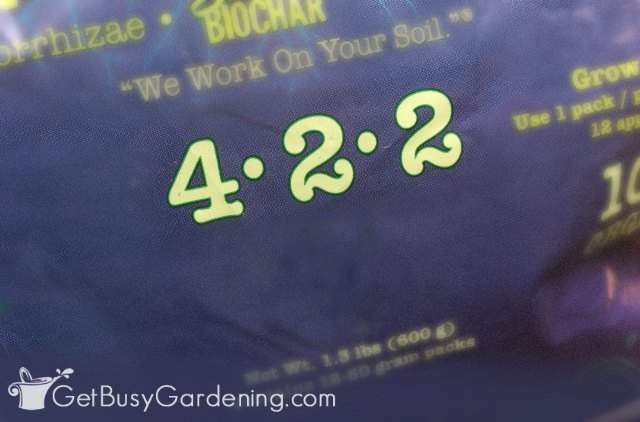
Manufacturers make it easy choose the best fertilizer for potted plants at a glance by putting numbers on the packaging. But what do those numbers mean?
Those numbers represent the amount of each of the three most important ingredients that plants need to grow their best. Nitrogen, phosphorous, and potassium (N-P-K for short).
The reason for the numbers is that certain types of plants require different amounts of these nutrients. Here’s how to choose the right fertilizer for feeding potted plants…
Best Fertilizer For Container Vegetables
Vegetables need a lot of nutrients to stay healthy, and produce the best crops for us. So it’s especially important to fertilize vegetables in containers.
For the purpose of choosing the best fertilizer for them, let’s put all of our vegetables into two main categories: flowering and non-flowering…
- Flowering vegetables are those that need to bloom to produce fruit. Examples are beans, squash, tomatoes, peas, and peppers. These types of veggies need fertilizer that’s high in phosphorus (P), so choose one with a larger middle number.
- Non-flowering veggies are those that we harvest for the leaves. Examples are lettuce, kale, spinach, and chard. Choose a fertilizer that’s high nitrogen (N) where the first number is the largest of the three.
- Root crops are the ones we harvest for the roots. Examples are carrots, radishes, beets, turnips, etc. They do best with less nitrogen and more phosphorus (P) and potassium (K). Choose one where the last two numbers are highest.
Related Post: Guide To The Best Fertilizers For Vegetable Gardens
Best Fertilizer For Flowering Container Plants
It’s also very important to feed your flowering plants throughout the growing season so that they will continue to bloom. Otherwise they can fizzle out half way through the summer, and stop producing flowers.
The best plant food for potted flowers is a higher phosphorous (P) fertilizer. That means the center number on the label is largest.
Liquid Fertilizer -vs- Granular Fertilizer For Containers
Now that we know which type of fertilizer to use for feeding potted plants, the next question is whether you should use liquid or granular (aka: slow release)?
Each has their own unique benefits for fertilizing container plants, so the short answer is to use both! Below I’ll discuss the differences between the two, and show you why it’s best to combine them.
Liquid Fertilizer For Potted Plants
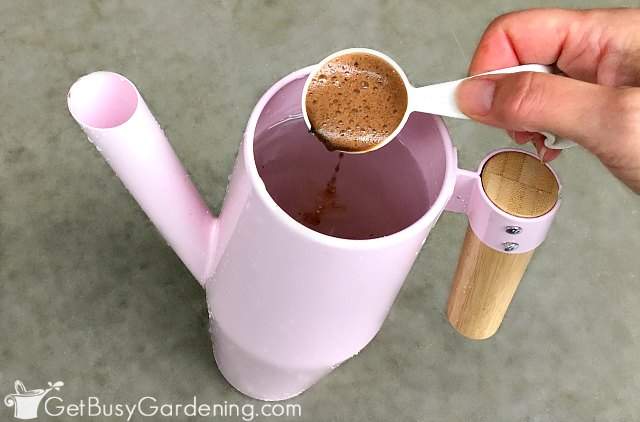
The biggest benefit of using liquid fertilizer for potted plants is that it’s absorbed very quickly by the plants. But the downfall is that it doesn’t last very long.
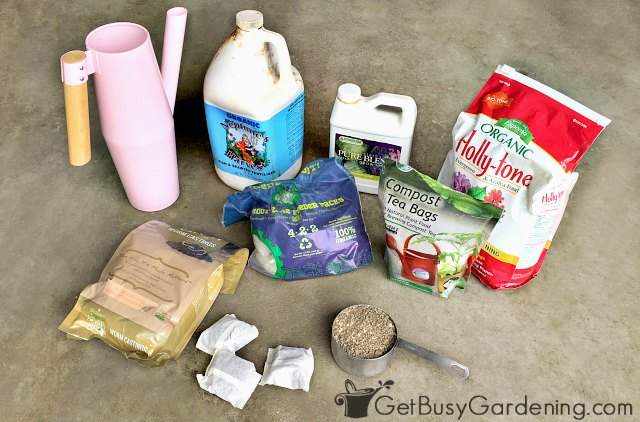
You can buy liquid fertilizers pre-mixed, as a concentrate that you mix with water, or as tea bags so you can brew your own. Here are a few examples of fantastic liquid fertilizers for potted plants…
- Liquid kelp seaweed
- Fish emulsion
- Worm castings tea
- Compost tea concentrate
- Compost tea bags
Slow Release Fertilizer For Potted Plants
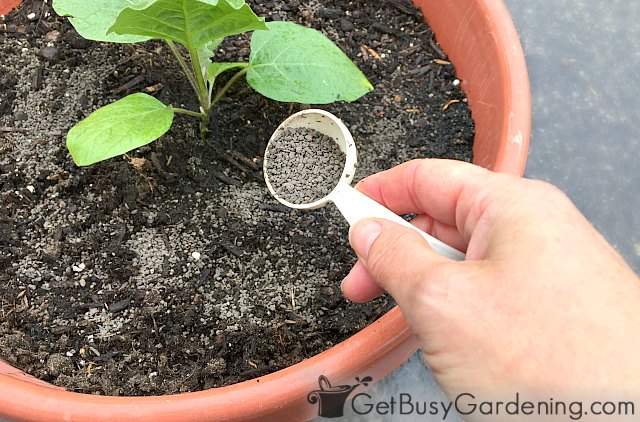
On the flip side, granular fertilizers release their nutrients over time, so they aren’t immediately available to the plant. But that means they feed the plants longer, and you don’t need to apply them as often as liquid fertilizers.
There are tons of wonderful products out on the market these days. You can buy them for general use, or specifically for different types of plants. Here are some excellent options…
When To Fertilize Potted Plants
You can fertilize potted plants at any time during the day, but never fertilize a plant that is dehydrated or drooping. Fertilizing potted plants that are under stress can harm or even kill them.
So, always check the soil before feeding container plants. If the soil is dry, or the plant is drooping, give it a good drink of water, and then wait a few hours before adding fertilizer to the pot.
How Often To Fertilize Potted Plants
You should feed your potted plants regularly throughout the entire growing season. For best results, always follow the instructions on the label, because products can differ.
But, generally speaking, slow release granules only need to be applied 2-3 times per season. So, add them to the soil when you first plant your containers, and then again once or twice during the summer.
You can apply liquid fertilizer every 2-4 weeks. Some gardeners will use a weak dose each time they water so they don’t have to remember to stick to a schedule. In this case, be sure to add about 1/4 – 1/5 of the recommended amount to your watering can.
How Much Fertilizer To Use In Potted Plants
The amount of fertilizer to apply to potted plants depends on the size of the pot, and the product you’re using. So, rather than give you any specifics here, I recommend following the directions on the package.
Most labels will tell you how much to use for the size of pot your plants are in. So it’s important to follow those guidelines, and never add too much fertilizer to potted plants.
Even though the risk of burning them is much lower when you use organic fertilizers, it is still possible for some. Plus, overdoing it doesn’t have any additional benefit the plant, and will just end up costing you more money.
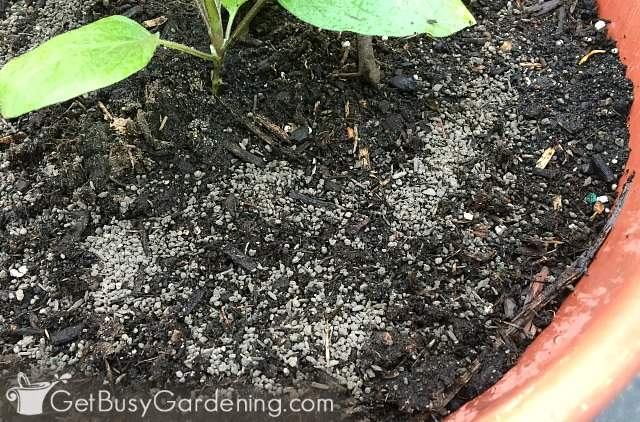
How To Fertilize Potted Plants
How you fertilize depends on whether you’re using liquid or slow release. Below I will give you basic guidelines for how to apply fertilizer to potted plants. But you should always read the instructions on the label of the specific product you’re using.
Adding Slow Release Granules To Containers
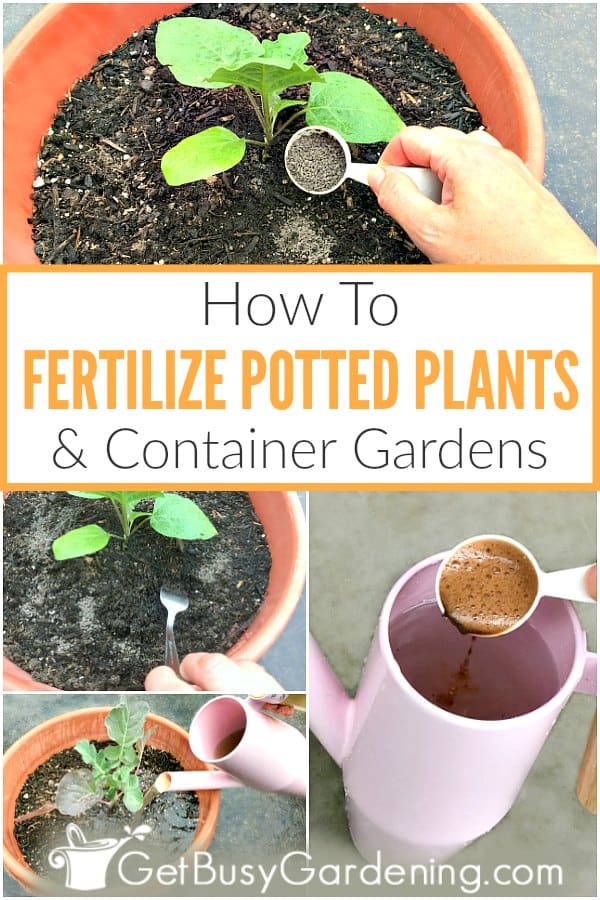
Sprinkle the recommend amount of granules (based on the size of your pot) evenly over the top of the soil.
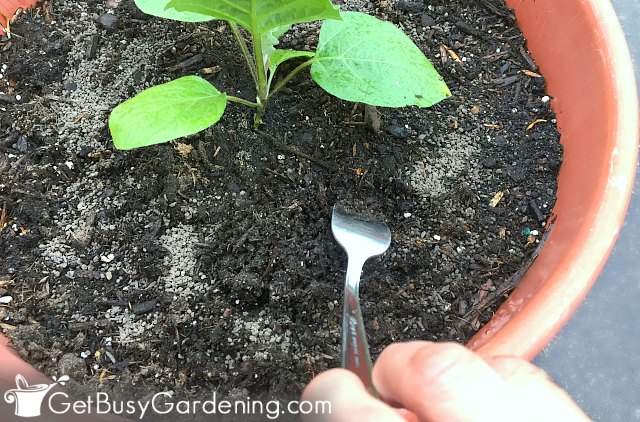
Then use a hand fork to gently loosen up the soil, and mix it in. Water the soil well to activate the granules.
Applying Liquid Fertilizer To Potted Plants
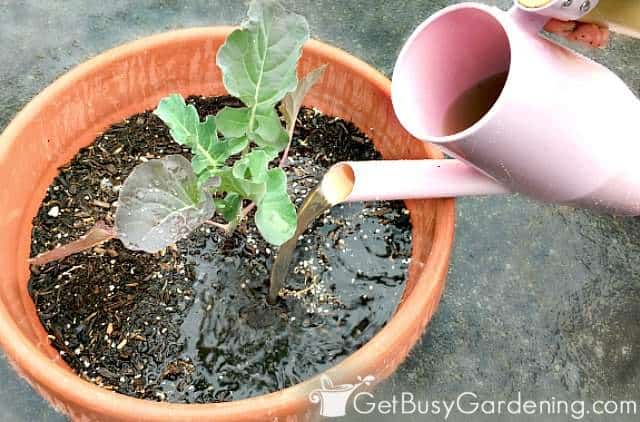
First mix the recommended amount of liquid fertilizer and water in a watering can.
Then simply pour the mix into the soil as if you’re watering the plant. You can also put some into a spray bottle, and spray it on the leaves for foliar feeding.
Fertilizing potted plants is important to grow healthy, productive, and beautiful container gardens. Once you get the hang of it, and see how much better everything grows, feeding your container plants will become second nature.
More Container Gardening Posts
- How To Install A DIY Drip Irrigation System For Potted Plants
- Container Gardening Design Tips & Ideas
- 15 Best Container Vegetables For Pots Planters
- 21 Best Container Plants For Pots
Share your tips for fertilizing potted plants, or your favorite type of potted plant fertilizer in the comments below

MERCEDES CRONIN says
Hi, I am new in gardening, and I’ve been buying outdoor potted flower plants. Some of them, I’ve been successful, but others died on me. Like my lantana but I got another one because I love the smell and flowers of it. I am from Central Florida, and it is very hot and humid here. I would like to know what can of fertilizer should I use for my flower plants. Thanks, and I like all the information you gave.
Amy Andrychowicz says
You’re welcome! Here’s my article about when and how to fertilize your flowers, and I listed some of my favorite types of products that I use in there.
Deb says
Can you fertilize outdoor potted plants and treat them for insects with Diatomaceous Earth at the same time? If not, can I go ahead and use a bloomer fertilizer to get them blooming and then sprinkle the soil and stems with the DE a day or two later?
Amy Andrychowicz says
You could do them both at the same time. I would fertilize the plant first, then sprinkle the DE after.
Brenda Kemp says
I read about using used tea bags in your soil for nutrition but never have I read you can use used tea
leaves/grounds. Can you tell me what’s the correct way to use tea.
Amy Andrychowicz says
The tea that I mention in this post is compost tea, not herbal tea. It’s specifically made for plants. I have links to the brands that I use and recommend in the article.
mh says
I think I chose the wrong bag for fertilizing my potted, flowering plants. Mine is the yellow bag of Expert Gardener Flower Food 10-10-10. It is the granuals and does not give directions for applying to plants in pots. Should I use it? I am worried about burning my plants that I love.
Thanks for any help!
Amy Andrychowicz says
I don’t have any experience with that specific product that you mention, so I can’t speak to whether it’s safe for fertilizing container plants. But for flowers, you should get something that’s higher in phosphorous (the center number should be the highest).
Beth Crane says
I live in the Northern CA. The weather gets to the 90’s in the day and cools to 50’s at night. In the winter the weather remains cool with occasional freezes at night. I have a number of flowering potted plants that I fertilize regularly with an liquid,organic fertilizer specifically for flowering plants. Should I stop fertilizing or change the type of fertilizer in the fall?
Thank you,
Amy Andrychowicz says
Generally speaking, most types of potted plants go into a state of dormancy in the winter, and shouldn’t be fertilized. However, there are some exceptions, and it totally depends on the type of plants you have. For the most part, I would stop feeding them in the fall, and start again in late winter/early spring. However, you may want to research your specific plants to see if any of their active growing seasons are during the fall and winter.
Katrina Kahler says
Your article is extremely helpful. Thank you so much for the valuable information. Now that I’ve found you, I will be visiting your site often.
We have many potted plants, and have always used top quality potting mix. The information on the potting mix bag indicates 9 months of fertiliser. However, the leaves of our giant elephant ears plant, which was thriving and has grown several pups around its base, are yellowing.
We’ve had a lot of rain so I’m wondering if its overwatered, or if it simply needs some liquid fertiliser because of the avid growth in the pot. I have an organic bottle of fertiliser ready and we’re planning to remove and repot a couple of the the pups as well. It’s been in the pot for about 5 months. Until now, I’ve been worried about refertilising because of the nutrient rich potting mix it is potted in (advertised as lasting for 9 mths).
thank you so much in advance for any advice you can offer.
Katrina
Amy Andrychowicz says
Usually when the leaves turn yellow like that, it is a sign that a plant has been overwatered, as you suspected. Check the soil, and if it’s very wet, then that is likely the problem. However, if it’s been over the 9 months that the potting mix advertised, then I would start fertilizing your outdoor containers.
Ercy says
Thank you very much for this article! It answers my questions with specific, useful information and examples.
Amy Andrychowicz says
You’re welcome! So glad to hear you found this article useful. Thank you! 🙂
Nikesh B says
Hi Amy,
It was great I came across your post. Have been trying to garden in my cramped balcony (I am from Mumbai, India, where space is an issue). Was looking on internet how to provide essential nutrients to my plants which I have just planted.
The fact is that I have been trying to set up my plants for over years now, but my frequent travels related to business would end up me coming home to see my plants dried dead.
So now with the lockdown in India, decided to reignite and drive my desire to get home grown vegetables. Started with green chillies, cucumber, ginger and lemon.
Some have sprouted from the seeds now, so any guidance on how to proceed? Your article was was informative, so thought of asking you for guidance.
Amy Andrychowicz says
Wonderful, glad you found this article about fertilizing outdoor potted plants helpful! You can read all about caring for seedling here. Good luck, and I hope your container garden will thrive for you this year! 🙂
Julie Wheeler says
Just stumbled upon your website..Love it! I absolutely love plants and gardening, but know very little. I will be visiting often. Thanks for sharing your knowledge!
Amy Andrychowicz says
Awesome, glad you love the site! 🙂
Sabrina says
Is fertilizing potted fruit shrubs & trees the same as fertilizing potted vegetables?
Amy Andrychowicz says
Great question! Fertilizing potted fruit plants would be the same as it would be for flowering vegetables. So they would need fertilizer that’s high in phosphorus (which is the middle number), like this one. (you can also see the “Flowering vegetables” bullet point above).
Manju says
Very informative article.Thank you so much
Amy Andrychowicz says
You’re welcome! 🙂
Beth Cohen says
Thanks for your informative article. The soil on a few of my outdoor potted plants looks like it could use some type of amendment. Cow manure or some type of compost? I am in central Florida. Thanks again! Beth
Amy Andrychowicz says
Yes, compost would be an excellent amendment for your outdoor planters. Here’s my recipe for making your own container potting soil if you want to give that a try… How To Make Potting Soil For Containers (with recipe!).