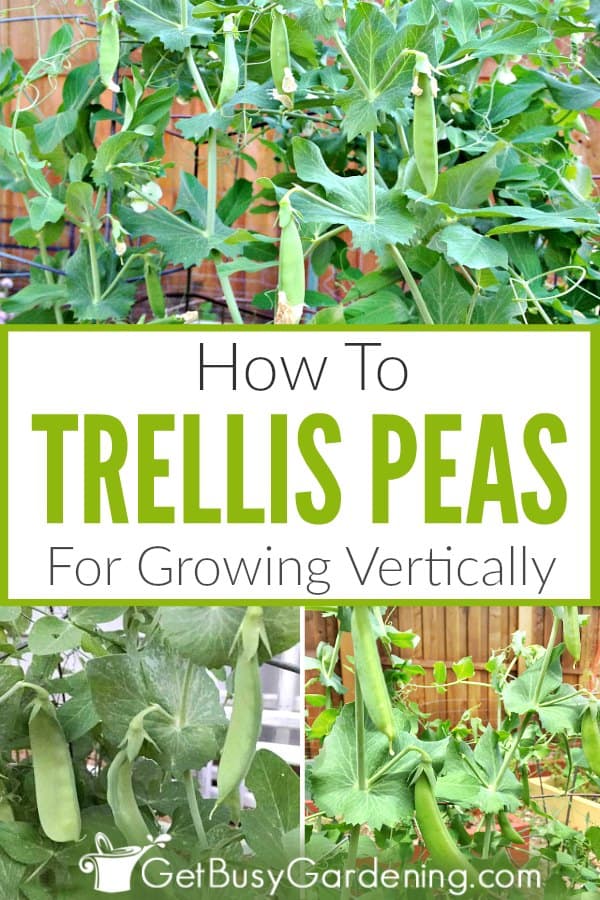
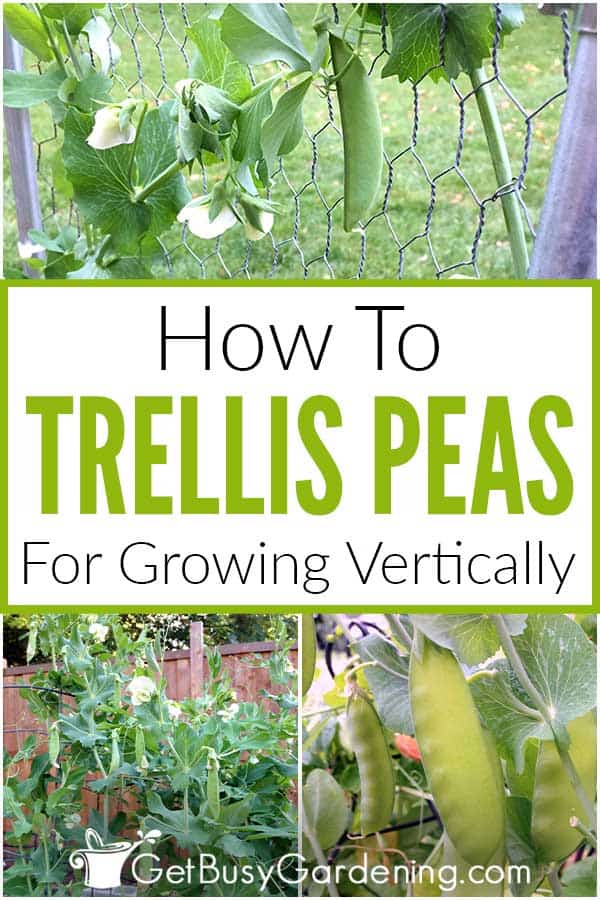
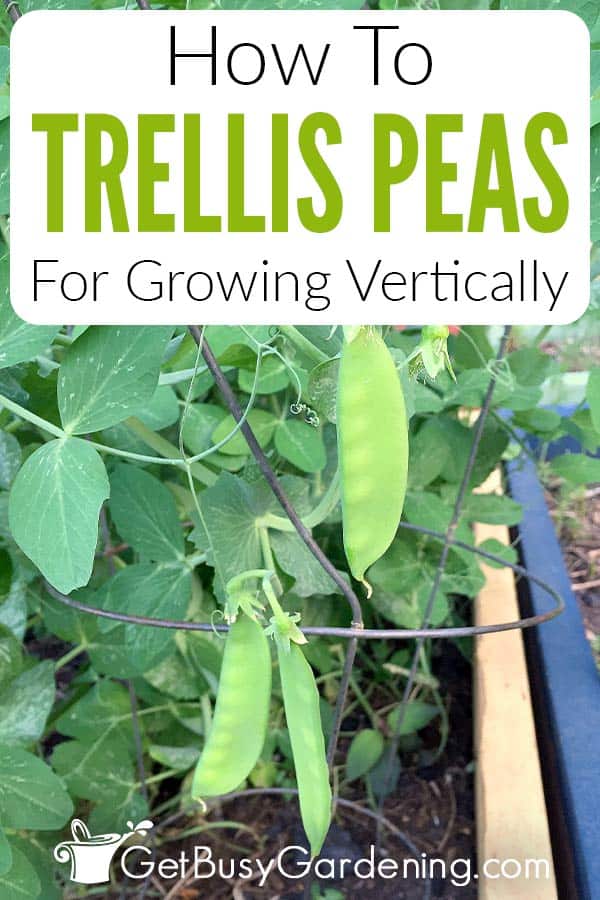
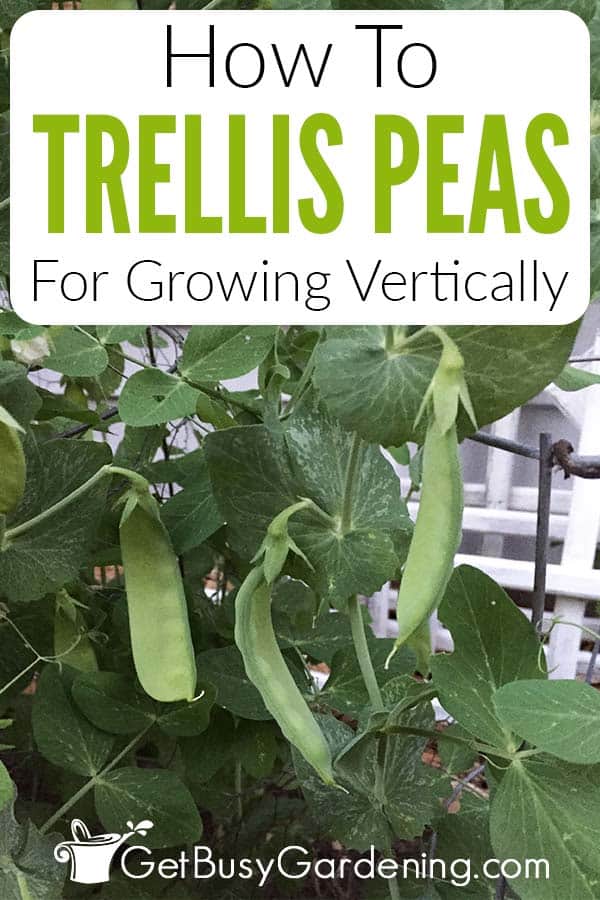
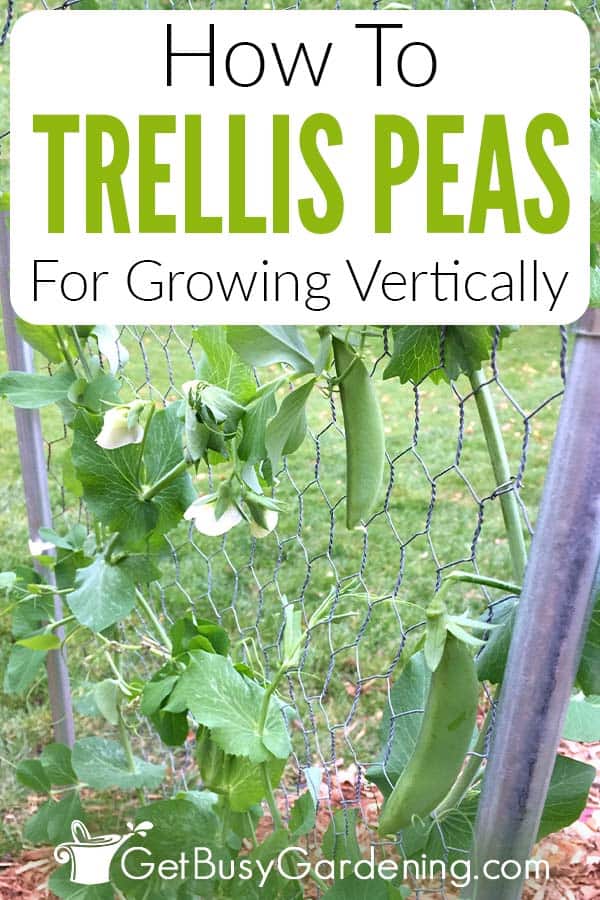
Growing peas vertically is fun, easy, and a great way to save space in the garden. In this post, I will show you exactly how to trellis peas, and give you tons of great support ideas too.
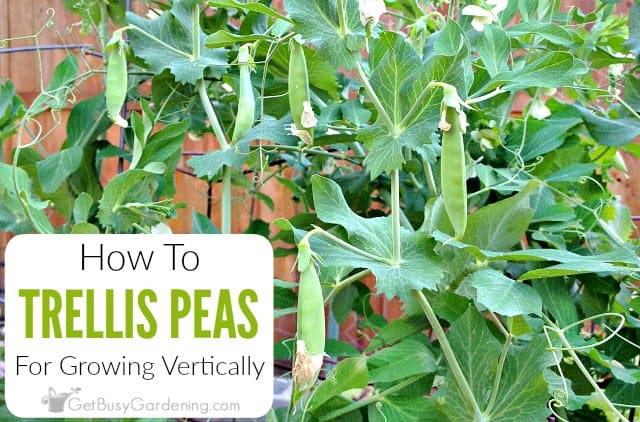

If you’ve ever grown climbing peas in your garden before, you know that the vines can become unruly pretty quickly.
Not only that, but allowing them to sprawl along the ground can lead to issues with disease, fungus, and pests.
Trellising peas solves off of these problems, makes them easier to pick, and it looks great too! If you’ve never tried vertical gardening before, this is one of best ways to get started.
In this detailed guide, I will tell you all about how to trellis peas. Including the benefits, different varieties to try, trellis ideas, and how to figure out if they even need a support.
Do You Need A Trellis For Peas?
The short answer is no, you do not always need a trellis for peas. There are (very broadly) two different types: bush and vining.
The reason it’s important to understand the difference is that vining plants will climb, and bush varieties will not.
So, you won’t need a trellis for bush peas. But if you have vining ones, then it’s best to give them a support to climb on.
Always check the seed packet or plant tag so you know what you’re getting. If you want to grow them vertically, then be sure to get the vining types rather than bush.
Related Post: How To Grow Peas
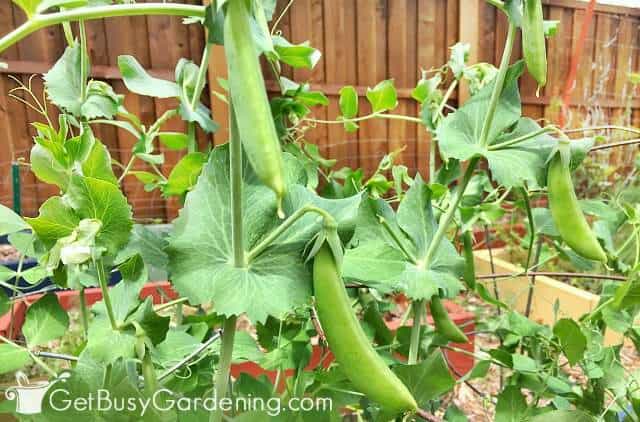
How Do Peas Grow On A Trellis?
Peas grow on a trellis by sending out side shoots, called tendrils, that vine out from the main stem. Those tendrils will wrap around anything they touch.
They are usually pretty good climbers on their own. But you will probably need to train them to attach themselves to the support. Otherwise, they can grab onto nearby fences, plants, or even mulch instead of the trellis.
Why Should You Trellis Peas?
There are many benefits to trellising peas. Not only does it look beautiful, but giving them something to climb on will give you more space in your garden.
Training them also keeps them from latching on to other plants or items you don’t want them climbing, keeping your beds looking tidier.
It’s also healthier for the plant, and allows for better airflow around the leaves. More airflow can prevent mildew and disease issues.
Getting the vines up off the ground also makes it easier to protect them from ground-dwelling pests like rabbits or slugs.
Another benefit of growing peas vertically is that it makes them simple to harvest, since the pods will hang down.
Related Post: How To Can Peas: Easy, Safe Recipe
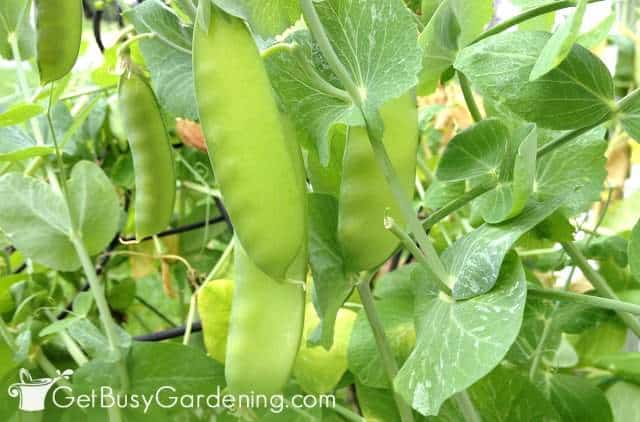
Best Peas To Grow Vertically
The most common types are English (aka shelling), snow, and snap. You may have also heard of sweet peas.
But sweet peas are not edible, they’re just decorative and prized for their pretty, sweet smelling flowers. However, they can be grown vertically too.
The edible climbing varieties I like the best include Oregon Giant, Sugar Daddy, and Tendersweet.
Related Post: How To Freeze Peas The Right Way
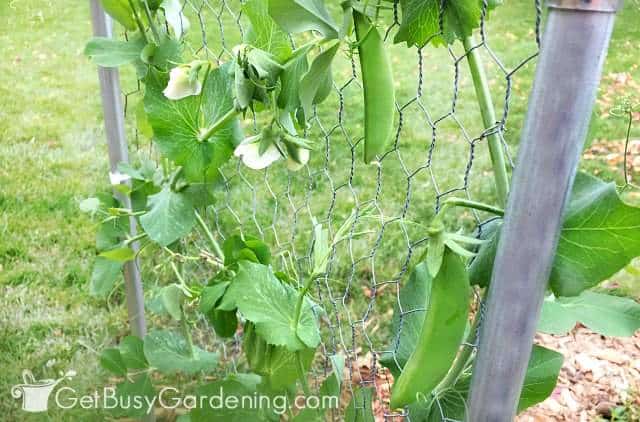
Pea Trellis Ideas
Pea vines are super lightweight, so you don’t need a heavy-duty trellis to support them. But you will definitely need to think about the height.
Some kinds get taller than others. The heights of the full grown plants usually ranges between 3-6 feet tall.
So be sure you choose the right sized structure for them, one that is proportionate to the size of the specific variety. Here are some pea trellis ideas to help get you started.
- Short plants will do great on small structures like a fan trellis, a teepee made out of bamboo stakes, a decorative obelisk, a small lean-to style support, or a wire tomato cage.
- Bigger vines will need a large structure like a tall trellis, a small arch, a large lean-to structure, or an a-frame.
- Arches, lean-tos, and a-frames will give you even more room in your garden because you’ll be able to plant shorter crops underneath.
- It’s also easy to make your own using things like chicken wire or other fencing, lightweight netting, or stakes.
Check out my easy pea arch trellis DIY project if you want to make your own using my design.
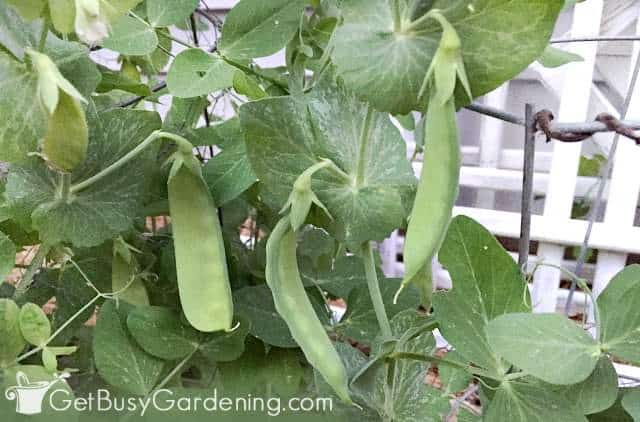
How To Grow Peas On A Trellis
Like I said above, peas naturally want to grow on a trellis, and they are pretty good climbers on their own.
But the vines will likely need to be trained a bit so that they will grab onto the support you provide for them, rather than nearby plants.
To train them, carefully tuck the vines into the support as they get taller. They are very delicate and will break easily when mishandled, so be extremely gentle with them.
They also grow very quickly, and it can be difficult to weave the delicate vines into the trellis without breaking them.
So, it’s usually safer to tie them to your structure using twine, metal twist ties, or flexible plant ties.
Just be sure to tie them on very loosely, otherwise they can strangle the vines, or break them as they get taller and thicker. Learn more about how to train vines here.
It’s easy to trellis peas, and a great garden space-saver. Not only do they look beautiful, but growing peas vertically helps keep them healthier and happier too.

If you’d like to learn how to make the most of your space and get as much homegrown food as possible, then my Vertical Vegetables book is perfect! It will teach you all you need to know, has tons of gorgeous photos, and includes 23 DIY projects you can build for your own garden. Order your copy today!
Learn more about my Vertical Vegetables book here.
More Information About Vertical Gardening
- How To Grow Squash Vertically
- Growing Cucumbers On A Trellis
- How To Trellis Grapes In Your Home Garden
Share your tips for how to trellis peas in the comments section below.

Mac McInnes says
Amy, — When planting peas each side of a trellis how far away from the trellis must each row be planted?
Amy Andrychowicz says
I plant my pease right next to the trellis so they can grab onto it as soon as they are tall enough. So plant them as close to it as you can.
Richard Gilston says
Hi Amy – thanks for the informative article on growing peas vertically. I am relatively new at gardening. I have built a raised bed and at one end I put 4 wooden stakes (about 5 ft each) to make a square enclosure. I wrapped some silk store bought garden netting around the stakes to make the enclosed space. It’s fairly small maybe 10 inches square. I have about 10 pea plants growing nicely within the space and starting to climb the trellis. My question is this: can too many pea plants make for too much competition in a confined space like that? Can one plant’s tendrils wrap around another pea plant and stunt its growth? Should I thin them out to maybe 4 or 5 plants? It’s beginning to look like a small jungle at the bottom of the trellis! Thanks.
Amy Andrychowicz says
Yes, pea plants can crowd each other out if they are too close together, and it can also cause fungus and disease issues. I recommend spacing peas 3-4 inches apart to give them enough room to grow.