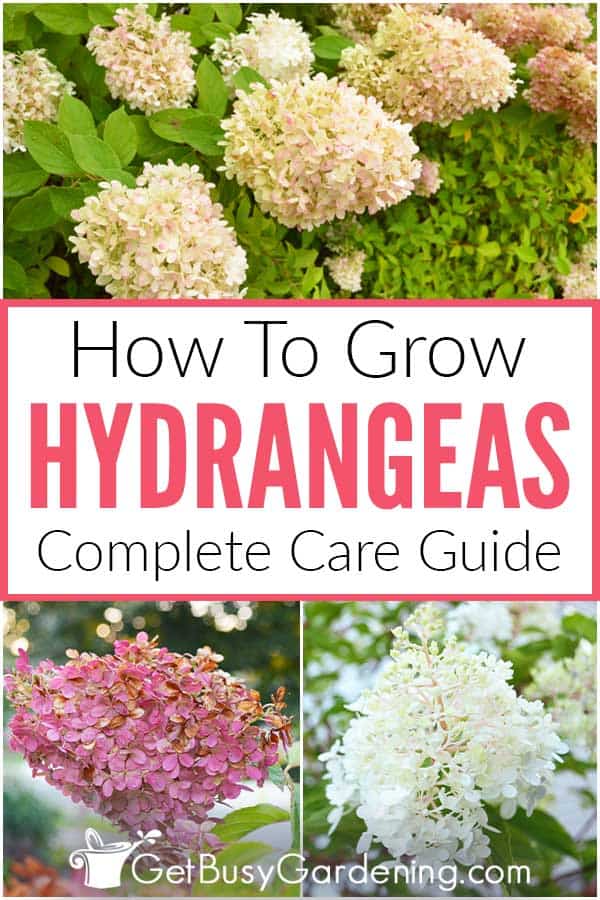

Growing hydrangeas is easy, and they can thrive in just about any climate with the proper care.
In this post, you’ll learn everything you need to know about hydrangea plant care, so you can enjoy their beauty for many years to come.
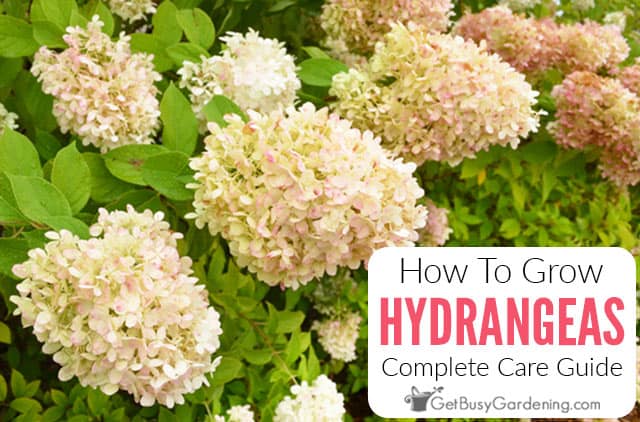

People who are unfamiliar with gardening might believe that growing hydrangeas is challenging. After all, the blossoms are so spectacular, they look like they would be difficult to maintain.
On the contrary, these beauties are very low maintenance. With the proper care, they will continue to dazzle us with their show-stopping blooms year after year.
These lovely shrubs come in all shapes and sizes, so you can have constant flowers throughout summer.
In this comprehensive guide, you will learn the best practices for caring for your hydrangea plant, no matter which type you choose to grow.
Information About Hydrangeas
For anyone interested in growing hydrangeas, there are many types and cultivars available. Their popularity has led plant breeders to seek out more and more beautiful versions.
The list below will explain the categories and general characteristics of each type.
Classifications
- Smooth: Many people know this type as snowball bush. Each year they produce large round blooms, and do exceptionally well in cold climates.
- Panicle: These are an excellent choice for cold climates as well. They fill an ample space, reaching heights of up to 15 ft tall. They’re also low maintenance and easy to care for.
- Oakleaf: This large-leafed type can grow to be quite big, and is the most tolerant of summer heat. They also have beautiful fall colors, in addition to the late summer blooms.
- Bigleaf: As the most common type of hydrangea, these varieties come in many brilliant colors, shapes, and sizes.
Different Types Of Hydrangeas
When it comes to growing hydrangeas, you have a huge selection of different types to choose from. There are 75 different species, and 600 cultivars from all over the world.
The differences are many, from the size and form of the shrub, to the shape and color of the flowers. Hardiness and bloom time also vary by variety.
There’s no doubt they are fun to collect. Of course, I can’t possibly list them all here, so below I’ll give you a few of my favorites.
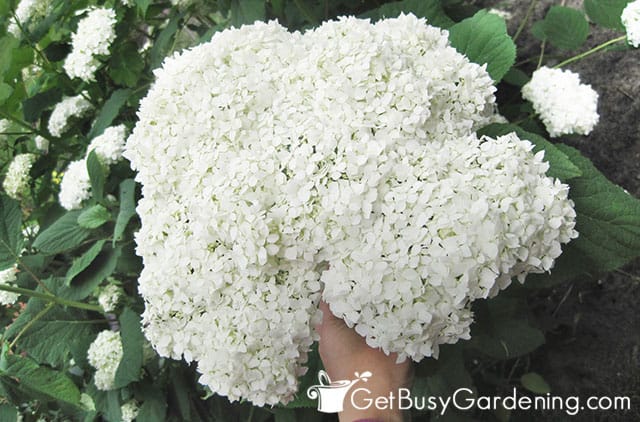
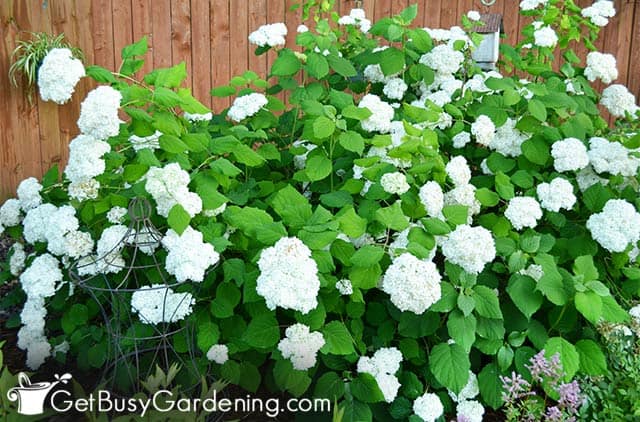
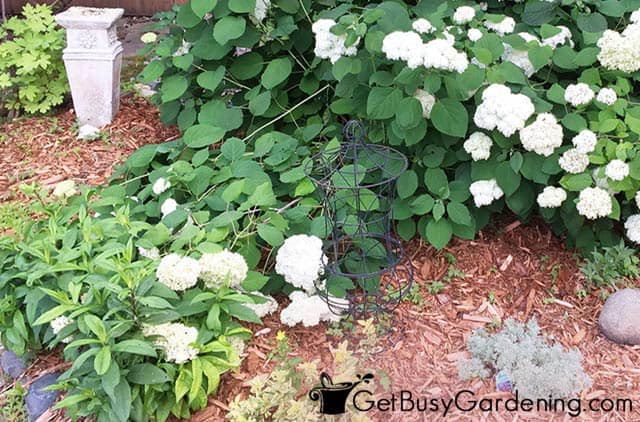
- Annabelle (Hydrangea aborescens ‘Annabelle’) is classified as a smooth type which produces huge white blooms that are 8-12 inches in diameter. Grows best in zones 3-9.
- Limelight (Hydrangea paniculata ‘Limelight’) is a panicle type with beautiful chartreuse blooms on shrubs that can reach 10 ft tall. It also does best in zones 3-9.
- Gatsby Pink (Hydrangea quercifolia ‘Gatsby Pink’) is another panicle type that happens to be native to the US, and is best suited for the warmer zones of 6-9.
- Blue Deckle (Hydrangea serrata ‘Blue Deckle’) has fall foliage that is nearly as beautiful as its delicate light blue lacecap blooms. This one is a good choice if you live in zones 5-8.
- Endless Summer (Hydrangea macrophylla ‘Endless Summer’) is a bigleaf type that stays relatively small, reaching only 3-5 ft in height and diameter. Its brilliant blooms range from blue to pink, depending on the soil acidity, and it is great for zones 4-9.
Hardiness
Hydrangeas are woody perennial shrubs that, when given appropriate care, will live and bloom for countless seasons.
The hardiness depends on the variety, but typically their zones range from 3-9.
Some are hardier than others, so it’s always best to look up the specific type you want to grow to make sure it will thrive in your climate.
Flowers
Hydrangeas have different bloom times, as well as various flower shapes and colors, depending on the species.
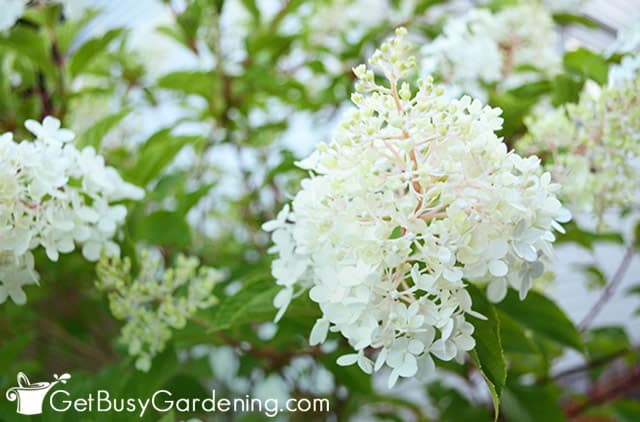
The classic varieties have the large, rounded flowers that we all adore. While more recent cultivars can have cone shaped or lacetop blooms.
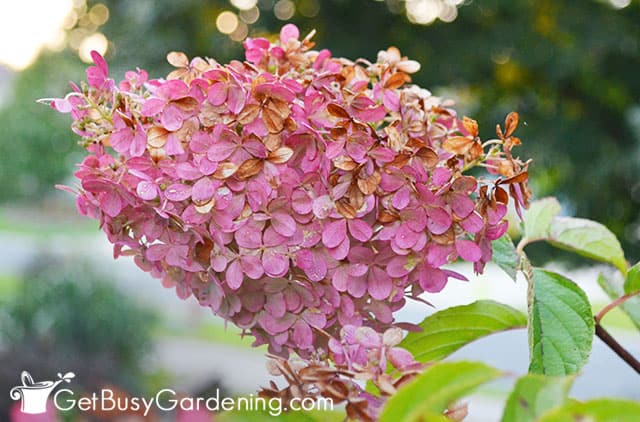
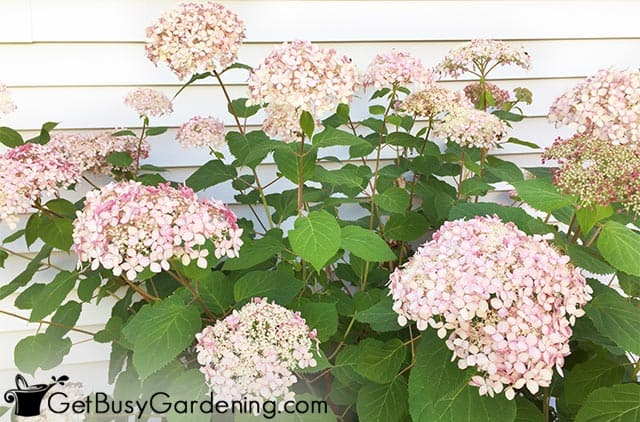
The colors range from white to light pink, dark pink, purple, or blue. Some will even change color throughout the summer as they age.
Where To Grow Hydrangeas
The basics of hydrangea plant care are the same whether you grow them in the ground or in pots.
Most people plant them in the landscaping or garden, but some types will do just as well in containers. Below are the details so you can decide where you want to plant them.
Growing Hydrangeas In The Garden
The best place to grow hydrangeas in your garden is a partial shade location that has rich, well draining soil. Avoid areas where water pools, or the soil is consistently wet.
When choosing a spot, make sure you know the full size of the mature shrub, so you can give it plenty of space.
Also, since they can live for many years, choose a spot where your shrub can stay put for the long-term.
They make an excellent flowering shrubs for landscaping in front of your house, and that’s why I included them on my list of the best foundation plants and bushes.
Planting Hydrangeas In Containers
Yes, you can grow hydrangeas in containers, as long as you choose the right type. If you want to try planting them in a pot, choose a dwarf variety, such as ‘Mini-Penny’ or ‘Little Lime’.
Select a large container with holes in the bottom to allow for adequate drainage, and use a good quality container potting mix.
How To Grow Hydrangeas
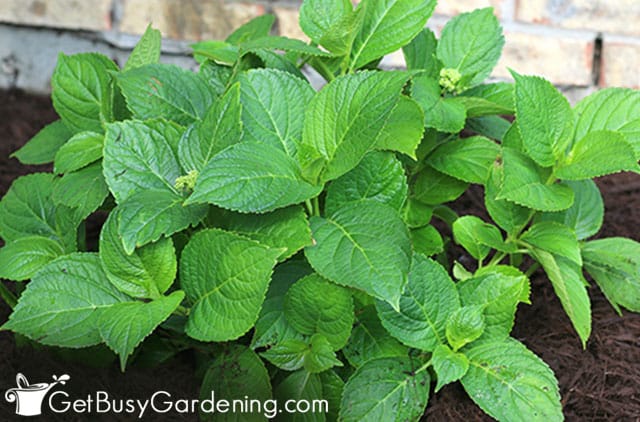
Before we get into the specific hydrangea plant care instructions, first let’s talk about planting them. Doing this right is the first step for success.
When To Plant Hydrangeas
The best time to plant hydrangeas is while they are dormant (when there are no leaves on the bush), in late fall through early spring.
It is possible to transplant them out of dormancy, but it’s essential to understand that they have a high need for water.
Consistent watering is key to transplant success, especially in the first two to three seasons.
Hydrangea Planting Tips
To plant a hydrangea shrub, first dig a wide hole in your landscape. It should be at least 2 ft wider than the plants roots. There is no need for the hole to be deeper than the rootball.
Gently loosen the roots, place the hydrangea into the hole at the same depth it was in the pot, and fill it back in with soil.
Water it thoroughly, and then mulch the area surrounding the base of the plant to help keep the soil moist.
Hydrangea Care & Growing Instructions
For the most part, hydrangea plant care is easy. However, they do have some fairly specific requirements that need to be met for them to thrive. Follow these detailed growing instructions for best results…
Sunlight
These plants cannot tolerate full sun or full shade. Hydrangea thrives on a north or east wall, or any location with partial sun.
In colder, more northern climates, they can handle a little more sun. In warmer climates, they need more shade.
When they receive too much shade, they tend to have smaller and fewer blooms.
Indications that they’re receiving too much sun include wilted and dull foliage, and their flowers tend to turn brown very quickly.
Soil Conditions
Hydrangeas love well-drained soil that is high in organic matter. Avoid those that cannot retain moisture, and are possibly too light or sandy.
Do not plant in an area where standing water is frequent. Saturated soil causes them to develop root rot, and become more susceptible to fungal disease.
Amend clay, sandy, or other poor quality soils with compost or worm castings to improve moisture retention and drainage.
Some cultivars are sensitive to soil pH. In fact, you can manipulate the color of certain types by changing the acidity levels. Not sure what your pH level is, use a soil probe to quickly find out.
The flowers on varieties like ‘Endless Summer’ or ‘Invincibelle Spirit II’ will turn blue in highly acidic soils, pink in alkaline, and purple with slightly acidic levels.
Watering
Proper watering is one of the most important parts of successful hydrangea plant care.
They need consistent water, more so than many other bushes. This is especially important during the first few growing seasons.
If they don’t get enough water, they will show distress with wilting leaves. Make sure that your shrub receives at least one inch of water each week.
During periods of extreme summer heat or drought, it may be necessary to water them daily. Make sure to give your shrubs a nice, deep watering to ensure the roots are getting enough.
If you struggle with proper watering, then I recommend getting yourself an inexpensive moisture meter to make it super easy.
Fertilizer
Once established, it’s not usually necessary to regularly fertilize hydrangeas. However, in poor quality soils, it’s a good idea to feed them monthly for the best blooms and health.
Choose a fertilizer that is high in phosphorus (one with a bigger middle number) to promote blooming.
You can add granules to the hole at planting time, then top dress the soil monthly during the summer.
Water-soluble plant food is also a good choice, if you prefer. Feed them with a liquid fertilizer every time you water. Fish emulsion and organic compost tea also work great.
If your soil is alkaline, you can try changing the color of the blooms on varieties that are sensitive to pH levels. In that case, use either a granular acidic fertilizer monthly, or a water-soluble one each time you water.
Related Post: How To Fertilize Your Flower Garden Beds
Disease Control
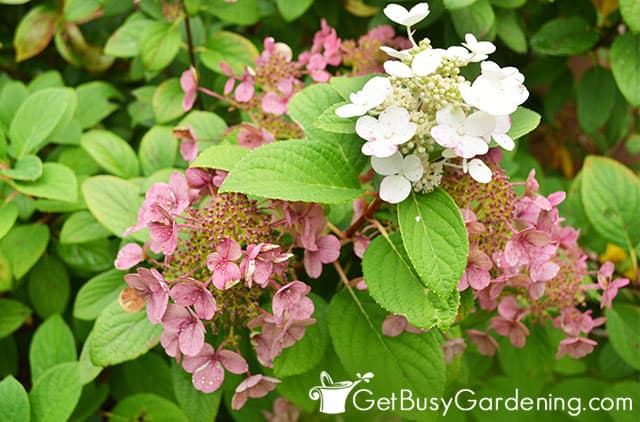
Powdery mildew can affect all varieties, but the Bigleaf types are particularly susceptible to this fungal disease.
It will only affect the aesthetic look of the plant, not its overall health, therefore, chemical fungicides are unnecessary.
Instead, prevent it by removing spent leaves and debris at the end of the growing season.
Root rot is the consequence of poorly drained soil. Select a site with good drainage, and avoid over-watering to prevent root rot.
Pest Control
Healthy plants tend to be less susceptible to pest infestations. Aphids love the new growth of hydrangeas, but they are relatively easy to prevent and control.
If you do notice an emerging aphid problem, you can spray your shrub with an organic insecticidal soap, or use neem oil. Treat the plant regularly until all evidence of the bugs is gone.
Pruning Hydrangeas
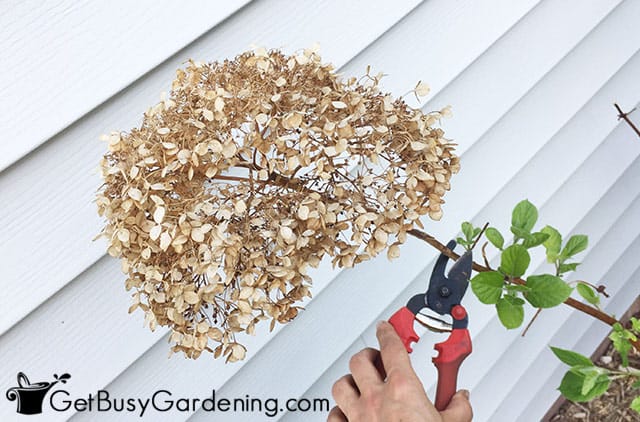
Pruning hydrangea can successfully improve the shape and increase the bloom size.
But before you begin, you must first learn whether your shrub flowers on new or old growth. This will determine what time of year to prune.
In general, shrubs that flower on old wood will bloom in the spring, and fade sometime in midsummer. Prune these varieties after they have flowered.
By contrast, if they flower on new growth, they tend to begin blooming in late summer through fall.
These should be cut back in late fall once the shrub has gone into dormancy, or in early spring as it begins to wake up.
Learn all you need to know about pruning hydrangeas in my step by step guide here.
Hydrangea Plant Propagation Tips
Hydrangeas can be propagated by cuttings during the spring and summer. Cut 4-5″ stems from mature and actively growing shrubs.
Remove the bottom few sets of leaves from the stem, then dip the cutting into rooting hormone. Place them into moist soil, and keep the cuttings warm until they form new roots.
Troubleshooting Common Hydrangea Problems
The hardest part about hydrangea plant care is when your shrub starts to have problems, and you have no idea what’s wrong.
So, in this section, I’ll talk about some of the most common things that might happen, and give you quick tips for how to fix them.
Brown Leaves
Could be caused by lack of water, sunburn, or fertilizer burn from overuse of chemical products.
If it’s sunburn, then relocate the shrub to a shadier area once it goes dormant. Flush the soil of over-fertilized plants with water, and switch to using organic products.
Shrub Is Wilting
This usually means improper watering, either too much or too little, but it could be caused by bugs.
Check the soil to make sure it’s not dry or soggy. Then inspect the tops and undersides of leaves for bug infestations.
Green Flowers
It’s normal for hydrangea flowers to turn green as they age on many varieties. And, if you’re growing the one called “Limelight”, then it’s bred to have green flowers.
Brown Flowers
When the blooms turn brown, that means it’s either getting too much sun, or not enough water.
Ensure you’re watering the shrub deeply during hot, dry weather. Relocate it during dormancy if it’s getting too much sun.
Falling Over
This one is tough to diagnose because it can be caused by over-fertilizing, improper watering, too much shade, too much sun, the wrong type of soil, strong wind or rain…etc.
Monitor the plant, ensure you’re following the proper hydrangea plant care instructions above, and you should be able to correct the problem.
Hydrangea Plant Care FAQs
In this section, I’ll answer some of the most frequently asked questions about hydrangea plant care. If you can’t find your answer here, then ask it in the comments below, and I’ll answer it ASAP.
Are hydrangeas easy to care for?
Yes, with the right growing condition, hydrangeas are very easy to care for. They are fairly low maintenance, hardy shrubs that will thrive for many years with minimal care.
How big do hydrangeas grow?
That depends on the variety. Sizes can range to only a few feet tall with dwarf varieties, all the way up to 15 ft for larger ones. Always check the plant tag so you know exactly how large your chosen hydrangea will grow.
Can hydrangeas tolerate full sun?
Some hydrangeas may tolerate a full sun location in colder climates. However, it’s best to plant them in a spot where they get partial shade for the best results.
How long does it take for a hydrangea to grow to full size?
Though they are fast growing shrubs, it can take 2-4 years for hydrangeas to reach their full size. Some are faster to mature than others.
Growing hydrangeas is simple, and they can thrive in just about any climate. The best part is that, with so many types, you can have a large variety of those big, showy blooms all summer long. And, with the proper care, your hydrangeas will thrive for many years to come.
More About Flower Gardening
- How To Care For Butterfly Weed (Asclepias tuberosa)
- Bougainvillea Care & Growing Guide
- How To Care For A Voodoo Lily Plant
- Bird Of Paradise Plant Care & Growing Guide
- False Goat’s Beard: How To Grow & Care For Astilbe
- When & How To Plant Spring Bulbs
Share your hydrangea plant care and growing tips in the comments section below!

Linda Jennings says
I have a first year lavender colored hydrangea.. Problems wilting, by end of day, on west side of house 8 hrs if full sun, has mulch around. I water, not every day, scared. Next morning it looks ok. No bugs. I just bought a water meter today, so that she’ll me judge when it actually needs to be watered. Lady at garden store said to baby it through the summer to help get it established, then next spring it should be ok. When and do I deadhead the blossoms? Never had these to take care of and don’t want to lose all the new landscaping, ! No bugs I look every day!
Amy Andrychowicz says
Sounds like you’re doing all the right things. It’s best to keep newly planted hydrangeas well watered until they become established. Though you certainly could deadhead the spent flowers, there’s no need to do it right away. They turn different colors as they fade through fall and are lovely. Also, depending on the variety, the large blooms will dry on the plant and make wonderful winter interest. I usually wait until late spring-early summer as new growth starts to appear before I prune them off.
Simon Davis says
Hi Amy, Just a quick compliment on your blog and particularly this article about Hydrangeas. The glorious white Anabelle is the variety that’s very fashionable with my clients at the moment here in the UK. Keep up the great work. Kind regards, Simon
Amy Andrychowicz says
Thanks so much, glad you enjoyed the article about growing hydrangeas. It’s so nice of you to take the time to leave such a nice comment. Made my day! 🙂
Shana Smith says
Hi. I’m thankful to have discovered your blog. I’m hoping you can help me. I have finally moved into a home with a gorgeous yard and have discovered gardening, true thanks to the previous owners! They have created some beautiful gardens of amazing plants, trees, and flowers that have caused me to fall in love with gardens. I have been here 2 years and have enjoyed watching these blooms pop at all different seasons. My husband and I have been able to identify all the plants and bushes, except this one bush that eludes us. It is a green bush with oval shaped leaves and when it first blooms in the late spring, its petals turn lime green, then after a couple weeks, turns white. The bunch of tiny flowers together create an ALMOST cone shaped bloom but is a very messy and loose cone, unlike the limelight hydrangea which has a tight full appearance. Is this possibly a malnourished hydrangea or is it something else altogether? Thank you for any kind of advice, guidance, or information you can offer us in our quest.
Amy Andrychowicz says
Welcome to the wonderful world of gardening, I’m so glad to hear you’re hooked! ? It sounds like you have a fantastic base to start with, thanks to the previous homeowners. Awesome! It sounds to me that you have a different variety of hydrangea. Some of them have cone shaped flowers, and some have flower clusters that are very loose. I would take a photo of it and bring it to your local garden center to see if they can ID it for you.