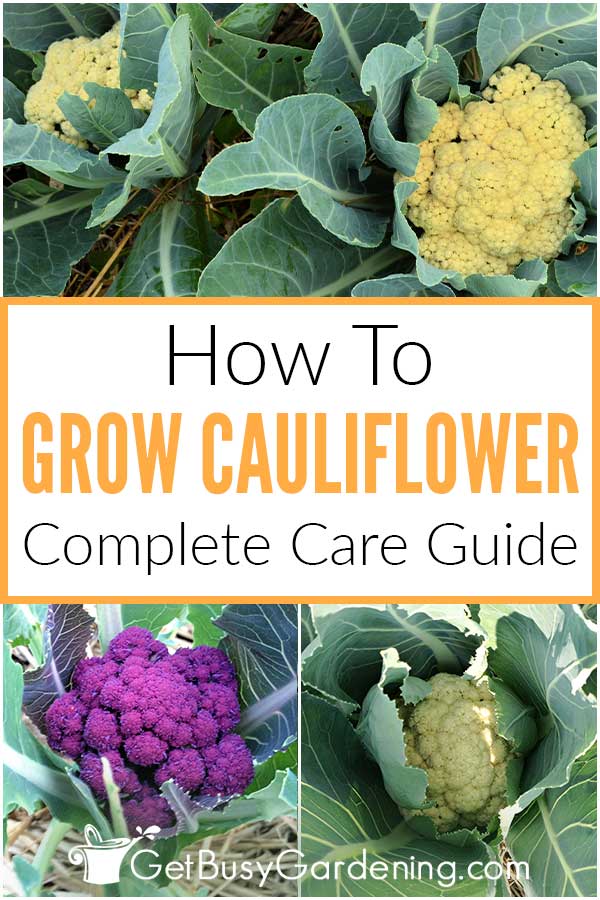
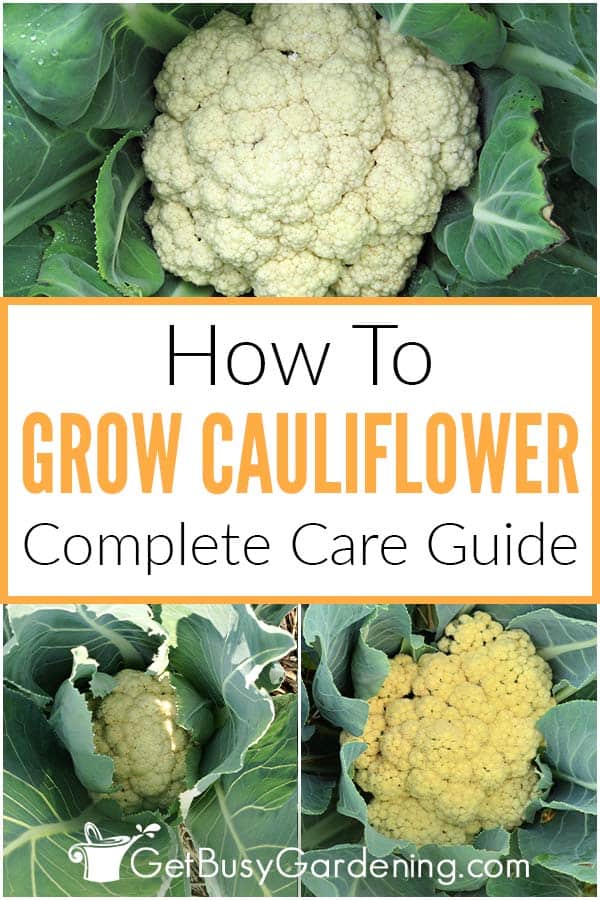
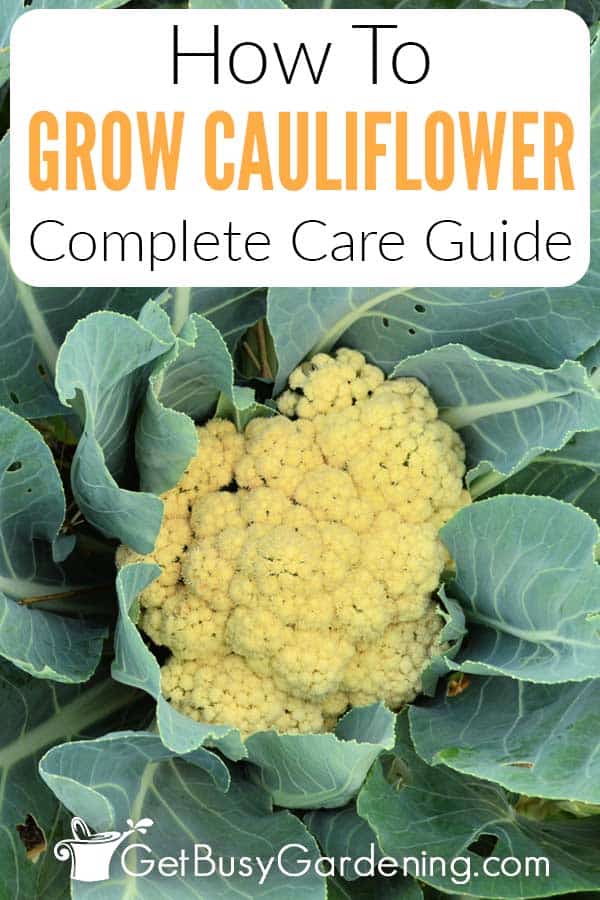
Growing cauliflower in the home garden can be challenging, but it’s also very rewarding.
The key to success is understanding what it needs to thrive and form large heads, and it’s not difficult once you know how to create the right environment.
This complete guide is designed to help you master the process of growing your own cauliflower.
It includes everything you need to know, from soil, water, fertilizer, and temperature, to tips on pests, diseases, blanching, and much more.

Quick Cauliflower Care Overview
| Scientific name: | Brassica oleracea |
| Classification: | Vegetable |
| Common names: | Cauliflower |
| Hardiness: | Annual |
| Temperature: | 50-70°F (10-21°C) |
| Flowers: | White, green, purple, orange, yellow |
| Light: | Full sun to light shade |
| Water: | Keep soil evenly moist, never allow to dry completely |
| Humidity: | Average |
| Fertilizer: | High nitrogen granules or liquid, once per season |
| Soil: | Rich, fertile, well-draining |
| Common pests: | Cabbage loopers, cabbage root maggots, cabbage worms, flea beetles, aphids |
Information About Cauliflower
Cauliflower (Brassica oleracea) is an annual vegetable from the Brassicaceae, or cole, family that also includes broccoli, cabbage, kohlrabi, and brussels sprouts.
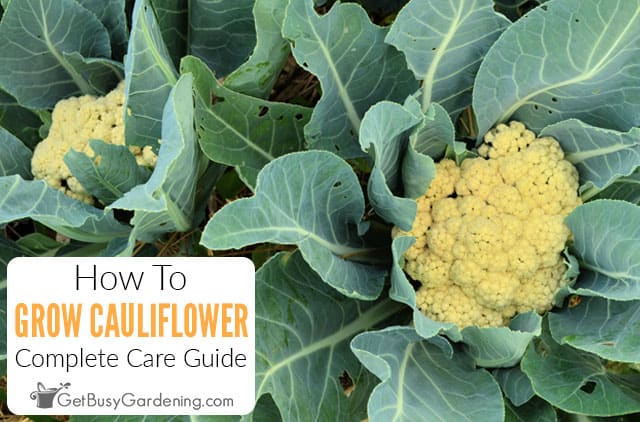
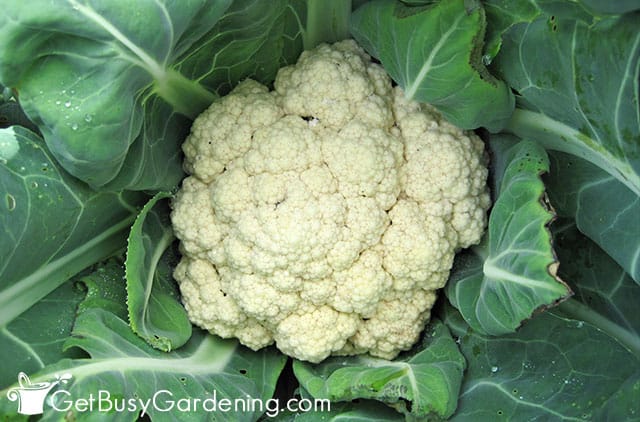
Wide smooth green leaves surround a central head or ‘curd’ that is made up of tightly bunched florets and averages about 6-8” in size.
The curd is actually the flower stalk that we harvest for food before it blooms. They come in a variety of colors and have a mild, nutty, slightly sweet flavor. But all parts of the plant are edible.
As a cool season crop, it doesn’t tolerate major temperature fluctuations and will struggle when it’s too cold or too hot, or if there are dramatic swings between the two.
Different Types Of Cauliflower
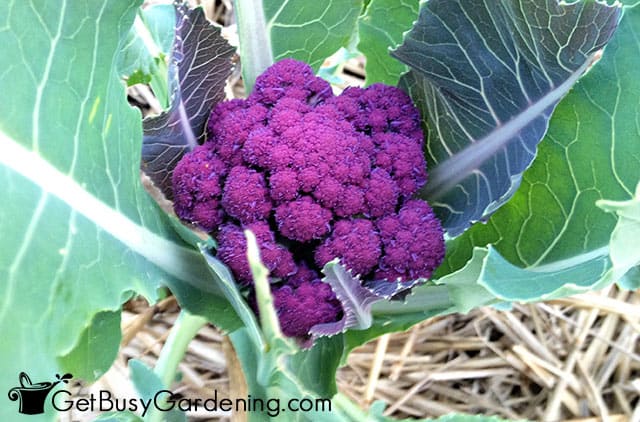
There are many different types of cauliflower that range from traditional white, to orange, yellow, green, or purple. They all have a similar flavor and require the same basic care.
A few fun varieties to try at home are:
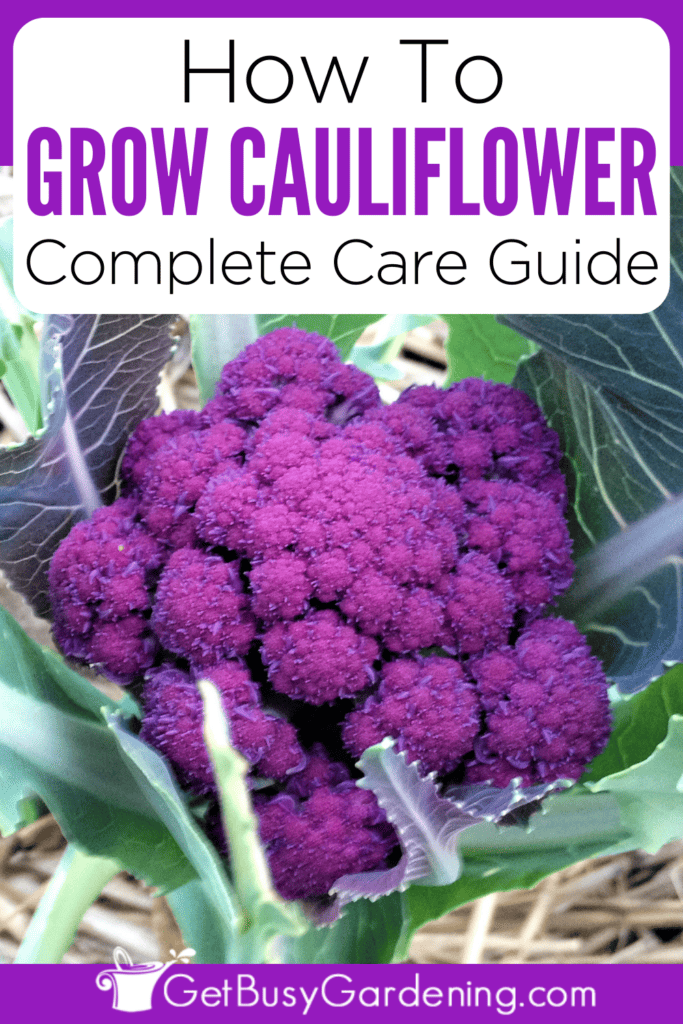
- Graffiti – This deep purple variety is great for fall planting in warmer climates, is ready in about 70 days, and has a sweet flavor.
- Snowball – Forms a smooth, white, 6” sized head and is disease-resistant, heat tolerant, self-blanching (meaning the leaves naturally curl around the head to protect it from the sun), and ready in about 60 days.
- Snow Crown – This short-harvest white cauliflower variety is ready in 50-60 days, making it ideal for spring growing and northern climates.
- Flame Star – This yellow-orange variety is more tolerant of heat, so it’s good for warmer areas, and produces creamy, sweet 7” curds.
How Does Cauliflower Grow?
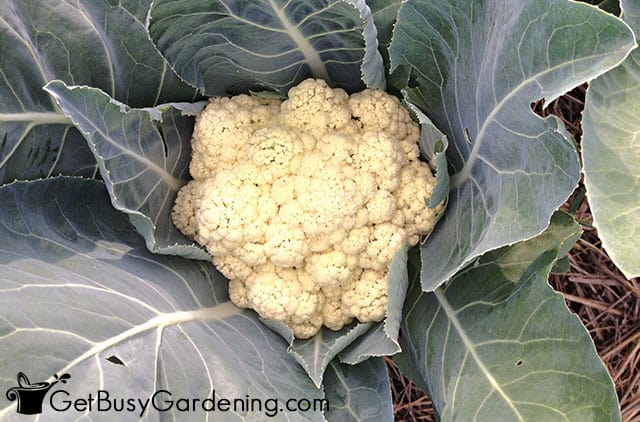
Cauliflower produces large, wide green leaves and one central head, or curd, from a single, thick stalk.
The curd is the flower stalk and is made up of tightly packed florets that will eventually bloom and form seeds if left to grow long enough.
How To Grow Cauliflower
Before we chat about caring for it, first let’s talk about where and when to grow cauliflower. Choosing the right time and location is essential for a successful harvest.
Where To Grow Cauliflower
The best spot to grow your cauliflower is somewhere with plenty of sun and good, rich soil. It needs lots of light and nutrition to properly develop a tightly packed curd.
If late spring or early fall temperatures in your region get above 70°F (21°C) provide afternoon shade to help prevent ‘buttoning’. That is when a cauliflower forms small individual heads instead of a single large one.
When To Plant Cauliflower
The best time of the year to plant cauliflower is in either the early spring or the fall when temperatures are cool. They do not tolerate heat very well.
In northern climates, aim for planting starts 2-4 weeks before your last spring frost, or as soon as the ground is workable.
In warmer regions, plant them 6-8 weeks before the first fall frost, or after daytime temperatures are consistently below 75°F (23°C).
Cauliflower Plant Care & Growing Instructions
Now that you have the timing and location figured out, let’s get into the details about how to grow cauliflower. The care tips here will help you understand exactly what it needs to thrive and produce a beautiful head.
Sunlight
Cauliflower may hate the heat, but it loves the sun. It needs between 6-8 hours a day or the head will not properly form.
But hot sun on high temperature days can be damaging, so be prepared to provide shade in the afternoon if the forecast is above 70°F (21°C). A shade cloth works great for this.
Water
The plant does not tolerate any drought stress, and the heads will button if it’s allowed to dry out for too long.
For the best success, provide at least 2” of water per week so the soil stays evenly and consistently moist.
If you’re unsure of how to tell, I recommend getting an inexpensive moisture gauge to make it easy to check.
Temperature
The ideal temperature range for growing cauliflower is between 50-70°F (10-21°C). They’ll thrive best in the low to mid 60’s fahrenheit.
They’re pretty fussy, and will not do very well when it gets much below or above that range.
Both low and high temperatures can cause buttoning, stalled, or stunted growth. High heat will cause loose heads and bolting.
Fertilizer
When planted in good quality soil, cauliflower will only need one or two feedings throughout the growing season.
Use organic nitrogen-rich slow release granules or compost at planting time, and then again once or twice through the season.
Or apply a balanced natural liquid, like fish emulsion or compost tea about 4-6 weeks after planting, or monthly if the soil is poor quality.
Soil
The best soil for growing cauliflower has a pH between 6.0-7.0 (which you can test with a simple probe tool) and is rich, fertile, and well-draining.
Amend sandy or poor quality soils with plenty of well-rotted manure or compost before planting to add extra nutrients and help it retain the right about of moisture.
Blanching
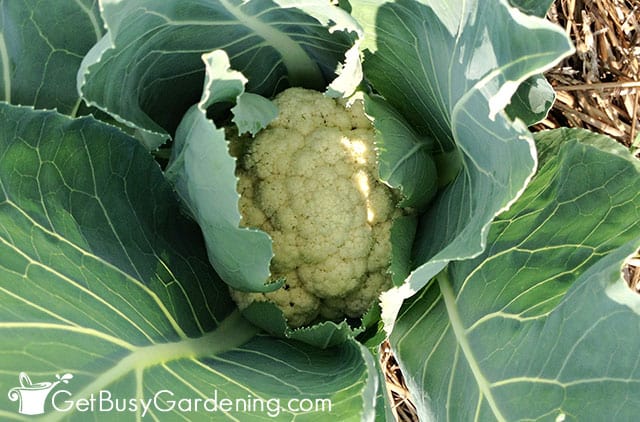
White cauliflower varieties sometimes require blanching, which is the process of sheltering the head from sunlight, or they will start to turn a pale yellow or brownish color as they grow.
Wait until the curd is about the size of the golf ball, then curl the outer leaves in and tie them together at the tips to block out the sun. Leave enough room for the head to get larger, or rewrap the leaves as it grows.
There are some self-blanching varieties that have naturally inward curling leaves, so you won’t need to take these extra steps if you grow one of those.
Don’t blanch purple, green, or orange cauliflower because they need plenty of sun to develop the vibrant color.
Pest Control Tips
There are several pests that find cauliflower as delicious as we do. Cabbage loopers, cabbage root maggots, cabbage worms, and flea beetles are among the most common.
Row covers are a useful way to prevent these pests, especially for new plantings, and you can leave them on through the whole season.
Neem oil spray, handpicking, insecticidal soap, and BT (Bacillus thuringiensis) are all effective natural and organic treatment methods once the bugs are present.
My post on managing cabbage worms has lots of useful, specific tips for stopping caterpillars from causing major damage.
Disease Control Tips
Diseases and fungi, like clubroot, black rot, downy mildew, and alternaria, can cause damage on growing cauliflower plants.
To avoid these issues, water at the base of the plant rather than spraying it over the top so moisture and soil don’t splash or sit on the leaves and spread disease.
Also, make sure there is good airflow between plants, and apply an organic fungicide to help manage things like mildew.
Tips For Harvesting Cauliflower
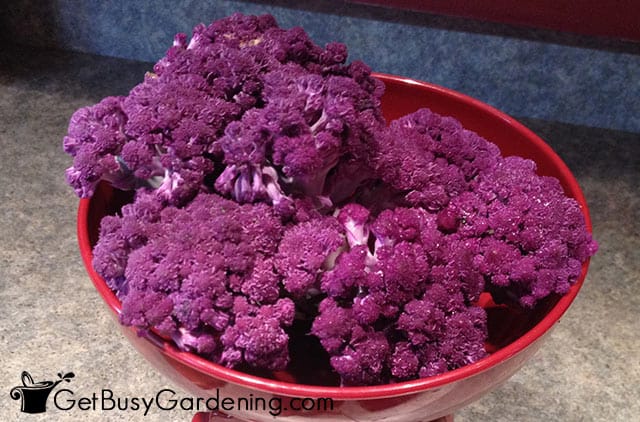
About 7-10 days after blanching, or when the curd is about 6-8”, tightly packed, and firm, it’s time to harvest.
Use a sharp sterile knife or heavy duty pruners to cut off the head at the base of the stem. Keep a few of the leaves around it attached to protect it from bruising, and help it stay fresh longer.
If the head ever begins to button or bloom, harvest it immediately regardless of size. Don’t leave them on the plant too long or they can become loose, coarse, and bitter, and will eventually flower and go to seed.
Troubleshooting Common Problems
Cauliflower is temperamental and requires special care to grow its best. But anyone can learn to manage the potential problems. Use these tips to troubleshoot issues and prevent them in the future.
Not Forming A Head
When your cauliflower doesn’t form a head it’s called ‘blindness’ and it can be caused by a wide variety of environmental factors.
Lack of sun, inconsistent watering, poor soil, temperature swings, pests, and overcrowding are just a few of the most common ones.
Keep them adequately watered in good soil and full sun, and watch out for pests so you can treat them immediately.
Brown Heads
Brown cauliflower heads are usually caused by direct sun (on white varieties), black rot, or nutrient deficiencies.
Make sure you shield baby white cauliflower curds from the sun. Exposure to light can cause them to turn a greenish or orangish-brown color.
Rot will eventually kill the plant, but you can test your soil to determine if it’s lacking any nutrients and amend it for future planting.
Holes In The Leaves
Holes in cauliflower leaves are caused by insect damage, most commonly from pests like cabbage loopers and cabbage worms.
Hand pick any large, visible bugs and treat the plant with an organic pesticide, like neem oil or insecticidal soap right away. I make my own spray by combining 1 teaspoon of gentle liquid soap with 1 liter of water.
Cauliflower Plant Flowering / Bolting
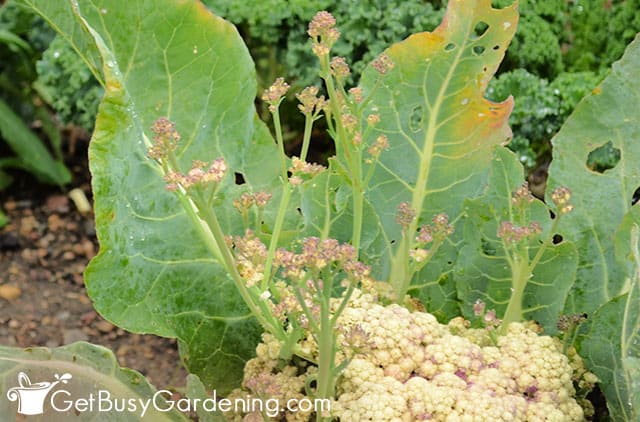
Flowering, also known as bolting, is caused by extreme temperatures, and usually happens when it gets too hot. Unfortunately, once it starts you can’t stop it.
To prevent it, protect young plants with row covers during early spring if a late freeze is coming or nighttime temps are below 50°F (10°C).
In warm weather, protect them from the full sun, or use a shade cloth during the hottest part of the day, and harvest the heads as soon as they’re large enough.
FAQs
Here I’ve answered some of the most commonly asked questions about growing cauliflower. If yours isn’t listed, please add it to the comments section below.
How long does it take for cauliflower to grow?
How long it takes for cauliflower to grow can vary widely between varieties, and also depends on the environment. The average range is between 60-80 days, with some ready in as few as 50 or as much as 85.
What is the secret to growing cauliflower?
The secret to growing cauliflower is consistent cool temperatures, plenty of sun, and evenly moist, rich soil. Healthy plants are less affected by pests and disease, so creating the right environment from the start is the best strategy.
Is cauliflower difficult to grow?
Cauliflower can be somewhat difficult to grow because it’s very sensitive to environmental changes, like temperature fluctuations, inconsistent water, and soil nutrition.
Do you prune cauliflower plants?
You do not need to prune cauliflower plants, they will grow and produce heads just fine without it. However, you can trim off any leaves that have been severely damaged by bugs, or older ones that are turning yellow to keep the plant looking its best if you’d like.
How many cauliflower do you get per plant?
You will only get one cauliflower head per plant, they will not produce more than one curd. So you can pull the whole plant after harvesting, as nothing else will form after.

If you’d like to learn how to make the most of your space and get as much homegrown food as possible, then my Vertical Vegetables book is perfect! It will teach you all you need to know, has tons of gorgeous photos, and includes 23 DIY projects you can build for your own garden. Order your copy today!
Learn more about my Vertical Vegetables book here.
More About Vegetable Gardening
Share your tips for growing cauliflower in the comments section below.

Terry spurrell says
Can you eat the cauliflower leaves and broccoli leaves
Amy Andrychowicz says
Yes you can eat the leaves of both cauliflower and broccoli! They are the best when they’re small and tender, otherwise they tend to get tough and stringy as they age.