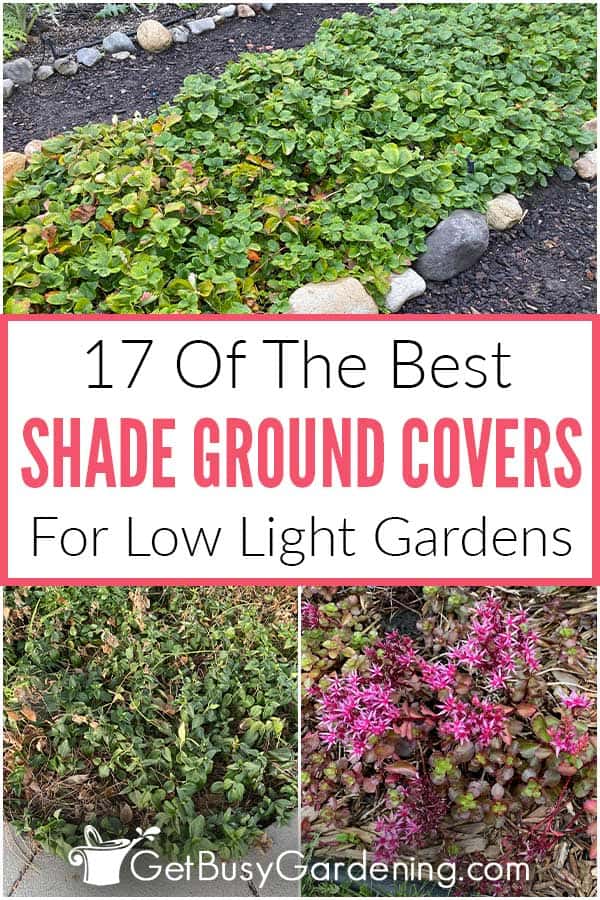
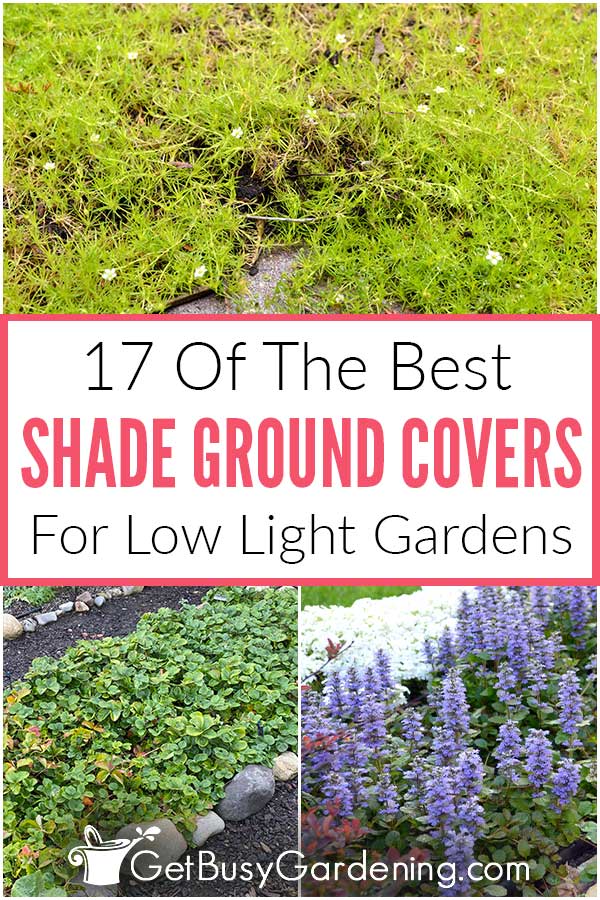
Shade ground covers make an excellent addition to low light areas. Whether you’re looking for something that can take light foot traffic, or simply want to cover the soil in your shade garden, you’ll find lots of options in this list.
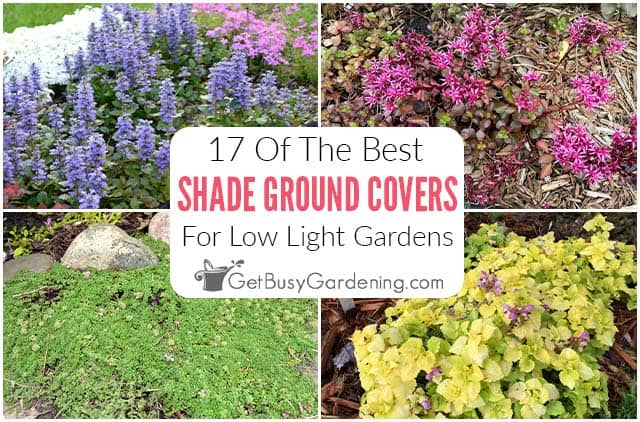

Ground cover plants are a simple way to add beauty to your shade garden. They’re just as useful in low light landscapes as they are in the full sun.
There some seriously beautiful choices out there, and they will make your outdoor area more functional too.
In this guide, you will learn why ground covers are so important for shade gardens, and discover more about the best kinds you can plant.
Why Do You Need Ground Cover In Your Shade Garden?
Ground covers do more than beautify your shade garden, they can solve common problems too. Here are a few of the most useful things they can do.
- Create a natural path – Walkable ground covers are nice for making a path in your shade garden. They also soften the edges around pavers and stepping stones, making them look more natural.
- Keep the weeds down – Once they fill in, these dense plants help to prevent weeds from becoming established by keeping the light from reaching them and smothering them.
- Prevent erosion – If you have a shady hill or steep slope in your yard, planting ground covers will help to prevent erosion.
- Retain moisture – These versatile plants can also slow water evaporation. They help to hold moisture in the soil longer, so you won’t have to irrigate as often.
- Easier to maintain than grass – Most types of lawn grass don’t do well in low light, and can end up a mucky, patchy, weedy mess. Shade-loving ground covers make a great replacement, require less water, and are easier to maintain than grass.
17 Best Ground Covers That Grow In Shade
In this list, you’ll find my top picks for the best ground covers for shade. Browse through and choose the ones that will do the best in your garden and climate.
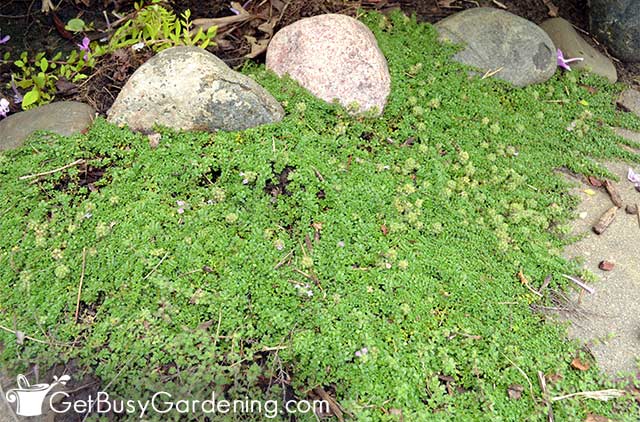
1. Creeping Thyme
If you’re looking for a stepable ground cover for a shady path, creeping thyme is perfect. Not only is the foliage beautiful, it’s covered in tiny purple or pink blooms in summer.
My favorite thing is that it smells amazing. When you walk on it, the aroma wafts through the air, creating a wonderfully calming fragrance. Plus it’s edible, and can be used just like the common herb.
This tough plant will survive in a wide variety of climates (zones 4-10), and will do best in an area that gets partial to light shade.
2. Campanula (Bellflower)
Also known as clustered bellflower or dane’s blood, campanula is hardy in zones 3-8. It has violet blossoms that form in a 5-pointed star shape.
It does best in partial shade, where it can receive some sunlight as well. Though the foliage stays low, the flowers can be 12-18” or taller.
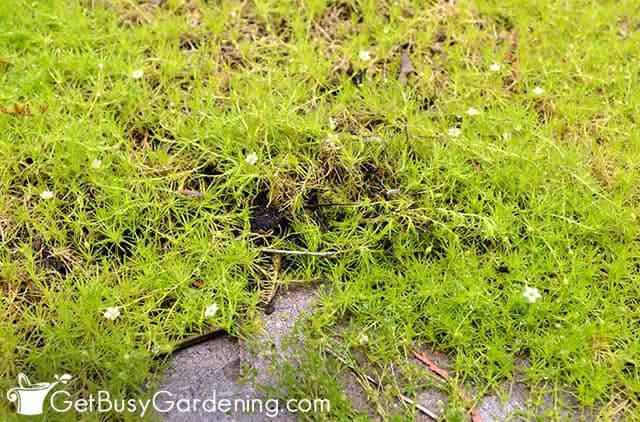
3. Irish Moss
The name Irish moss is perfect because they really do look and act like other mosses. It’s bright green foliage and tiny white blooms are perfect to use between stone pavers, or to carpet shady beds.
It stays very short, usually only reaching a max of 6” tall in thick, lush mounds. Since it’s hardy in zones 4-10, most people can grow it.
4. Sweet Woodruff
Sweet woodruff goes by a few common names, like Our Lady’s Lace and Sweetscented Bedstraw. The last one is very accurate because it has a pleasant aroma.
Technically an herb, this cute ground cover does best in part to full shade. Direct sunlight can damage its pinwheel leaves, especially in warmer climates.
At the tallest, it will reach 6-12”, and is hardy in zones 4-8. It’s very quick to fill up whatever space you place it in, so put it in an area where you don’t mind it taking over.
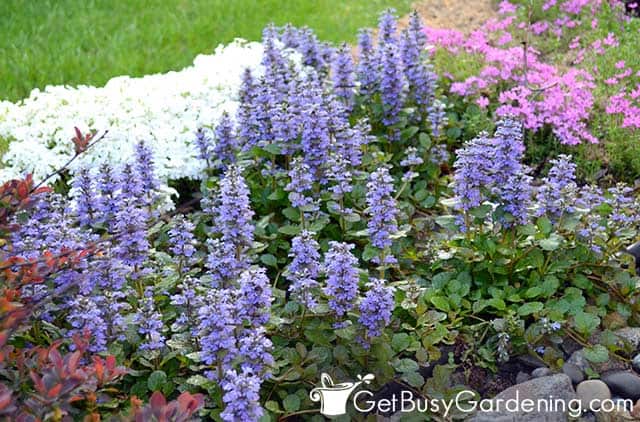
5. Bugleweed (Ajuga)
With its stunning foliage, bugleweed (also called carpet bugle) comes in a variety of colors. The leaves can be purple, pink, burgundy, near black, green, or variegated.
Hardy in zones 3-9, ajuga prefers partial shade, and reaches about 6” when in bloom. The flower spikes are the tallest part, and add fantastic bright purplish-blue pops of color in mid-spring.
6. English Ivy
A popular climbing vine, English ivy will creep along to cover the ground if you let it, and thrives in the shade.
The thick, dense foliage is excellent for trouble spots where other plants have a hard time becoming established.
They do best in moderate climates, from zones 5-9. It can take a small amount of sunlight, but will burn if it gets too much.
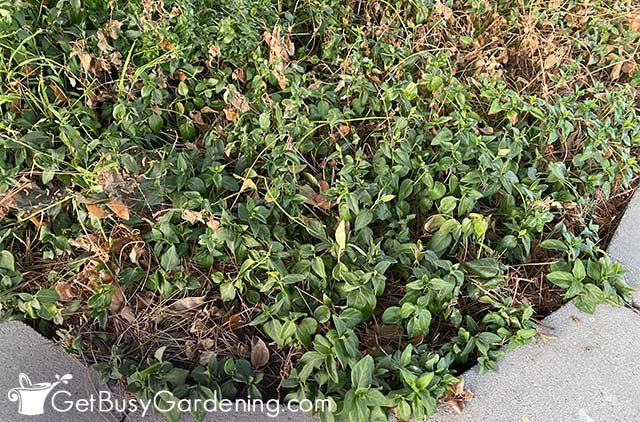
7. Common Periwinkle (Vinca)
Named after the color of its flowers, the common periwinkle (also called creeping myrtle) stays short, only reaching 6”.
It’s the perfect ground cover for low light because it likes cooler temperatures. It does best in zones 4-8, but can survive though zone 10, as long as you keep it in full shade and water it well.
8. Trifolium (White Clover)
With little white buds sprinkled among the three-leaf clovers, trifolium is a fantastic choice for people who want low-maintenance in zones 4-9.
Though it can handle full sun in mild climates, it will do much better in the shade, especially during extremely hot summers.
9. Viola
Known for their beauty during colder months, violas are ground covers that will do really well in the shady spots of your garden.
Though technically only hardy in zones 7-10, they do tend to reseed themselves. So they can act like perennials in other areas.
Too much direct sunlight will cause the flowers to fade, so keep it in dappled or partially shaded spots.
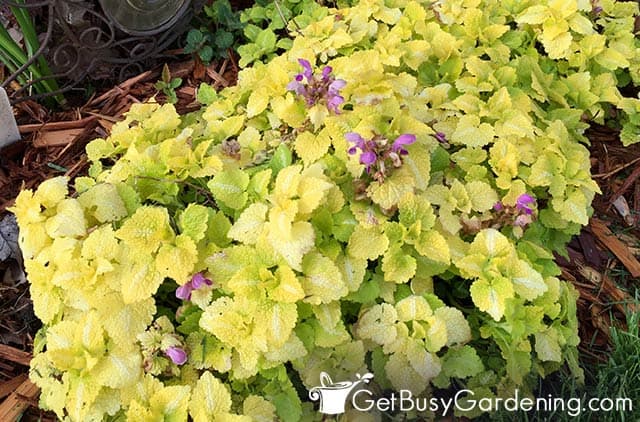
10. Lamium (Spotted Dead Nettle)
With its bright foliage and unique flowers, lamium can quickly cover the ground in any shady garden bed.
The foliage stays low, but when it is in bloom it can reach 6-12”. They can survive in zones 3-10, and needs partial to full shade to keep it from burning out.
11. Creeping Liriope (Lilyturf)
If you’re looking to use a ground cover for lawn replacement in partial shade areas, check out the creeping liriope. The lush green foliage looks similar to grass, but is much easier to maintain.
The leaves are evergreen, and it does well in zones 4-10. The tallest it will get is 6-12”, and it likes to spread out over the entire area they are planted in.
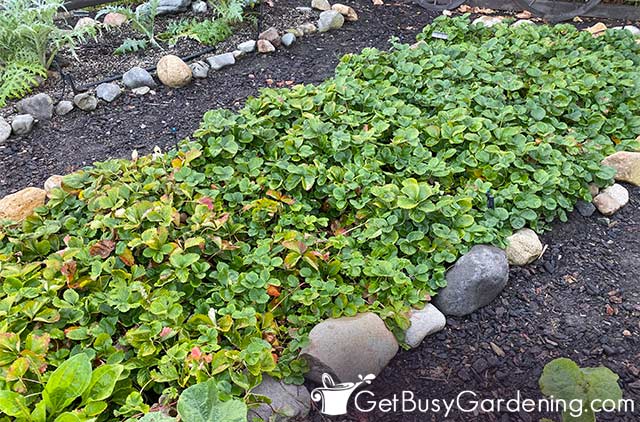
12. Ornamental Strawberries
If you want to add texture and visual interest, ornamental strawberries are a fun choice. Though they can produce edible fruits, they’re much smaller than traditional varieties.
Since these are grown for the foliage and not the fruit, they don’t need much sunlight. So they’re an excellent ground cover for low light areas in zones 4-8.
13. Brass Buttons (Leptinella)
Another shade ground cover that has really unique foliage is known as brass buttons. It has tiny fern-like leaves that are multi-colored dark purple and bright green.
It does well in zones 5-11, and requires consistently moist soil. If you live somewhere cooler, they can handle the sunshine. But in hot weather, they will need more shade.
14. Creeping Jenny
Also called creeping yellow loosestrife or moneywort, creeping Jenny has leaves that are various tones of yellow and green. This gives it an almost 3D visual effect.
It’s a fantastic ground cover for shade because the hot sun can burn the foliage. It does best in zones 3-8, and prefers consistently moist soil.
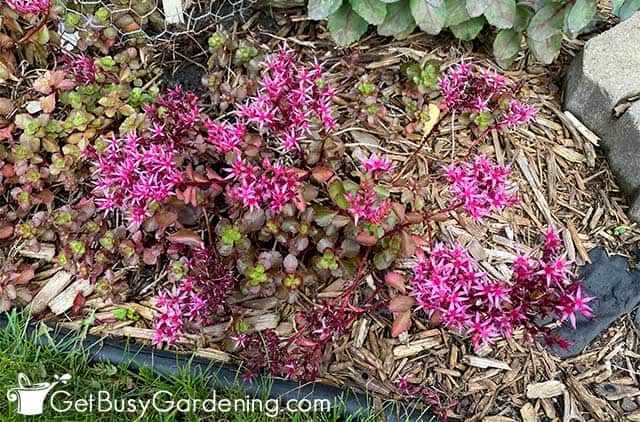
15. Stonecrops
Most people think that stonecrops only do well in full sun. But, they can also thrive in low light areas. These drought tolerant plants do great in a variety of climates, from zones 4-11.
Though there are many varieties that stay short, I recommend Dragon’s Blood. It has dark reddish-maroon leaves that hug the ground, and gets covered in vibrant hot pink flowers, even in the shade.
16. Leadwort (Ceratostigma)
Another versatile ground cover for shady areas, leadwort has small green leaves and delicate blue flowers that open late in the summer.
They are hardy in zones 6-9, but how much light it needs depends on your climate. They don’t do well in the hot sun, so be sure to give it plenty of shade warmer areas.
17. Mazus
If you’re looking for something that requires minimal care, mazus is perfect. The incredibly unique flowers appear in mid summer, and have brown spots on either side of the petals.
It does best in zones 5-8 and stays short, only reaching 6”. It can handle more sun in cooler ares, but can’t take extreme heat. So give it shade during the hottest part of the day.
Ground covers are ideal for adding visual interest and texture to your shade garden. No matter where you live, this list will give you several to choose from.
Recommended Reading
- Grow a Fabulous Garden that Lightens up the Shadows
- Dazzling Plants, Design Ideas, and Proven Techniques for Shade
- Planting the Dry Shade Garden
- Shade-Loving Plants for Year-Round Interest
More About Shade Gardening
- 15 Shrubs For Partial Shade In Your Garden
- 17 Colorful & Gorgeous Shade Garden Plants
- 15 Herbs To Grow In Your Shade Garden
- 40+ Vegetables That Grow In Shade
Tell us your favorite ground cover plants for shade in the comments below!

Leave a Reply