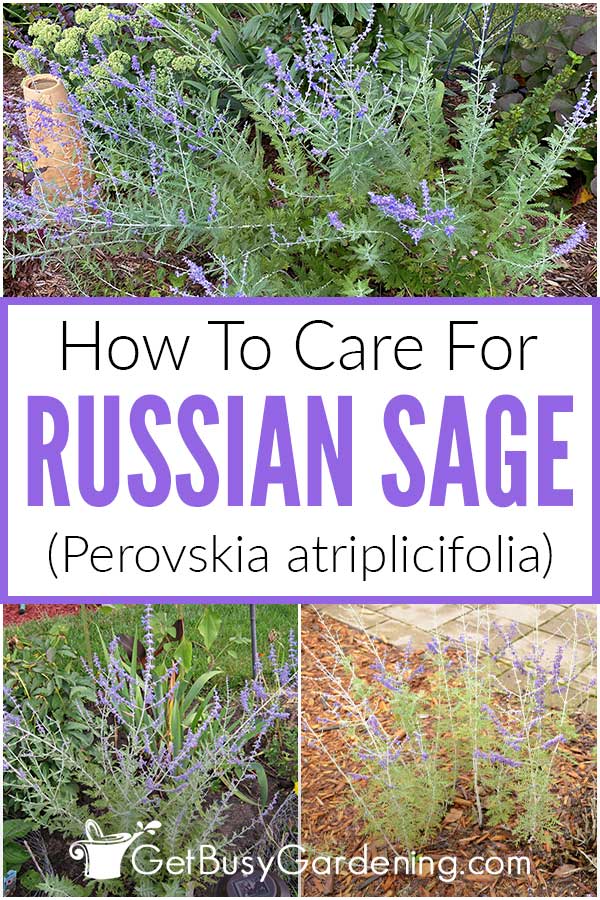
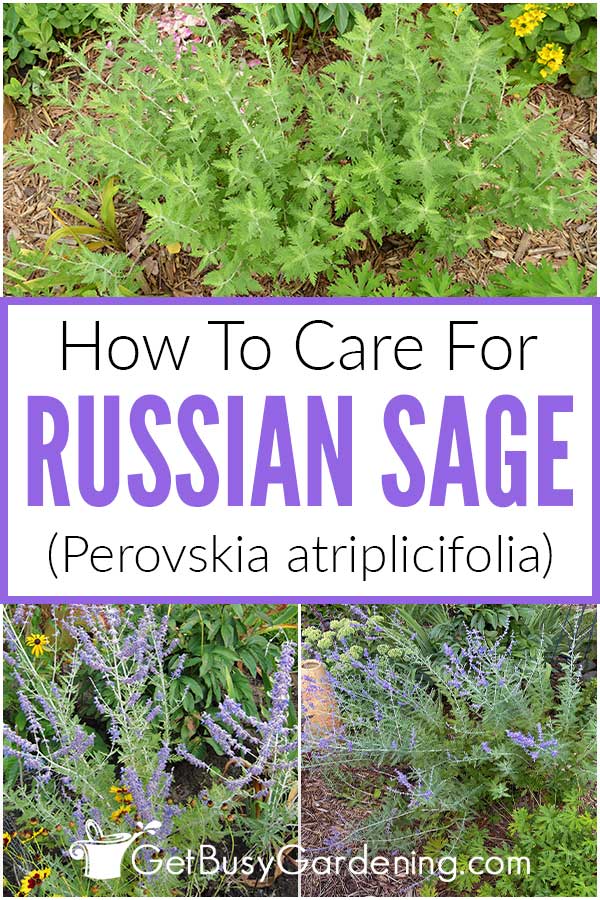
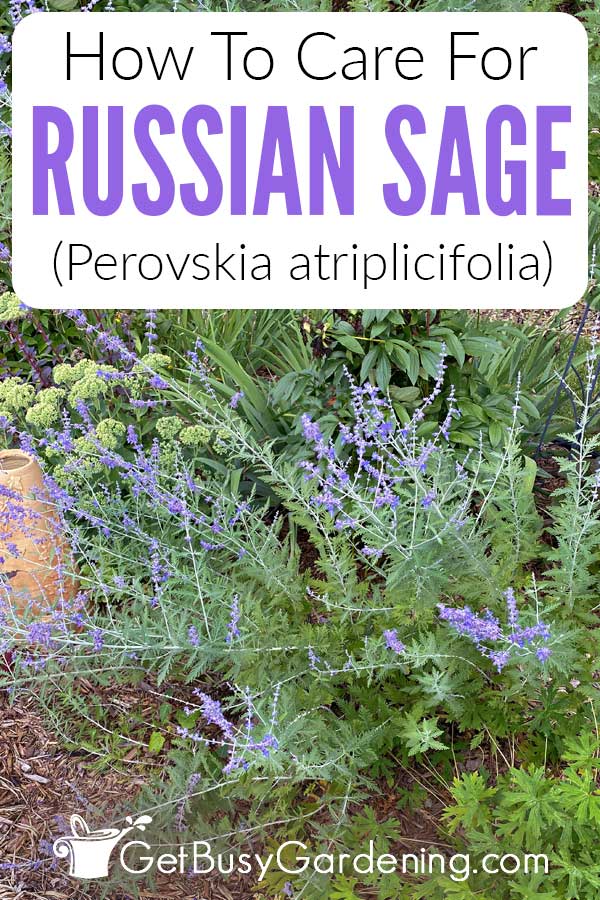
Russian sage is easy to care for and fun to grow in any perennial flower bed or landscaping.
The airy foliage and vibrant flowers make it a beautiful and low-maintenance addition to any beginner’s garden.
But even the easiest plants need the right attention and environment to thrive.
This Russian sage care guide is designed to help you learn exactly what they need. You’ll find tips on water, sun, soil, temperature, and so much more all in one place.

Quick Russian Sage Care Overview
| Scientific name: | Perovskia atriplicifolia |
| Classification: | Perennial |
| Common names: | Russian sage |
| Hardiness: | Zones 4-9 |
| Temperature: | 60-95°F (15.5-35°C) |
| Flowers: | Blue, purple, blooms early summer-mid-fall |
| Light: | Full sun |
| Water: | Allow it to dry between waterings, do not overwater |
| Humidity: | Average to low |
| Fertilizer: | None |
| Soil: | Sandy, well-draining |
| Common pests: | Pest repellent |
Information About Russian Sage
Russian sage (Perovskia atriplicifolia) is a wood flowering perennial from the Lamiaceae, or mint, family. Despite the common name, it’s actually native to central Asia.
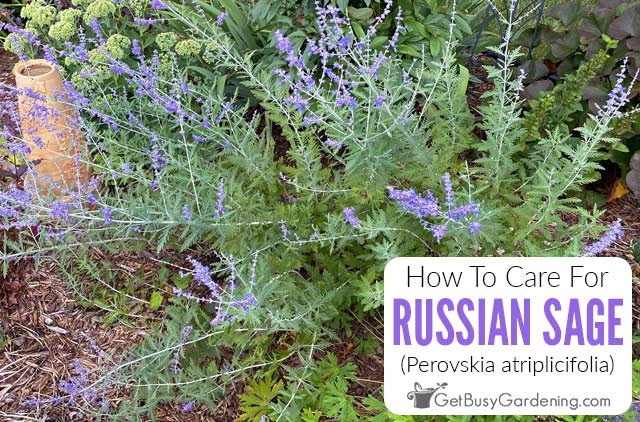
It’s a drought-tolerant, low-maintenance herbaceous plant that’s characterized by the tall thin spires, or panicles, and vibrant blooms. It can reach heights of 2-5’ tall and spread between 2-3’ wide.
Each branch has feathery gray-green leaves and either blue or violet flowers. Both are very aromatic, especially when crushed, which makes them popular for potpourris.
It’s naturally pest and disease resistant, versatile in landscaping, and requires very little hands-on care.
Different Types Of Russian Sage
There are many varieties of Russian sage, and each one features a slightly different growth habit and appearance.
Thankfully, no matter which you choose, they all require the same general care. Here are some of the more popular cultivars you could try.
- ‘Denim n Lace’ – The pale blue flowers and gray-green foliage grow on upright stems that don’t exceed about 3’ in height.
- ‘Blue Jean Baby’ – This compact, 2-3’, deer-resistant variety has blue flowers, gray-green leaves, and a strong sage-like scent.
- ‘Crazy Blue’ – This variety is known for very compact 18” heights and dense foliage with vibrant, violet flowers.
- ‘Blue Spire’ – Tall spires of 4’ or more topped with at least 1’ of violet flowers are hallmarks of this cultivar.
Flowers
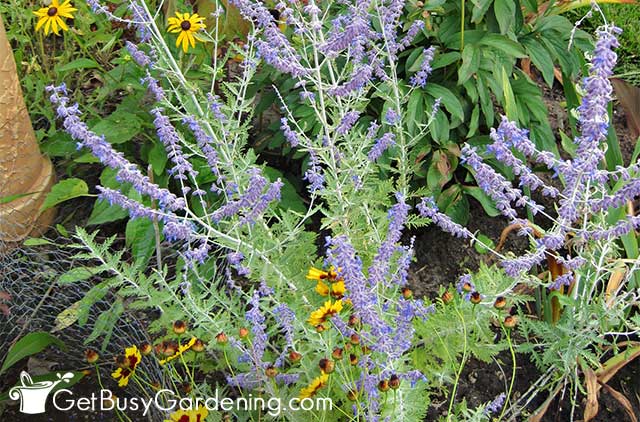
Russian sage is known for its long-lasting blue or violet flowers that bloom between early summer and mid-fall.
They appear along the top third of each stem and often remain until temperatures begin to cool in the fall.
The blooms are very small, but abundant and fragrant. They repel most garden pests, but are attractive to pollinators and hummingbirds.
Toxicity
According to this ASPCA list of non-toxic plants, Russian sage is not considered poisonous to animals.
So adding it to your garden is a safe choice if you have pets like dogs and cats.
How To Grow Russian Sage
Before we dive into Russian sage plant care, first we need to chat about where to grow it.
The right location is the best way to ensure abundant blooms and healthy growth year after year.
Hardiness
Russian sage is very hardy, and is a perennial in zones 4-9. It can handle extreme cold or hot weather without any issue.
It can often survive even lower zones with added winter protection, like mulch, or in a warmer microclimate area of your yard.
Where To Grow Russian Sage
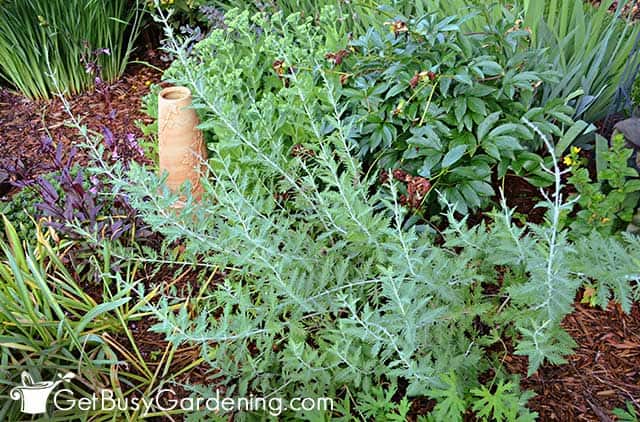
The bushy growth and hardiness of Perovskia atriplicifolia make it a popular addition to outdoor gardens as hedging or landscaping plants, and it also does well in large containers.
Wherever you choose to grow them, they need a location with plenty of sun and good drainage to prevent issues with legginess and root rot.
Russian Sage Plant Care & Growing Instructions
Now that you know the perfect place to grow it, let’s talk about how to care for Russian sage. My tips will make this low-maintenance plant even easier to manage.
Sunlight
Russian sage needs lots of sunlight to grow upright and bushy, and to produce plenty of flowers.
Place it somewhere that receives 6-8 hours of full sun to prevent leggy, sparse growth.
Watering
Perovskia atriplicifolia has average water needs. After it’s established, it is very drought tolerant and doesn’t like to be overwatered.
Allow the soil to dry several inches down, then give it a deep, thorough drink. Avoid puddling or making it soggy, which can lead to root or stem rot.
If yours is in a container, always drain off the excess. If you struggle with over-watering, a moisture gauge probe can be handy for helping you get it right.
Humidity
High to low humidity won’t bother Russian sage, it does well in moist or dry air, or anywhere in between.
Ideally it would prefer average to low air moisture, but thrives in my garden even during the extremely humid summers in Minnesota without any issues with mildew or disease.
Temperature
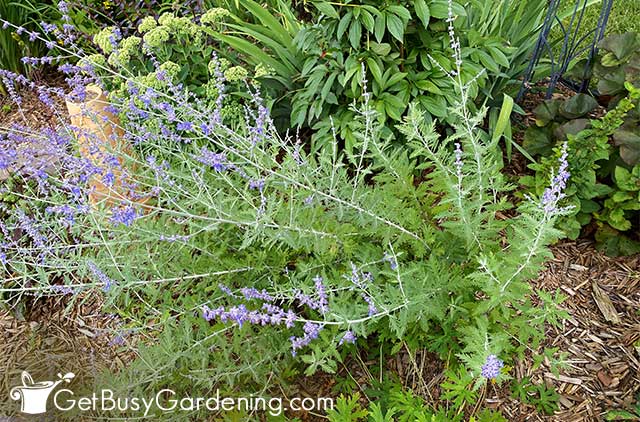
Russian sage is also tolerant of a wide range of temperatures. It can handle lows from -30°F (-34.4°C) to highs over 95°F (35°C) just fine.
It will typically stop growing when temps get down to 40°F (4.4°C) or below, and start flourishing again once it’s above 60°F (15.5°F).
In very cold areas, you can cut it back to the ground in the fall and add a layer of mulch over it for extra protection.
Fertilizer
Fertilizer is not a necessary part of Russian sage care. In fact, too much nutrition can be damaging and cause them to droop.
At most, add a light layer of compost over the top of the rootball in the spring when new growth begins.
Soil
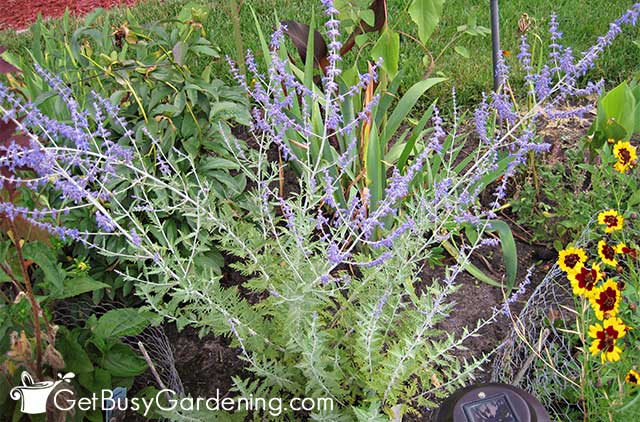
Russian sage prefers a well-draining sandy soil, but can grow in almost any type, even poor quality ones, because it requires few nutrients.
Avoid rich, fertile soils because they can cause the typically upright stems to fall over. Amend heavy clay beds with sand to add extra drainage.
In containers, choose a basic potting mix and amend it with pumice or perlite to improve drainage and avoid issues of rot.
Transplanting
Transplant your Russian sage in the spring when temperatures are warm and you begin to see new growth, but before the heat of summer kicks in.
Start by preparing a hole in its new location. Next, gently loosen it from its container or dig in a wide circle around the rootball to prevent damage.
Position it at the same depth and fill in the soil around it. Press down gently and water thoroughly, adding more soil as it settles, if needed.
Pruning
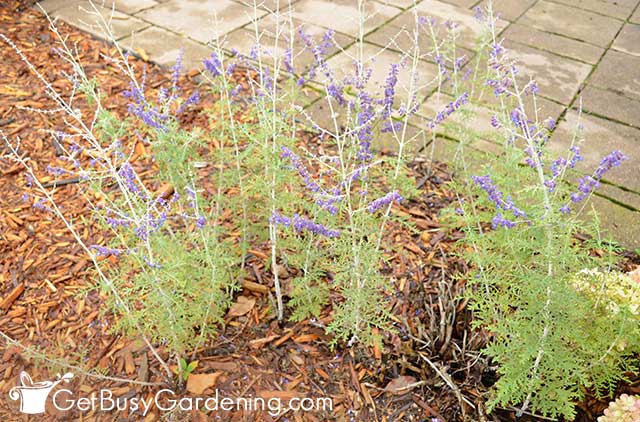
Pruning is an important part of Russian sage care. Foliage will not grow at the tops of old woody stems after winter, so cut them back in the spring to remove the bare branches.
You can get details on different techniques and step by step help in my guide on pruning Russian sage, but here are a few important things to know.
- You cannot over-prune Russian sage, it’s safe to cut it all the way to the ground each year if you prefer.
- The best time of year to trim your plant is after new growth begins in early spring.
- The safest way to cut through the thick woody, older growth is with a sharp pair of sterile pruning shears, and then use precision snips on thinner ones.
Pest Control Tips
One of the great things about growing Russian sage is that it’s typically pest-free. The fragrant foliage and flowers actually act as a deterrent to most troublesome bugs and animals.
If you do have issues with common insects, like aphids or spider mites, use an organic spray like neem oil or insecticidal soap to manage it. You can make your own by combining 1 teaspoon of mild liquid soap with 1 liter of water.
Disease Control Tips
Russian sage is also usually disease-free. But it can be affected by root or stem rot. The best way to manage that is with prevention.
Use a simple probe gauge to monitor moisture levels, don’t overwater, and ensure the soil is well-draining, especially if you live somewhere with wet winters.
Russian Sage Propagation Tips
You can propagate your Russian sage from cuttings, seeds, or by removing and replanting the offsets that develop at the base.
Cuttings are the most common method. Take a healthy 4-6” long clipping from new growth in the spring or early summer.
Dip the cut end into rooting hormone and plant it in a dampened, well-draining medium.
Place it in full sunlight and keep it moist until new growth begins. You can then transplant it into a larger container or the garden.
Troubleshooting Common Problems
Russian sage truly is low-maintenance with very few issues, but no plant is completely care free. If you experience one of these problems, my tips can help you get back on track.
Yellow Leaves
Yellowing leaves is usually a sign of too much moisture from overwatering or high humidity.
Check the base of the stems or the roots for rot. Cut back on watering and prune away any rotten pieces.
Brown Leaves
Perovskia atriplicifolia can develop brown leaves from improper watering, either too much or not enough.
Soft, soggy, limp stems with brown leaves is a sign of too much. While dry, crispy leaves that fall off are a symptom of excessive drought.
Avoid watering to the point of creating soggy, wet soil, or leaving it bone-dry for long periods of time.
Leggy Russian Sage Plant
Leggy, sparse growth is a sign that your Russian sage either needs to be pruned, or it’s not getting enough sunlight.
They require 6-8 hours of full sun a day, and will not grow well if they get too much shade.
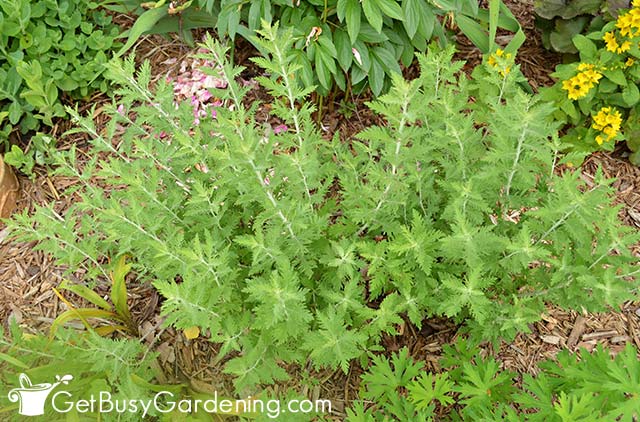
New leaves won’t appear on old woody growth, so trim away any bare branches from previous years at the beginning of each spring to rejuvenate your plant.
Stems Falling Over
Drooping branches or stems falling over are one of the more common issues Russian sage experiences.
Some varieties simply have heavy stems that cannot hold themselves up. Stakes or sturdy neighboring plants can help support them.
However, drooping can also be caused by excess water, rich soil, or lack of light. Place them in full sun in well-draining area that isn’t too nutrient rich.
FAQs
Here I’ve answered some of the most commonly asked questions about Russian sage care. If yours isn’t on the list, please add it to the comments section below.
Is Russian sage easy to grow?
Yes, Russian sage is a very easy to grow because it’s cold hardy, drought and heat tolerant, thrives in poor quality soil, isn’t picky about humidity, and doesn’t usually have issues with pests or disease.
Does Russian sage come back every year?
Russian sage is a perennial that will come back every year in growing zones 4-9, or in areas that don’t get below -30°F (-34.4°C).
Is Russian sage edible?
No, Russian sage is not edible, despite its name. However the fragrance of the crushed leaves and blossoms make them popular as a cut flower for decorating, or dried and used in potpourri.
Where should I plant my Russian sage?
Plant your Russian sage somewhere in full sun in gritty, well-draining soil that isn’t too fertile. Large containers with drainage holes also work well.
Is Russian sage invasive?
Russian sage is not considered an invasive because, while it can spread, it’s typically very slow and only occurs in the most ideal conditions. Many new cultivars are bred not to spread as much.
Does Russian sage spread?
Russian sage spreads, but only in highly ideal circumstances, and usually very slowly. It grows offsets near the base of the mother through underground rhizomes. You can remove and transplant them if you’d like.

If you want to learn all there is to know about maintaining healthy indoor plants, then you need my Houseplant Care eBook. It will show you everything you need to know about how to keep every plant in your home thriving. Download your copy now!
More About Flower Gardening
- How To Grow & Care For Astilbe
- How To Grow & Care For Peonies
- How To Care For Butterfly Weed (Asclepias tuberosa)
Share your Russian sage care tips in the comments section below.

Leave a Reply