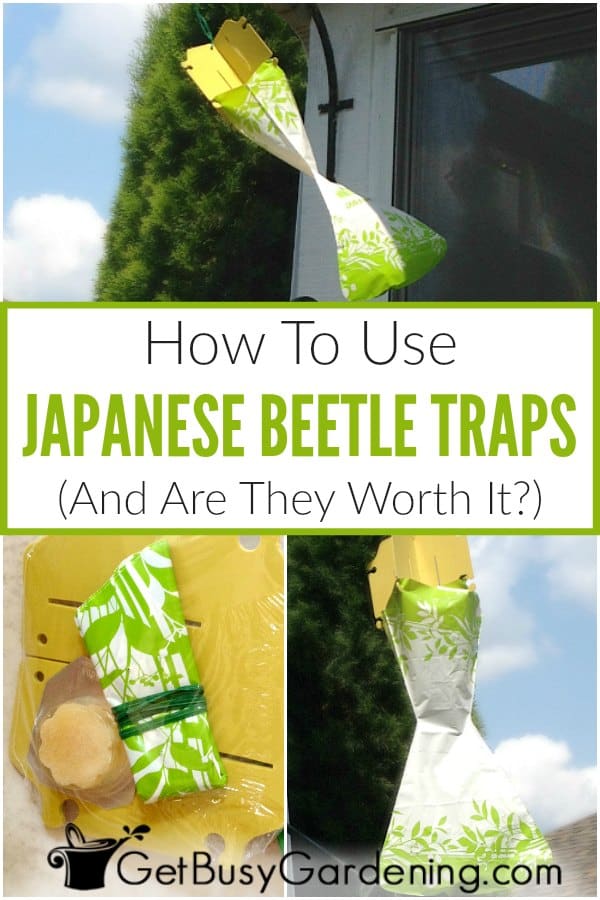
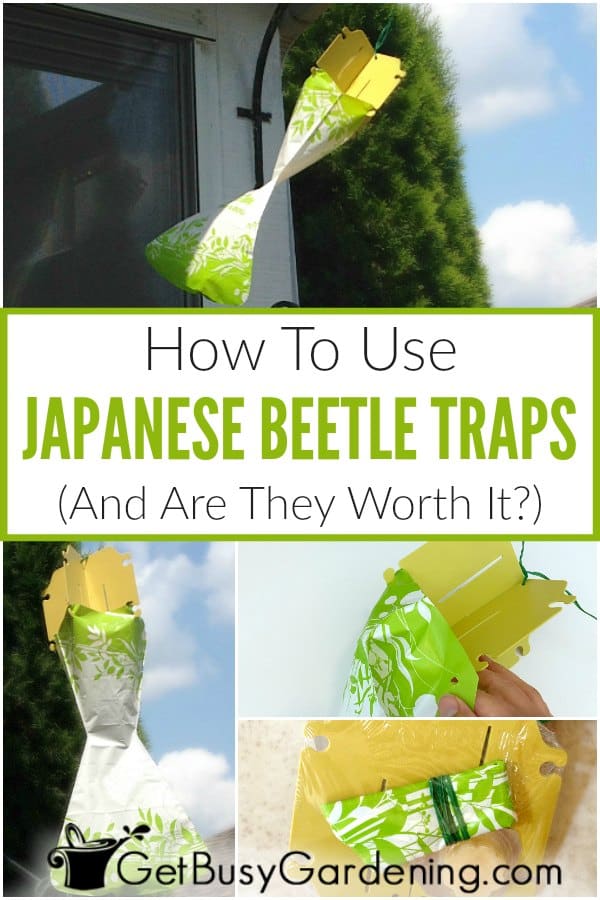
Japanese beetle traps are safe, non-toxic, and very effective at capturing these nasty pests. But are they worth it?
In this post, you’ll learn all about using them, including the pros and cons, how they work, when to put them out, where and how to hang them, and what to do with the dead bugs.
I will answer all of your questions, and give you the information you need so you can decide if Japanese beetle traps are right for you.
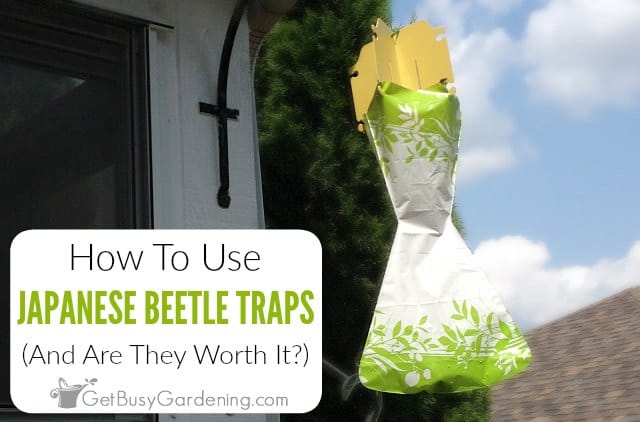

How Do Japanese Beetle Traps Work?
Japanese beetle traps come with bait that lures them in. The bait is made with pheromones (a natural sex attractant), as well as floral scents that the Japanese beetles (JBs) can’t resist.
Once they fly to the lure, they will fall into the trap and can’t get back out. It’s actually kinda funny that they can’t find their way back out because the traps are wide open on top. But I guess JBs aren’t very smart.
Related Post: How To Control Japanese Beetles Organically
How To Use Japanese Beetle Traps
It’s super easy to use JB traps, so you’ll probably find set up and assembly pretty self-explanatory.
Of course you should always follow the instructions on the package that yours comes in. But here are my tips for using them from experience…
When To Put Them Out
It’s best to put out Japanese beetle traps just before the adults start emerging in mid-summer, or once you spot the first one in your garden.
As for time of day… I definitely recommend putting them out either at night or very early in the morning when the beetles aren’t active. Also, I highly recommend waiting to open the attractant until the very last step.
Opening the attractant is the first step in the instructions, but don’t do it. Instead, get everything assembled and hang the trap before you open the bait packet.
The lure attracts the JBs immediately, and they’ll start flying in from all directions as soon as you open it.
They don’t bite or sting, but having a bunch of bugs buzzing around and crawling on you while you’re assembling and hanging the trap might not be a very fun experience. EEK!
How To Set Up The Trap
The exact steps for assembling your Japanese beetle trap will depend on the type that you bought. So be sure to follow the setup instructions on the package.
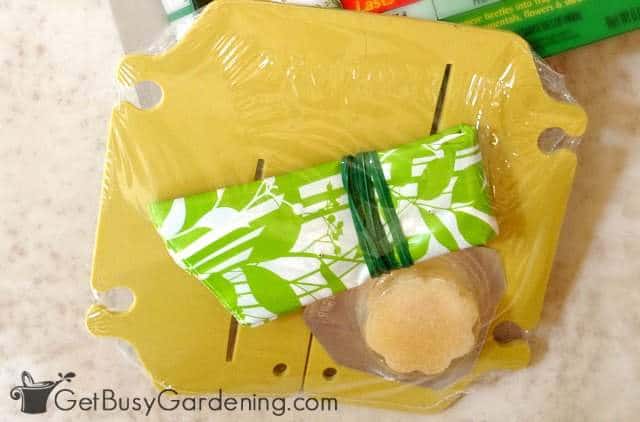
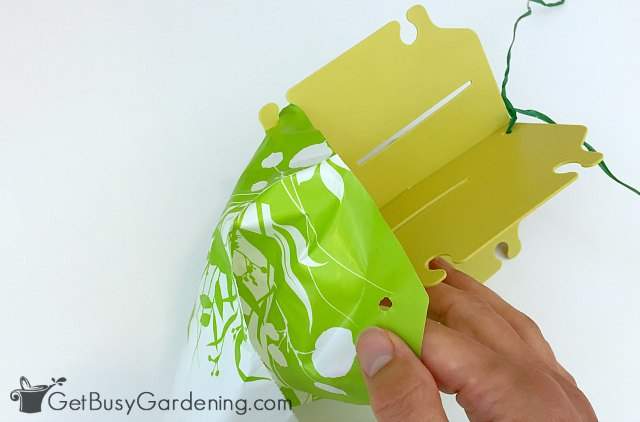
The kit I have came with a reusable top that has slots to hold the attractant, as well as a lure, a tie for hanging, and replaceable bags.
So, all I had to do was attach the bag, tie, and attractant to the top part, and I was good to go.
How To Hang Them
My kit came with a long twist tie to use for hanging. If yours didn’t come with one, then you could use cut-a-size garden ties, wire, or string to hang yours.
The empty bags blow around a lot in the wind, so be sure to use a sturdy tie to hang them.
As for what to hang them from… well you’ll want to find a place where there’s plenty of room around the trap because the Japanese beetles will fly in from all directions.
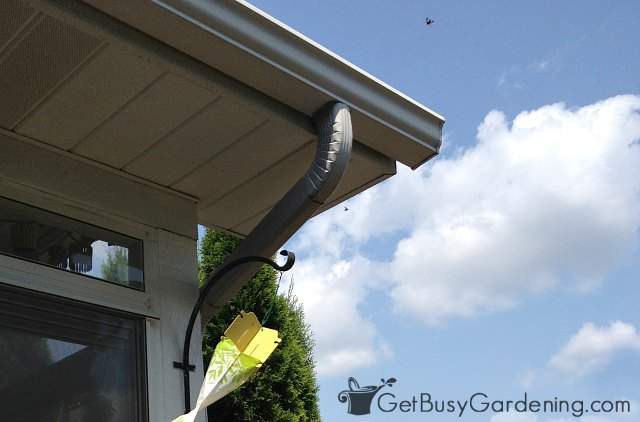
I hung mine from a plant hook that sticks out about a foot from my porch. But you could use a shepherds hook, or buy a stand to hang it from.
Where To Place Them
The key to success with a Japanese beetle pheromone trap is to hang it in an area of the yard as far away from their favorite plants as possible. If you put it right in your garden, it will attract more beetles to the plants.
Of course the joke is that the best place to hang the traps is in your neighbors yard. But that’s probably not going to be an option for most of us. Haha!
So find a spot that’s on the other side of the yard from the infested plants. I hung mine from my porch, which means I can watch it from inside the house (morbid curiosity).
Once you have the trap set up, be sure to check it daily to see how full it is. They can fill up fast, and the dead beetles get pretty stinky after a few days, so you should empty it frequently.
How To Dispose Of Full Japanese Beetle Traps
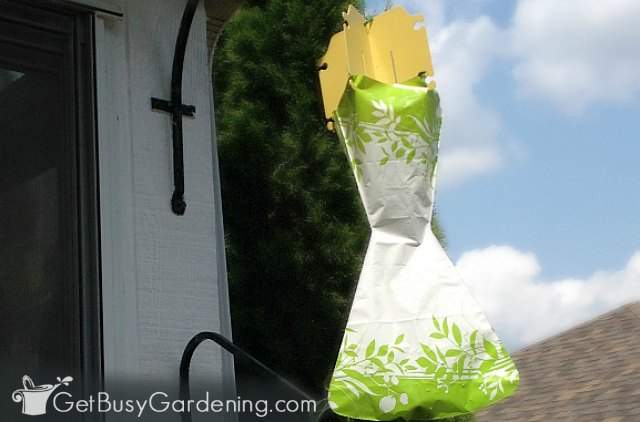
If your trap has disposable bags like mine, then you can keep the top and attractant in place, and just replace the bags when they’re full – easy peasy. But again, be sure to do it early in the morning or at night when the beetles aren’t active.
The replacement bags are inexpensive, and make it simple to get rid of the dead beetles. But some types of traps are disposable, so you can just throw the whole thing out once it’s full.
To dispose of the dead Japanese beetles, simply tie the bag shut at the narrow center (I use twist ties to do that). Then you can throw the whole thing into the trash.
Do Traps Attract More Japanese Beetles?
Yes, the traps absolutely attract Japanese beetles – but that is the whole point. It’s also why you should place them far away from your garden.
When I heard the traps would attract WAY more (like THOUSANDS more) of these destructive pests to my yard it scared me at first.
But I have the biggest gardens in my neighborhood, so I’m pretty sure that I already have one of the largest populations of JBs too.
I figured that if I’m killing a few extra hundred of them in the traps every summer – well, that’s less of them that can reproduce in the neighborhood.
My Experience
There have been years where I’ve used Japanese beetle traps in my yard, and also several years where I haven’t.
I’ve never noticed a larger amount of them on my plants in the years that I used the traps (and I’ve certainly never seen thousands more of them).
So I personally don’t feel that the claim of the traps attracting large hoards of JBs to my yard is true. But your experience may be different.
Should You Use Japanese Beetle Traps?
Ultimately, this is a question you need to answer for yourself. You should weigh all the pros and cons before deciding if they’re right for you.
If there are only a handful of Japanese beetles in your garden, then I would not bother with using the traps.
However, if you have a large population of them like I do, and your yard is big enough to place the traps away from your garden, then it’s worth a try.
Remember, the purpose of the traps is to attract Japanese beetles. So that means that more will be coming to your yard. But, they also capture and kill TONS of JBs too, which means you’re taking them out of circulation.
FAQs
The attractant lure is made with a natural Japanese beetle sex pheromone, as well as flower scents that they love.
If you buy reusable traps, the bait should last all season long. Discard it in the fall, and buy a replacement lure each spring.
Yes, the traps definitely work to attract and capture Japanese beetles, and you will get a LOT of them in the bag. After flying into the trap, they will eventually die.
In this post, I’ve given you all the details, including the pros and cons of Japanese beetle traps. They’re easy to use, and non-toxic. But they also attract JBs to your yard. So in the end, you need to decide if they’re right for you.
Share your experience with using Japanese beetle traps in the comments section below. Would you recommend them or not?

Jen says
I have a small yard, most of my flowers are in the backyard. The beetles have been ruining my dahlia plants. I’m wondering if I put the bag in my front yard if that is far enough away from my plants in the backyard? Thanks.
Amy Andrychowicz says
Yes, putting the JB trap in your front yard would be a good spot.
Scott says
Feed them to your chickens. They love them.
Martina says
What happens if the bag is too close to foliage? Does the “smell” kill the bushes?
Amy Andrychowicz says
The smell won’t affect any nearby plants. But it’s a good idea to empty your Japanese beetle traps every few days to avoid any unpleasant odor.
Carol Thompson says
We just started with JBs in 2022. Never had seen one before. Our property is about 9,000 sq ft. Would 1 trap on the side of the house that has no plants draw the JBs from both the front & back yards? Or, should we use one on each side of the house?
Amy Andrychowicz says
No matter where you put the trap it will draw Japanese beetles. I would just put out one or two to see how fast they fill up, then add more if the few you have are filling up quickly.
Marilyn says
What does it mean when the jB start to accumulate on the outside bottom of the bag? The replacement bag is only a day old.
Amy Andrychowicz says
Weird, I’ve never had that happen with my JB traps. Did you put the attractant in the top part of the bag just above the opening, or is it sitting in the bottom of the bag? If it’s inside of the bag, then that would make sense that they would accumulate on the outside. Otherwise, if it’s above the opening, then I guess the Japanese beetles just haven’t found their way into the bag yet. Give it time, they’ll eventually end up in there.
Toni says
Something keeps eating the bottom out of our disposable bags
Amy Andrychowicz says
Probably a raccoon or some other scavenger. They can be attracted to the smell of the dead beetles, so keep just empty or change the trap more often. Yuck!
KyaFox says
We have used beetle traps for 3 years. I did not see ONE beetle on my plants last year, not a one. We have approx 2 acres, and we used two traps, one at each far end, and they were full very quickly. It has been a plant saver for us, and if you do a lady bug release, bye bye aphids. We literally had the best growing year we’ve ever had without all those pests feasting out there! I highly recommend the traps, and I agree with everything the author has in here. Thank you for sharing! We did it all by trial and error, and it’s nice to know what we “thought” we should do, turned out to be correct! Wish I would have found this post 3 years ago! DO NOT PUT THE TRAPS BY YOUR PLANTS (We made that mistake our first year) Listen to this author, and you will probably have some great results!
Amy Andrychowicz says
Great tips! Thanks so much for sharing your experience using the JB traps, glad to hear you’ve had such great success with them.
Sus says
I use End All concentrate spray. It kills them on contact and no need for traps. The JB bugs like to be out in the heat of the day!. So I’m out there with my jug of End All and kill them all! But I have to do it every day…even if I use the bags I still have to go out and spray my actual flowers and shrubs. But again, it works!!
Amy Andrychowicz says
Thanks for sharing, I’ve never tried that product. Always good to have more options. And yes, even when you use the traps, you’ll still see JBs on your plants. The bags just helps to capture and kill even more of them.