Growing onions at home is easy, and they don’t require much hands-on care. In this post, I’ll show you all you need to know in order to have the best success.

Onions are a staple in most recipes, which makes them a very popular and useful crop to grow at home.
The good news is that there are several ways to do it, and it’s actually pretty simple! Even a beginner can grow onions with the advice I’ve shared in this guide.
Below you’ll find everything you need, from how and where to grow them, to caring for your onions all the way through the season.
Onions Quick Care Overview
| Scientific name: | Allium cepa |
| Classification: | Vegetable |
| Common names: | Onion |
| Hardiness: | Biennial |
| Temperature: | 40-70°F |
| Flowers: | White, purple, blooms second year |
| Light: | Full sun |
| Water: | Keep evenly moist, do not overwater |
| Humidity: | Average |
| Fertilizer: | Balanced organic fertilizer spring-summer |
| Soil: | Rich, fertile, well-draining |
| Common pests: | Thrips, onion maggots |
Information About Growing Onions
Onions, or Allium cepa, are biennial members of the Amaryllis family. We grow them to eat the edible bulb that forms just above the roots.
They’re frost tolerant and can thrive in a wide range of climates, but originally came from the temperate regions of southwestern Asia.
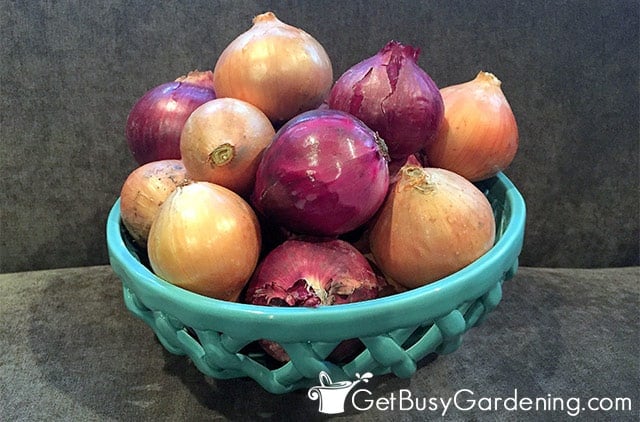
Varieties range from sweet to very sharp in flavor, and come in red, white, and yellow. The shoots and immature bulbs are also edible, and are often enjoyed as green or spring onions.
Different Types Of Onion Plants
Your grocery store probably sells them simply as red, yellow, white, and sweet.
But there’s actually a huge range of onions that you could grow. Your options will depend on where you live.
Onions are sensitive to day length, so it’s a good idea to understand which types are best for your region.
- Short-day – For southern US gardeners with daylight ranging from 10-12 hours, try Red Burgundy, Red Creole, White Bermuda, Southern Belle, or Yellow Granex.
- Day-Neutral – Middle to northern state gardeners can choose varieties like Cabernet, Gladstone, Talon, or Sierra Blanca, which require 12-14 daylight hours.
- Long-day – In northern regions that have days with 14+ hours of light, varieties like Yellow Sweet Spar, Walla Walla, Red Baron, Cortland, and Sweet Spanish are good options.
How Do Onions Grow?
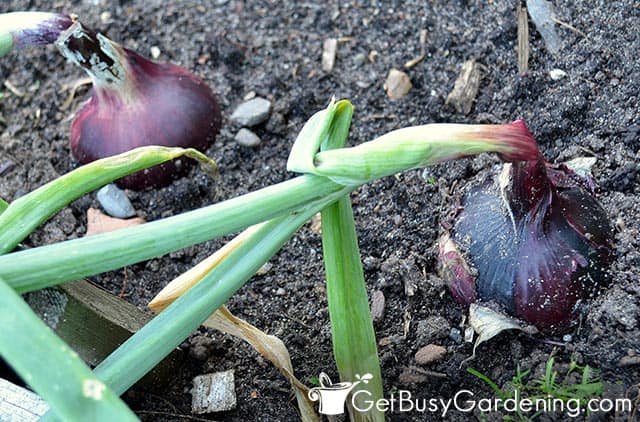
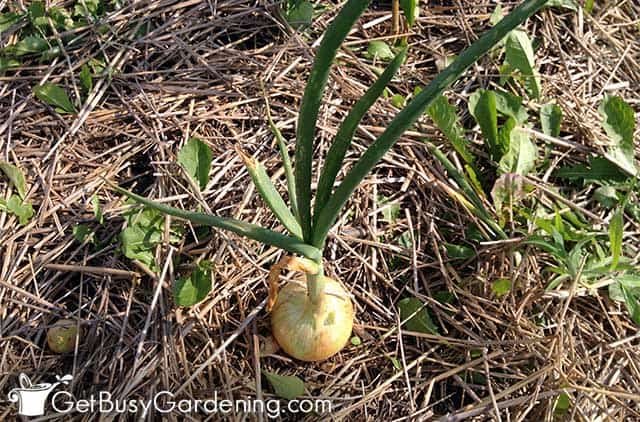
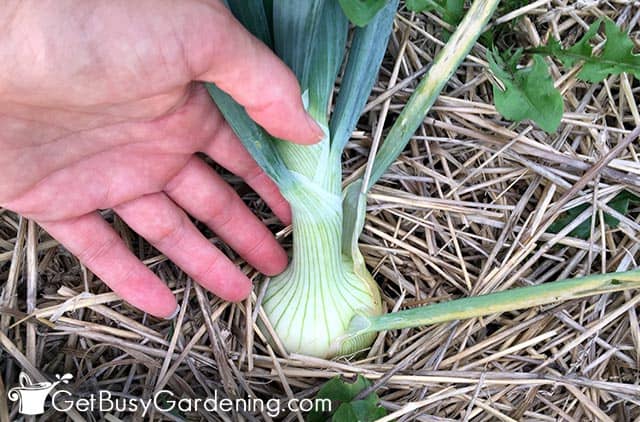
Onions grow as layered bulbs that develop on top of the ground in between the roots and the green tops. For each leaf, a layer of the bulb is formed.
The tops grow in cool weather, then as it warms, the bulbs begin to set. They’ll begin underground, and slowly push up through the soil as they mature.
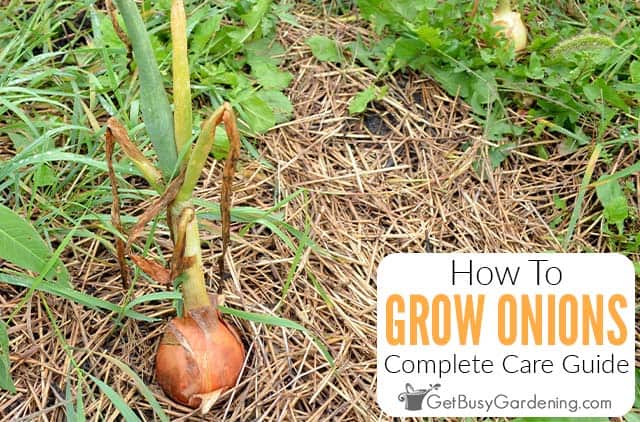
When they’re fully mature, the tops will first begin to yellow, then eventually they’ll turn brown and fall over.
How Long Do Onions Take To Grow?
The length of time onions take to grow from planting to maturity depends on how you started them.
Seeds will take the longest, anywhere from 3-5 months. Using sets (small onion bulbs) or transplants (banded bundles) can take between 2-3 months.
How To Grow Onions
Choosing a good location with enough light and space is essential for growing healthy onion plants. So let’s talk about how to find the perfect place.
Where To Grow Onions
Onions have shallow roots, which makes them ideal for growing either in the ground or containers.
They do best with full sun and loose, well-draining soil in a weed-free environment. They’ll also need plenty of space for the bulbs to form.
Choose a spacious garden area or a wide-mouth container to ensure they have enough room.
Tips For Planting Onions
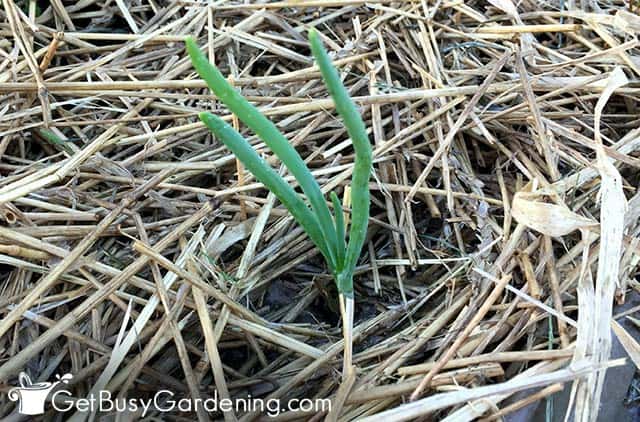
There are several ways you can plant onions. You could plant starts and sets in rows with a minimum of 1’ of space between them.
Or you can direct sow clusters of 4-8 seeds in rows spaced 12-18 inches apart, or start them indoors. Learn exactly how to plant the seeds here.
Onion Plant Care & Growing Instructions
Once you understand the exact care they need, growing onions isn’t difficult. In this section you’ll find detailed tips on how to keep them thriving.
Sunlight
Most onions grow best with 8 or more hours of direct sun daily. Make sure they’re not shaded by other plants at any time.
If they don’t get enough sunlight, it will either result in smaller bulbs, or prevent them from forming all together.
Water
Due to their shallow roots, onions grow best with even moisture. Inconsistent levels can lead to small bulbs. Too little water can cause them to bolt, and too much can cause rot.
As soon as the top inch of soil is dried out, give them a drink to moisten it, but never saturate it.
A great way to help regulate it is by adding mulch around the base of the plants. A moisture gauge is also a handy tool to help you get it just right.
Related Post: The Best Pickled White Onions Recipe
Temperature
Onions like different temperatures at different times of their life cycle. Young starts are best established when it’s cooler, between 40-70°F.
For bulb formation to begin, they need warmth. Temperatures from 75°F and above are ideal.
Fertilizer
Start your onions off right with a balanced organic fertilizer at planting time by working slow-release granules or worm castings into the soil.
Then water with compost tea or fish emulsion every week, and top-dress with granules once a month.
Related Post: How To Can Onions
Soil
Onions will grow best in a moderately rich, loose, and well-draining soil. Adding organic compost at the time of planting is a great way to get them happily situated.
The shallow roots can be easily disrupted. So make sure the bed is clear of any rocks, sticks, or other debris.
Young plants cannot compete with weeds for nutrients and water, so stay on top of pulling them. But do so gently when working around your onions so you don’t disturb the roots.
Pest Control Tips
Growing onions is actually a strategy some gardeners employ to repel pests, since many bugs and animals are put off by the intense aroma.
Because of this, they don’t usually have problems with pests themselves, but they’re not immune to bugs entirely.
Thrips and onion maggots are two of the most common. Row covers can prevent the adult maggot flies from laying their eggs, and insecticidal soap can get rid of thrips with a few treatments.
You can even make your own by combining 1 teaspoon of gentle liquid soap with 1 liter of water.
Disease Control Tips
Though it’s not usually a big problem, onions can be susceptible to fungal and bacterial diseases. Most commonly soft rot, blight, and downy mildew.
If you see rot or white spots on the bulb or leaves, you can begin treating it with a natural fungicide.
But unfortunately many times the most effective treatment is to pull the affected plant and destroy it before it can spread.
Tips For Harvesting Onions
Though it’s possible to use leaves and small bulbs for cooking, onions are mature and ready to harvest when the leaves have turned yellow and brown and start to fall over.
Unearth them gently to avoid bruising, which can cause rot. Then lay them in a warm, dry place away from direct sun to cure. They’ll store for 6-8 months when properly cured.
Related Post: How To Make Onion Jam (Recipe & Instructions)
Troubleshooting Common Problems
Onions are pretty simple to grow, but you may run into an issue or two during the season. Here are my best tips for solving some of the more common problems.
Bulbs Popping Out Of Ground
If your onion bulbs are popping out of the ground, that’s actually a good sign that they’re growing.
As they mature, they naturally begin to pop up, and the outer leaves turn papery. Avoid covering them up as they do this to reduce the chance of rotting.
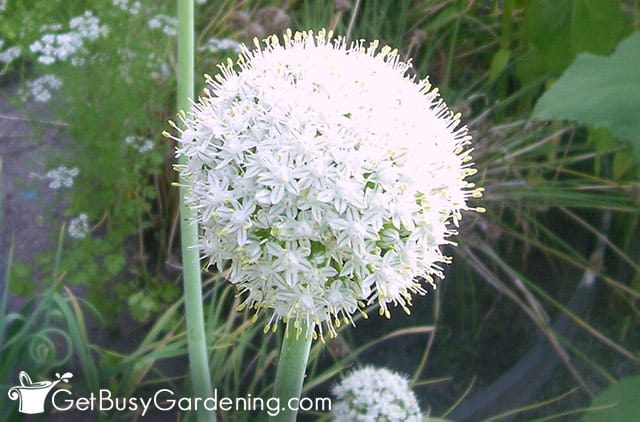
Onions Are Flowering
When onions are flowering, it’s usually a problem when starting them from sets.
That’s because they are biennials that typically flower in their second year, and sets are technically in their second year of growth.
Very hot or cold weather, or prolonged dryness can cause them to bolt and send up flower stalks.
The best thing to do is pull them immediately. Flowering onions are no longer good for storage, but you can use them for cooking right away if you catch it early enough.
Otherwise, the longer they bloom, the smaller the bulb will become, until it is completely inedible.
Mini Onion Growing Inside Another
On rare occasions you might find that a small onion has grown inside another bulb.
This occurs when environmental and developmental factors cause the vegetative buds that live within each leaf to develop into whole shoots.
It’s not preventable, but it’s also not a major problem. Your onion is still completely edible.
Bulbs Are Rotting In The Ground
If your onion bulbs are rotting in the ground, you’re likely dealing with soft rot or overwatering.
Soft rot is a soil borne disease that’s not treatable. The best thing you can do is pull and destroy the affected plants before it spreads to others, and grow them somewhere else next year.
FAQs
Here I’ve answered some of the most commonly asked questions about growing onions. If yours is not on the list, please add it to the comments section below.
How many onions grow from one bulb?
You will only be able to grow one onion from one bulb. It’s a one-and-done type of crop.
Can I cut the tops off my onions while they are still growing?
You can cut off some of the green leaves to cook with while the onions are still growing, but never take the entire top, or the bulb will stop forming. Instead you can cut the top few inches, or take 1-2 leaves at a time.
What is the secret to growing onions?
The secret to growing onions is to provide them with plenty of direct sunlight, plant them in well-draining soil while it’s still cool, and keep them evenly moist.
Can you grow onions from a store-bought onion?
No, you cannot grow mature onions from a store-bought onion. But it is possible to grow edible shoots or green onions from the bottom portion or sprouted bulbs, as long as the roots are still attached.
What is the best month to plant onions?
The best month to plant onions depends on the climate where you live. Plant them 1-2 weeks before your last frost date, when the soil is workable, and temperatures are above 40°F.
Onions are easy to grow in the right environment, and don’t require a lot of care. Now that you know how to provide the best sun, water, and other requirements, you’ll be able to cultivate your favorites right at home.

If you want to learn how to have a highly productive vertical veggie garden, then you need a copy of my book Vertical Vegetables. It will show you all you need to know about starting and caring for your plot, plus you’ll get 23 step-by-step projects that you can build! Order your copy today.
Learn more about my Vertical Vegetables book here.
More About Vegetable Gardening
- How To Grow Potatoes In Your Garden
- How To Grow Garlic In Your Garden
- How To Grow Tomatoes At Home
- How To Grow Peppers In Your Garden
Share your tips for growing onions in the comments section below.

Clementine Dagley says
I had some caterpillars and grasshoppers that ate the tops off all my onions. It is only June 27th, and our first frost isn’t usually until September or October. Should I dig the onions now to make sure the bulbs don’t rot from the rain? Or leave them in the ground until fall, hoping the tops will grow back and the bulbs will get bigger?
Amy Andrychowicz says
If I were you, I’d pull them now. You could leave some of the smallest onions in the ground to see if the tops will regrow, but usually once the greens are gone, it sends the bulb into dormancy – which means it won’t grow any larger.