Squash bugs can be a huge pest, and wreak havoc in your vegetable garden. But it IS possible to get rid of them.
In this post, you’ll learn all about them, including what they look like, their lifecycle, where they come from, what they eat, and the damage they cause to plants.
Then I’ll show you a bunch of organic methods for how to get rid of squash bugs in your garden, and prevent them from coming back.

But they aren’t the only bugs that eat cucurbits, so it’s important to verify that you’re dealing with the right one before you start treating your plants. There are two common types of bugs that plague squash plants, and it’s easy to tell them apart.
If you have insects crawling all over the leaves and fruits, those are squash bugs. On the other hand, if there are white worms inside of the stems, vines, or fruits, those are squash vine borers, and here’s how to get rid of them.
Squash Bugs -vs- Stink Bugs
Stink bugs are another common pest insect that many people mistake for squash bugs. They look similar, and both can emit a stinky odor when you crush them. But here are a few easy ways to tell them apart…
- Body shape – Squash bugs are long, narrow, and oval-shaped. Stink bugs are wide, rounded, and shaped like a shield.
- Feeding habits – Squash bugs feed on cucurbits, while stink bugs will eat a variety of different types of plants.
- Hibernation -Squash bugs typically overwinter in the soil or under plant debris outside. Stink bugs are the ones that try to get into your house in the fall to hibernate.
Related Post: How To Control Garden Pests Naturally
What Do Squash Bugs Look Like?
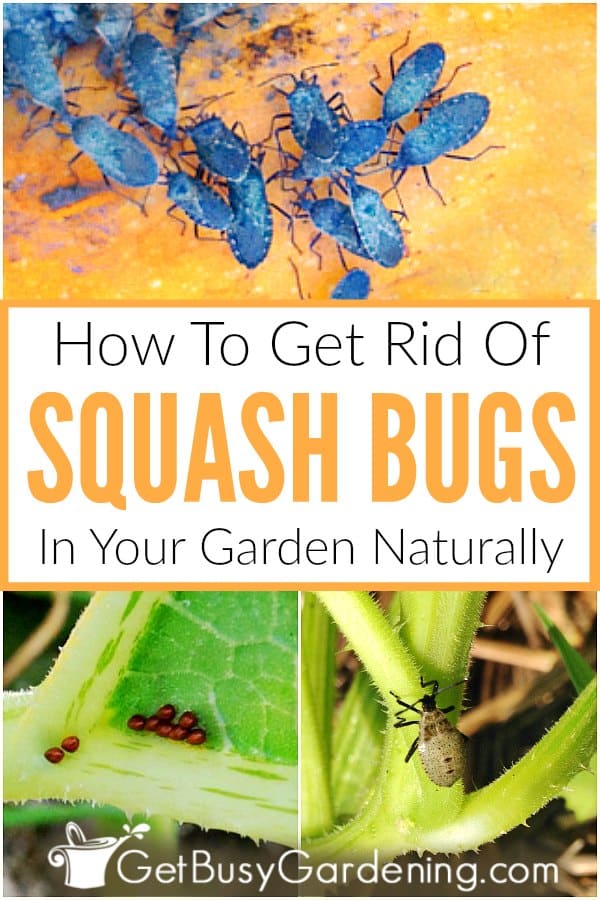
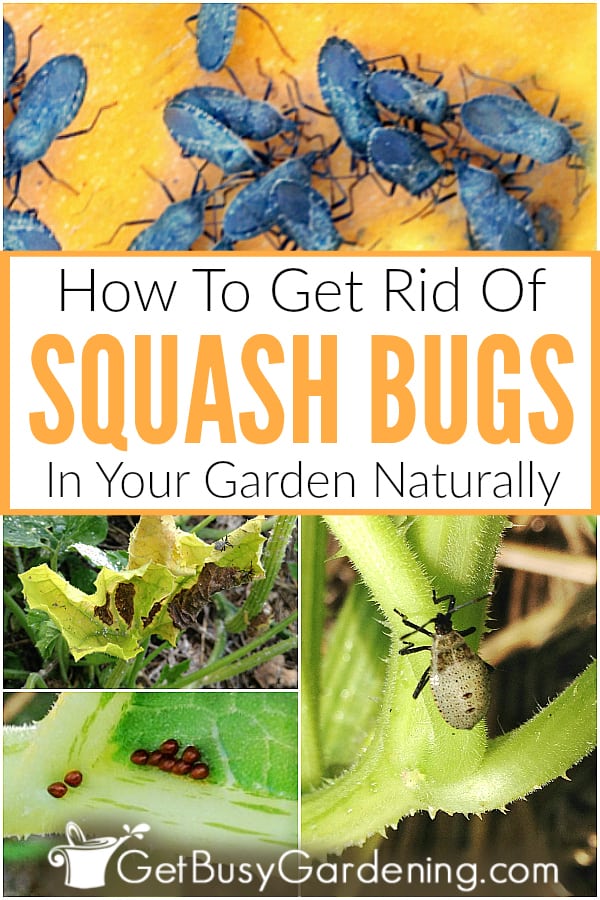
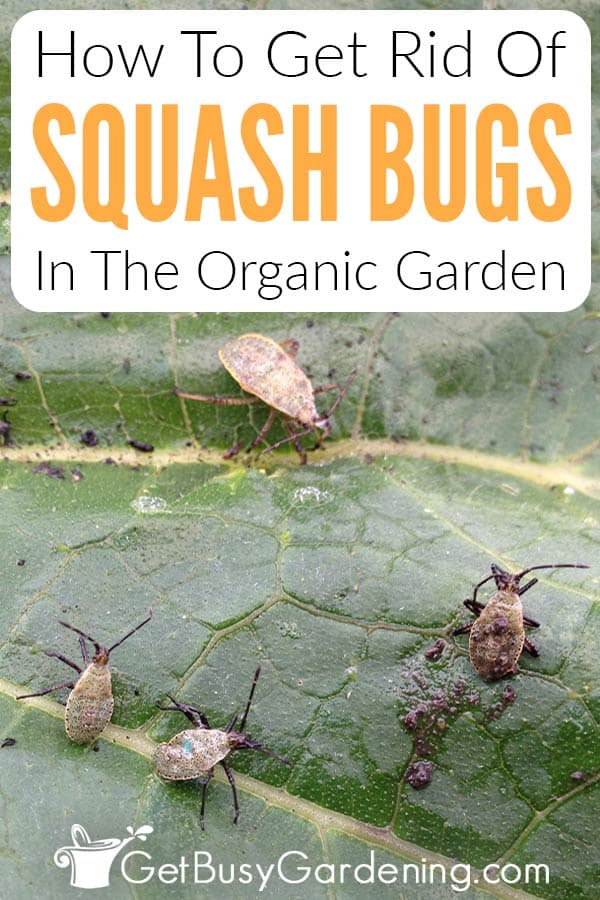
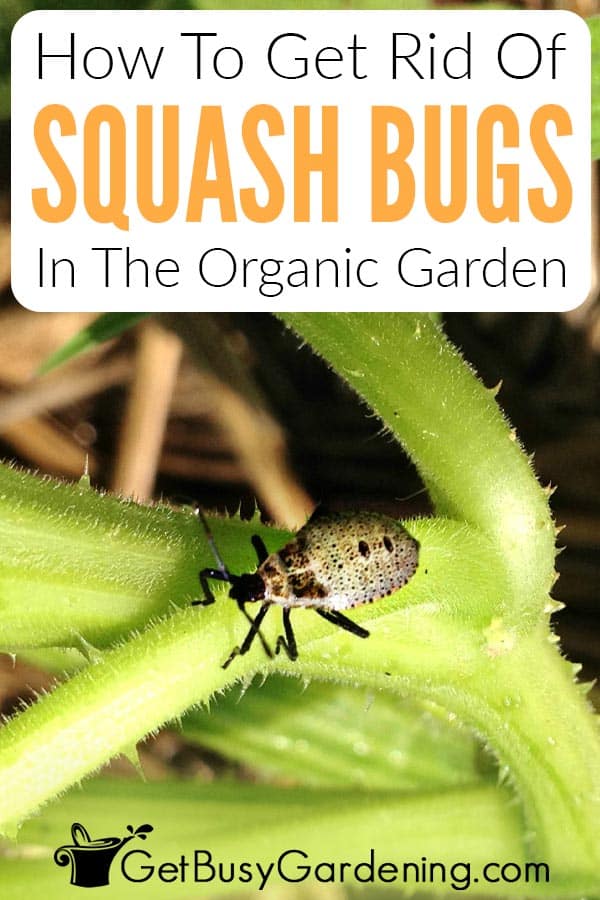
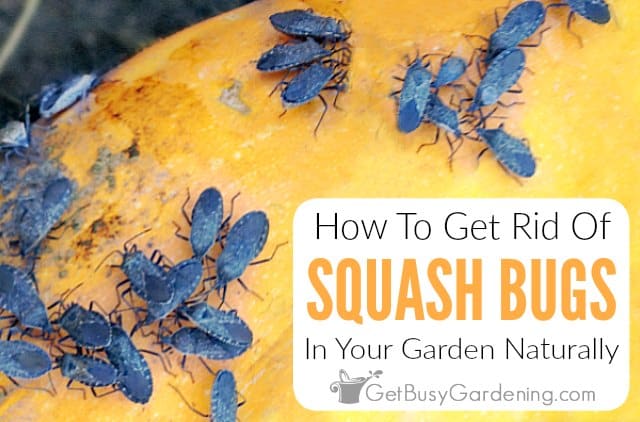
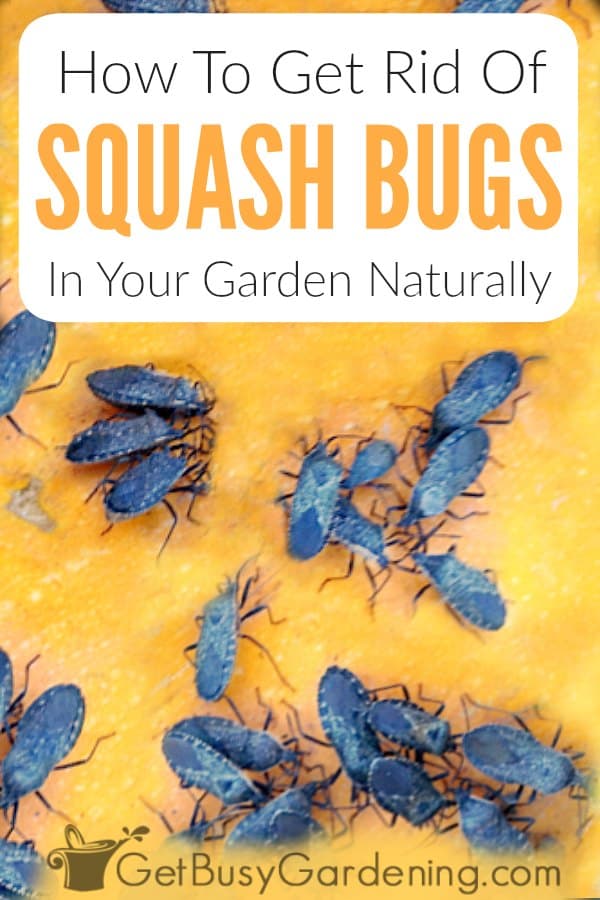
Adult squash bugs are brown or gray colored with flat, oval-shaped bodies. Some of them have an inverted V or diamond shape in the center of their back, and white dots along the perimeter.
Other species have a dark U shaped band across the top, or dots covering their backs. Full-grown adults are just over a 1/2 inch long. They are able to fly, but most of the time you’ll just see them walking around on the plants.
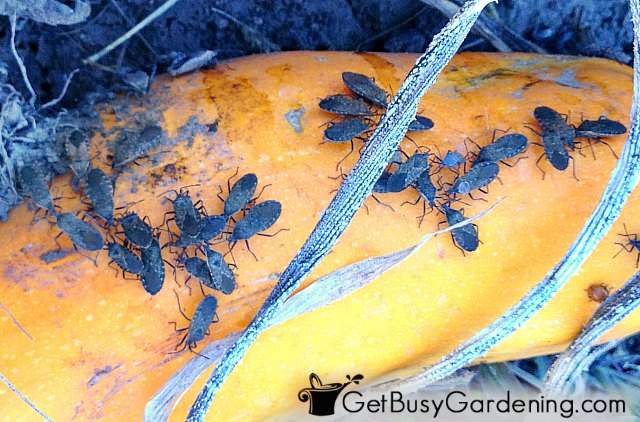
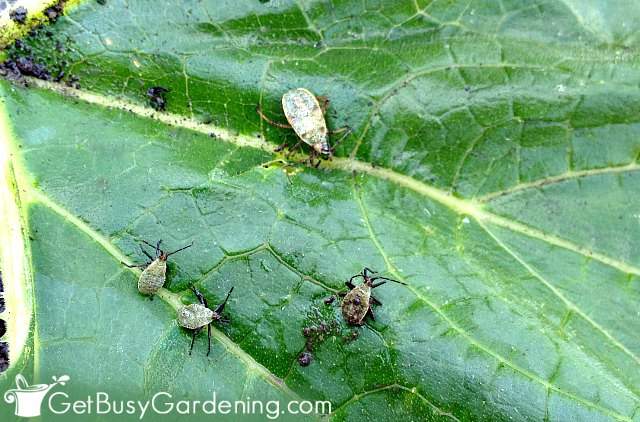
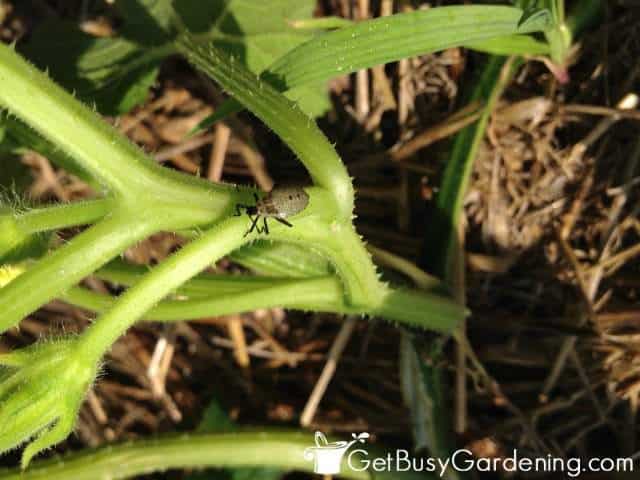
Squash bug babies, called nymphs, are much smaller. They can be anywhere from 1/10″ to 1/2″ long as they mature into adults.
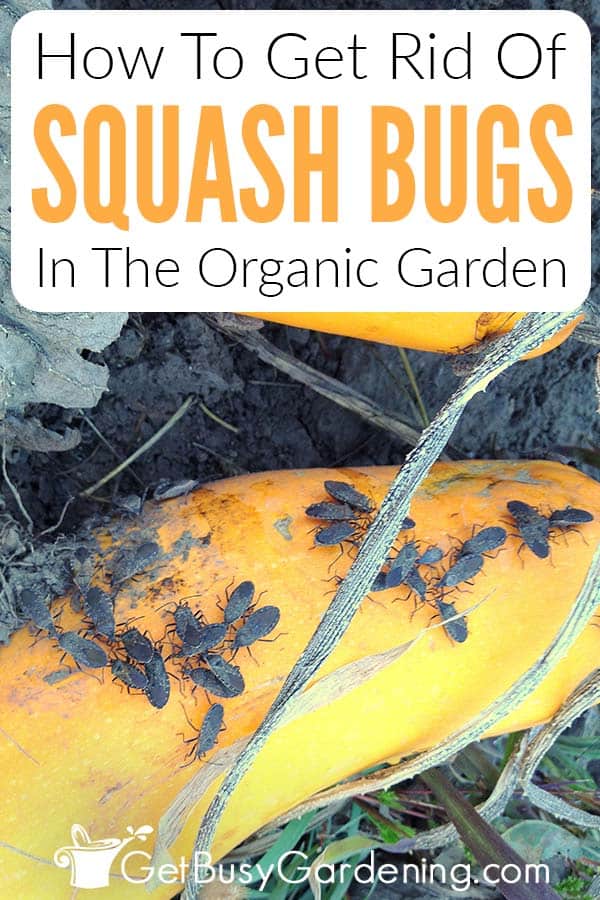
Right after hatching, the nymphs have green bodies, but they turn gray a few weeks later. They have long black legs, and look like weird little spiders. They tend to cluster on the undersides of leaves, and they move very, very fast.
Related Post: How To Grow Summer Squash
The Squash Bug Life Cycle
Before you can get rid of squash bugs, it’s important to understand their life cycle. There are three main stages: eggs, nymphs, and adults.
The adults hibernate under debris in the garden and surrounding areas through the winter. They emerge when the weather warms in early summer to start feeding and mating.
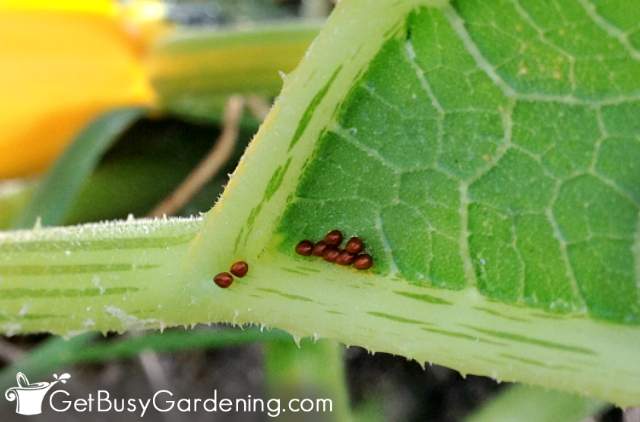
Females will begin laying eggs on nearby cucurbit plants soon after. They lay them in clusters on the undersides of the leaves, usually in a corner where the thickest veins form a V shape.
The eggs will hatch in about ten days, and the babies (called nymphs) will emerge. It takes about six weeks for the nymphs to mature into adults.
The good news is that there’s usually only one generation of squash bugs per year, though they can overlap.
Related Post: How To Grow Winter Squash
Where Do Squash Bugs Come From?
Although you don’t usually see it, adult squash bugs can fly. That means they can travel a long way to find your garden. This is why it can be so challenging to get rid of them.
Since cucurbits are their main host plant, they’re naturally attracted to them. So, if there are squash bugs present in your area of the world, then there’s a good chance they will find your garden.
What Do Squash Bugs Eat?
Squash bugs love to feed on all types of cucurbit plants. This includes all winter and summer squash varieties, like zucchini, pumpkins, and gourds, as well as melons and cucumbers.
Both the adults and the nymphs will feed on all parts of the plant. They usually start with the leaves, and then work their way to the vines, and finally the fruit as the plant starts to die.
Squash Bug Damage To Plants
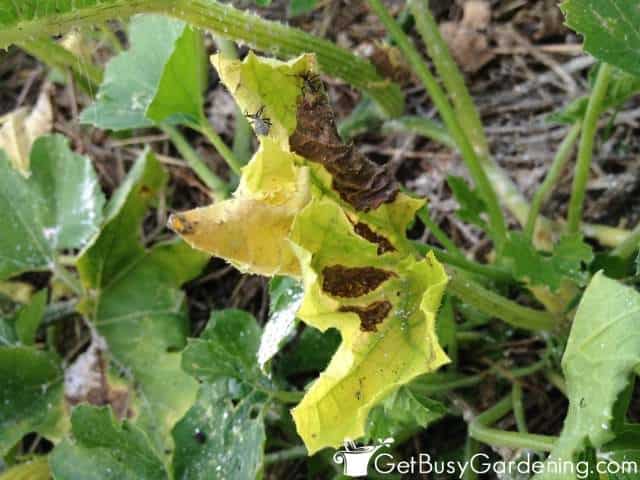
They cause damage to plants by sucking the sap out of the leaves, which will turn yellow, wilt, and then eventually dry up and die. Severe damage can cause the vine to turn black.
Healthy, mature plants can handle a small squash bug infestation without major problems. But a large population can kill a weak or immature plant pretty quickly.
Related Post: How To Grow Cucumbers
How To Get Rid Of Squash Bugs
The good news is that you can indeed get rid of squash bugs for good. I haven’t had them in my home garden for over ten years (knock on wood).
It’s a different story in our community garden plot, since others don’t do anything to prevent the spread. So managing the population is a more realistic goal.
Here are the first steps you should take to control an outbreak:
- Keep a close eye on your plants. Check them regularly for leaves that are turning yellow or brown, which is the first sign of a squash bug infestation.
- If you find a yellowing or browning leaf, inspect it closely, especially the underside. If you see any squash bugs crawling around, then take immediate action.
- Be persistent! If you stay on top of the problem, then they won’t cause much damage (trust me, it sounds harder than it is).
Organic Squash Bug Control Methods
The best way to get rid of squash bugs in your veggie garden is to use natural garden pest control methods, rather than synthetic chemicals.
Below I have listed several organic treatments you can use. Be sure to experiment, and also try combining a few of them to find what works best for you.
Hand Pick The Adults & Nymphs
The best organic treatment for squash bugs is hand-picking them off your plants. They don’t sting or bite, so you can just pick them off with your bare hands. If that freaks you out, then wear gloves.
It’s not hard to do once you get the hang of it – but they can move fast. Like really fast! And they’re elusive little buggers too, so you have to be quick.
Once you catch them, simply drop them into a bucket of soapy water, or just squish them if you’re not too squeamish.
Since they tend to cluster, sometimes it’s easier to remove the infested leaf. Then drop the whole thing into the bucket of soapy water, or step on it to crush the bugs, rather than trying to chase after them.
Once you’re done, you can dispose of the dead squash bugs by dumping them into your compost bin, or somewhere in the weeds.
Capture Them With Duct Tape
If you’re having a hard time catching them, you can try capturing them with duct tape, or any other type of thick tape you have on hand.
Simply roll the tape around your hand, with the sticky side facing out. Then brush it over the eggs, bugs, and nymphs.
Take care not to press too hard, or the tape could stick to the leaves. When you’re done, just toss the bug-covered tape into the trash.
Try Diatomaceous Earth
Diatomaceous earth (DE) is a wonderful product that you can use to kill squash bugs naturally. The fine powder easily sticks to their bodies.
It works best when you sprinkle it directly onto the bugs, rather than doing a broad application. Spreading it everywhere is much less effective, and you’ll just be wasting it.
Use Insecticidal Soap
Soap will quickly kill many of the bugs on contact. But at minimum it will slow them down so they’re easier to catch and hand pick.
You can use a pre-made insecticidal soap, or make your own. My recipe is 1 teaspoon of mild liquid soap to 1 liter of water.
Neem Oil
Another great option that is very effective for longer term control is neem oil. While it will kill many of the squash bugs on contact, it can take some time to get rid of them completely.
So make sure to stay consistent with it. Treat your plants every few weeks until you no longer see any of the bugs or nymphs.
Related Post: How To Use Neem Oil On Your Plants
How To Prevent Squash Bugs
One of the easiest ways to control squash bugs is to keep them from infesting your plants in the first place. Below are a few simple prevention methods to try.
Check For Eggs
The best way to thwart an infestation is to regularly find and destroy the eggs as the squash bugs lay them. It’s easy to spot them when you know what you’re looking for.
Most times you’ll find them in clusters on the undersides of leaves, and in a nook where the larger veins form a V shape. They’re brown or red-ish in color, and oval shaped.
Gently scrape the eggs off with your fingernail or a tool, and then destroy them. Or you can use the rolled up duct tape trick I described above. Check the leaves weekly for new egg clusters so you can get rid of them before they hatch.
Use Row Covers
Putting row covers over your plants can keep the squash bugs from laying their eggs in the first place. Or you could cover your plants with inexpensive tulle fabric instead.
The downfall of using row covers is that it will also keep pollinators out. So, you can either hand-pollinate your squash flowers, or remove the covers once the plants start to bloom.
Try Repellent Plants
Nasturtium is a natural companion plant that can work to repel squash bugs. I tried it out in my community garden one year, and it worked great.
I inter-planted nasturtium flowers in one half of the garden to test it out. Sure enough the cucurbits on that side of the bed never had one squash bug, while the ones in the other half did.
Keep Your Garden Clean
The adults will overwinter under plant debris and other materials in the garden. So, to prevent them next year, be sure to clean out your garden in the fall.
Tilling or turning the soil can also help to kill or expose hibernating squash bugs. You should also burn, toss out, or otherwise destroy dead cucurbit plants in the fall, rather than composting them in your yard.
FAQs About Controlling Squash Bugs
There are lots of different types of beneficial beetles and other predatory insects (like ladybugs and spiders) that feed on insects and their eggs. That’s why it’s so important to only use organic methods to get rid of squash bugs. You don’t want to kill their natural predators in the process.
No. Squash bugs do not bite or sting. They are completely harmless to humans.
Yes. If left untreated, they will eventually kill the plant. It takes much longer for them to destroy a large, mature squash plant. But they can kill small, immature plants pretty quickly.
No, squash bugs don’t die during the winter. They hibernate in plant debris, rocks, or any area that provides protection as a hiding spot until it warms up in the spring.
Yes, Dawn dish soap, as well as other soapy water solutions, will kill squash bugs on contact. I recommend that you test it on a few leaves first before spraying the whole plant, to make sure there’s no damage.
There’s no doubt that dealing with squash bugs is frustrating, and it can be difficult to eliminate them from your garden. But, if you’re diligent in fighting them, and take preventative measures to keep them from coming back, then you absolutely can get rid of them for good.

If you’d like to learn how to make the most of your space and get as much homegrown food as possible, then my Vertical Vegetables book is perfect! It will teach you all you need to know, has tons of gorgeous photos, and includes 23 DIY projects you can build for your own garden. Order your copy today!
Learn more about my Vertical Vegetables book here.
More Posts About Garden Pest Control
Share your tips for how to get rid of squash bugs, or your favorite organic control methods in the comments below.

TERRI L THOMAS says
I made mixture of water 3/4 of 32 oz spray bottle, and added just a fea drops of Dawn dish soap, everyday I went out to check my Pumpkin Patch, I checked the fruit itself, then the underneath of the leaves. Sure enough, eggs and grown squash under almost every leave. Shake the bottle well, put it on a mist and spray underneath each leaf that jad either eggs, or bugs. Works line a charm!
Amy Andrychowicz says
Great, so glad to hear that you’ve been able to get rid of those nasty squash bugs! Woohoo!
TERI DEEL says
Dawn dish soap actually did harm my cucumbers. They began to wilt within hours and never recuperated. The wilted leaves then turned brown and shriveled up. The zucchini’s had the same effect but not as bad. Throwing the bugs in a bucket of water doesn’t work either because when you pour the water out it drains away and the bugs are still alive. Eggs also are still alive and will still hatch out and come back.
Amy Andrychowicz says
Bummer, sorry to hear that. You definitely want to test any type of spray on the leaves before treating the whole plant, as some products can be damaging, and some plants are more sensitive than others. This is why I always recommend using natural/organic products rather than those that contain chemicals. If the squash bugs aren’t dying in your bucket, then you need to add more soap. They’ll die pretty quickly when the water is soapy enough. Then leave them in there until they stop moving, don’t dump it out as long as they’re alive. And yes, it’s important to find and remove the eggs as well, as I described in the article. Getting rid of squash bugs is a multi-tiered approach for sure!
michael mayer says
I had an infestation of them on my seminole squash, i used that Dr B ppermint soap in water spray. about twice a day it kills all if you spray them heavily
Katya says
Will using boric acid get rid of them?
Amy Andrychowicz says
I don’t think it will kill squash bugs. Plus, I don’t recommend using it in the garden because it can kill beneficial insects, like honeybees.
September Provencher says
Hi Amy,
Thank you for such a well written and helpful article. This is my first garden and it seems that the squash bugs and I like all the same plants! I have two questions:
1. Does the soap solution kill the eggs as well or those must be physically removed instead?
2. Before reading this article, I removed some watermelon vines that were producing watermelons that began to rot on one end before maturing; I didn’t see any squash bugs on those plants but they are next to my butternut squash which had a lot of the bugs and the watermelon vines were looking bad so I removed them but I tossed them onto my compost pile – will this ruin the whole pile?
Amy Andrychowicz says
Oh no, that’s a bummer. 1. The soap will kill the eggs too. 2. When the fruits start to rot on one end it’s called blossom end rot, and has nothing to do with squash bugs, it’s caused by inconsistent watering. Hopefully the heat of the compost heap will kill the bugs and eggs, but it is best to burn or throw away infested vines instead of composting them – just keep that in mind for the future.
Katie says
I have found tweezers to be extremely helpful when I am hunting squash bugs. The bugs often avoid getting caught by quickly moving around to the back side of the stems, but if you grab a leg with the tweezers they can’t get away. It is much easier and faster! Also, I like to have a little container underneath to catch the eggs when I am scraping them off the leaves. Otherwise, some fall on the ground–and I don’t want ANY to hatch!